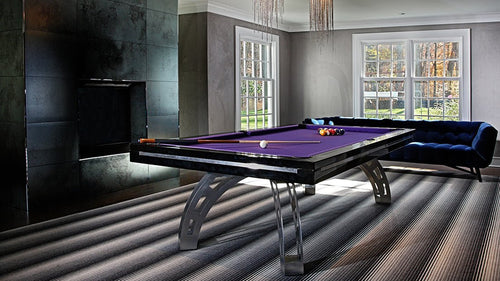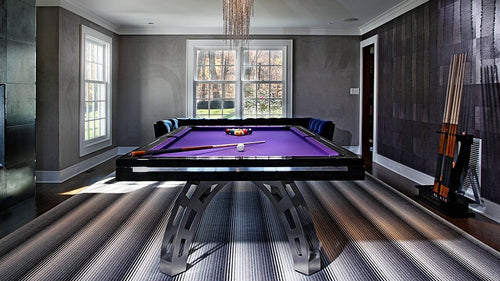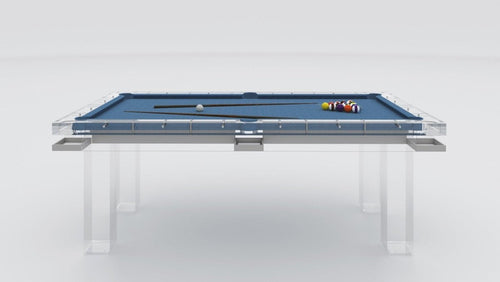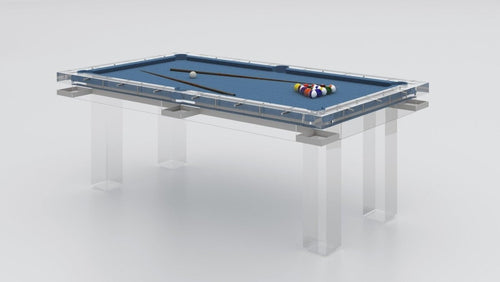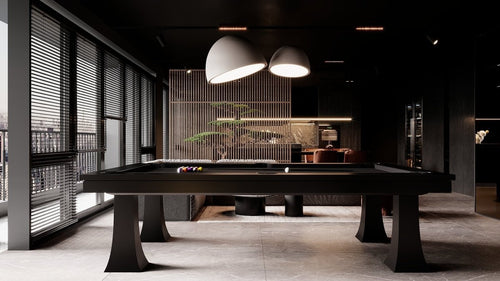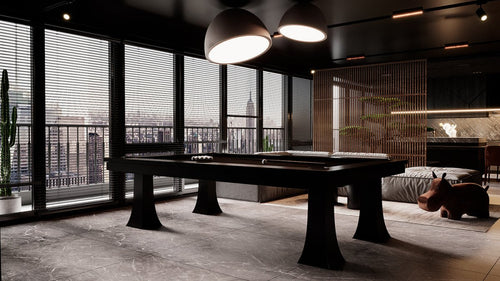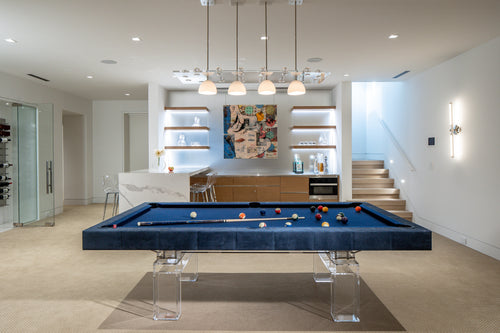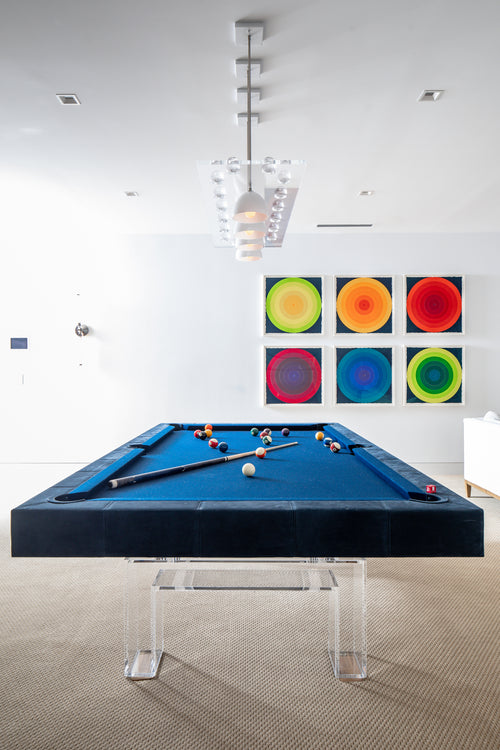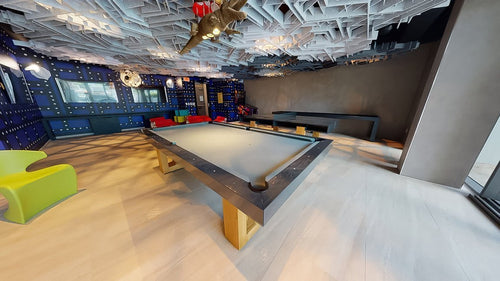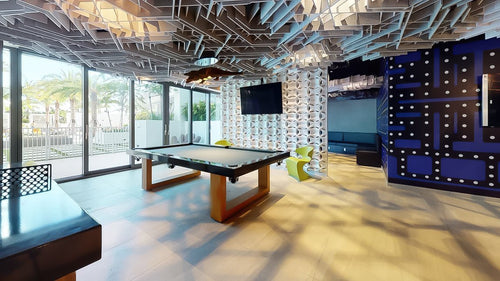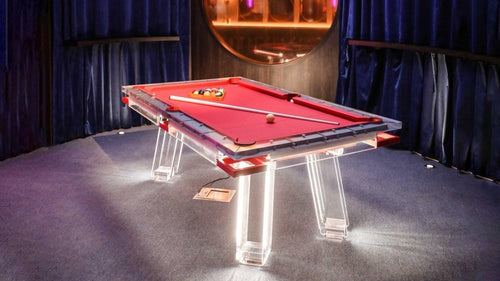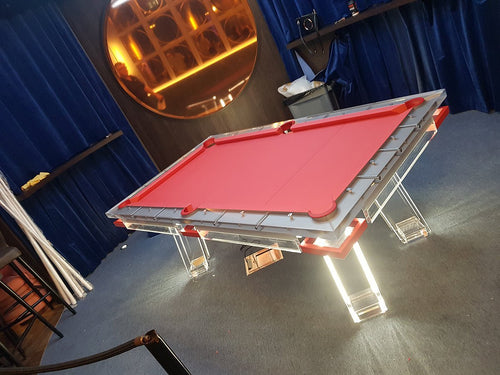

Enjoy our modern designs
Cloth and Color
Your pool table is not just a centerpiece of your game room but also a significant investment. Maintaining the pool table felt in pristine condition is essential for both optimal gameplay and visual appeal. While it might be tempting to clean your pool table like any other piece of furniture, using the wrong tools or methods can damage the felt and the table itself. Use this guide alongside the cleaning instructions for your particular cloth and table.
01
Step 1: Check Your Cloth Maker’s Cleaning Method
A vacuum is not automatically unsuitable. Simonis permits careful vacuuming with low suction and a nonrotating brush attachment, tested away from the table first. Excess suction can stretch cloth and disturb slate seam filler. Check the instructions for your particular cloth before choosing a method.
Control Suction:
Use only a cloth-approved vacuum setup; never assume a powerful household setting is suitable.
Alternative Tools:
Use appropriate tools designed specifically for pool tables to maintain the integrity of the felt.
02
Step 2: Invest in a Quality Pool Table Brush

If brushing is recommended for your cloth, choose a suitable pool table brush. Check the following:
Soft Bristles:
Ensure the brush has soft bristles to prevent tearing or damaging the felt.
Shape:
Choose a tool that reaches the intended area without hard edges scraping the cloth.
Pro Tip: Regularly clean your pool table brush to maintain its effectiveness and prolong its lifespan.
03
Step 3: Follow the Cloth’s Brushing Instructions
Proper brushing technique is crucial for maintaining the felt's smoothness and preventing damage.
- Direction: Follow the cloth maker’s specified direction and pressure rather than using one routine for every fabric.
- Edge Cleaning: Use the approved tool gently around the cushion cloth and under the rails; avoid scraping with the brush body.
Pro Tip: Follow the cloth maker’s brushing direction. Napped cloth and worsted cloth do not have identical care requirements.
04
Step 4: Clean the Brush After Each Pass
To prevent redistributing dust and dirt across the felt:
- Wipe the Brush: After each pass, use a microfiber cloth to remove accumulated dust and debris from the brush.
- Maintain Cleanliness: Keeping the brush clean ensures that you’re not transferring dirt from one area to another.
Pro Tip: Designate a clean area to store your brush between passes to avoid contamination.
05
Step 5: Clean the Rails Before the Playing Surface

Start by addressing the rails, then move to the main playing area.
-
Clean the Rails:
- Use the pool table brush to sweep along the rails.
- Use a separate approved cloth-cleaning tool if the maker recommends one.
- Option 1: If your cloth maker allows vacuuming, remove fine dust with its recommended low-suction attachment rather than sweeping it into the pockets.
- Option 2: Use a dedicated cloth-cleaning tool approved for the fabric. Keep hard dustpan edges off the playing surface.
Pro Tip: Regularly cleaning the rails prevents dirt buildup, which can affect the table’s overall condition and gameplay.
06
Step 6: Hand-Clean the Pockets

The pockets can accumulate dust and debris, impacting game performance.
- Match the Pocket Material: Use the table maker’s method for leather, plastic, netting or other pocket material. Keep cleaning liquid away from the playing cloth.
- Protect the Material: Keep hard attachment edges away from cloth and pocket surfaces. Use only the attachments and method approved for the table.
Pro Tip: Regularly inspecting and cleaning the pockets ensures they remain free from obstructions, providing smooth ball movement.
07
Step 7: Use Approved Wood Cleaning Products
Maintaining the wooden parts of your pool table is just as important as caring for the felt.
- Choose the Right Cleaner: Use wood cleaning products recommended by your pool table supplier.
- Avoid Harsh Chemicals: Steer clear of abrasive or harsh chemicals that can damage the wood’s finish.
Pro Tip: Apply wood cleaner with a soft cloth, following the product instructions to preserve the table’s aesthetic and structural integrity.
08
Step 8: Clean the Pool Balls Properly

Clean pool balls enhance their appearance and performance.
- Choose a Ball-Specific Cleaner: Follow the ball maker’s instructions. For Aramith phenolic balls, Aramith provides its own cleaner and polishing directions.
- Clean and Buff: Apply the approved product as directed and buff with a clean cloth; do not substitute a detergent soak or a cold-water rinse.
- Finish Before Play: Remove product residue and return clean, dry balls to the table.
Special Note: If your pool balls are made from a special material, consult the billiard ball supplier for appropriate cleaning methods.
Pro Tip: Regularly cleaning the balls prevents residue buildup, ensuring consistent roll and spin.
09
Step 9: Handle Stains with Care
Stains on the felt require gentle treatment to avoid further damage.
- Check Before Damp Cleaning: For Simonis cloth, a clean damp—not wet—towel is permitted only after vacuuming. Let it dry completely, then brush or use the X-1 before play. Do not assume this method suits every cloth.
- Fresh Spill: Blot gently without scrubbing or soaking the cloth, then ask the cloth maker or installer how to treat the particular stain.
- Professional Help: Ask the cloth maker about persistent stains. Simonis suggests consulting a dry cleaner and identifying its cloth as worsted wool; confirm suitability before any treatment.
Pro Tip: Address stains immediately to increase the chances of successful removal without damaging the felt.
In Closing
In Conclusion
Maintaining your pool table felt in excellent condition is essential for smooth gameplay and prolonging the life of your table. Follow the cloth and table makers’ instructions, and stop if a method pulls fibers, stretches the cloth or leaves residue. Regular maintenance not only preserves the aesthetic appeal but also enhances your overall pool-playing experience.