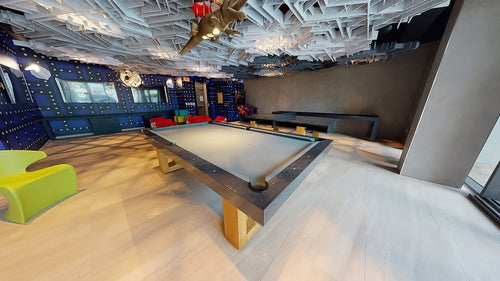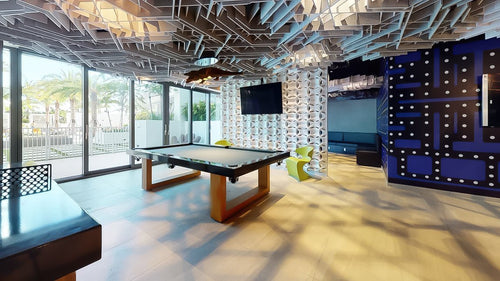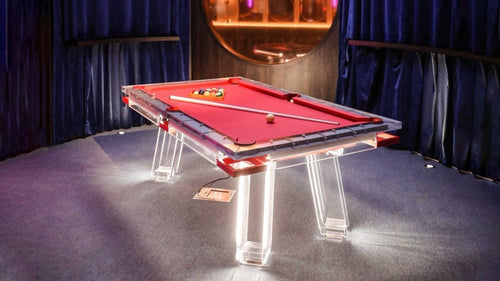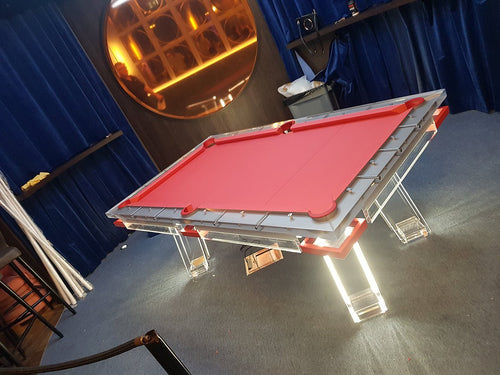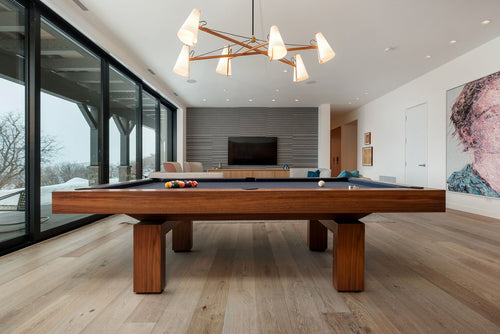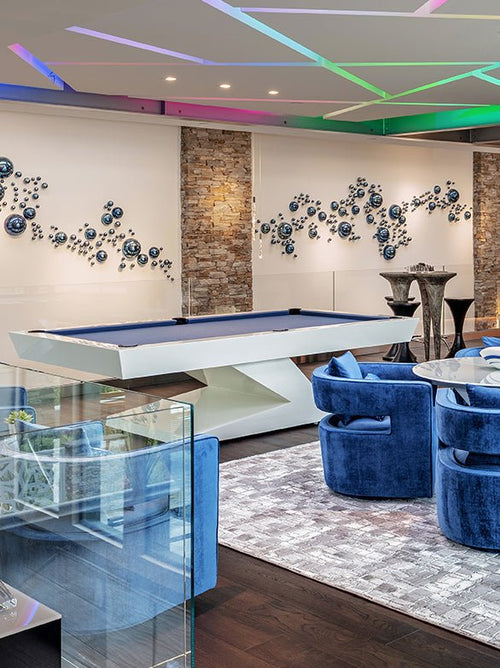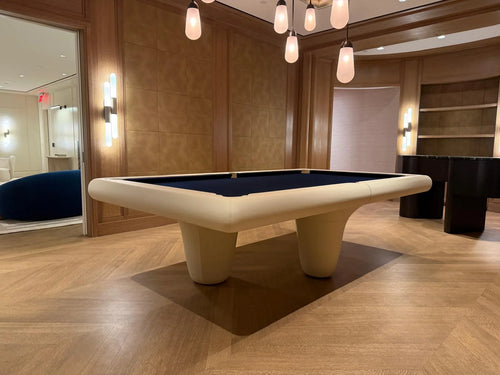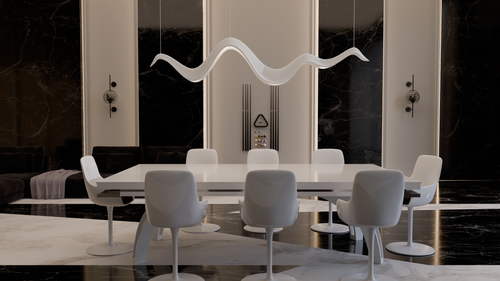


Enjoy our modern designs
Estimated Read Time: 3 mins
For centuries, billiard furniture was defined by weight. Massive oak legs, heavy slate tables, and floor-standing racks that took up as much visual space as a bookshelf. The philosophy was simple: if it’s heavy, it’s expensive.
But modern luxury has shifted. Today, the most sophisticated interiors prioritize light, space, and flow. Enter the era of the Lucite cue rack—designs so minimal they practically disappear, leaving only your cues floating on the wall.
Here is why "invisible" hardware is taking over the high-end market.
Table of Contents
The Philosophy: The Cues Are the Art
The primary argument for a Lucite (high-grade acrylic) or "floating" rack is simple: You didn't spend thousands of dollars on custom cues just to hide them behind a piece of wood.
Traditional racks often visually overpower the cues they hold. A dark mahogany rack with heavy molding draws the eye to the rack, not the sticks.
"Invisible" racks flip the script. By using crystal-clear Lucite or hidden mounting hardware, the storage solution recedes into the background. The result? Your cues look like they are hovering against the wall. It transforms your equipment into a museum-style display, highlighting the exotic woods, intricate inlays, and craftsmanship of the cues themselves.
The Material: Why Lucite?
Don't confuse Lucite with cheap plastic. Lucite is a high-quality, solid acrylic resin known for its optical clarity.
- Strength: It is incredibly durable and shatter-resistant, often stronger than wood of the same thickness.
- Clarity: Unlike glass, which can have a green tint, or standard plastic, which can yellow over time, high-grade Lucite remains perfectly clear.
- Visual Weight: In smaller game rooms or multi-purpose living areas, a wooden rack can feel cluttering. Lucite has zero "visual weight," making the room feel larger and more open.
The Mechanics of "Floating"
How do these racks actually work? The magic lies in the hardware.
- Standoff Mounts: Many modern acrylic racks use architectural "standoffs"—small metal cylinders (usually brushed nickel, chrome, or matte black) that hold the acrylic panel away from the wall. This creates depth and shadow, enhancing the 3D "floating" effect.
- Blind Fasteners: For wooden floating racks, the trend is toward "blind" shelving brackets hidden inside the wood, so there are no visible screws or supports.
- Minimalist Clips: The best modern racks use friction-fit slots or clear rubberized grips, ensuring that even the mechanism holding the cue is barely perceptible.
Is This Style Right for You?
The invisible look isn't for everyone, but it solves specific design problems beautifully:
- The "Open Concept" Home: If your pool table is in the main living room, a Lucite rack prevents the space from looking like a dedicated "man cave." It blends seamlessly with modern decor.
- The Collector: If you own custom cues with elaborate butt sleeves or forearm points, this is the only rack style that offers an unobstructed view of the entire stick.
- The Wallpaper Enthusiast: If you have a textured wall or graphic wallpaper, a clear rack lets that design shine through rather than covering it up.
The Verdict
We are witnessing a shift from "furniture" to "architecture." The cue rack is no longer just a storage bin; it is a display case. Whether you choose polished Lucite or a hidden-hardware wood design, the goal is the same: let the game speak for itself.