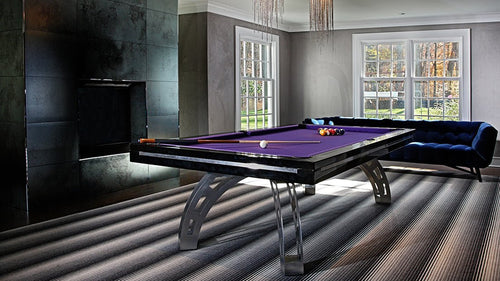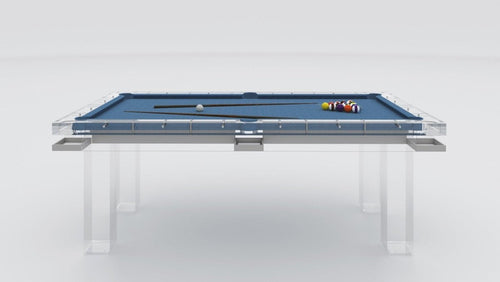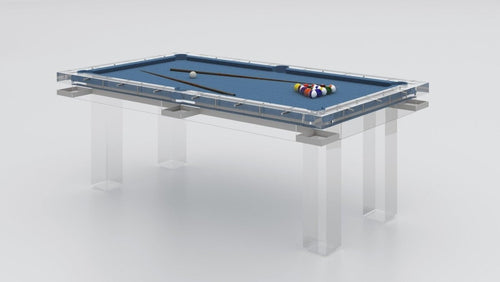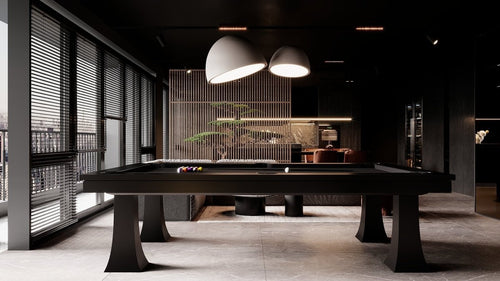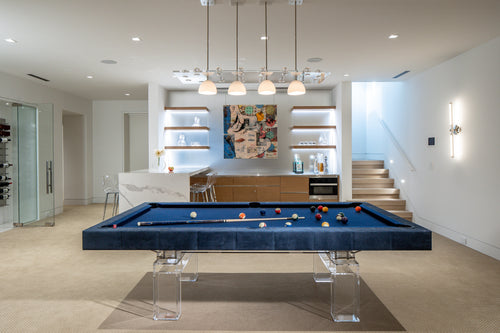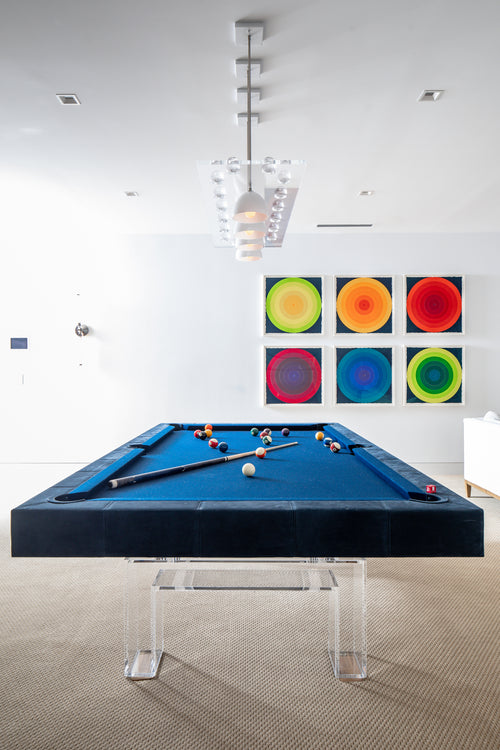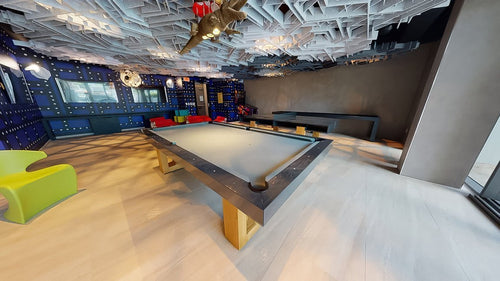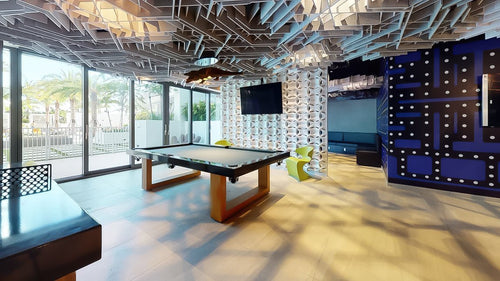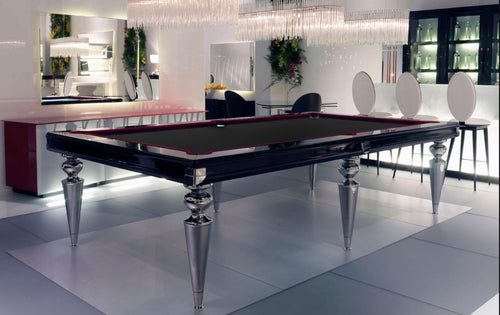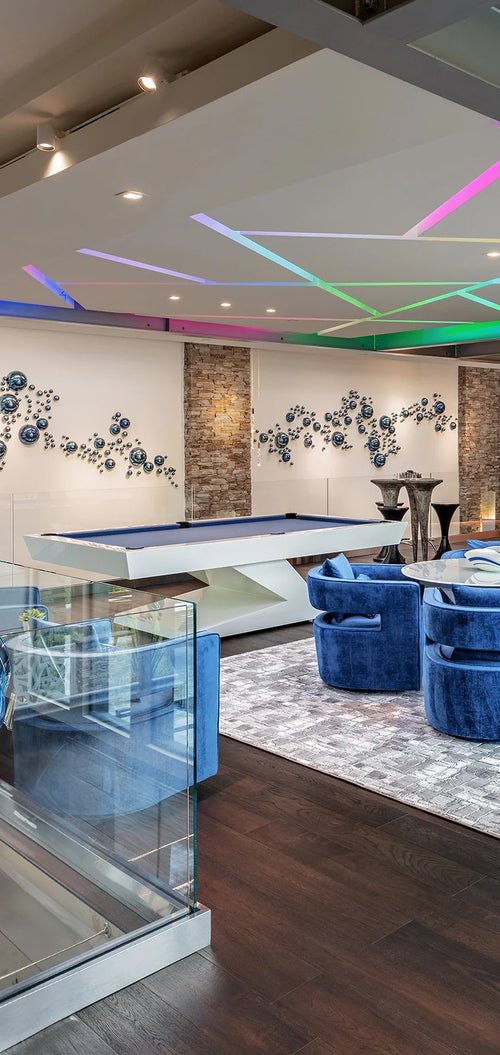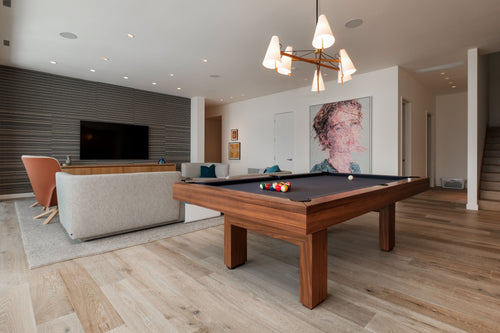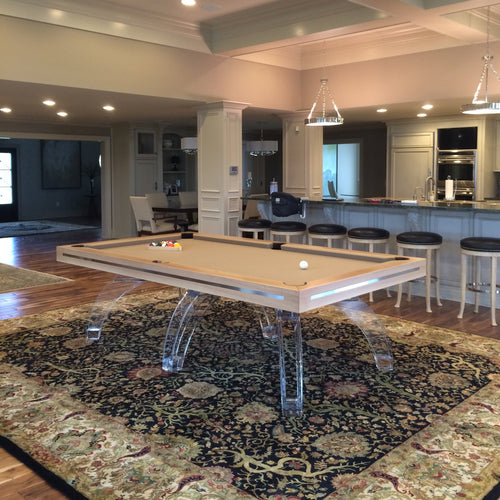


Enjoy our modern designs
Game Rules & Setup
Crud
A beginner guide to a free-for-all house version of Crud: the setup, moving-ball rallies, and exactly who loses a life.
Crud is a fast-moving game played by hand with a cue ball and one object ball, usually the eight ball. Each player starts with three lives. Take your turn before the object ball stops, use legal corner pockets to put opponents under pressure, and try to be the last player remaining.
Which rules are we using? This is a non-contact, free-for-all house adaptation of WPI's published Crud rules. We use one circular player order instead of two teams and leave out physical blocking and team privileges. Corner pockets are legal; the two side pockets are "poison" and cost the player who pockets the object ball a life. The ACPA team rules use different details, so agree on this house version before starting.
✦
Equipment
What You
Need to Play
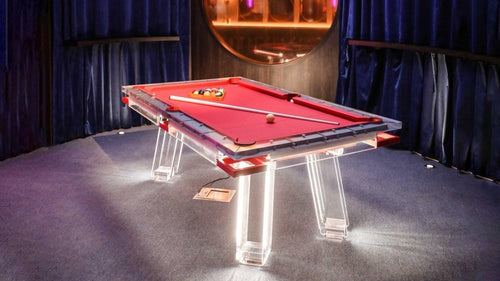
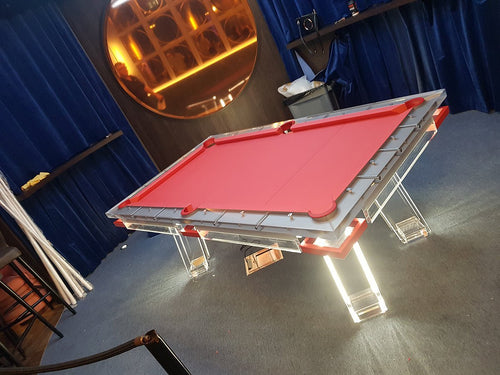
A Pool Table
Use a pool table with clear space around it. The four corner pockets are in play; the two side pockets are poison in this house version.
The Cue Ball
Your weapon. You hit the eight ball with it. No cue stick — the cue ball is thrown or rolled by hand.
The Eight Ball
The object ball. Keep it moving on your turn, but a legal corner-pocket shot can cost an opponent a life.
Friends
Start with three or more players and a written turn order. The game finishes with two players, then one winner.

Game in progress — players rotate around the table's short ends
Setup & Objective
The Goal &
Starting the Game
Each player starts with three lives. Lose all three and you're eliminated; the last player with a life wins. Write down a circular order, such as Alex, Blair, Casey, Dana, then back to Alex. Skip eliminated players without changing the order of those remaining. A scorekeeper or agreed referee records lives and settles close calls.
The Serve
-
Place the Eight Ball
The receiver places the eight ball on the table's centerline within a forearm's reach of the receiving short cushion, following the WPI setup. Use the same agreed spot for every serve; the diagram is schematic.
-
Serve from the Opposite End
The server stands at the opposite short end and rolls or bounces the cue ball onto the cloth to hit the eight ball. Release it before contact with the object ball. The server has three attempts; a cue ball passing the table's midpoint counts as an attempt.
-
Three Misses = Lost Life
If the server misses all three attempts, they lose a life and the rally ends. Reset using the restart sequence below. A successful serve passes the turn to the receiver; a legal corner-pocket ace costs that receiver a life even if they could not reach the cue ball.

Crud in action — short rail only, cue ball by hand
Crud is chaos with rules. The speed, unpredictability, and nonstop momentum make it unlike anything else you can do on a pool table.— On what makes Crud unique
Core Rules
The Rules
of Play
Once a legal serve contacts the eight ball, continuous play begins. The next active player in the order becomes the shooter. You may retrieve the cue ball from anywhere around the table, but must release each shot from a short end. Keep your feet off the table and leave room for the next player.
Keep the Motion. After a valid hit, the next player must hit the eight ball before all its movement stops, including any spin. Contact ends your turn and begins theirs. A legal corner pocket ends the rally and uses the pocket penalty below; keeping the ball out of every pocket is not the objective.
Misses and Recovery. If you miss, retrieve the cue ball and try again while the eight ball is moving. A pocketed cue ball may be retrieved without pausing play. If your shot sends either ball off the table, you lose a life and the rally stops; do not treat that as a free retrieval.
Penalties
How Lives
Are Lost
Foul 01
Dead Ball
The player whose turn it is loses a life if the eight ball stops all movement before they hit it. Check the short-shot exception before assigning this penalty.
− 1 LifeFoul 02
Short Shot
If your hit sends the eight ball less than six inches in total, including cushion travel, you lose a life. Exception: a double kiss, where the cue ball hits it twice, usually against a cushion. Agree the call before the next shot.
− 1 LifeFoul 03
Illegal Contact
The cue ball must touch the cloth before it hits the eight ball, and your hand must release it before that contact. Dropping it directly onto the object ball or pushing both together costs you a life.
− 1 LifeFoul 04
Side Shot
Shots may only be taken from the short ends of the table. Throwing from a long rail — the sides — is illegal and costs a life immediately.
− 1 LifeFoul 05
Sink Shot
A corner pocket ends the rally. The next player loses a life if they had a reasonable chance to make a legal shot; otherwise the player immediately before the pocketing shooter loses it. A side pocket costs the pocketing shooter a life. See the example below.
- 1 Life (see example)Foul 06
Foul Handling
Touching the eight ball with your body or clothing, playing out of turn, or sending either ball off the table costs the responsible player a life. In this non-contact version, do not block, shove or climb onto the table.
− 1 LifePocket Example
Who Loses
a Life?
Use the order Alex → Blair → Casey → Dana. Alex hits, then Blair hits, then Casey hits the eight ball into a corner pocket. Dana is the next shooter. If Dana held the cue ball or could reasonably have reached it and made a legal shot before the pocket, Dana loses a life.
If Casey's corner-pocket shot gave Dana no reasonable chance to intervene, Blair loses a life: Blair was the player immediately before Casey and left Casey that opportunity. This is the precise meaning of the previous-player penalty in this free-for-all adaptation. It is not whichever spectator last stood beside the table. Ask the agreed referee or scorekeeper to decide the opportunity question. A serve ace is the exception: the receiver loses the life.
If Casey pockets the eight ball in either side pocket, Casey loses a life, regardless of Dana's position. If the ball simply stops after a valid hit rather than falling into a pocket, the current shooter's dead-ball rule applies.
Restart & Finish
Start the
Next Rally
After any life is called, stop play, retrieve both balls, record the penalty, and remove anyone who has no lives left. Re-spot the eight ball. The next active player after the person who lost the life chooses to serve to, or receive from, the following active player. Those two take the opening turns, and the circular order then continues from the receiver. Use this same sequence after a dead ball, foul, pocket or third missed serve.
With two players left, keep their remaining lives and alternate successful hits. After a penalty, the other player chooses whether to serve or receive. On a corner-pocket shot, that opponent is both the next player and the player before the pocketing shooter, so the opponent loses the life either way. A side pocket still costs the shooter. When one player loses their final life, the other wins.
// Quick Reference — The Full Rules
- → Three lives: Lose all three and you're eliminated from the game.
- → Serving: Three chances to make a valid serve. Miss all three and lose a life.
- → Keep it moving: Hit the eight ball while it's still moving or spinning, or lose a life.
- → Short ends only: All throws from the short rails. Long-side shots are illegal.
- → Six-inch rule: The eight ball must travel six inches, unless there is a double kiss.
- → Sink the 8: Corner pocket: next player if they had a chance, otherwise the player before the shooter. Side pocket: shooter loses.
// Conclusion
Crud rewards quick reactions and a clear turn order. Agree on the house rules, give each player room to move, and settle who loses the life before restarting. Then take the cue ball to a short end and see who can keep their three lives longest.
For more on Crud's origins, read our deep dive into Crud's Canadian roots.
Explore Our Luxury Pool Tables →