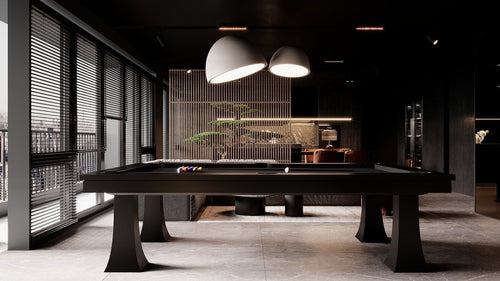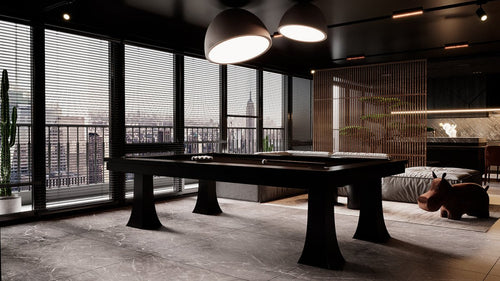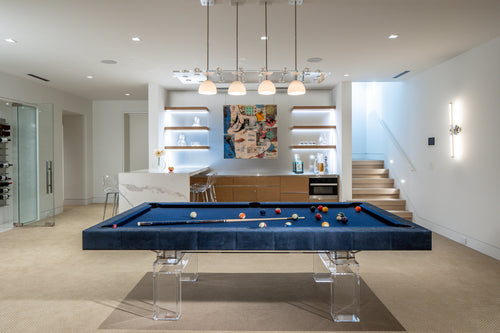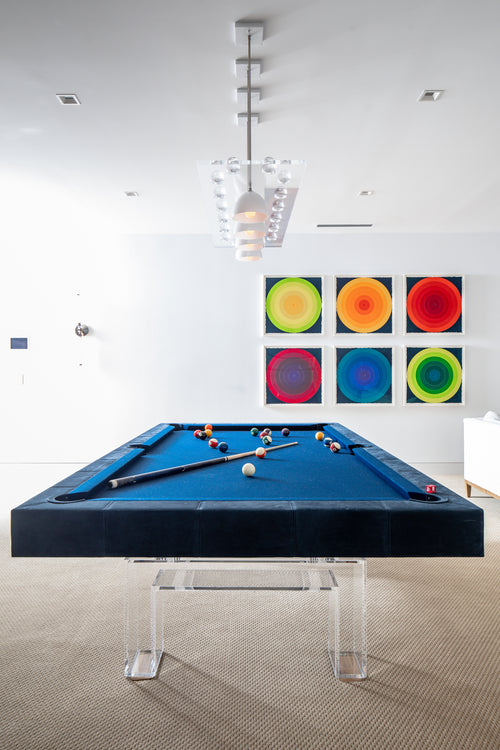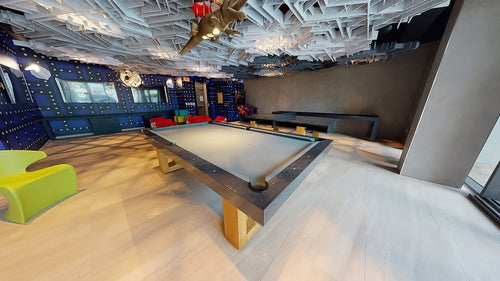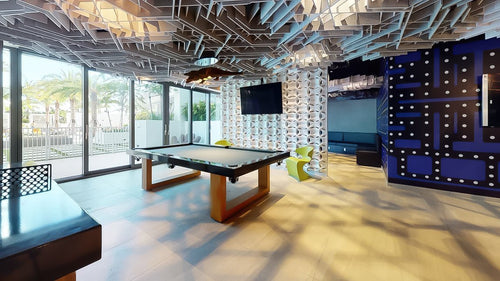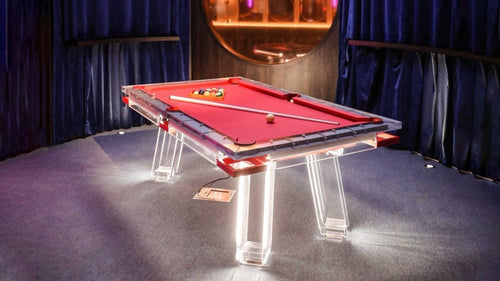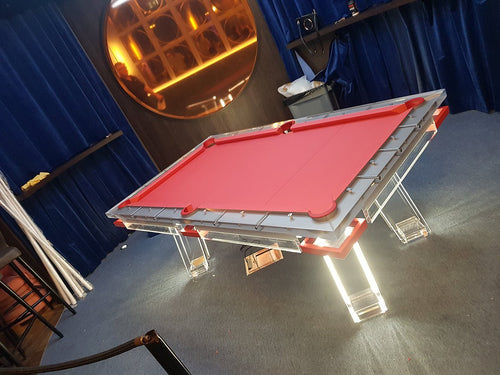


Enjoy our modern designs
Estimated Read Time: 2 mins
You have likely experienced this before: You lean over a pool table to take a difficult shot, you put your weight on the rail, and you feel the entire table shift slightly underneath you.
In a dive bar, that’s just part of the charm. But if you have invested in a luxury table for your home, that movement is unacceptable.
A quality billiard table should feel like a rock. It should be an immovable object. If your table wobbles, squeaks, or shifts, the problem usually isn't the floor or the feet. The problem is hidden inside the frame, in how the chassis is bolted together.
This is where the importance of "Metal-to-Metal" construction comes in.
Here is why this technical detail separates "disposable" furniture from heirloom-quality tables.
Table of Contents
The Problem with "Lag Bolts" (Wood Screws)
Most mass-produced pool tables are assembled like cheap flat-pack furniture. They use "lag bolts"—essentially giant screws with coarse threads that bite directly into the wood of the table frame.
On day one, this works fine. The wood holds the screw. But wood is organic. It expands in the summer humidity and contracts in the dry winter. Over time—and with the vibration of thousands of racks—the hole where that screw sits begins to widen.
If you ever have to take the table apart to replace the felt or move to a new house, that screw will never hold as tightly the second time. The threads strip. The wood crumbles. The result? A table that gets "loose" after just a few years.
The Solution: Metal-to-Metal Fastening
On our high-end tables, we don't rely on wood alone to hold the frame together. We use embedded metal inserts.
During the manufacturing process, a threaded steel or zinc insert is permanently anchored into the hardwood of the cabinet. When our installation team assembles your table, they aren't screwing steel against soft wood; they are bolting a high-strength machine screw directly into a metal receiver.
This creates what we call "Positive Locking."
Why This Matters for the Luxury Buyer
1. Torque and Rigidity
Because we are connecting metal to metal, we can apply significantly more torque (tightening force) to the bolts without fear of cracking the wood. This fuses the cabinet parts into a single, solid structure. You can sit on the rail, and it won't creak.
2. Moving and Reassembly
This is the biggest advantage. Because the threads are metal, you can disassemble and reassemble the table 100 times, and it will lock up just as tightly on the 100th time as it did on the first. If you plan on moving homes in the future, or passing this table down to your children, the structural integrity remains 100% intact. Lag-bolt tables often have to be glued or patched when moved; ours do not.
3. Vibration Dampening
When a ball hits the rail at high speed, that energy travels through the table. On a table with loose fasteners, that energy causes the frame to shudder, creating a hollow, rattling sound. With metal-to-metal locking, the frame is so rigid that it absorbs the impact silently. The sound is solid. The play is pure.
The Verdict
Don't buy a table that has an expiration date.
The exterior beauty of the stained hardwood is important, but it is the internal engineering that secures your investment. Metal-to-metal construction is the insurance policy that guarantees your table will remain solid, silent, and level for decades to come.