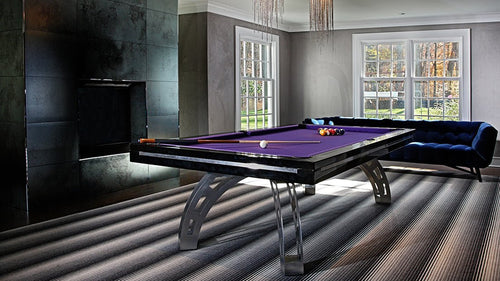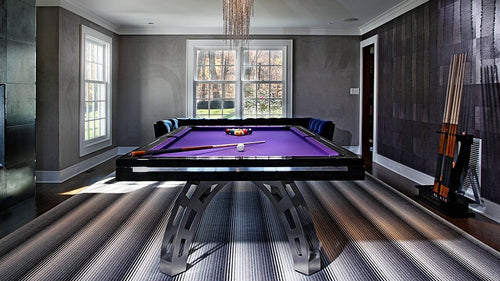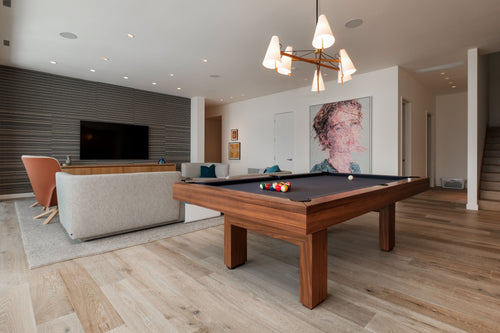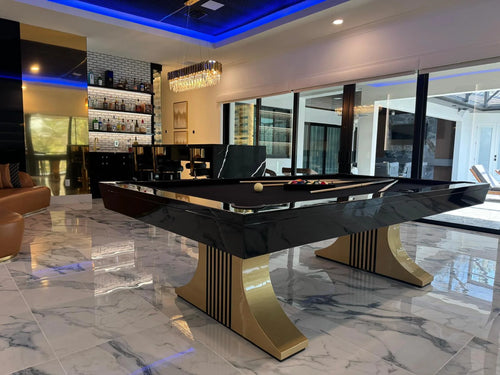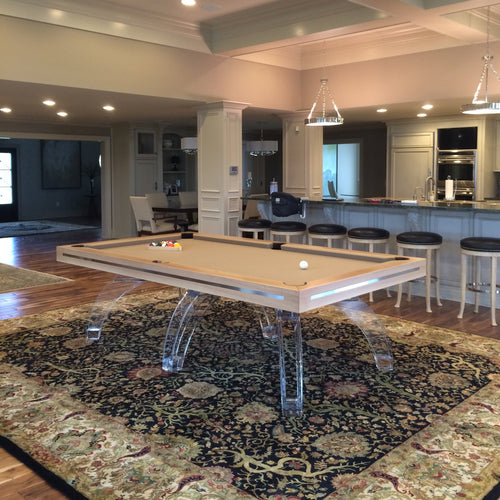


Enjoy our modern designs
What is The Kick Shot?

A kick shot in pool is a clever tactic used when a direct shot is blocked. Instead of aiming straight at the object ball, you drive the cue ball to one or more rails so that it “kicks” off the cushion and reaches its target. This technique not only salvages tough situations when you're snookered but also adds a strategic edge to your game. Mastering kick shots elevates your play by turning defensive obstacles into offensive opportunities.
Table of Contents
Historical Background

Cushion-assisted play has a long instructional history. Garno’s Modern Billiards (1908) illustrates cushion routes in the terminology of its period. Modern pool distinguishes a cue-ball-first cushion route, called a kick, from an object-ball bank.
Technical Breakdown

Understanding the Kick Shot
A kick sends the cue ball to a cushion before object-ball contact. Equal incident and reflected angles are a geometric starting model, not an exact prediction for every speed, spin and cushion.
Aiming with a System
For a one-cushion reference, mirror the desired target across an appropriate cushion reference line and sight toward that reflection from the actual cue-ball position. The reference depends on shot conditions. Alciatore’s mirror-system guide explains why the diamond line, cushion nose and rail-groove line are not interchangeable.
Cue Ball Spin
Running sidespin generally lengthens the rebound; reverse sidespin generally shortens it. The magnitude depends on contact conditions. Establish a no-sidespin reference before adding spin.
Speed Control
Repeat the layout at controlled speeds and record the rebound. Faster shots generally bank or kick shorter, but spin, cloth and post-cushion curvature can change the result; medium pace is not a guarantee of geometric reflection.
Common Mistakes
A frequent error is mis-hitting the rail, causing the cue ball to miss the object ball entirely and resulting in a foul. Other mistakes include failing to adjust for the object ball's position, not accounting for how the cloth's condition affects the shot, and overcomplicating the aim by adding unnecessary spin. Tunnel vision can also be a pitfall; focusing solely on making contact may leave you unprepared for where the balls end up afterward.
Execution Tips
Define the cue-ball starting point and the contact you want on the object ball, then trace a possible cushion route. For a pot, the target is a ghost-ball centre, not simply the object-ball centre. Test the chosen reference with a controlled stroke.
Strategic Applications
Escaping Safeties
Kick shots are invaluable when you’re in a safety bind. When an opponent has effectively “hooked” your direct path, a kick shot might be your only option to legally hit an object ball. A controlled kick can produce legal contact and a useful safety leave, provided the other legal-shot requirements are also met.
Offensive Kicks
In some cases, the kick shot isn’t just a defensive tool—it’s an offensive weapon. For instance, if a ball is near a pocket but direct access is blocked, a kick can be used to pocket the ball while simultaneously disrupting the table layout. Advanced players often incorporate kick shots into combination plays that break clusters or continue a scoring run.
Multi-Rail Strategies
In games like one-pocket or 9-ball, multi-rail kicks are employed both for positioning and for achieving difficult shots. Whether it's a two-rail or three-rail kick, these shots require precise calculation and can change the course of a match when executed correctly.
Avoiding Fouls
For ordinary WPA 8-ball and 9-ball, contact alone does not ensure a legal kick. When no ball is pocketed, a ball must reach a rail after object-ball contact; hitting a cushion beforehand is insufficient.
Conclusion
Learning kick shots is a game-changer. Initially, they may seem like guesswork, but with practice, you’ll start to see the natural angles and develop an instinct for the right amount of spin and speed. Whether you're escaping a safety or launching an offensive surprise, a well-practiced kick shot not only makes you a more versatile player but can also shift the momentum of a match.
Embrace the challenge, keep practicing, and soon you'll be turning difficult positions into opportunities that leave your opponents guessing.
Sources
References checked October 19, 2026: Alciatore: rebound effects; Alciatore: mirror aiming reference; WPA rules: no rail after contact; Garno, 1908: cushion-route illustrations.