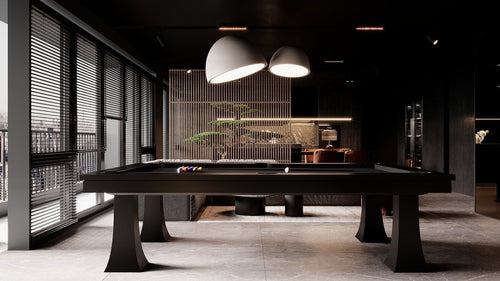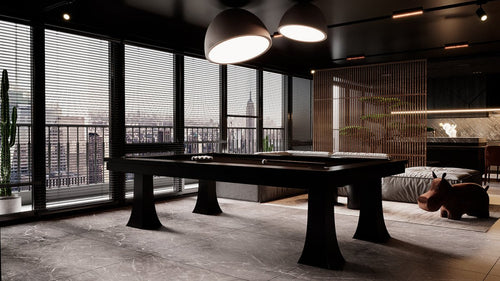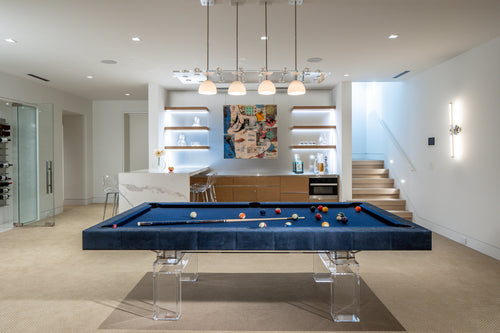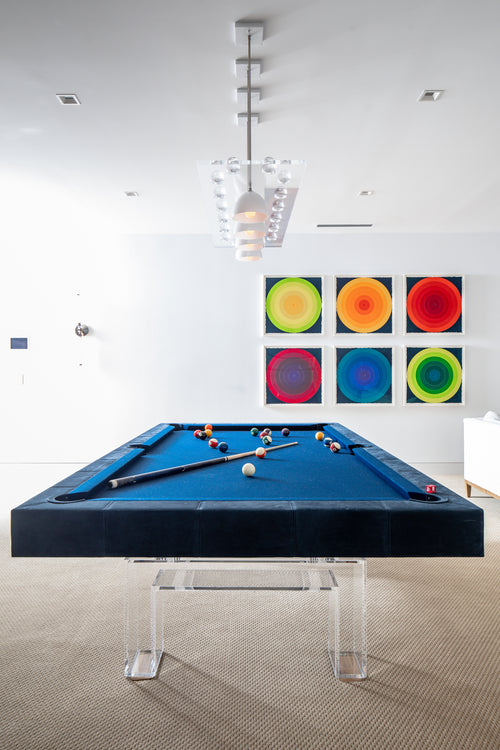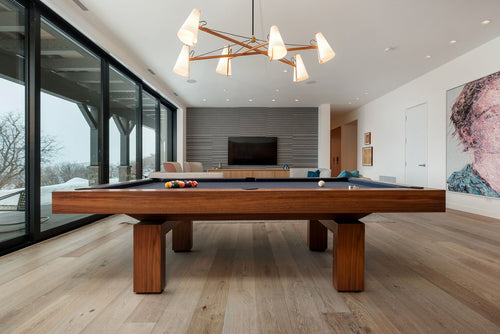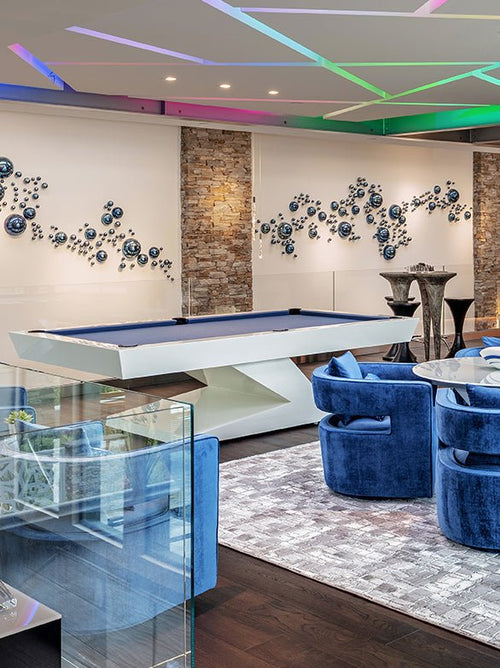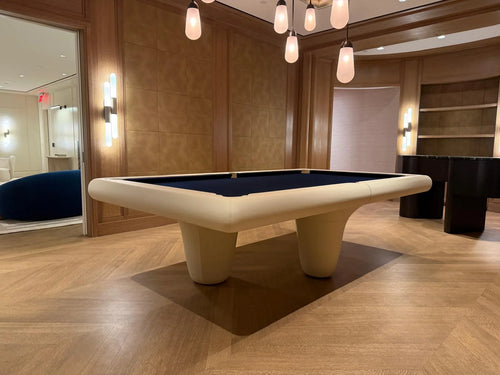


Enjoy our modern designs
Estimated Read Time: 3 mins
When you run your hand along the rail of a pool table, what should you feel?
If you are in a crowded college bar, you expect to feel a thick, glossy, plastic-like shell. But if you are in a private residence standing over a custom heirloom piece, you expect to feel wood.
The difference lies in the finish. While the stain provides the color, the topcoat provides the protection and the tactile experience. In the world of custom billiards, two contenders dominate: the industrial strength of Polyurethane and the artisanal tradition of Hand-Rubbed Oil.
Here is how to decide which finish belongs on your table.
Table of Contents
1. Polyurethane: The "Armor" Approach
Polyurethane is the industry standard for 95% of pool tables sold today. It is a synthetic resin that dries to form a hard, plastic-like shell over the wood.
The Application: It is typically sprayed on in a booth. It sits on top of the wood fibers rather than soaking into them.
The Pros:
- The Shield: It is incredibly tough. It seals the wood completely, making it impervious to water rings, beer spills, and humidity changes.
- Consistency: It creates a uniform sheen (from satin to high-gloss) that looks brand new for a long time.
The Cons:
- The "Plastic" Feel: Because it encapsulates the wood, you lose the texture of the grain. You are touching plastic, not timber.
- The Scratch Problem: This is the dealbreaker for many enthusiasts. If you scratch a poly finish (common with cue sticks and watches), the scratch turns white and hazy. You cannot spot-fix it. To repair a deep scratch in poly, you often have to strip and refinish the entire rail.
Best For: Commercial pool halls, bars, or homes with young children where durability beats aesthetics.
2. Hand-Rubbed Oil: The "Living" Finish
This is the choice of master craftsmen and high-end furniture makers. It is not a shell; it is a treatment.
The Application: As the name implies, it is applied by hand, rubbed deep into the pores of the wood, wiped off, and repeated over days or weeks. Common oils include Tung Oil or Boiled Linseed Oil mixtures.
The Pros:
- The Tactile Experience: There is no barrier between you and the wood. The finish feels warm, organic, and silky. It enhances the "chatoyance" (the 3D shimmering effect) of figured woods like Tiger Maple or Curly Walnut.
- The "Magic" of Repair: This is its superpower. If you scratch an oil-finished rail, you don't need to call a professional. You simply take a rag with a little oil, rub it over the scratch, and the wood absorbs it. The scratch virtually disappears.
- Patina: Over time, instead of getting hazy or yellowing like poly, an oil finish deepens and grows richer.
The Cons:
- Maintenance: It requires care. You cannot leave a sweating glass of ice water on an oil finish for hours, or it may leave a ring. It requires a "coaster culture."
- Cost & Time: It takes significantly longer to apply, which increases the cost of the table.
The Comparison: What Matters to You?
1. Visual Depth
- Poly: Sits on top. Can look like the wood is "under glass."
- Oil: Soaks in. Makes the grain "pop" and look three-dimensional.
2. Durability vs. Repairability
- Poly: Harder to damage, but nearly impossible to fix when damage occurs.
- Oil: Easier to damage (water spots), but effortless to fix.
3. The "Lean" Test
Pool is a game of leaning. You spend hours resting your forearms on the rails.
- Poly: Can feel cold and sticky if your arms are sweating.
- Oil: Breathes. It feels consistent and smooth against the skin, never sticky.
The Verdict
If you are buying a table for a rental property or a high-traffic game room where drinks will be spilled daily, Polyurethane is the pragmatic choice. It is armor.
But if you are commissioning a custom piece for a private sanctuary—a table intended to be passed down to the next generation—Hand-Rubbed Oil is the superior choice. It respects the wood. It acknowledges that a pool table is not just a piece of sports equipment, but a piece of fine furniture that should age gracefully along with the home.