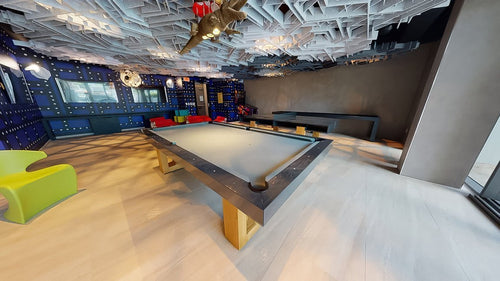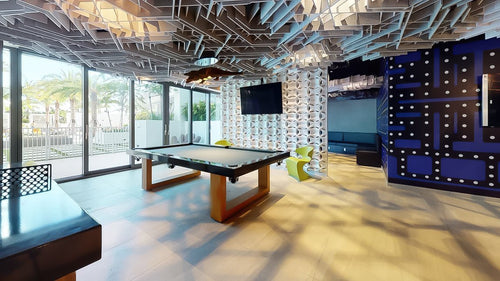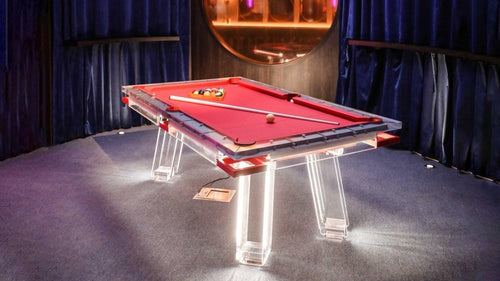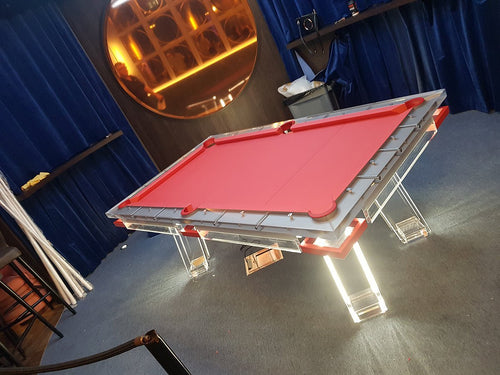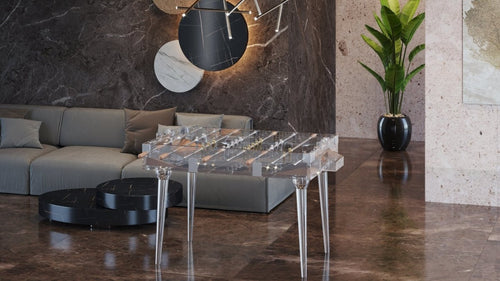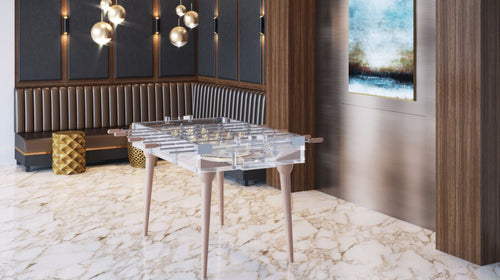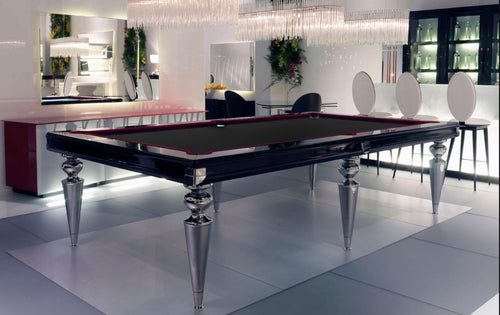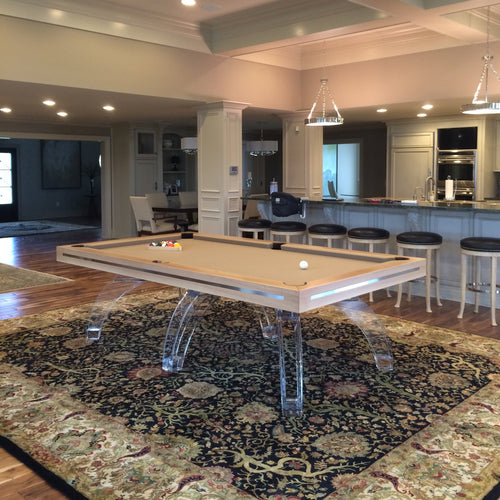

Enjoy our modern designs
Reviewed October 19, 2026
A convertible pool-dining table can bring two activities into one Sydney apartment. Whether it saves useful space depends on the complete layout: cueing room, dining chairs, circulation and somewhere safe to store the top. Start with a measured plan and the exact table specification, then decide whether the conversion suits the way you live.
The space question is specific to your apartment
An apartment's total floor area does not tell you whether its dining zone can accommodate pool. Measure the usable room, including columns, fixed cabinetry, door openings and the furniture that will remain during a game. Draw separate arrangements for dining and play so the same clear area is not counted twice.
Compare a convertible table with the furniture it would actually replace. Removing a separate dining table might free useful floor area, but it does not automatically create a resale gain or make a room suitable for full-length cues. Evaluate the benefit in your own plan rather than assigning a fixed dollar value to every square metre.
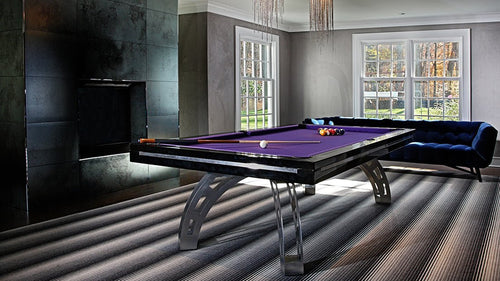
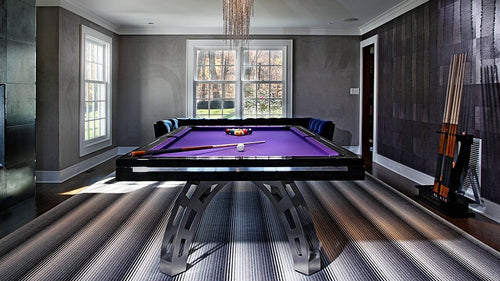
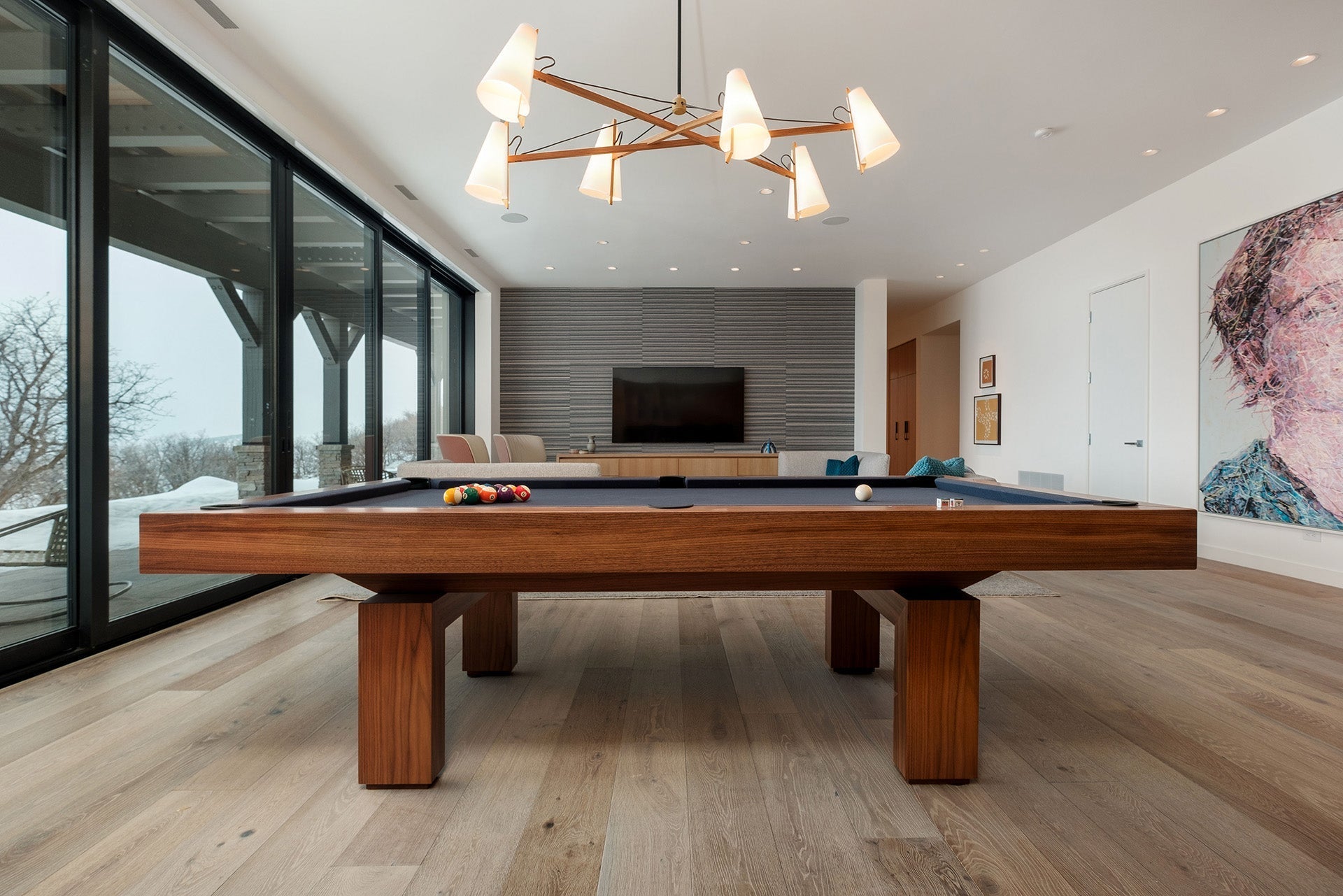
Meet the Arock Walnut Convertible Table

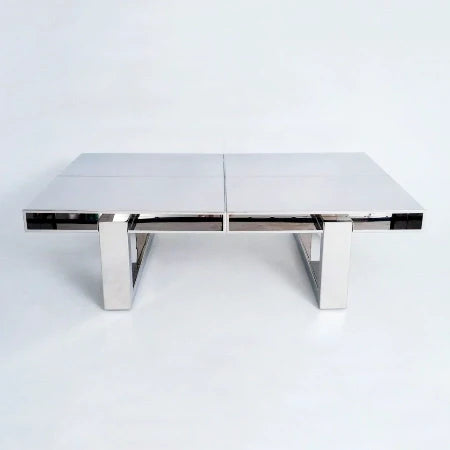
The current Arock Walnut product listing offers optional glass or hardwood dining tops. Its specifications distinguish walnut-stained timber from a solid-walnut upgrade and list three-piece, 1.2-inch Brazilian slate. Confirm the exact wood construction, finish and slate specification in your order.
The listing describes cloth and finish choices, including premium upgrades. Ask for a written quotation showing the selected options and their prices. Do not assume that every finish change, cloth upgrade or bespoke detail is included in the base price.
| Confirm before ordering | What to request |
|---|---|
| Table and top | Outside dimensions, playing dimensions, dining height, under-rail knee clearance and top construction. |
| Conversion | Panel dimensions and weights, the required number of handlers, fitting method and approved storage arrangement. |
| Materials | Wood species and construction, finish system, slate, cloth and the precise choices included in the quote. |
| Delivery | Complete installed weight, component sizes and weights, access requirements, installation scope and timing. |
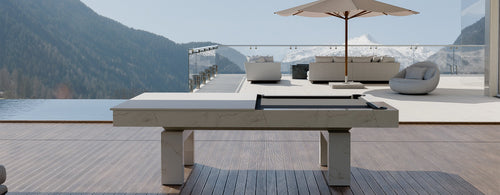
Ask to see the conversion demonstrated with the actual top design. A short demonstration should answer where the panels go during play, how their edges are protected and how they are returned to the table. Do not lean glass or heavy timber panels behind a sofa unless the supplier has specified a stable, suitable storage system there.
Check cueing space before dining capacity
Brunswick's room-size guide gives a 13-by-16-foot room for its seven-foot reference table with a 38-by-76-inch playing area and a 58-inch cue. That is approximately 3.96 by 4.88 metres. A 3.4-by-3.6-metre room does not meet that reference.
This is a planning comparison, not an Arock-specific approval. Obtain the selected model's drawing and check cue length, the player's stroke and every fixed obstruction. A shorter cue can help with a restricted shot, but it changes the playing experience. Try the proposed cue and position before committing to a layout that relies on it.
| Mode | Check on the plan |
|---|---|
| Pool | Playing area, cueing positions, obstacles and the place for chairs and top panels while playing. |
| Dining | Actual chair widths, arm and knee clearance, pull-back space and a usable route around seated guests. |
| Conversion | A clear handling route and the supplier-approved storage position for every top panel. |
Measure to the face of built-ins and other obstructions rather than relying only on wall-to-wall dimensions. Keep door and balcony access usable in both modes. Table length alone does not establish seating capacity; test the chair and base arrangement together.
Build a material moodboard from actual samples

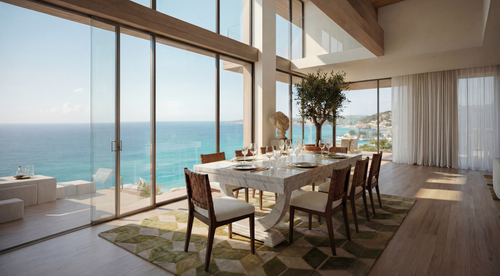
As a design starting point, compare a warm walnut finish with the apartment's flooring and joinery. A paler wood treatment can suit a coastal palette, while a dark gloss finish can create a sharper contrast. These are visual choices; confirm the exact finish name, substrate, sheen and cleaning requirements for the table being ordered.
View samples beside the existing finishes in daylight and under the room's evening lighting. A sample is more useful than assuming that two products both called walnut or grey ash will match. Record the approved sample with the quotation.
Plan the apartment installation
Give the delivery team the building address, floor, lift details, loading access and any stairs or tight turns. Ask the building manager about booking procedures and access conditions before fixing an installation date. A previous installation elsewhere cannot establish the route or timing for your apartment.
Confirm the installed weight and support locations, and have structural suitability assessed if it is uncertain. Ask the installer about floor protection and any pads before buying them. A protective pad is not automatically a structural or acoustic solution, and it should not be presented as a guarantee of silence for neighbours below.
Care for the selected materials
- Dining panels and wood: use the table maker's instructions for the exact finish. Do not apply oil to finished rails on a generic monthly schedule.
- Cloth: identify the brand and model before choosing a method. For example, Simonis permits careful low-suction vacuuming with a non-rotating attachment. That is a named manufacturer's method, not permission to vacuum every cloth or steam-clean the bed.
- Playing surface: report a repeatable roll problem or changed support condition to the installer. Agree any follow-up visit for the actual table and floor; do not assume every installation needs an annual relevel or a fixed 45-minute service.
- Spills and damage: keep food and drinks on the fitted dining surface, and protect the playing area during conversion. Brunswick's care guidance warns against household cleaners on cloth and recommends experienced professionals for moving a billiard table.
Store cues as their maker directs, away from damaging conditions, and keep the table's care documents accessible. A wall rack provides orderly storage; it does not guarantee that a cue cannot warp in an unsuitable environment.
Request a specification and finish samples

The Arock listing advertises complimentary material samples. Ask which samples are available for your selected configuration, whether any shipping costs apply, and the expected delivery time to Sydney. Confirm separately whether a room drawing or rendering is included in your consultation.
Send a measured room plan, photographs and the preferred table configuration. Request the current price, lead time, delivery scope and sample arrangements in writing. That gives you a clear basis for choosing the table and planning its arrival.