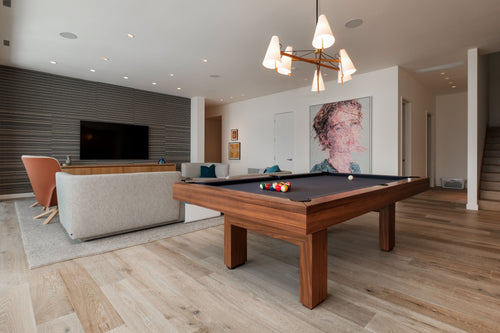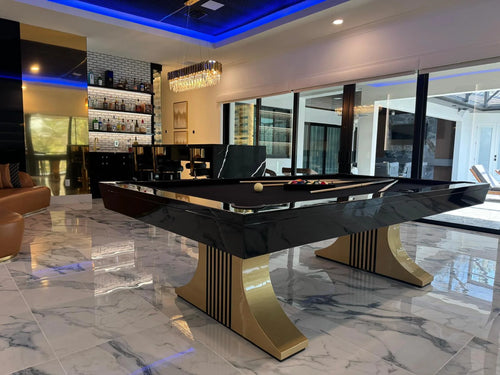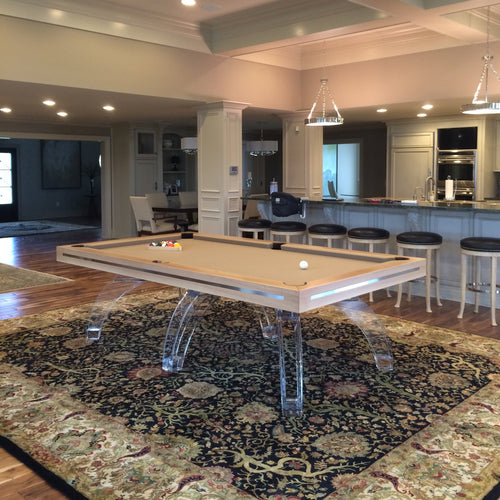


Enjoy our modern designs
Estimated Read Time: 6 mins | Updated:
In pool-table service, recovering or re-clothing normally means replacing the cloth. The useful decision is whether to keep and maintain the existing cloth, install new cloth, or service the table before re-clothing. Inspect condition and play rather than using these terms as different treatments.
Table of Contents
- Assess the Age of the Cloth
- Look for Surface Damage
- Check Play Quality
- Evaluate Color & Aesthetic
- Inspect the Slate & Cushions
- Usage Context
- Decision Tree (Summary)
- Conclusion
1. Assess the Age of the Cloth
- Recent cloth: Inspect for damage and installation issues; age alone does not establish that it is usable.
- Established cloth: Assess wear, cleanliness and play under the manufacturer’s care guidance.
- Older cloth: There is no universal replacement birthday. Condition and the standard of play required matter.
2. Look for Surface Damage
- White burn marks: Simonis explains that these can be normal friction marks rather than removable dirt. Do not abrade them in an attempt to clean them off.
- Tears or Cuts: Have the cloth inspected; replacement may be required for satisfactory play.
- Surface Wear: Use only the maker’s approved cleaning method; persistent damage warrants professional assessment.
3. Check Play Quality
- Changed Speed: Check cleanliness, humidity, cloth condition and installation before deciding that new cloth is the only remedy.
- Drifting Balls: Have the balls, level, bed and cloth checked. An off-line roll does not by itself identify worn cloth.
4. Evaluate Color & Aesthetic
- Slight Fading: Keep the cloth if its appearance and play remain acceptable.
- Unacceptable Appearance: New cloth may be the appropriate choice; recovering is that replacement process.
5. Inspect the Slate & Cushions
- Slate & Cushions Fine: Cloth-only replacement is efficient.
- Bed or Cushion Issues: Plan the underlying service with the installer before fitting new cloth.
6. Usage Context
- Private Home: Inspect according to use and condition rather than a fixed 4–7-year promise.
- Commercial / Club: Busy tables may need more frequent attention; set a service schedule based on actual wear.
- Events: Follow the organizer’s equipment requirements and the cloth maker’s care instructions.
7. Decision Tree (Summary)
- Minor cosmetic marks with acceptable play → maintain and monitor.
- Tears, substantial wear or installation problems → professional assessment and, where needed, new cloth.
- Persistent drift or rebound problems → diagnose the table and balls before ordering cloth.
Conclusion
Keep serviceable cloth clean using its maker’s instructions. If replacement is needed, arrange recovering with a qualified installer and resolve any bed or cushion problems as part of the plan.
Sources
References checked October 19, 2026: Simonis: cloth care and friction burn marks; Brunswick: table care and professional cloth service.