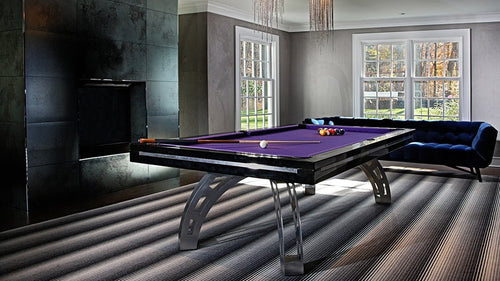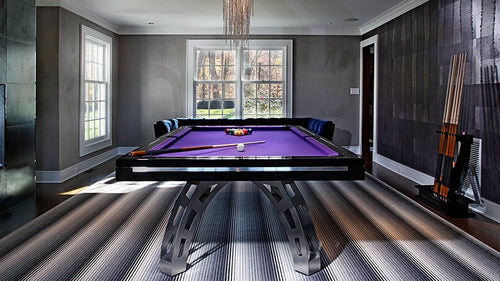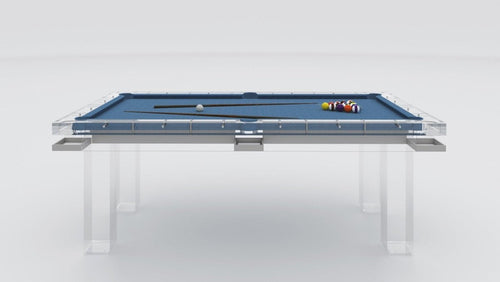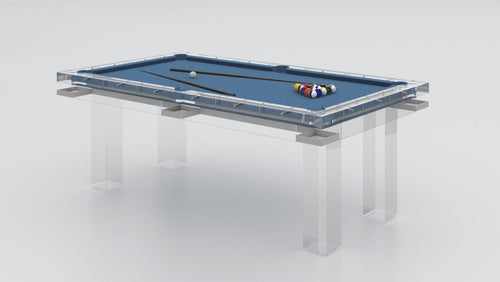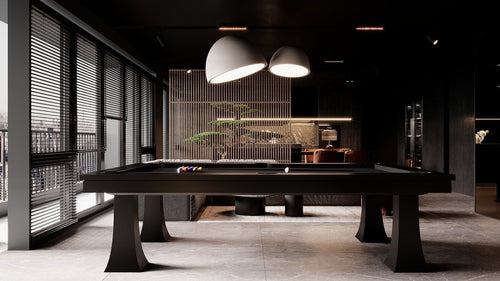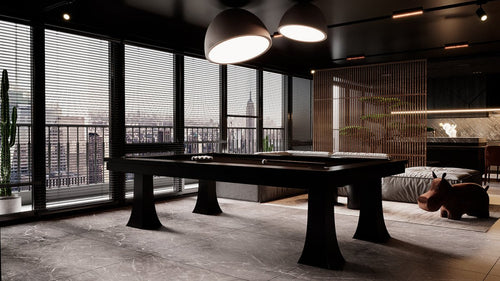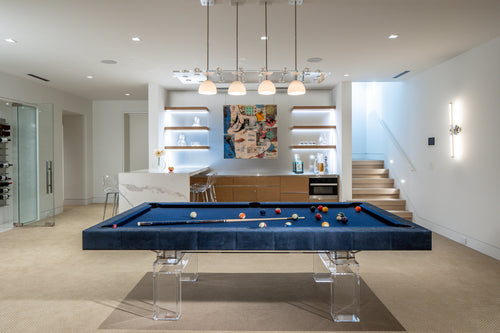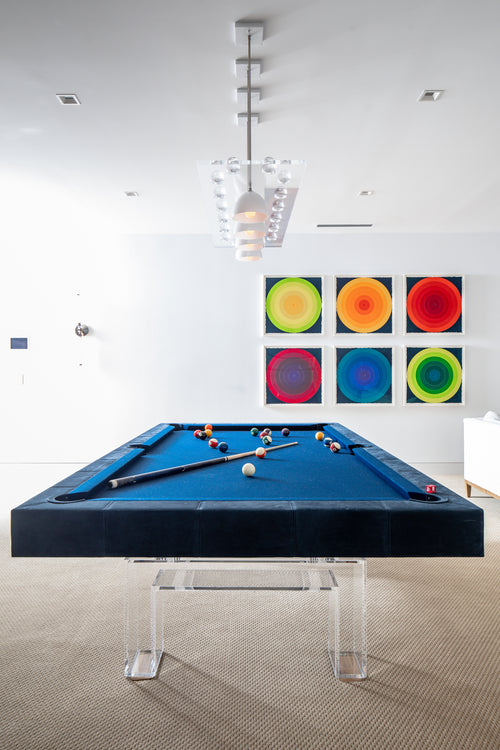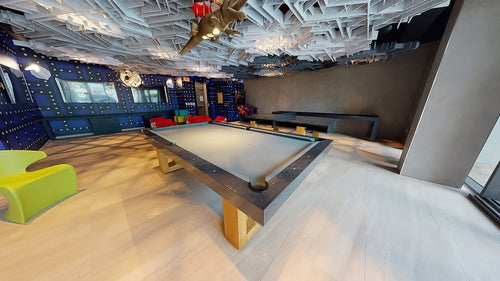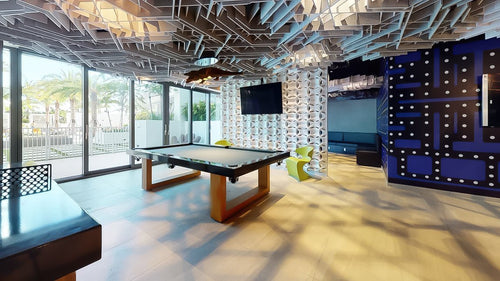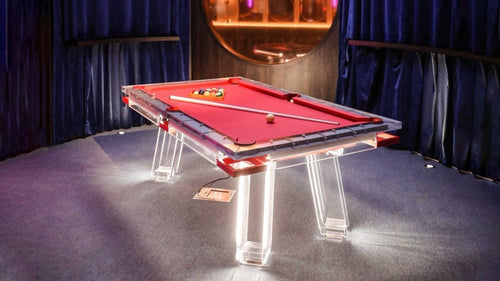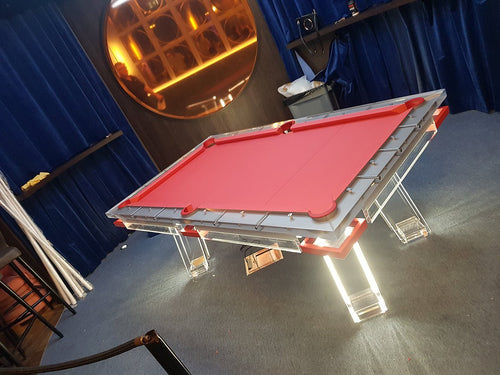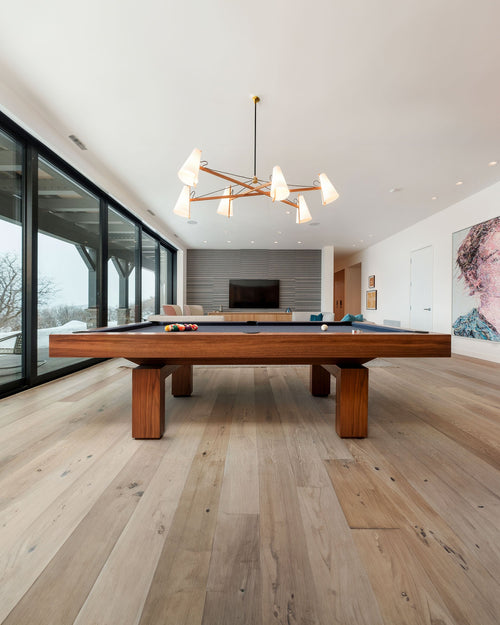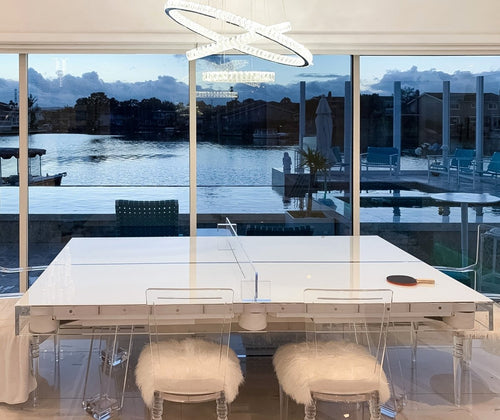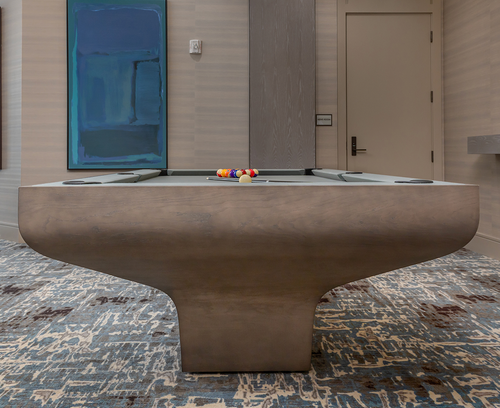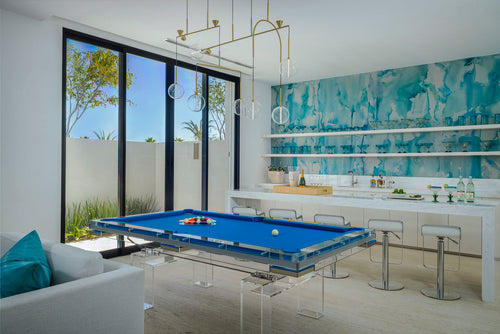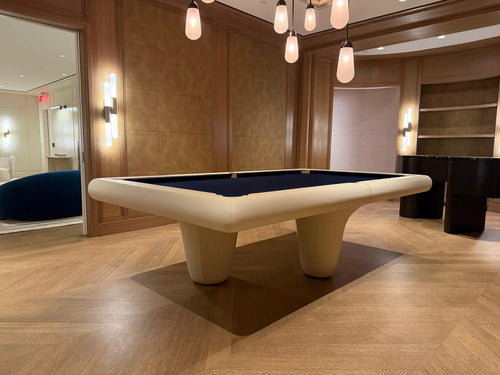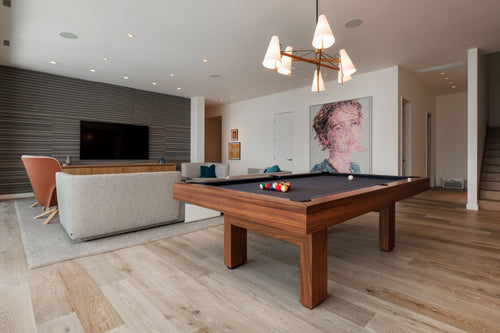


Enjoy our modern designs
Wood finish is one of those details that separates a normal pool table from a truly custom one. Most people think about wood in terms of species first: walnut, oak, maple, ash, mahogany, or exotic veneers. That matters, obviously. But the way the wood is finished can change the table just as much as the wood itself.
One of the most important choices is whether the table should have an open-pore or closed-pore finish. This decision affects texture, sheen, maintenance, visual depth, formality, and how the table fits into the room.
Neither finish is automatically better. They simply serve different design goals. The right choice depends on whether the pool table should feel natural, tactile, and relaxed, or smooth, refined, and highly finished.
Table of Contents
1. What “Pore” Means in Wood Finishing
Wood has grain, and many wood species also have visible pores. These pores are tiny openings in the wood surface. Some woods have large, obvious pores. Others have much finer, tighter grain.
Open-grain woods like oak, ash, walnut, mahogany, and elm often show more pore texture. Closed-grain woods like maple, cherry, birch, and beech tend to look smoother naturally. In furniture finishing, the question becomes simple: do you leave that texture visible and tactile, or do you fill it until the surface becomes smooth?
An open-pore finish allows the natural grain texture to remain visible and often slightly touchable. A closed-pore finish fills the pores so the surface becomes smoother, more even, and more polished.
2. Open-Pore Wood Finishes
An open-pore finish keeps the wood grain visually and physically present. You can often see the natural texture of the wood, and in some cases, feel it lightly under the finish.
This type of finish usually feels more organic, architectural, and material-driven. It celebrates the fact that the table is made of wood instead of trying to make the surface perfectly flat. Open-pore finishes are especially popular in modern luxury interiors because they feel authentic without being rustic.
- Best For: Organic modern interiors, minimalist homes, warm contemporary spaces, mountain homes, coastal homes, modern rustic rooms, and neutral interiors.
- Pairs With: Matte or satin finishes, charcoal felt, taupe felt, olive felt, navy felt, natural leather pockets, blackened steel, bronze, brushed brass, stone flooring, neutral rugs, and warm architectural lighting.
- Watch Out For: Open-pore does not mean unfinished. The table should still feel sealed, refined, and durable, especially around the rails where people lean and play.
The Pro Insight: Open-pore luxury is about texture, honesty, and material presence. The grain does the work, so the table usually needs less decoration.
3. Closed-Pore Wood Finishes
A closed-pore finish fills the natural pores of the wood to create a smoother surface. The result can range from satin-smooth to high-gloss and mirror-like depending on the finish system.
Closed-pore finishes feel more refined, polished, and formal. They are often associated with fine furniture, luxury millwork, lacquered interiors, and more traditional or glamorous design. If open-pore is about natural texture, closed-pore is about refinement.
- Best For: Traditional interiors, formal lounges, Art Deco-inspired spaces, luxury entertainment rooms, penthouses, glamorous interiors, club-style game rooms, and tables meant to feel like fine furniture.
- Pairs With: Satin or gloss finishes, black felt, navy felt, burgundy felt, charcoal felt, traditional green felt, leather pockets, shield pockets, brass, polished nickel, chrome, bronze, marble, glass, lacquered cabinetry, and formal lighting.
- Watch Out For: Closed-pore finishes can look cheap if the sheen is too high and the execution is poor. Glossy closed-pore finishes show waves, scratches, fingerprints, dust, and uneven reflections quickly.
4. Open-Pore vs. Closed-Pore: The Main Differences
| Open-Pore | Closed-Pore |
|---|---|
| Feels natural, tactile, and material-driven. | Feels smooth, polished, and controlled. |
| Works well in organic modern, coastal, mountain, and warm contemporary rooms. | Works well in formal, traditional, glamorous, and club-style rooms. |
| Gives depth without visual flash. | Can create more drama, especially with satin or gloss sheen. |
| Shows texture and may hold dust slightly more. | Wipes smoothly but shows surface quality more clearly. |
5. How Wood Species Affects the Choice
Not every wood behaves the same way. Oak is one of the best woods for open-pore finishing because its grain is strong and architectural. Open-pore white oak can feel modern, warm, and textural, while closed-pore oak feels more tailored and polished.
Walnut works well both ways. Open-pore walnut feels warm, natural, and slightly relaxed. Closed-pore walnut feels richer, smoother, and more formal. Mahogany often benefits from closed-pore finishing, especially in classic or formal pool tables, while ash usually looks excellent with open-pore texture because of its strong graphic grain.
Maple is naturally tighter-grained, so the distinction is less dramatic. Exotic veneers vary widely, which means the finish should be chosen around the design goal rather than the name of the wood alone.
6. Sheen, Felt, and Pocket Pairings
Open-pore and closed-pore are about texture. Matte, satin, and gloss are about sheen. These choices interact, but they are not the same thing.
| Combination | Best Use |
|---|---|
| Open-Pore Matte | Natural, soft, architectural, and understated. |
| Open-Pore Satin | Tactile but richer. One of the strongest choices for luxury residential interiors. |
| Closed-Pore Satin | Smooth, elegant, refined, and versatile. |
| Closed-Pore Gloss | High drama. Best for formal, glamorous, or statement interiors. |
Open-pore finishes pair naturally with taupe, olive, charcoal, and navy felt. They usually work best with simple leather or hidden pockets. Closed-pore finishes pair well with navy, burgundy, black, charcoal, and traditional green felt. They can support shield pockets, modern pockets, hidden pockets, and more formal pocket detailing.
7. Maintenance Differences
Open-pore finishes may show dust in the grain more easily, depending on the wood and finish texture. They can also hold chalk dust slightly more than a closed-pore surface. However, open-pore matte or satin finishes often hide tiny scratches and surface imperfections better than glossy closed-pore finishes.
Closed-pore finishes are smoother and easier to wipe down. Dust and chalk do not settle into texture as much. But if the finish is satin or gloss, scratches, fingerprints, and swirl marks may be more visible. High-gloss closed-pore finishes are the most demanding.
The Bottom Line
Open-pore wood feels natural, tactile, architectural, and quietly luxurious. It is usually the better choice for modern homes, organic interiors, relaxed luxury spaces, and rooms where material texture matters.
Closed-pore wood feels smoother, more formal, more polished, and more furniture-like. It is the better choice for traditional rooms, formal lounges, glamorous interiors, and tables meant to feel like refined showpieces.
For most contemporary custom pool tables, open-pore or open-pore satin is the more interesting choice. It feels less generic, shows the wood better, and works beautifully with modern interiors. But for a formal walnut or mahogany table, closed-pore satin can be unbeatable.