

Enjoy our modern designs
A pool room should not only work during a game. In most homes, the table spends more time unused than used. That means the room has to look good when nobody is holding a cue, when the balls are put away, and when the table is simply sitting in the space as furniture.
This is where many pool rooms fail. They are designed around activity, not atmosphere. They function well enough during play, but when the game stops, the room feels empty, cluttered, or strangely unfinished.
A better pool room has presence even at rest. It feels composed, useful, and visually complete whether a game is happening or not.
Table of Contents
1. Design for the Room’s Resting State
The resting state of a pool room is how it looks when nobody is playing. This is the state the room will be in most often. It is also the state guests usually see first.
If the room only makes sense during a game, it will feel weak the rest of the time. Cues may be scattered. Balls may sit on the table. Chairs may face awkwardly. The lighting may feel too focused on the playing surface. The room may have no reason to exist except for the game itself.
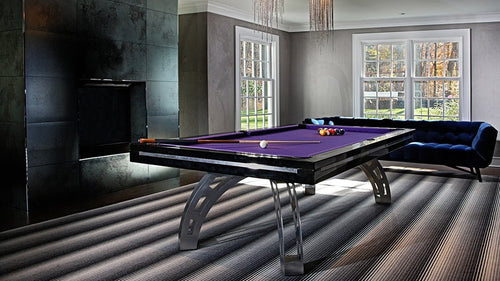
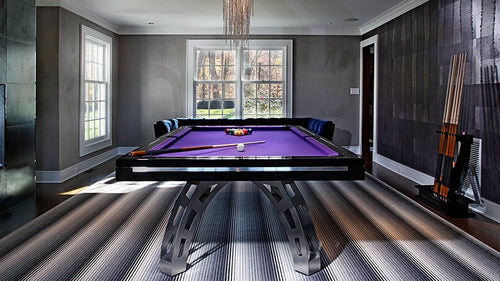
In a luxury home, that is not enough. The room should still have a mood. It should feel like a lounge, gallery, library, entertaining space, or architectural feature even when the pool table is not being used.
The best pool rooms are designed for both motion and stillness.
Designer insight: A pool table is active equipment during play, but furniture the rest of the time. The room has to respect both identities.
2. Choose a Table That Works as Furniture
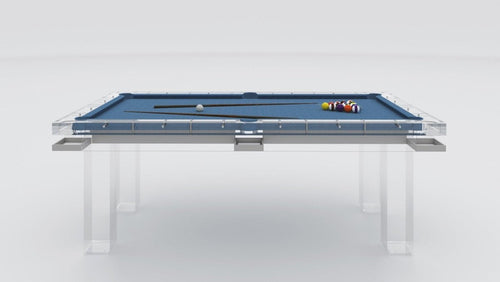
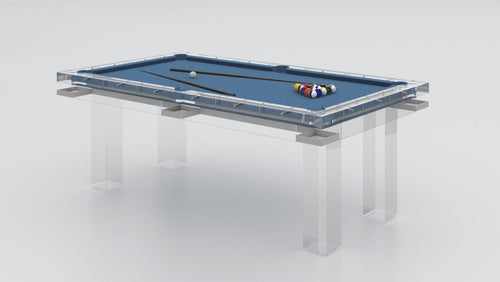
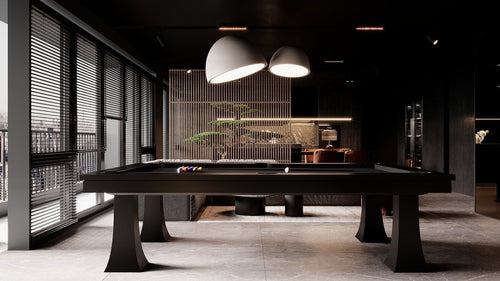
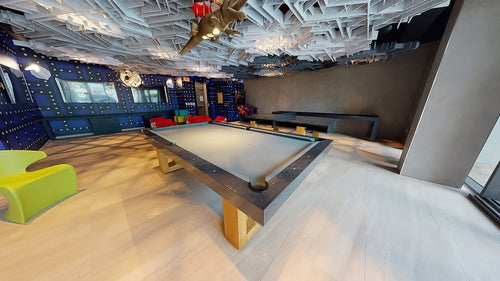
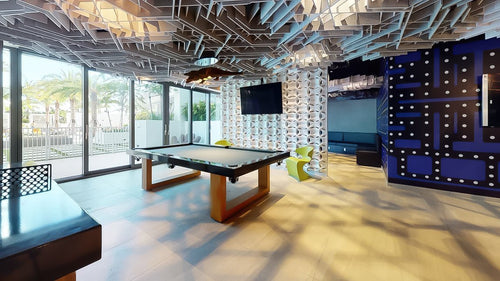
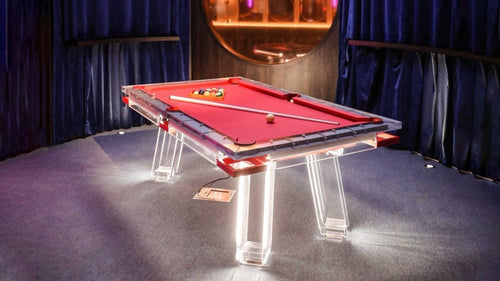
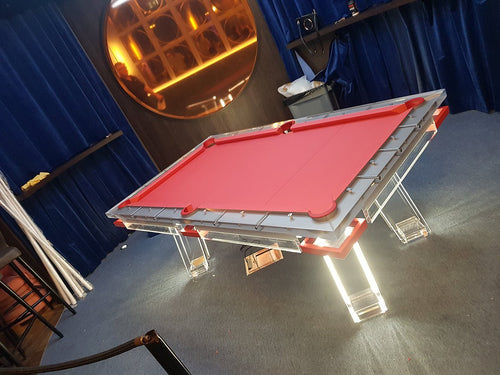
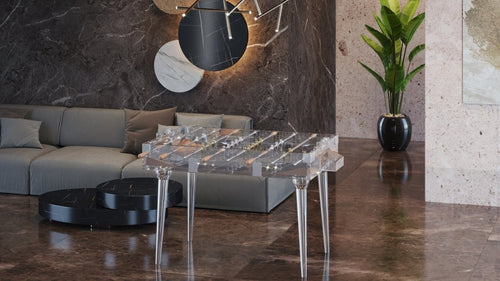
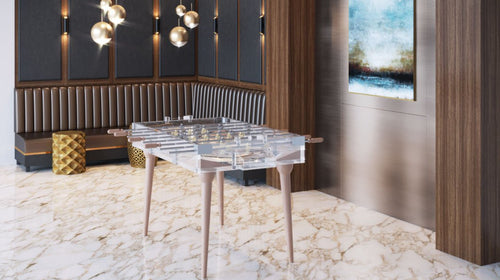
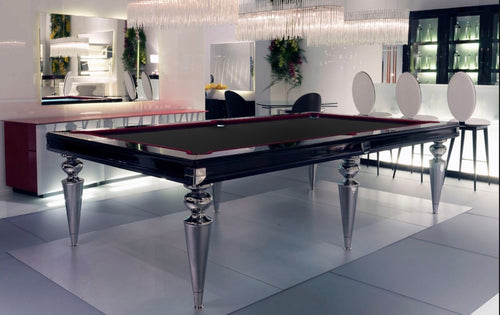
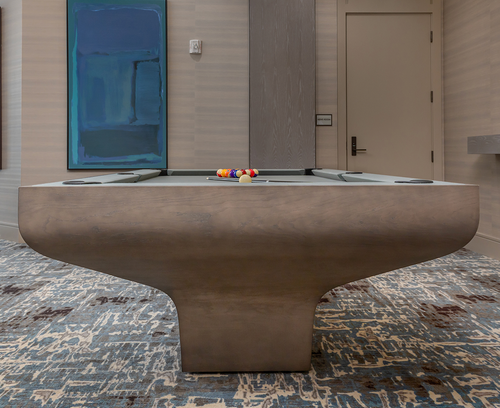
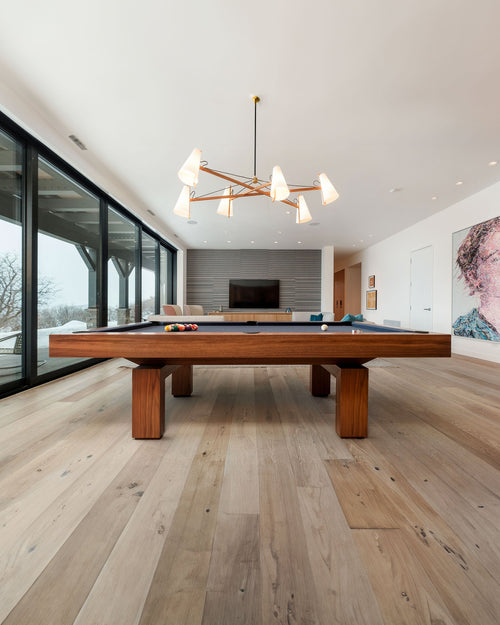
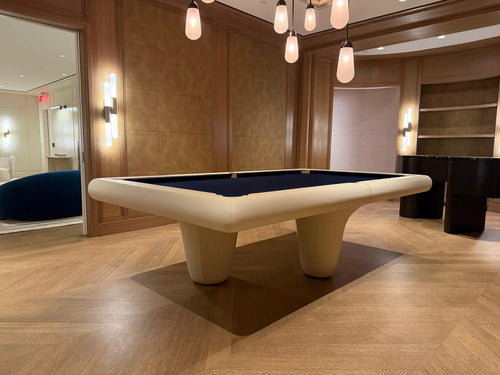
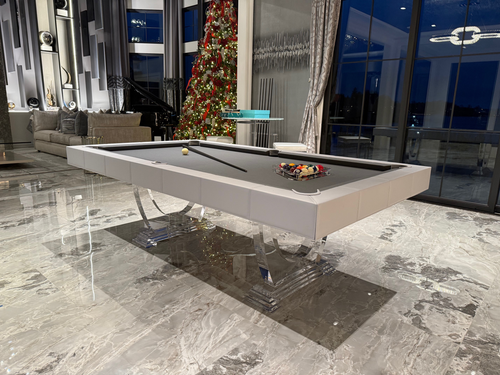
The pool table is the center of the room, so it must look good even when unused. This is where furniture quality matters. A table with beautiful proportions, refined materials, and a strong base can carry the room visually. A generic table often cannot.
When nobody is playing, the table becomes a large horizontal surface in the middle of the room. Its frame, cloth, pockets, and finish are fully exposed. If those details feel cheap or disconnected, the room will feel unresolved.
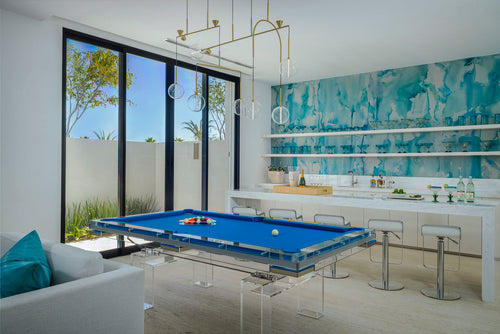
A good table should relate to the interior. It may pick up the wood tone of the millwork, the metal finish of the lighting, the mood of the architecture, or the color language of the space. It does not need to disappear, but it should belong.
The test is simple: if the table were never used, would it still improve the room? In a luxury home, the answer should be yes.
3. Use Lighting to Create Atmosphere
Pool table lighting is often treated as a purely functional decision. The table needs to be lit for play, so a fixture is placed above it. But if that is the only lighting strategy, the room can feel flat when the game is not happening.
A pool room needs layers. The table should have proper illumination, but the room also needs ambient light, accent light, wall light, and possibly architectural lighting. These layers allow the space to shift from game mode to lounge mode.
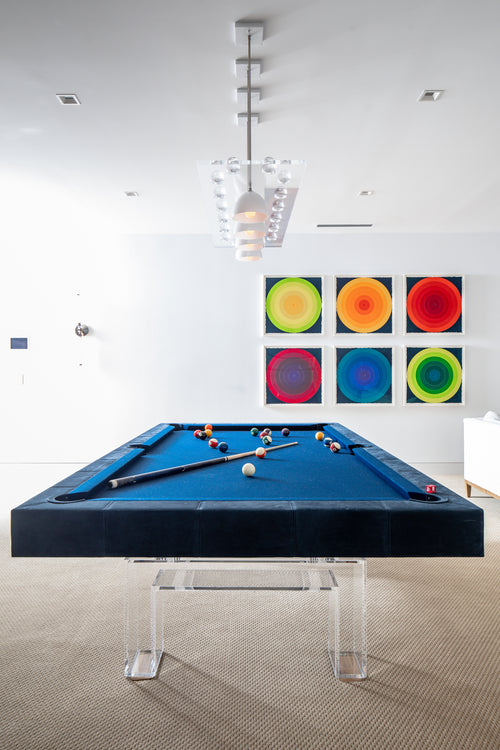
The fixture above the table should also feel appropriate to the home. A standard billiard lamp may work in some rooms, but in many luxury interiors it feels too literal. A linear pendant, sculptural fixture, or integrated lighting detail can make the room feel more designed.
When the table is not in use, lighting is what keeps the room alive.
4. Hide the Equipment When the Game Ends
A pool room rarely looks good at rest if the equipment is left out. Cues leaning against the wall, chalk on the rail, balls scattered on the felt, and brushes sitting nearby make the room feel unfinished.
Storage should be planned early. Cues, balls, racks, chalk, brushes, gloves, covers, and maintenance tools all need a proper place. In a luxury home, that place should usually be concealed, built-in, or designed to match the room.
This is especially important in open-concept spaces or rooms visible from other areas of the home. If the pool room can be seen from the living room, hallway, bar, or stairwell, the resting state matters even more.
The goal is not to hide the fact that the room is used. The goal is to make the transition from active game space to finished interior feel effortless.
Pro tip: If there is no dedicated place for chalk, cues, balls, and brushes, they will eventually become the room’s decoration.
5. Make the Room Useful Without a Game
A pool room that only works for pool is less valuable than one that supports conversation, drinks, watching, reading, or casual gathering. This does not mean crowding the room with furniture. It means giving the space a secondary purpose.
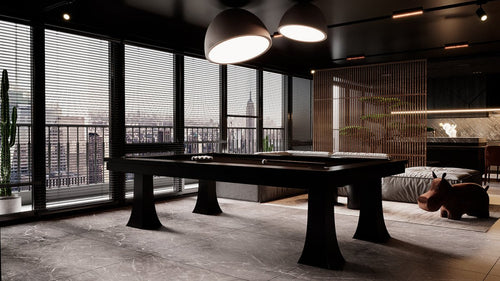
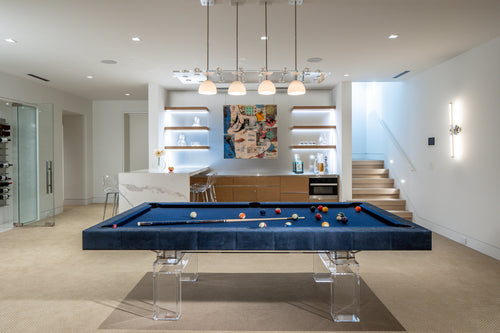
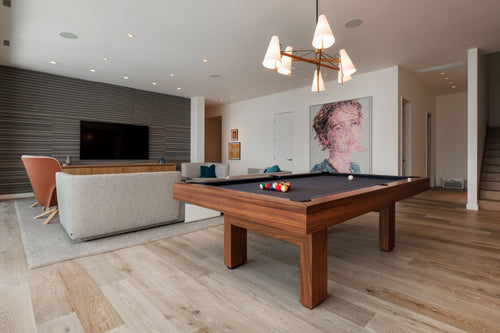
Seating is the easiest way to do this. A pair of lounge chairs, a tailored sofa, a small drinks table, a built-in bench, or a nearby bar can make the room feel useful even when nobody is playing. The seating should be close enough to feel social but far enough not to interfere with the playing area.
The best pool rooms feel comfortable before the game starts and after it ends. People should be able to enter the room, sit down, talk, and enjoy the space without needing the pool table to be active.
That is what turns a game room into a real entertaining room.
6. Connect the Pool Room to the Rest of the Home
A pool room looks better at rest when it feels connected to the rest of the home. If the room uses completely different materials, lighting, furniture style, and color language, it can feel like a separate entertainment zone rather than a natural extension of the property.
Material continuity helps. The room may repeat a wood tone, stone detail, metal finish, wall treatment, or architectural rhythm from elsewhere in the home. These connections make the pool table feel integrated instead of isolated.
This does not mean the room has to be quiet or neutral. A pool room can be moody, dramatic, colorful, or highly social. But it should still feel like it belongs to the same house.
When the materials are connected, the pool table does not look like an object dropped into a bonus room. It looks like part of the home’s design story.
7. Do Not Leave the Table Looking Abandoned
An unused pool table can look beautiful or abandoned depending on how the room is handled. A clean table with thoughtful lighting, clear surroundings, and controlled accessories feels sculptural. A table with balls left in random positions, chalk dust, clutter, and poor lighting feels neglected.
The table should have a default state. Maybe the balls are stored away. Maybe a cover is used. Maybe the table has a dining top. Maybe the room is reset after play so the table returns to being a visual anchor.
This matters because luxury is often experienced through small signals of care. A pool room that always looks halfway used will never feel fully designed.
The best rooms have a ritual of reset. When the game ends, the room returns to form.
The Bottom Line
A pool room should still look good when nobody is playing because that is how the room will exist most of the time. The table, lighting, storage, seating, materials, and accessories all need to support the room’s resting state.
The goal is not to make the room less functional. It is to make the function disappear gracefully when it is not needed.
A great pool room is not only enjoyable during a game. It is a room people want to walk into even before anyone breaks.