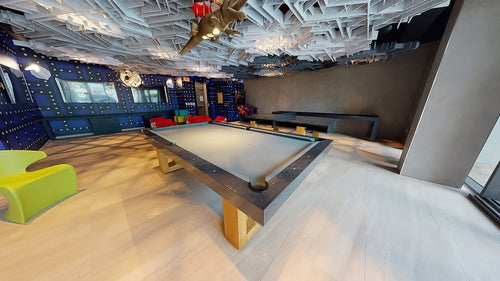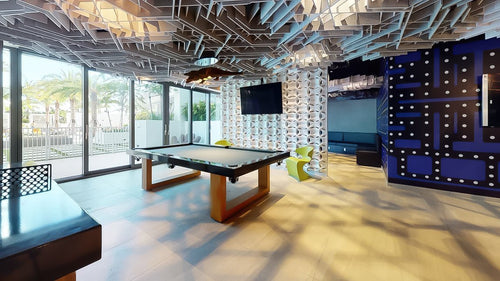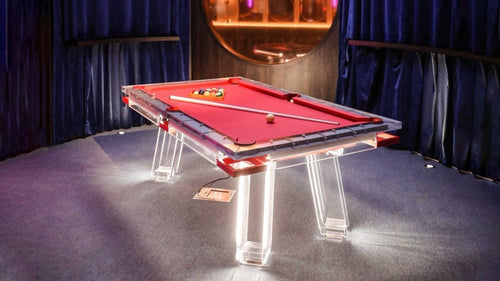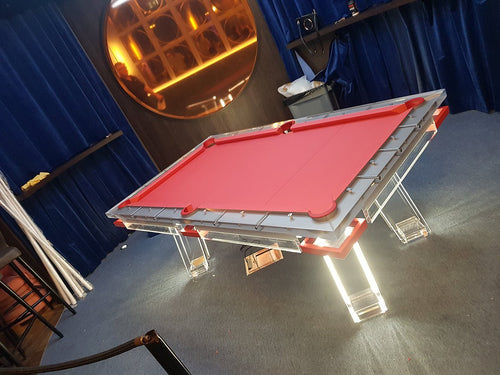


Enjoy our modern designs
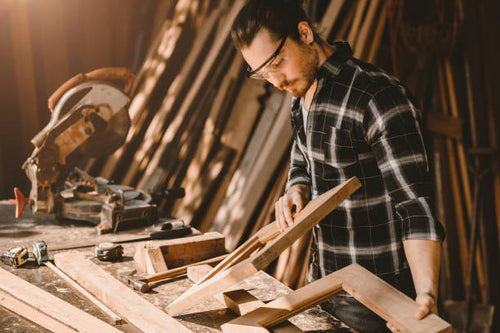
Crafting premium furniture and pool tables involves meticulous wood processing, combining traditional methods with innovative techniques to achieve structural integrity, durability, and aesthetic elegance.
Table of Contents
Wood Selection
The foundation of high-quality woodcraft starts with careful wood selection. High-end furniture and pool tables typically use hardwoods such as oak, maple, walnut, mahogany, and cherry. Each type of wood offers distinct advantages:
- Oak: Renowned for its durability and resistance to wear, making it ideal for high-use items like pool tables due to its dense grain structure.
- Walnut: Highly valued for its luxurious appearance, rich color, and inherent strength, often the wood of choice for sophisticated furniture pieces.
- Cherry: Popular for its natural beauty, cherry wood develops a distinctive dark patina over time, enhancing its aesthetic appeal.
Once selected, the wood undergoes kiln-drying to achieve a moisture content of 6-8%, which is crucial to prevent warping and cracking.
Wood Drying & Stabilization
Proper drying methods are critical for stability. Kiln-drying exposes wood to controlled temperatures ranging from 130-160°F (54-71°C). This process ensures dimensional stability, strength, and uniform shrinkage, significantly reducing the risk of fungal growth and insect infestation. Manufacturers embracing sustainability often opt for oven or solar drying techniques.
Additionally, wax boiling provides extra protection for thicker boards used in pool tables, minimizing cracking during subsequent stages.
Cutting & Milling
The dried wood then moves into precise cutting and milling:
- Rough Cutting: Using bandsaws or circular saws, wood is initially cut into approximate dimensions.
- Milling: Planing and jointing produce smooth, flat surfaces. For detailed parts like rails and legs, CNC routers and precision jigs ensure exact shapes.
- Precision Cuts: Pool table frames and rails are often milled from single solid pieces of wood to ensure consistency and minimize warping.
- Edge Joinery: Furniture craftsmanship employs methods like butt joints, miter joints, and dovetail joints, each offering unique strengths and aesthetic qualities.
Shaping & Bending
Innovative shaping techniques include:
- Steam Bending: Steam-softened wood is shaped over molds, essential for crafting curved components like rails and furniture arms.
- CNC Shaping: CNC machinery precisely replicates complex and customized designs, ensuring consistency across pieces.
Joinery Techniques
High-end woodworking demands robust and aesthetically pleasing joinery:
- Mortise and Tenon: Known for structural strength, these traditional joints are reinforced with pegs or dowels, especially crucial in pool table frames.
- Dovetail Joints: Appreciated for their strength and precision, these joints are common in drawer construction and high-end pool tables.
- Biscuit Joinery: Offering discreet yet strong bonds, biscuit joinery is favored in fine furniture assembly.
- Dowels and Pocket Holes: Simplified methods used in less critical areas, providing practical and cost-effective solutions.
Sanding & Surface Preparation
Perfect surfaces are achieved through meticulous sanding:
- Grain Filling: Particularly important for high-gloss finishes, grain filling is essential with porous woods like walnut or cherry.
- Sanding: Initial sanding (60-80 grit) removes imperfections; subsequent finer sanding (220-320 grit) ensures a flawlessly smooth surface ready for finishing.
Finishing (Sealing, Staining, and Varnishing)
The finishing stage enhances both protection and beauty:
- Staining: Oil-based or water-based stains amplify or modify the wood’s natural color.
- Sealing: Premium sealers prevent moisture absorption, increasing durability.
-
Top Coats:
- Lacquer: Provides a luxurious high-gloss finish favored in upscale furniture.
- Polyurethane: Offers exceptional durability, ideal for pool tables.
- Oil Finishes: Tung and linseed oils deliver a natural matte finish, emphasizing the wood grain.
- UV Protection: Incorporated into finishes to prevent fading from exposure to sunlight.
Quality Control and Inspection
Rigorous inspection standards maintain high quality:
- Moisture Checks: Ensuring correct moisture levels to prevent future warping.
- Integrity Testing: Structural assessments and laser-level checks, especially critical for the precision alignment of pool table slate beds.
Emerging Wood Processing Techniques
Innovation continues to drive advancements:
- 3D Printing with Wood Filament: Wood-plastic composites allow for detailed, custom parts, especially beneficial for intricate pool table elements.
- ThermoWood® Process: Heat-treated wood offers superior stability, enhanced color, increased durability, and greater resistance to environmental factors.
- Laser Cutting: Enables precise engraving of custom patterns, ideal for artisanal detailing.
- Carbon Fiber Integration: Merging wood with carbon fiber reinforcements significantly enhances durability without substantial weight increases, advantageous for high-end pool table frames.
Pool Table-Specific Considerations
Specialized techniques ensure exceptional quality for pool tables:
- Slate Bed Processing: Precision-cut slate (typically 3/4-inch thick) is meticulously ground and polished for optimal gameplay performance.
- Rail Construction: High-end rails feature luxurious wood or burl inlays, structurally reinforced with steel or aluminum for stability and consistent gameplay.
The thoroughness of these processes guarantees premium quality, durability, and aesthetic sophistication, positioning high-end furniture and pool tables as exceptional investments.