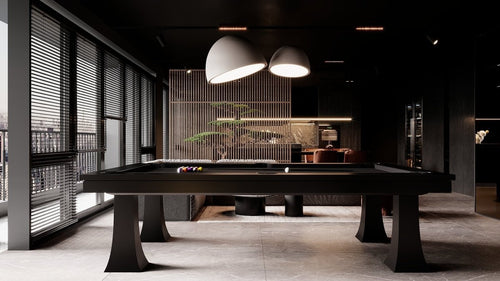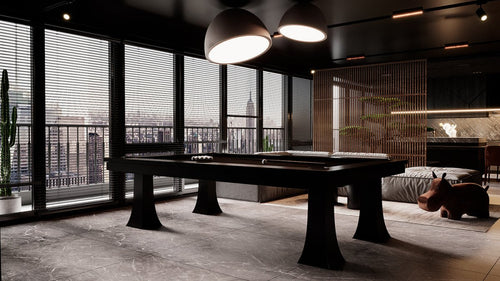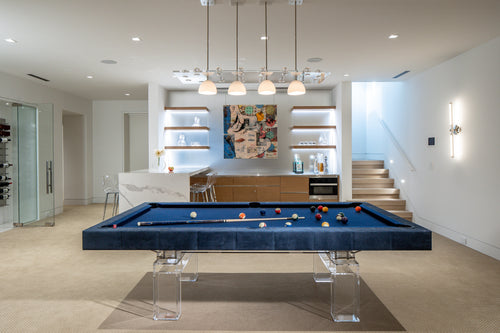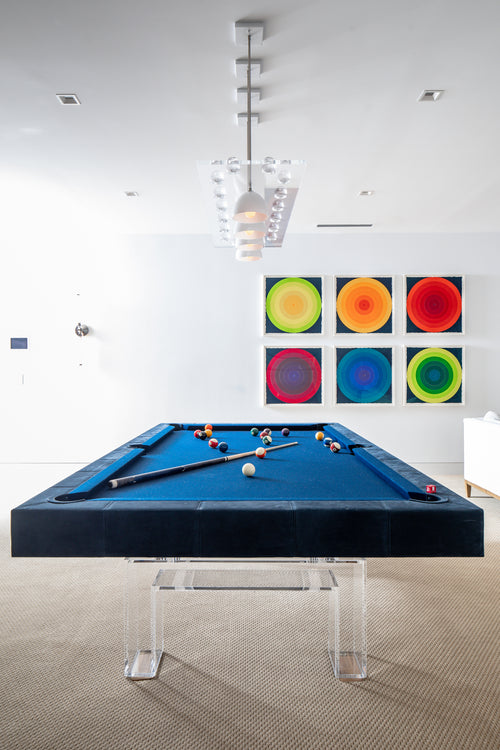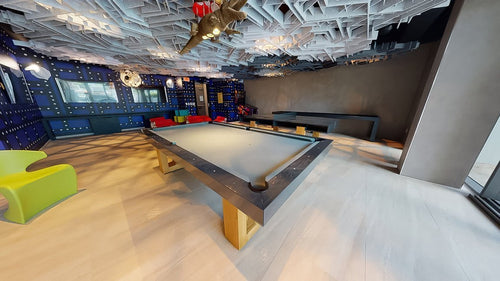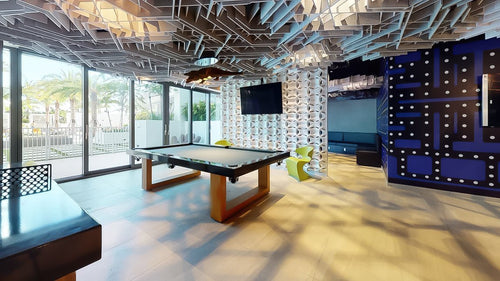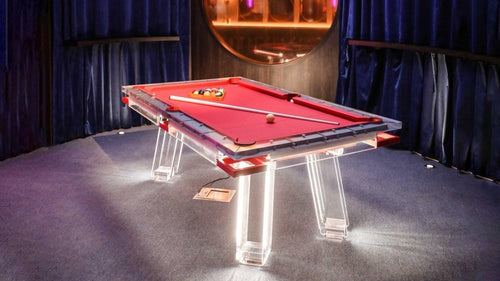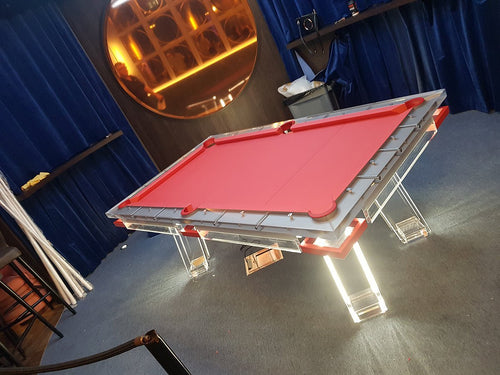


Enjoy our modern designs
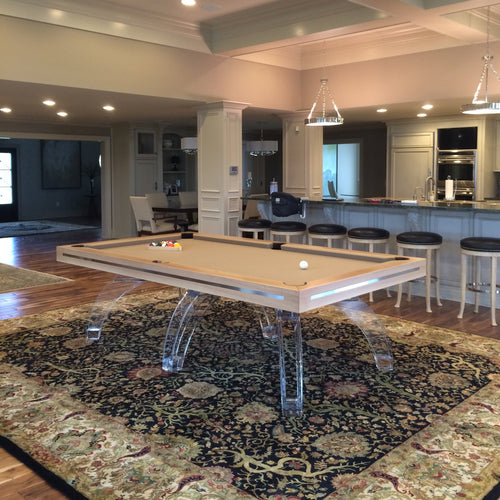
A rug under a pool table can be a smart design move. It can anchor the room, soften hard flooring, reduce echo, protect the surface below, and make the table feel more connected to the rest of the furniture. But the wrong rug can create problems with leveling, movement, maintenance, and visual proportion. The goal is not just to add softness. The goal is to use the rug without compromising the table.
In this guide:
1. The Short Answer
Yes, you can put a rug under a pool table. In many luxury game rooms, it is a good idea. The rug can make the table feel more anchored, reduce noise, and protect wood or stone flooring. The key is choosing the right rug and installing the table correctly.
The wrong rug is usually too thick, too small, too unstable, or placed without thinking about leveling. A pool table is not a coffee table. It cannot sit casually on a soft, shifting surface and still perform at its best.
Design note: A rug should make the pool table feel more intentional, not less stable.
2. Why Rugs Work Well in Game Rooms
Pool rooms often have hard surfaces: wood floors, stone, tile, concrete, glass, plaster, and millwork. These materials can look beautiful, but they can also make the room louder. A rug softens footsteps, ball noise, conversation, and the overall feel of the room.
A rug also helps define the table zone. This is especially useful in open-plan entertainment rooms, basements, pool houses, lounges, and rooms where the pool table shares space with seating, a bar, or media area.
- Adds warmth to hard floors.
- Reduces echo and foot noise.
- Protects flooring from wear around the table.
- Visually anchors the pool table as a room feature.
3. The Leveling Problem
The biggest concern with rugs is leveling. A pool table needs a stable base. If the rug is thick, soft, uneven, or compresses over time, the table may need adjustment. This is especially relevant for heavy slate tables.
A low-profile rug is usually safer than a thick pile rug. The table should be professionally leveled after it is placed on the rug, not before. If the rug compresses over time, the table may need to be checked again.
Design note: Install the rug first, then place and level the pool table. Do not level the table and then decide to slide a rug underneath later.
4. Rug Size and Placement
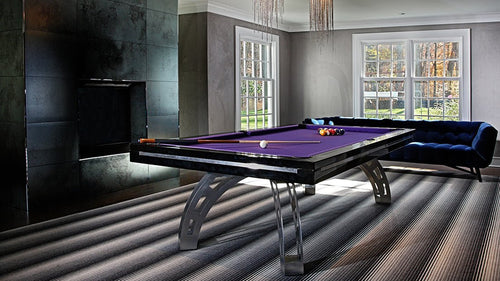
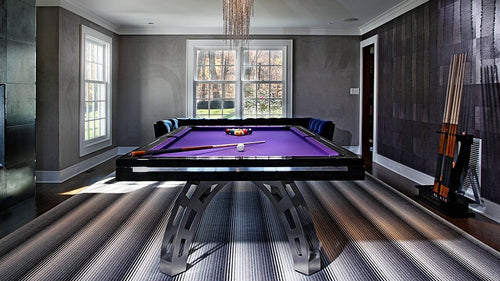
A rug under a pool table should look deliberate. A small rug that only sits under the legs can look awkward. A larger rug that extends beyond the table can define the playing zone and make the table feel properly grounded.
The rug does not necessarily need to cover the entire cueing area, but it should be large enough that the table does not look like it is barely sitting on a mat. Proportion matters. In a luxury room, undersized rugs are one of the fastest ways to make expensive furniture look cheap.
- Avoid rugs that are barely larger than the table footprint.
- Use a larger rug to anchor the game zone visually.
- Keep rug edges away from awkward high-traffic trip points.
- Coordinate rug placement with seating and lighting.
5. Rug Material and Pile Height
Low pile rugs are usually the better choice under pool tables. They are more stable, easier to clean, and less likely to interfere with leveling. Flatweaves and low-profile wool rugs can work well depending on the room.
Avoid deep shag, thick plush rugs, unstable pads, or rugs that buckle easily. These may feel comfortable but can make the table less stable and the room harder to maintain.
- Best: low pile, flatweave, dense wool, or stable performance rugs.
- Risky: thick pile, shag, soft padding, unstable layered rugs.
- Choose patterns that hide minor chalk and dust.
- Avoid rugs that curl at the edges.
6. Cleaning and Maintenance
Pool rooms create chalk dust, foot traffic, snacks, drinks, and occasional spills. A rug under the table should be beautiful, but it should also be realistic. Very pale rugs or delicate antique rugs may not be ideal in a room used often.
Choose a rug that can be vacuumed and maintained without major effort. If the room is used for parties, children, rentals, or hospitality, durability should be treated as part of the design brief.
Design note: A rug that looks perfect only when nobody uses the room is the wrong rug.
7. When to Avoid a Rug
A rug is not always necessary. In some rooms, stone, concrete, tile, or hardwood flooring may be strong enough visually without one. If the floor is beautiful and the room already has enough acoustic softness from seating, curtains, panels, or millwork, leaving the table directly on the floor may be cleaner.
Avoid a rug if it creates leveling issues, traps moisture, conflicts with heated floors, crowds the room, or feels like a decorative patch rather than part of the design.
- Avoid rugs in damp pool houses unless the material is appropriate.
- Avoid thick rugs over radiant floors unless approved.
- Avoid small rugs that make the table look visually stranded.
- Avoid delicate rugs in heavy-use game rooms.
The Bottom Line
A rug under a pool table can be a great choice when it is low-profile, stable, properly sized, and installed before the table is leveled.
Use the rug to anchor the room, soften sound, and protect the floor. Avoid thick, unstable, undersized, or overly delicate rugs. The right rug makes the table feel more luxurious. The wrong rug makes it harder to play and easier to regret.