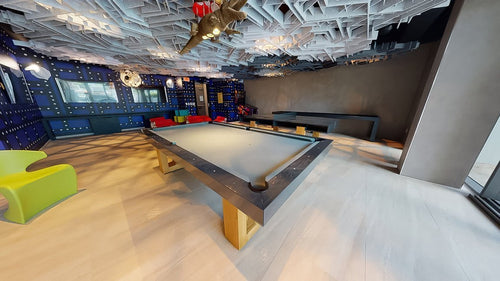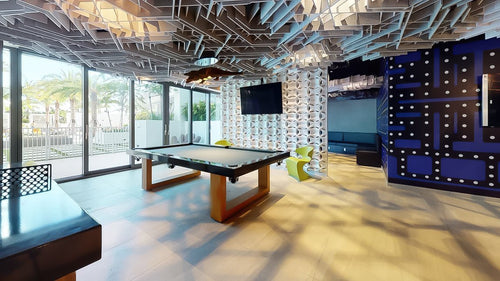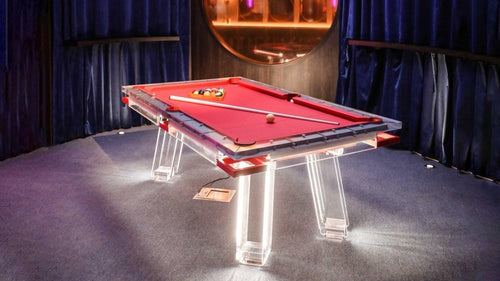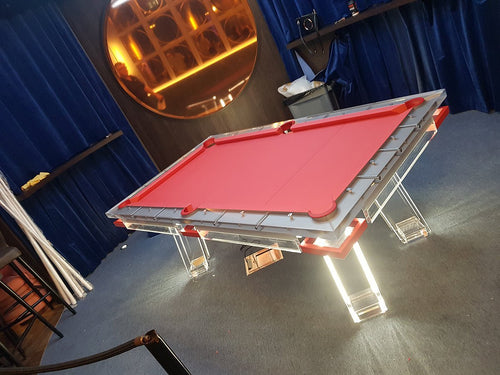


Enjoy our modern designs
An outdoor kitchen already gives a home a reason to gather. A game table gives guests a reason to stay. When the two are planned together, the result can be one of the most useful entertainment zones in the entire property. But the layout has to be intentional. Smoke, heat, weather, traffic, food, drinks, and cue clearance all matter. A luxury outdoor entertaining space should feel effortless, not like a grill station with a pool table forced into the leftover corner.
In this guide:
- 1. Why Outdoor Kitchens and Game Tables Work Together
- 2. Separate Cooking Heat From Playing Space
- 3. Plan the Flow Around Guests Not Just Furniture
- 4. Covered Patio vs Fully Outdoor Placement
- 5. Choosing the Right Game Table for Exposure
- 6. Lighting for Cooking Dining and Playing
- 7. Storage for Accessories and Outdoor Clutter
- 8. How to Make the Space Feel Luxury Instead of Backyard Casual
1. Why Outdoor Kitchens and Game Tables Work Together
The best outdoor entertainment zones have more than one reason to exist. An outdoor kitchen handles food and drinks. Lounge seating handles conversation. A game table adds movement, competition, and a reason for guests to linger between meals or after dinner.
This is especially effective in homes where entertaining moves between indoor and outdoor spaces. A game table near an outdoor kitchen can become the bridge between the terrace, pool, bar, dining table, and lounge area. It gives the space structure.
Design note: The goal is not just to add another amenity. The goal is to create an outdoor room where cooking, conversation, and play support each other.
2. Separate Cooking Heat From Playing Space
The grill zone and the game zone should not be too close. Heat, smoke, grease, food prep, and foot traffic can make the table feel uncomfortable or exposed. Even if the table is made for outdoor use, it should not live in the direct path of smoke or splatter.
A good layout keeps the outdoor kitchen close enough for convenience but far enough that the game area feels clean. Think of the kitchen as the active service zone and the table as the social play zone.
- Avoid placing the table directly beside a grill, pizza oven, or smoker.
- Keep greasy cooking zones away from cloth, rails, and accessories.
- Use ventilation, hoods, or open-air planning to move smoke away from the table.
- Keep prep counters and serving stations from blocking cue movement.
3. Plan the Flow Around Guests Not Just Furniture
Outdoor spaces fail when they are arranged like furniture diagrams instead of party diagrams. Guests move constantly: from the kitchen to the bar, from the pool to the bathroom, from the lounge to the dining table, from the terrace to the game area. The pool table or game table should not sit in the middle of every route.
Players need space to shoot. Non-players need space to pass. The best entertaining zones give each group room without forcing them into each other.
- Keep main walkways outside the playing envelope.
- Place drinks and serving areas close enough to use but not on the table edge.
- Give spectators somewhere to stand or sit without blocking shots.
- Create a clear route from the kitchen to dining without crossing the cue path.
4. Covered Patio vs Fully Outdoor Placement
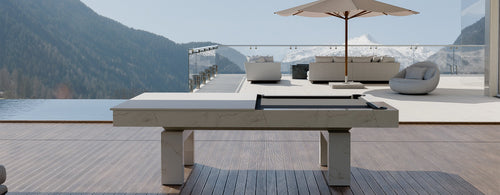
A covered patio is usually the better location for a luxury game table. It gives the table protection from direct sun, rain, falling debris, and harsh temperature shifts while still preserving the outdoor experience. A fully exposed placement requires a more durable specification and more maintenance discipline.
If the table will sit under a pergola, roof extension, cabana, or pavilion, consider how wind-driven rain, sun angle, and seasonal weather still reach the space. Cover does not always mean full protection.
Design note: Outdoor placement is not binary. The real question is how much exposure the table will actually face during normal use.
5. Choosing the Right Game Table for Exposure
The right table depends on the environment. A climate-protected outdoor room may support a wider range of custom finishes. A humid, coastal, open-air, or high-sun environment needs more durable material planning.
Outdoor-rated materials, powder-coated metal, weather-conscious finishes, performance fabrics, and proper covers may be necessary. For some homes, a pool table may work. For others, an outdoor ping-pong table, shuffleboard table, or multi-game setup may make more sense.
- Use true outdoor-rated construction for exposed areas.
- Avoid delicate indoor finishes in harsh climates.
- Consider how often the table will be covered, cleaned, and used.
- Match the table choice to the climate, not just the design concept.
6. Lighting for Cooking Dining and Playing
Outdoor kitchens need task lighting. Dining areas need warm social light. Game tables need even, controlled light across the playing surface. If the same lighting tries to do everything, the space usually feels either too dark for play or too harsh for entertaining.
Use separate lighting layers. The kitchen needs functional light over counters and cooking surfaces. The table needs focused lighting that does not glare into players’ eyes. The lounge and dining zones need softer light that makes the space feel comfortable after sunset.
- Use dimmers where possible.
- Avoid glare from glossy stone, glass, or polished metal.
- Make sure the playing surface is evenly lit.
- Keep fixture placement coordinated with ceiling fans, heaters, and outdoor structures.
7. Storage for Accessories and Outdoor Clutter
Outdoor entertaining creates clutter fast. Plates, glasses, towels, pool toys, speaker remotes, grill tools, cushions, covers, chalk, cues, balls, and cleaning supplies all need a place to go. If storage is ignored, the game zone will quickly look messy.
Built-in cabinets, weather-resistant storage benches, and dedicated accessory drawers keep the space polished. The storage should be close enough to use but protected enough to keep equipment clean.
- Store cues and balls away from moisture and direct sun.
- Use a proper table cover if exposure is possible.
- Separate game accessories from grill tools and pool supplies.
- Plan hidden storage before the outdoor kitchen is built.
8. How to Make the Space Feel Luxury Instead of Backyard Casual
The difference between a luxury outdoor entertainment zone and a casual backyard setup is restraint. The table, kitchen, bar, seating, lighting, and landscape should feel like one composed environment. Avoid random finishes, mismatched furniture, and decorative clutter.
Use a controlled palette: stone, wood, metal, outdoor fabric, greenery, and one or two strong accent materials. The game table should look like it belongs to the architecture, not like a toy added after the project was finished.
Design note: The best outdoor game zones feel permanent, architectural, and easy to use. They do not feel like furniture dropped onto a patio.
The Bottom Line
An outdoor kitchen and game table can create a powerful entertaining zone, but only when cooking, dining, lounging, and playing are planned as separate but connected activities.
Keep heat and smoke away from the table, protect the playing area from weather, manage guest flow, use proper lighting, and build in storage. Done right, the space becomes a true outdoor room rather than a patio with too many functions fighting each other.