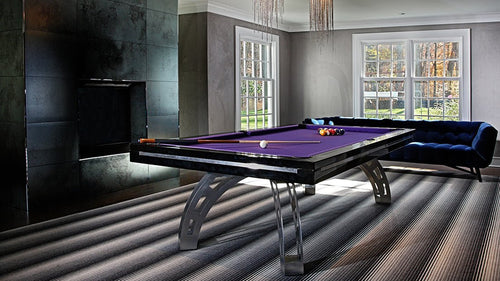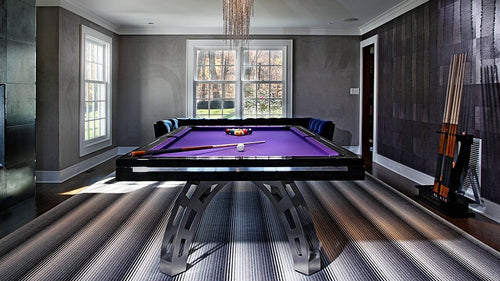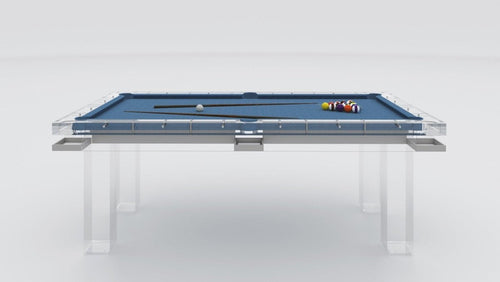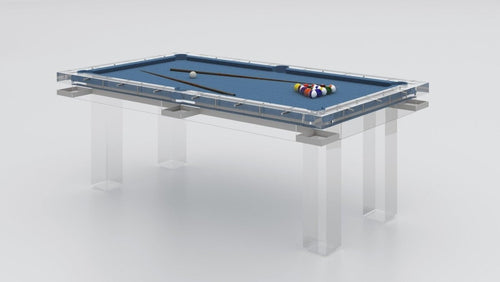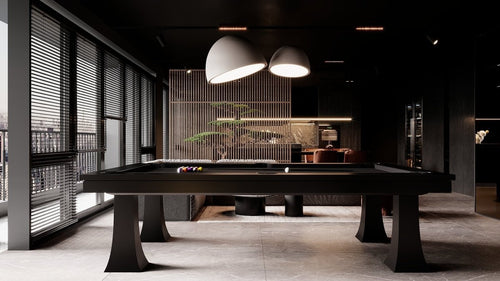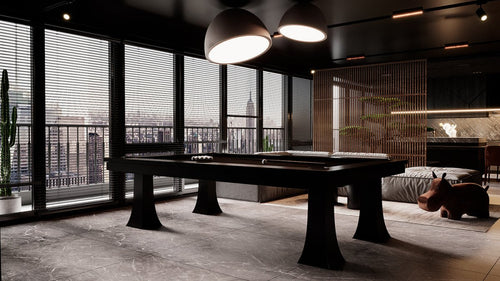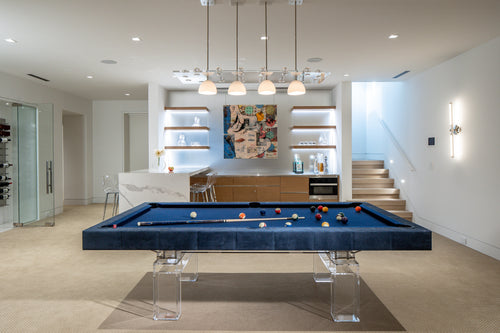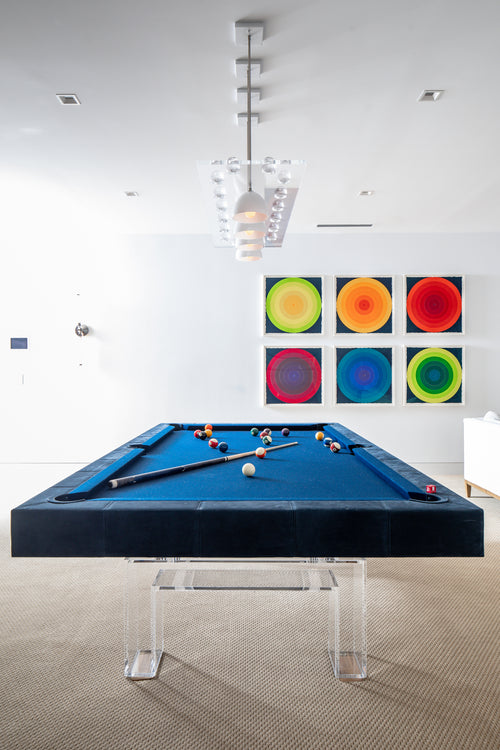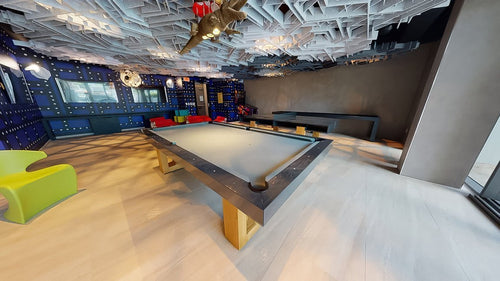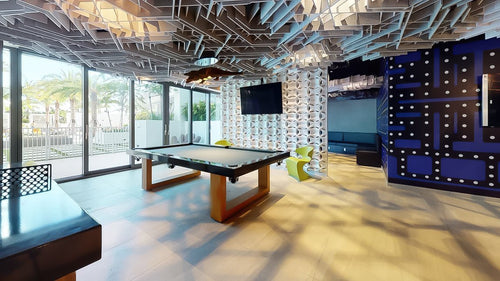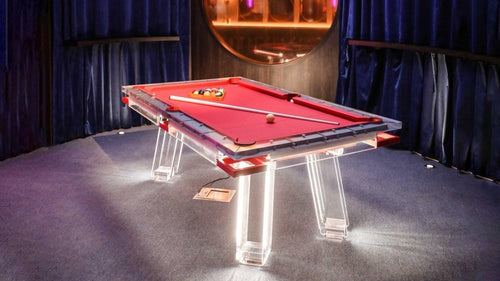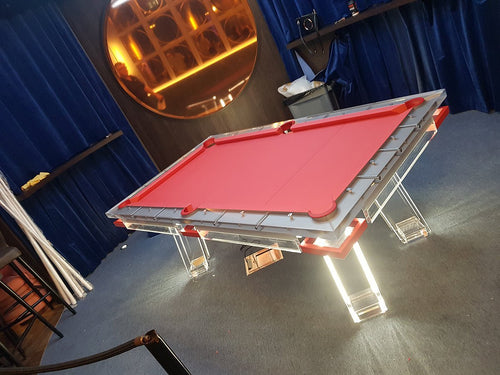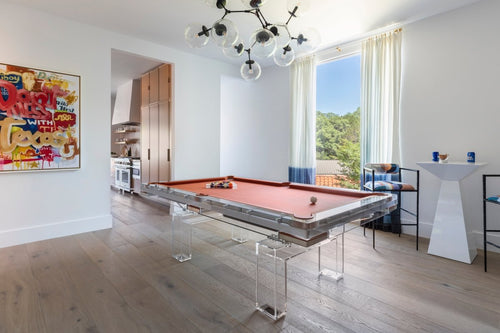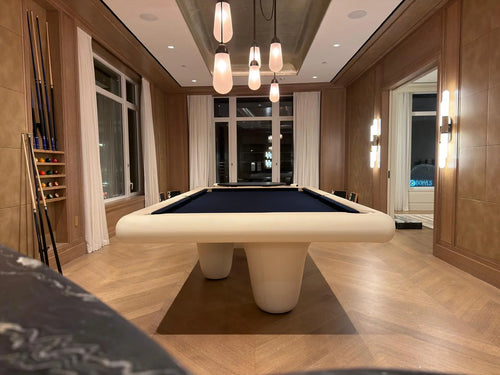


Enjoy our modern designs
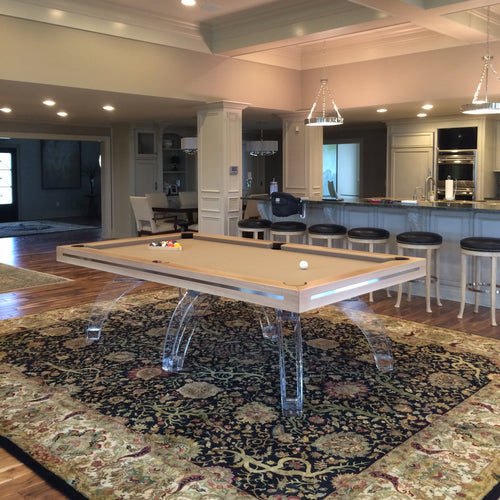
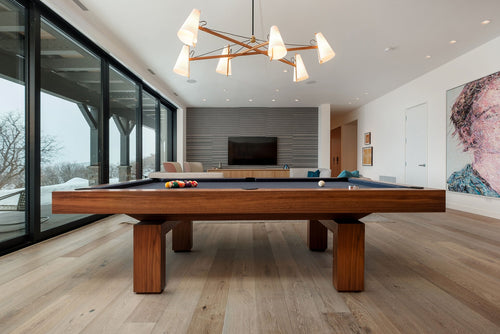
A pool table may be compatible with a heated floor, but approval depends on the exact heating system, floor assembly and table base. A four-leg table with open space below it is a different proposal from a large closed pedestal. Check those details before buying the table or adding a rug, rather than relying on a general statement that radiant heat is harmless to furniture.
Start with three separate approvals
Ask the heating supplier about permitted furniture contact, clearance and heat accumulation; ask the flooring supplier about loading, movement and temperature limits; and ask the table maker about the intended environment and support arrangement. The building structure must also be suitable for the complete installed load.
Have each party review the actual product and layout. “Radiant-rated flooring” is useful information, but it does not by itself approve every heavy object, pad, rug or pedestal placed above it. If a manufacturer excludes the proposed arrangement, change the design or obtain a product-specific approved solution before installation.
Why the base and heating system matter
Electric mats, cables and hydronic systems have different installation details. Even within one category, permitted coverings and furniture arrangements can differ. The table’s footprint on a room plan does not show how much of the heated floor will be covered by a solid base or insulating material.
For example, Warmup’s FOIL installation manual prohibits installation under flat-bottomed furniture or permanent fixtures, requires clearance beneath low furniture on legs, and states a contact-pressure limit. These are requirements for that named system, not universal rules for every heated floor. They show why the heater’s own manual must be checked, including restrictions on floor coverings and furniture feet.
- Send the supplier a drawing of the table base and the contact dimensions.
- Identify the heating product and its installed location, not just the thermostat brand.
- Include every proposed pad, rug and underlay in the review.
- Keep the written response with the installation documents.
Wood movement and room conditions
Wood exchanges moisture with surrounding air; finishes slow that exchange but do not stop it. Oregon State University explains this moisture relationship. Wood flooring and wooden table components therefore need an environment consistent with their product requirements. A table finish should not be treated as a moisture barrier that eliminates seasonal movement.
Record room temperature and relative humidity under normal use. If operation of the heating system coincides with repeated gaps, distortion or other changes, have the floor and room conditions assessed. Do not diagnose a floor problem solely from one room-humidity reading or correct it by improvising a new thermostat setting outside the supplier’s instructions.
Slate, stability and leveling
The assembled table relies on its base and floor support remaining suitable. Floor movement or a compressing contact layer can change the setup even when the slate itself is undamaged. Professional leveling addresses the table’s installed geometry; it does not certify the floor, repair a failed underlay or approve a heating layout.
Complete flooring cure, commissioning and acclimation steps required by the relevant manufacturers before table installation. Tell the installer which areas are heated and provide any no-drill or loading restrictions. Do not drive screws into a heated floor to anchor or restrain the table without an approved design and confirmed service locations.
Keep the initial setup record. If roll changes, a support becomes unstable or visible floor movement appears, arrange an assessment rather than assuming every new table needs a fixed period of “settling” or a mandatory seasonal relevel.
Choose the complete floor assembly
Stone, tile, concrete and approved wood products can appear in heated-floor designs, but the finish name alone is insufficient. Underlayment, adhesive, screed, joints and the installation method all belong in the specification. A heavy table on a floating floor may raise different movement questions from the same table on a bonded installation.
As a named example, Kährs’ wood-floor heating guidance limits the floor surface to 27°C, including beneath carpets and furniture, and calls for even heating and accurate temperature control. Apply the instructions for the exact product and market; do not treat 27°C as a universal limit for all heated floors or confuse floor-surface temperature with water-flow temperature.
Ask the flooring supplier to approve the table’s support details, including any proposed protective pads. A pad may prevent a scratch while introducing a different issue with indentation, movement or heat transfer.
Rugs and pads need their own check
A rug can improve comfort and soften the room visually. It also adds material over the heating system. Give the heating and flooring suppliers the rug and pad specifications, dimensions and intended position. A thin-looking textile is not automatically suitable, and a rug that is acceptable in an open area may be inappropriate beneath a broad base.
Coordinate the rug before final leveling. Avoid a later change that puts some supports on a rug and others on the bare floor. If a rug is not approved beneath the table, consider approved soft furnishings elsewhere in the room rather than making the table’s support arrangement an experiment.
Before installation: close the open questions
| Confirm | Keep on file |
|---|---|
| Heating | Exact system, furniture restrictions, covering limits and commissioning record. |
| Floor | Exact flooring assembly, surface-temperature limit and heavy-furniture requirements. |
| Table | Total weight, support plan, contact areas and environmental requirements. |
| Room | Structural suitability, normal operating conditions and final position. |
| Installation | Floor protection, no-drill locations, leveling procedure and service responsibility. |
A compatible combination is established through those project details. Once approved, operate the floor within its instructions and keep the table in its agreed position. Recheck compatibility before replacing a rug, changing the base or moving the table onto another heated zone.
Reviewed October 19, 2026. Product instructions and project-specific requirements take precedence over general planning guidance.