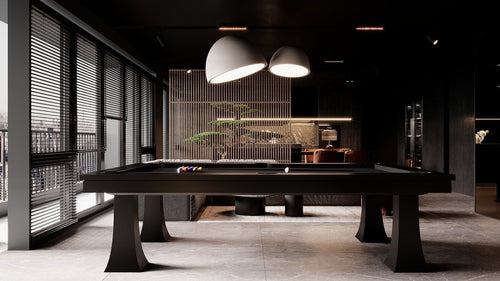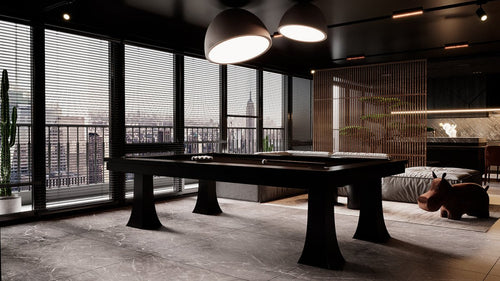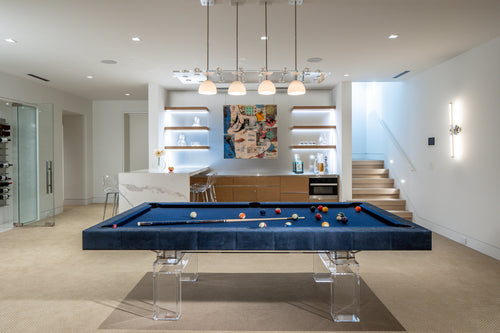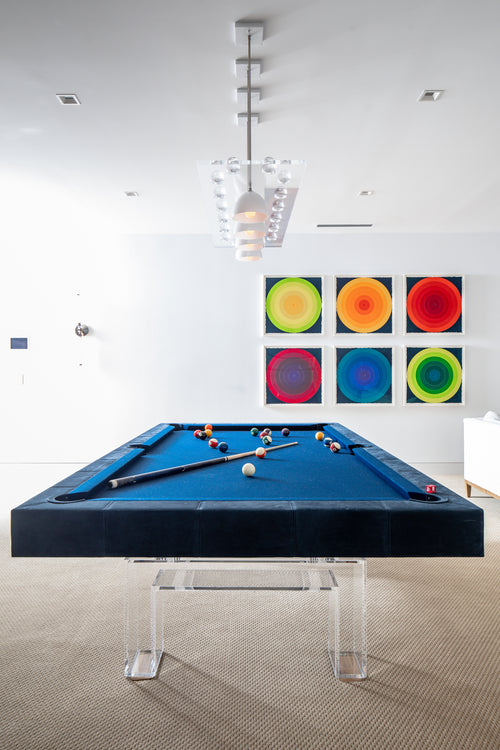


Enjoy our modern designs
A fireplace and a pool table can make a beautiful room together. One brings warmth, atmosphere, and architectural focus. The other brings social energy, structure, and interaction. In the right space, the combination can feel rich, inviting, and highly livable.
But the pairing is not automatic. Both elements want attention. Both affect furniture placement. Both need clear sightlines. Both can become the center of the room. If they are not planned carefully, the fireplace and pool table can compete instead of supporting each other.
The goal is not to decide which one matters more in every case. The goal is to understand the hierarchy of the room.
Table of Contents
1. The Challenge of Two Strong Anchors
A fireplace naturally wants to be a focal point. It often sits on a major wall, carries stone or millwork, and creates a place for seating to gather. A pool table also wants to be a focal point because of its size, shape, and central position.
When both exist in the same room, the design has to decide how they relate. Are they part of one larger lounge composition? Is the fireplace the visual anchor and the pool table the social anchor? Is the pool table centered in the room while the fireplace creates atmosphere from one side?
Without hierarchy, the room can feel confused. The seating faces the fireplace, but the table blocks movement. The table sits in the center, but the fireplace pulls attention away. The lighting favors one feature and leaves the other feeling secondary.
Two strong anchors can work beautifully, but they need a clear relationship.
Designer insight: A pool table and fireplace should not fight to be the room’s only focal point. One can provide activity while the other provides atmosphere.
2. When a Pool Table Near a Fireplace Works
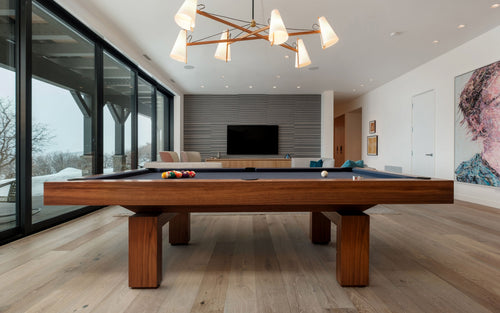
The pairing works best when the room has enough scale. A generous lounge, entertainment suite, club room, or great room can often support both features because each has space to breathe.
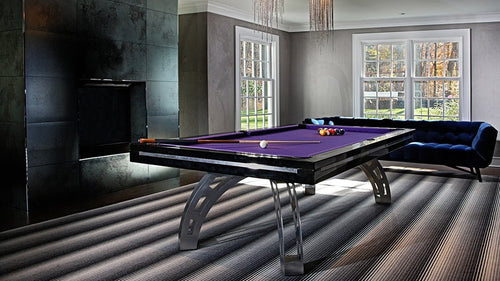
It also works when the fireplace is treated as atmosphere rather than the only destination. For example, a linear fireplace along a side wall can warm the room without demanding that every chair face it directly. A fireplace behind or beside a lounge zone can support the pool table without competing with it.
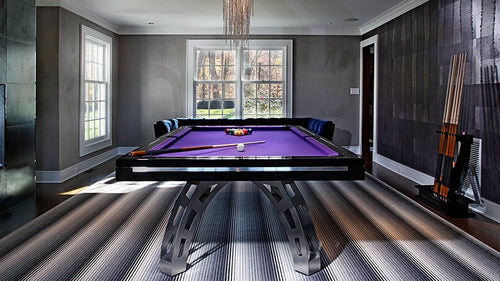
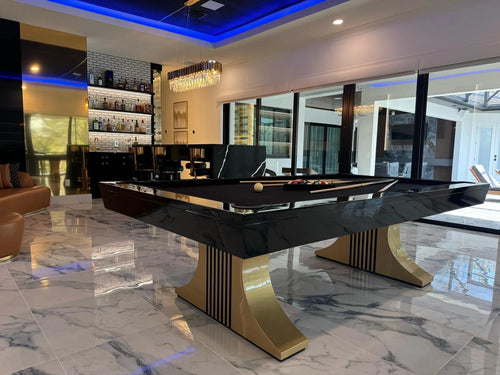
The combination is especially strong when the materials are coordinated. A pool table with warm wood, dark metal, leather, stone, or a tailored finish can relate naturally to a fireplace wall. The two features begin to feel like part of the same design world.
In the best rooms, the fireplace makes the pool table area feel more inviting. The table gives the fireplace room more life.
3. When the Two Features Compete
The pairing starts to fail when both elements are treated as the main event. A dramatic fireplace wall, oversized mantel, heavy stone surround, large television, bold artwork, and a statement pool table can create too much visual force in one room.
This is especially risky in smaller spaces. If the fireplace wall is already visually dominant, adding a large pool table too close to it may make the room feel crowded. The table can block the fireplace, interrupt seating, or make the room feel like two unrelated ideas pushed together.
Another issue is heat and comfort. A pool table should not be placed so close to a working fireplace that players feel uncomfortable or materials are exposed to unnecessary heat. Even if the layout looks good, the room still has to work in real use.
A fireplace and pool table compete when the room has no pause between them.
4. Spacing and Clearance Come First
Before thinking about style, the room has to work physically. A pool table requires cue clearance around all sides. The fireplace requires safe spacing, visual breathing room, and often a seating area. These zones cannot simply overlap without consequences.
The pool table should not be squeezed in front of the fireplace just because the floor plan technically allows it. Players need to move freely. Guests need to pass through the room. Seating should not crowd the table. Fireplaces with hearths, mantels, or raised stone details need extra attention because they can interfere with cue movement.
In some rooms, the right answer is a smaller pool table. In others, it may mean shifting the table off-axis or creating a separate lounge zone around the fireplace. The best solution depends on the room’s proportions.
Pro tip: Do not judge this layout from a rendered top-down view alone. Walk the cue path around the table and check how the fireplace, hearth, seating, and walls affect play.
5. Control the Sightlines
Pool tables and fireplaces are both highly visible features. The view into the room matters. From the entrance, hallway, lounge, or bar, the eye should understand the composition quickly.
If the pool table blocks the fireplace, the fireplace may feel wasted. If the fireplace overwhelms the table, the table may feel like an obstruction. If a television above the fireplace dominates everything, the pool table can feel secondary or oddly placed.
A strong layout creates a layered view. The pool table may sit in the foreground while the fireplace provides depth behind it. Or the fireplace may sit to one side, giving the table atmosphere without stealing the center. The important thing is that the features do not visually cancel each other.
The room should feel composed from the main viewing angles, not just functional on the plan.
6. Use Materials to Create a Relationship
Materials can make the fireplace and pool table feel connected. A table with walnut rails can relate to wood paneling around the fireplace. A black or bronze table detail can connect to fireplace metalwork. A stone-heavy room may benefit from a pool table with a quieter finish so the fireplace remains the dominant material feature.
The goal is not to match every surface. Matching the pool table too closely to the fireplace wall can make the room feel overly designed. Instead, use one or two material links to create harmony.
For example, a warm wood table near a limestone fireplace can soften the room. A black table near a dark stone fireplace can feel dramatic, but it needs contrast from flooring, lighting, or upholstery. A white or light table near a fireplace can work if the room has enough texture to keep it from feeling cold.
The table and fireplace should feel related, not identical.
7. Seating Should Support Both Features
Seating is where many fireplace-and-pool-table rooms fail. Chairs are often placed to face the fireplace, but then they interfere with the pool table. Or the pool table receives all the clearance it needs, but the fireplace seating becomes awkward and disconnected.
The best solution is usually to create zones. The pool table gets its playing envelope. The fireplace gets a lounge moment. The seating sits close enough to participate in both, but not so close that it blocks either.
Low-profile lounge chairs, benches, drink tables, or a sofa placed outside the cue path can work well. Avoid oversized furniture that crowds the table or turns the fireplace into a separate room within the room.
The seating should make the space feel social. It should not make the player feel trapped.
8. Lighting Decides the Mood
Lighting has to balance the two features. The pool table needs proper light for play. The fireplace needs warmth and atmosphere. If the pool table light is too harsh, it can kill the fireplace mood. If the room is too dim, the table becomes frustrating to use.
A layered lighting plan works best. Use table lighting for function, ambient lighting for the room, and softer accent lighting around the fireplace. Dimming control is especially useful because the room may shift between active play and quieter lounge use.
The fixture above the pool table should also respect the fireplace. If the fireplace is already dramatic, the table light may need to be quieter. If the fireplace is minimal, a stronger fixture can help define the pool area.
The best lighting makes the two features feel like one atmosphere instead of two separate displays.
The Bottom Line
A pool table near a fireplace can work beautifully when the room has enough scale, clear hierarchy, proper clearance, and a strong material relationship.
It competes when both features demand the same attention, when furniture crowds the table, when the fireplace blocks play, or when the room has no visual pause between them.
The right design lets the fireplace create warmth and the pool table create energy. When those roles are clear, the room feels richer, more social, and more complete.