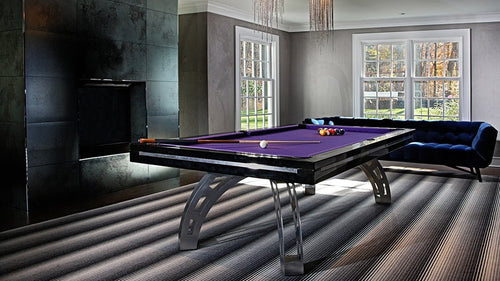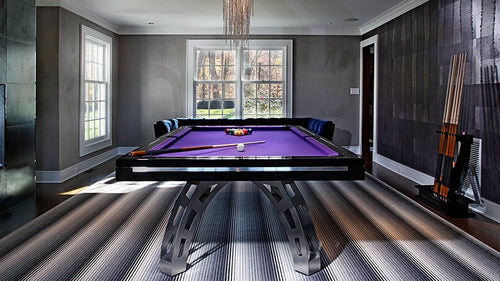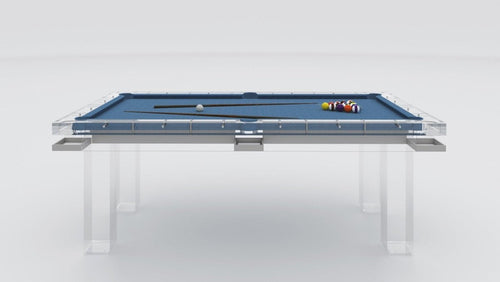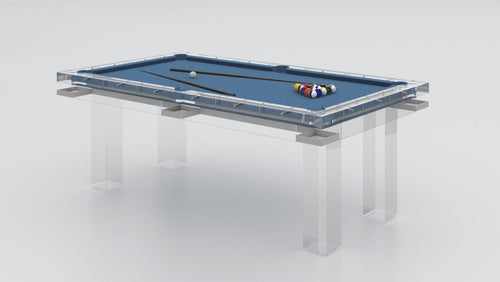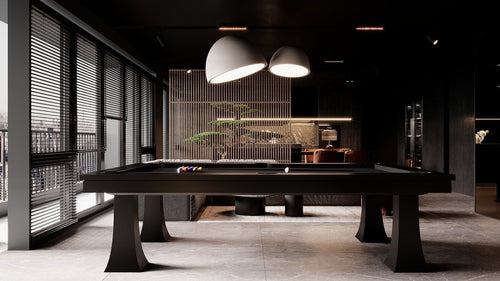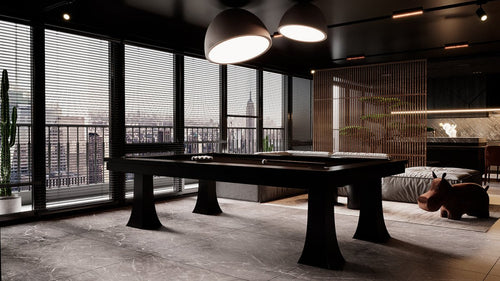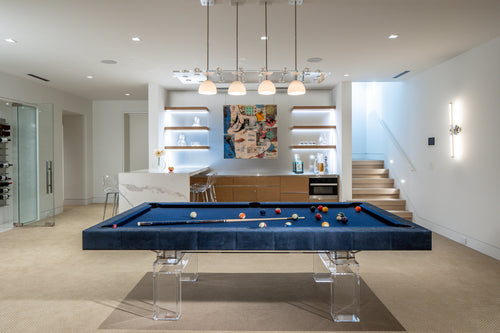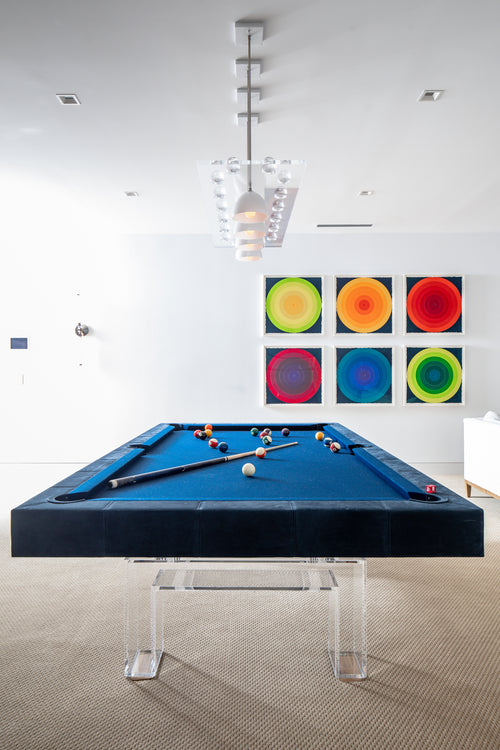


Enjoy our modern designs
In the world of luxury billiards, the "rails" are the engine of the game. They are responsible for every bank shot, every positional kick, and the overall "speed" of the table. But beneath that pristine wool cloth lies a critical component with a finite lifespan: the K66 profile cushion rubber.
When this rubber ages, it loses its elasticity and "dies." A dead rail doesn't just make the game less fun; it makes the physics of the game unpredictable. The problem? Most owners don't realize their rails are failing until they’ve already paid for an expensive re-felting.
Here is how to use physics and your senses to diagnose "dead rails" without ever touching a staple remover.
Table of Contents
1. The "Thud" Test (Acoustic Diagnosis)
The most immediate indicator of rail health is sound. When a billiard ball strikes a healthy, responsive cushion, the sound should be a crisp, sharp "click."
- The Symptom: If you hear a dull, hollow "thud," the rubber has likely undergone vulcanization—a chemical process where the rubber hardens and loses its ability to compress and rebound.
- The Physics: A healthy rail absorbs a tiny amount of energy and returns the rest to the ball. A dead, hardened rail absorbs almost all the kinetic energy, turning it into a muffled sound wave rather than motion.
2. The "Diamond" Consistency Check
Your table is equipped with "sights" or diamonds. These aren't just for decoration; they are mathematical markers.
- The Test: Shoot a ball directly at a 90-degree angle into a rail with medium-high force. On a healthy table, the ball should rebound back to your cue tip (or very close to it).
- The Symptom: If the ball dies halfway back, or if it rebounds at a strange, inconsistent angle, the rubber has "perished" unevenly. Often, the rubber near the pockets—where it is most compressed—dies faster than the rubber in the center of the rail.
3. The "Thumb Compression" Mystery
You don't need to see the rubber to feel it. Run your thumb firmly along the top edge of the rail (the "nose" of the cushion) under the cloth.
- The Goal: You are looking for a firm but "springy" resistance. It should feel like a high-density eraser.
-
The "Dead" Indicators:
- The "Brick": The rail feels completely rock-hard. No matter how hard you press, there is zero "give."
- The "Mush": The rail feels soft or "crumbly" underneath. This happens when the rubber breaks down into a sticky or powdery state due to high humidity (common in coastal areas like Brazil or Florida).
4. The 3-Rail "Speed" Metric
This is the gold standard for testing table speed without technical equipment.
- The Test: Hit a ball hard enough to travel the length of the table and rebound off the far rail.
- The Benchmark: On a tournament-grade table with healthy rubber, a ball struck with "maximum controlled force" should be able to travel back and forth across the length of the table 4 to 5 times.
- The Symptom: If the ball struggles to make it 2.5 or 3 lengths, your cushions are acting as "energy sinks." The rubber is no longer reflecting the ball’s energy; it’s eating it.
5. Why Rails Die (Even if You Don't Play)
Many clients ask, "I haven't played in two years, why are my rails dead?" Rubber is an organic compound. It is susceptible to oxidation and temperature fluctuations. In fact, a table that sits in a sunlit room without being played can often have "dead" rails faster than one in a dark pool hall. The UV rays and the cycle of heating and cooling cause the rubber to become brittle.
The Verdict: Don't Re-felt a Corpse
If you are planning to change your cloth to match a new interior design, always test your rails first. Installing a $400 piece of Simonis 860 cloth over dead rubber is like putting racing tires on a car with a seized engine.
If your rails fail the "Thud Test" or the "Speed Metric," it’s time to replace the cushions. It’s an invisible repair, but the moment you take your first bank shot, the difference will be crystal clear.