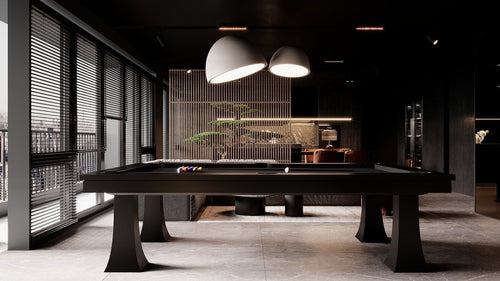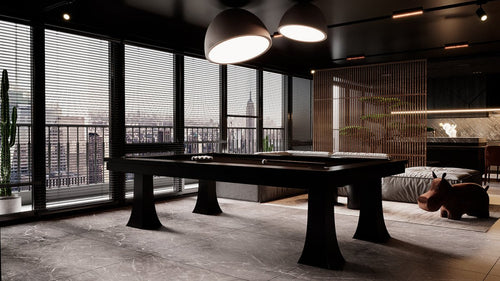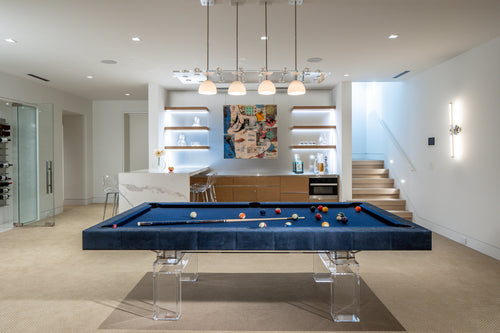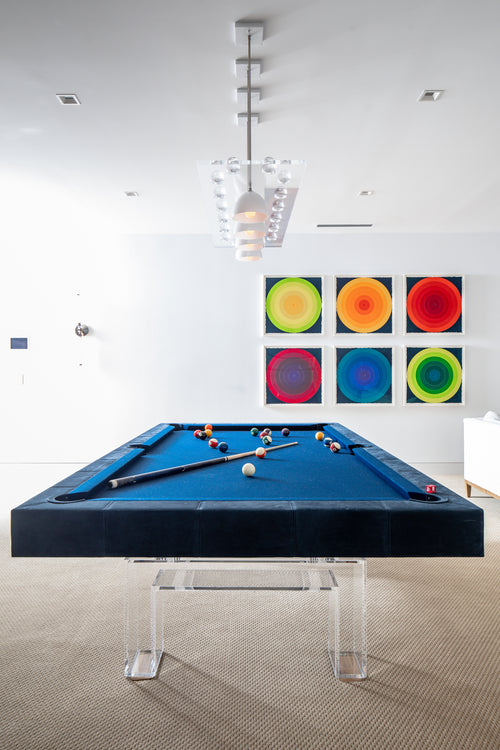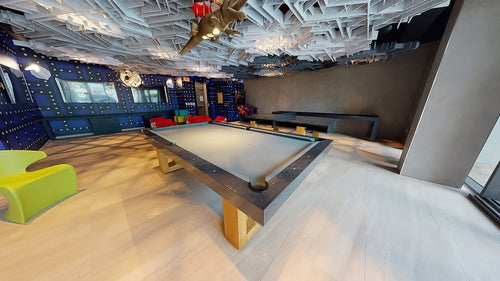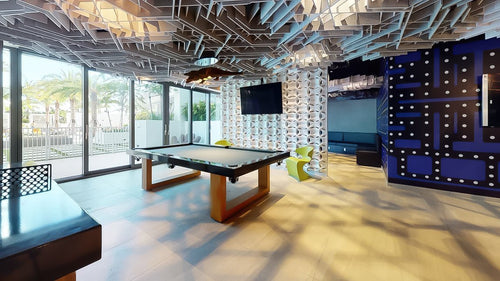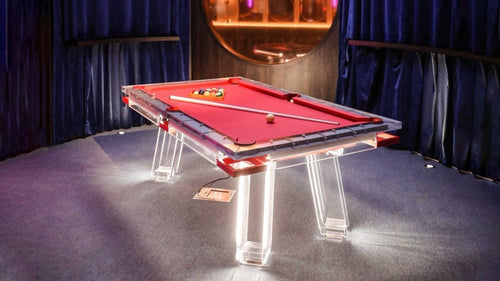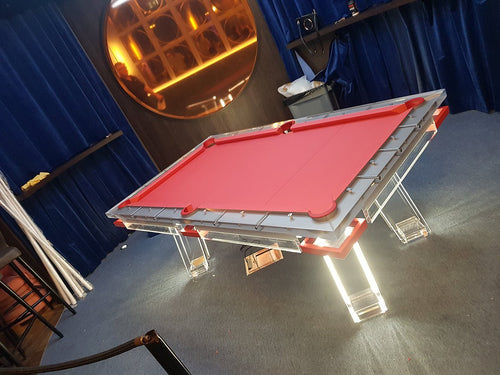


Enjoy our modern designs
A dining top places weight directly above some of a pool table’s most visible finished surfaces. Dust, grit, condensation, and incompatible pads can mark the rails even when the top appears to fit properly.
Protection depends on clean contact surfaces, suitable support materials, correct panel handling, and prompt moisture control.
In this guide
1. Understand How Rail Damage Occurs
Scratches often come from particles trapped between the dining top, support pads, and rail finish. When a panel slides, even a small crumb can act as an abrasive.
- Exposed screws or connector hardware
- Hardened or displaced pads
- Dragging panels during alignment
- Jewelry or tools contacting the rails
- Excessive weight at a few support points
Spills and condensation can remain against the rail, clouding finishes, staining wood, corroding metal, or swelling panel edges.
2. Use Compatible Support Pads
Use the manufacturer’s pads or material approved for the dining top and rail finish. Pads should distribute load, resist sliding, and remain soft without transferring dye, adhesive, or texture.
Inspect them for embedded grit, compression, cracking, loose adhesive, dye transfer, and missing pieces. Replace a complete matched set if wear has become uneven.
Design note: Avoid improvised rubber, vinyl, foam, or adhesive-backed pads. Some materials react with clear finishes during prolonged contact.
3. Clean Before Installing the Top
Before every conversion, remove debris from the rails, panel undersides, alignment points, and pads. Use a clean, soft cloth and an approved care method.
Prepare a clean temporary surface, inspect the rails under good light, clean and dry all contact areas, and lower each panel into position without dragging.
4. Control Spills and Condensation
Use coasters, placemats, trivets, and trays. Pay particular attention to cold glasses, pitchers, vases, and ice buckets.
If liquid reaches a seam, lift the affected panels, dry the edges, pads, rails, and exposed playing area, and allow everything to air-dry before reassembly.
Design note: Do not place a damp towel beneath the top. Absorbent material can hold moisture against the finish.
5. Remove and Store Panels Correctly
Lift panels using their intended grips and the required number of people. Keep jewelry, buckles, and tools away from the finished rails.
Never pivot a heavy panel on one rail unless the system is designed for that motion. Store sections in padded, ventilated slots that protect edges and prevent tipping.
6. Inspect the System Regularly
Inspect the rails for fine scratches, cloudy patches, staining, impressions, corrosion, and loose hardware. Confirm that pads remain in their specified locations.
Address active damage promptly. Early finish clouding or panel swelling may be easier to stabilize than damage left beneath the top for months.
The Bottom Line
Rail protection depends on clean contact surfaces, compatible pads, controlled lifting, and immediate moisture removal. Treat dining-top installation as a careful conversion rather than casual cover placement.