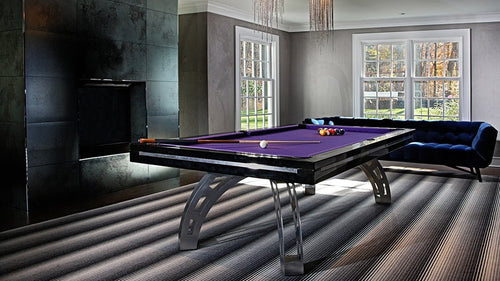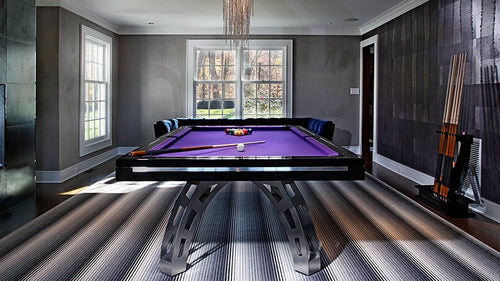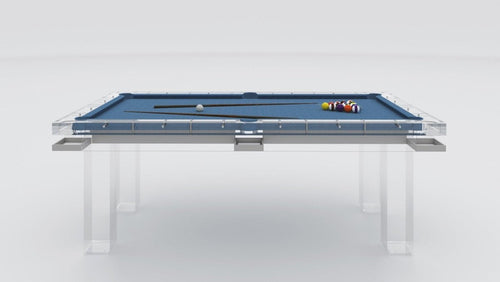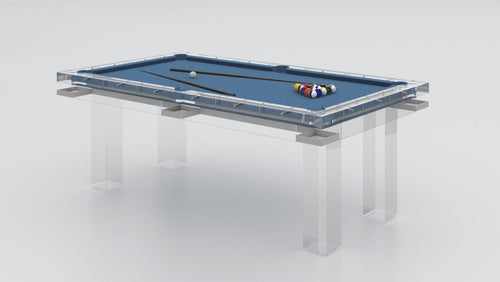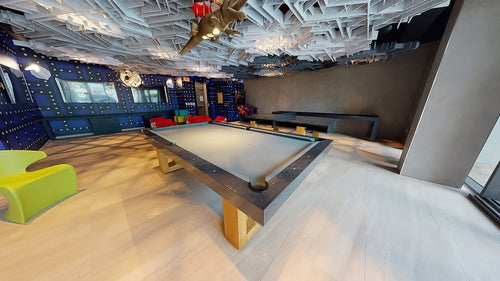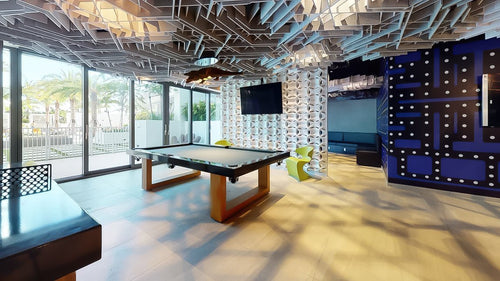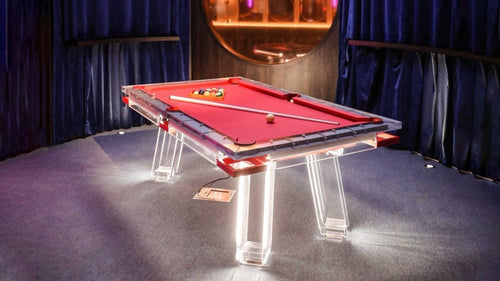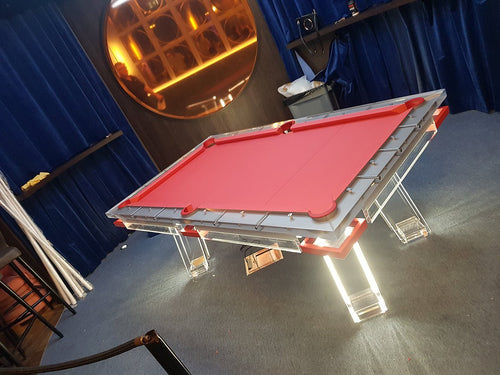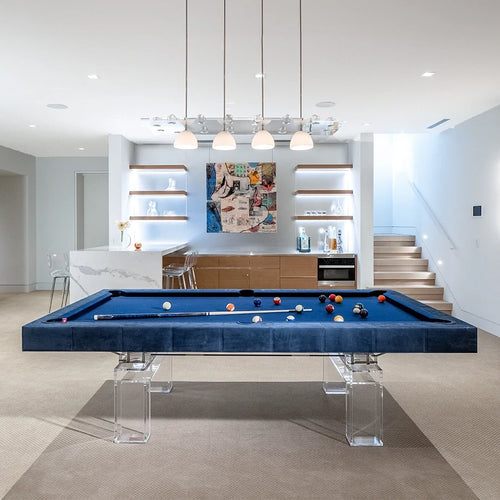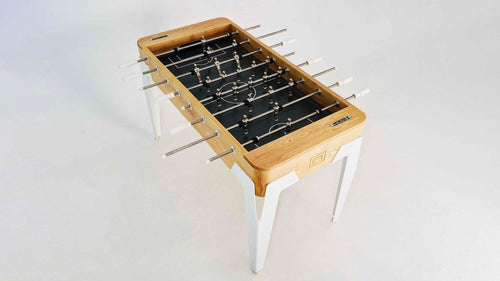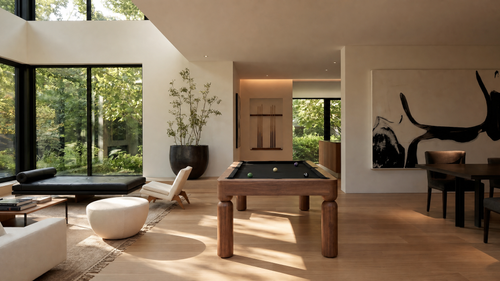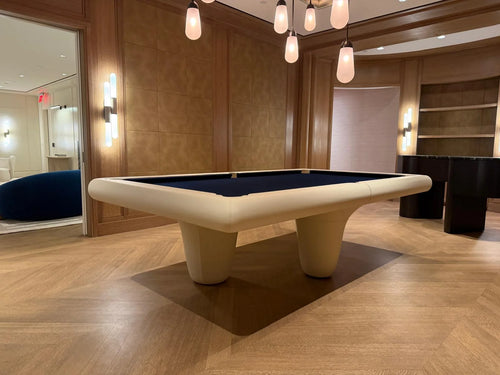


Enjoy our modern designs
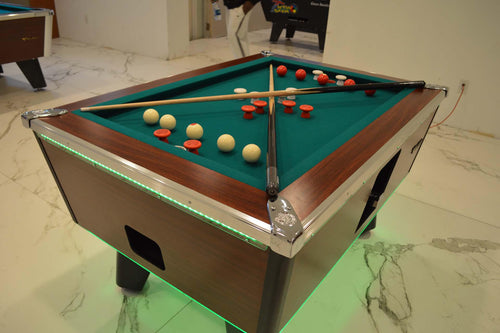
For a long time, the phrase "pool room" conjured up a very specific image: dark mahogany paneling, dim lighting, stained glass lamps, and emerald green felt. It was a look rooted in the 19th-century tavern, the private club, and the old-school billiard hall.
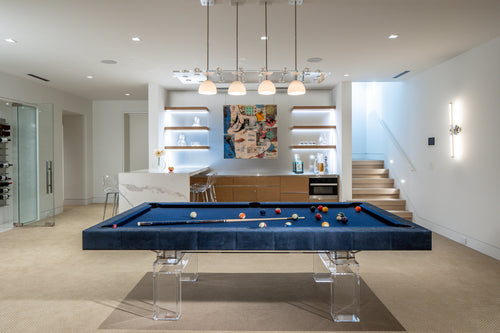
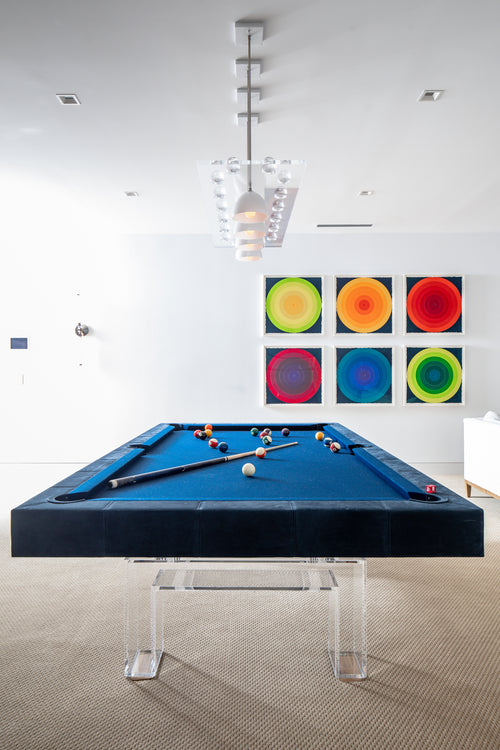
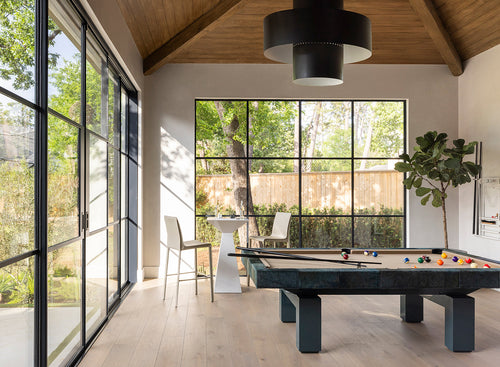
But the game has changed. Today, pool tables are moving out of basements and into open-concept living rooms, modern lofts, coastal dens, and bright entertainment spaces. The problem is that most billiard accessories have not caught up.
If you have curated a specific interior design style, whether it is Scandi-minimalism, industrial chic, mid-century modern, or coastal casual, a chunky old-school oak cue rack can look completely out of place. The rack may be functional, but visually, it drags the entire room backward.
Table of Contents
1. The Modern Minimalist
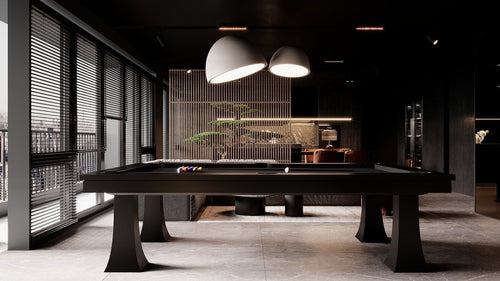
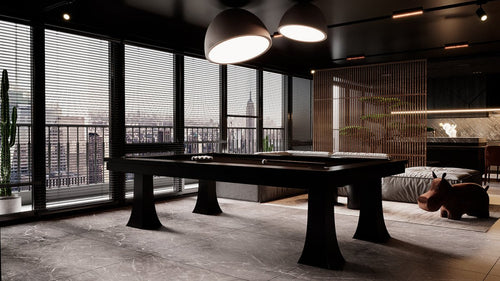
The modern minimalist game room is built around restraint. Clean lines, monochromatic palettes, negative space, and a less-is-more philosophy define the room. In this setting, the cue rack should not fight for attention. It should almost disappear into the architecture.
- The Vibe: Clean lines, quiet surfaces, monochromatic colors, and minimal visual clutter.
- The Rack Solution: Floating wall racks with hidden hardware. The cues should look like they are suspended cleanly against the wall, not crammed into a bulky accessory holder.
- Materials to Watch For: Matte black metal, acrylic, Lucite, high-gloss white, or slim powder-coated finishes. Avoid ornate carving, exposed screws, chunky molding, or anything that feels decorative instead of architectural.
The Pro Insight: In a minimalist room, the cue rack should function like a shadow line or built-in detail. If the rack looks like furniture, it is probably too heavy for the space.
2. The Industrial Loft
Industrial rooms are not about polish. They are about texture, weight, patina, and exposed structure. Brick, concrete, steel, ductwork, leather, and reclaimed wood all belong here. A delicate, glossy cue rack can look too safe in this kind of space.
- The Vibe: Exposed brick, raw concrete, visible ductwork, metal accents, and a blend of vintage and factory-inspired materials.
- The Rack Solution: Use mixed-media storage with visible texture. The rack should feel solid, grounded, and slightly raw.
- Materials to Watch For: Reclaimed wood, blackened steel, iron piping, oxidized metal, leather straps, or a floor stand with a heavy weighted base.
A great industrial cue rack does not need to look antique, but it should have presence. Matte finishes generally work better than shiny chrome. Visible joinery, metal brackets, or intentionally rugged materials can make the rack feel native to the room rather than added afterward.
3. Mid-Century Modern
Mid-century modern spaces are warm, functional, and highly intentional. This style favors organic forms, clean silhouettes, tapered legs, and beautiful wood grain. In an MCM room, the cue rack should be treated as furniture, not as sports equipment.
- The Vibe: Warm woods, organic curves, functional design, low profiles, and a nod to the 1950s and 1960s.
- The Rack Solution: Furniture-grade cue storage. The rack should look like it belongs beside a credenza, lounge chair, or sculptural sideboard.
- Materials to Watch For: Walnut, teak, rosewood-inspired finishes, tapered legs, rounded corners, and geometric asymmetry.
The mistake here is going too rustic or too ornate. Mid-century design is warm, but it is not heavy. The best cue racks for this style have enough wood character to feel rich, but enough restraint to keep the profile elegant.
4. The Boho or Coastal Room
Boho and coastal rooms are the opposite of the traditional dark billiard room. They are relaxed, light, airy, and texture-driven. The goal is not to create a heavy game-room atmosphere. The goal is to let the pool table and accessories live comfortably inside a softer home environment.
- The Vibe: Relaxed, airy, bright, natural, and informal. Think linen, woven textures, pale woods, white walls, and soft daylight.
- The Rack Solution: Avoid heavy dark stains and bulky cabinetry. Choose storage that keeps the visual weight light.
- Materials to Watch For: White oak, ash, maple, rattan details, pale washed finishes, matte clear coats, or slim vertical racks that feel breezy instead of heavy.
Vertical storage often works especially well in these spaces because it feels lighter than a large horizontal cabinet. A slim floor rack in pale wood can feel casual and intentional, while a dark traditional wall rack may instantly make the room feel dated.
| Room Style | Best Rack Direction | Materials That Work |
|---|---|---|
| Modern Minimalist | Floating, hidden, architectural | Matte black, acrylic, Lucite, high-gloss white |
| Industrial Loft | Heavy, textured, mixed-media | Reclaimed wood, blackened steel, iron, leather |
| Mid-Century Modern | Furniture-grade and sculptural | Walnut, teak, tapered legs, rounded corners |
| Boho or Coastal | Light, slim, relaxed | White oak, ash, maple, pale matte finishes |
5. The Golden Rule: Match the Room, Not Just the Table
The biggest mistake homeowners make is trying to perfectly match the cue rack to the stain of the pool table. That can work, but it is not always the most sophisticated move. In many rooms, it is better to match the rack to the broader furniture language of the space.
If your coffee table, bookshelves, and lighting fixtures use black steel, a black steel cue rack can tie the room together beautifully, even if the pool table itself is wood. If the room is full of pale oak, linen, and soft neutral tones, a dark mahogany rack may technically match billiard tradition, but it will fight the actual home.
The Pro Insight: Treat the cue rack like a frame. The cues create the pattern, but the rack determines whether that pattern feels intentional, modern, rustic, coastal, or outdated.
The Bottom Line
A cue rack should not drag a modern game room back into the 1900s. The right rack should support the room’s actual design language, whether that means floating minimalist storage, rugged industrial materials, warm mid-century woodwork, or light coastal finishes.
Match the room first, the table second, and the billiard tradition only when it genuinely supports the design. When chosen well, the cue rack stops being an accessory and becomes part of the architecture of the room.