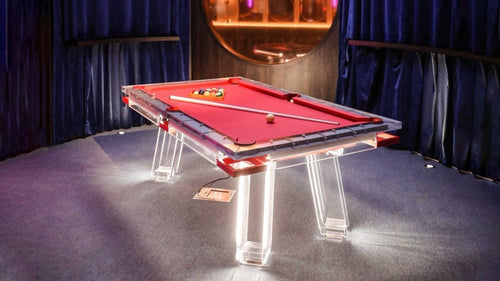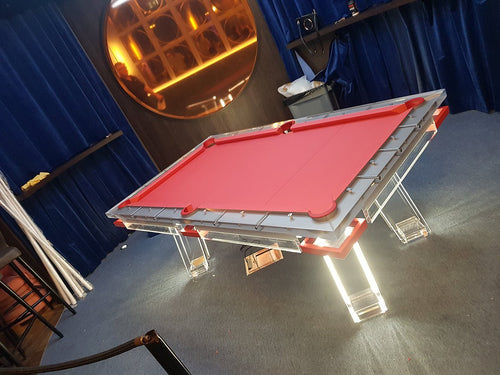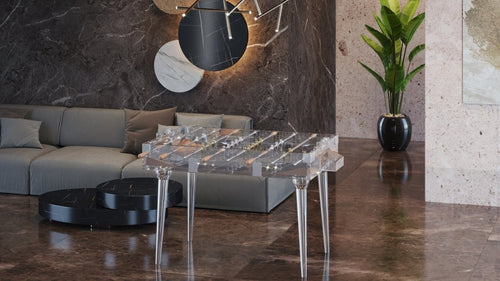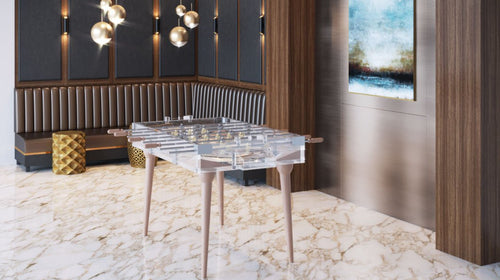


Enjoy our modern designs
A custom pool table may contain proprietary hardware, uncommon dimensions, specialty finishes, and components made for one specific installation. Years later, even a routine repair can become difficult if the table cannot be identified or its original specifications are missing.
A well-organized ownership file gives future technicians reliable information. It can shorten diagnostic visits, prevent incompatible substitutions, support insurance claims, and make the table easier to move or resell.
In this guide
1. Record the Table’s Identity and Specifications
Begin with the information that establishes exactly what you own. Record the manufacturer, model, serial number, purchase date, original dealer, installer, order number, and warranty period. For a fully bespoke table, retain the signed drawings, change orders, material schedule, and final invoice.
Save the completed table’s actual measurements rather than relying on a general label such as “eight-foot table.” Nominal pool-table sizes describe the playing surface, not necessarily the outside dimensions or dining top.
Your basic specification sheet should include:
- Overall length, width, and height
- Playing-surface dimensions
- Dining height with the top installed
- Approximate assembled weight
- Slate quantity and thickness
- Pocket style and opening dimensions
- Leg, pedestal, or base configuration
- Leveling-system type and access points
Design note: Photograph identification plates, stamps, and handwritten assembly marks before the table is positioned against a wall or surrounded by built-in furniture.
2. Document Structural and Playing Components
The slate, frame, rails, cushions, pockets, and leveling system work together. A replacement that fits physically may still change ball response or place the structure under uneven stress.
Retain drawings or measurements showing:
- Slate dimensions, screw-hole locations, and seam positions
- Frame cross-member locations and support points
- Rail dimensions, bolt pattern, and fastening sequence
- Cushion profile, brand, and hardness when known
- Pocket castings, irons, liners, and attachment style
- Leg and stretcher connection details
- Locations of shims, adjustable feet, or internal levelers
Take photographs from above and below. Include wide views showing orientation and close-ups showing fasteners. A technician should be able to tell which component is being shown and where it belongs.
If the table is disassembled, label every major part according to its original location. Rails and slate sections may have been fitted in a particular orientation and should not automatically be treated as interchangeable.
3. Keep Finish and Upholstery Information
A commercial stain name rarely contains enough information for an accurate repair. Retain the wood species, veneer type, stain formula, sheen level, topcoat, application method, and approved cleaning or touch-up products.
Document metal finishes with equal care. “Black metal” might mean paint, powder coating, chemical patina, plated material, or anodized aluminum. Each requires a different repair approach.
For the playing cloth, save:
- Manufacturer and product line
- Color name and product code
- Fiber composition and cloth weight
- Installation date
- Installer and batch information, if available
Remember that new cloth may not exactly match material that has aged under light and use. A retained sample identifies the original specification, but it does not guarantee an invisible partial repair.
Design note: Keep a labeled cloth offcut and finished wood sample in a closed envelope or box away from moisture and sunlight. Do not tape labels directly to finished sample faces.
4. Save Hardware Details and Useful Spares
Custom tables often use concealed fasteners, threaded inserts, alignment pins, magnets, clips, specialty hinges, decorative caps, and precisely sized bumpers. List each item’s dimensions, material, thread type, finish, quantity, and original location.
Reasonable spare items to retain include:
- Examples of proprietary bolts, washers, and inserts
- Dining-top pads, bumpers, gaskets, and locating pins
- Matching finish plugs and fastener caps
- Pocket trim or decorative hardware no longer widely available
- Manufacturer-approved finish touch-up materials
- Keys, remotes, and control components for powered systems
Do not remove installed hardware merely to build a spare collection. Request extras at the time of purchase, when the maker can confirm the correct part.
Store small components in labeled bags or divided boxes. Note the quantity and corresponding drawing location. An unidentified fastener in a drawer will be of limited value several years later.
5. Record Dining-Top and Accessory Details
Dining-top systems have their own service parts. Record the number of panels, individual panel dimensions and weights, installation order, alignment method, support-pad positions, and storage orientation.
Photograph both sides of every panel. If the sections look similar, add removable labels showing their sequence and direction. Keep instructions for operating wall racks, benches, cabinets, or powered lifts with the table file.
Also inventory the accessories supplied with the table:
- Ball set and racks
- Cues, bridges, and wall storage
- Table cover
- Dining panels and storage equipment
- Cleaning brushes and approved care products
- Special tools needed for adjustment or conversion
6. Build a Complete Service History
Keep installation instructions, warranty terms, care guidance, and provider contact details together. Add a dated record for every move, recloth, cushion replacement, leveling visit, finish repair, and hardware change.
Each service entry should identify:
- The condition or complaint
- The technician or company
- Work performed
- Parts and materials used
- Measurements or adjustments made
- Photographs before and after the work
- Any recommended follow-up
Maintain a digital folder with searchable filenames and a physical envelope for samples and spare hardware. Keep a second digital copy in a separate location so the file remains available after a move or equipment failure.
The Bottom Line
A custom pool table remains serviceable when its specifications are treated as a permanent part of the purchase. Preserve exact dimensions, drawings, finish formulas, cloth information, hardware samples, dining-top instructions, photographs, and service records. That file gives future technicians the evidence needed to diagnose problems and reproduce unavailable parts accurately.