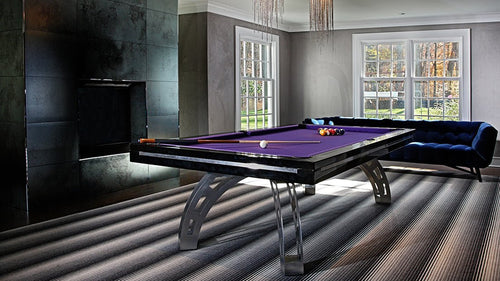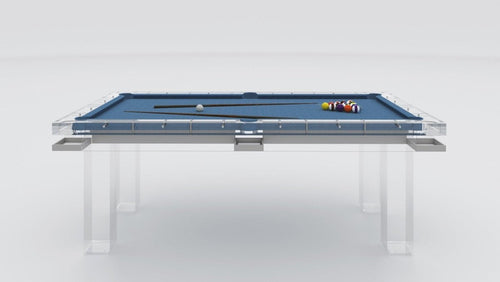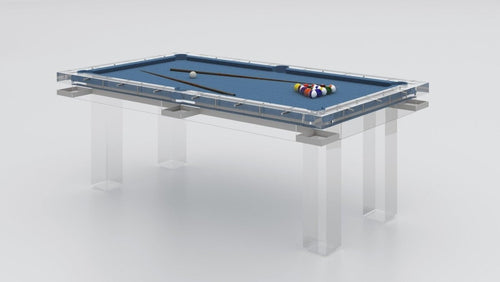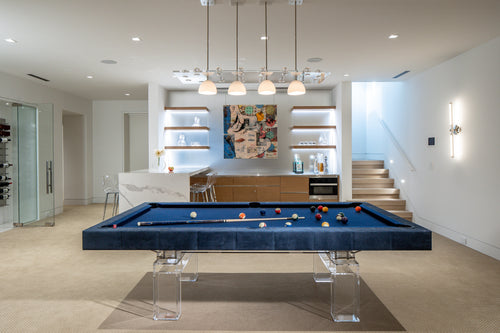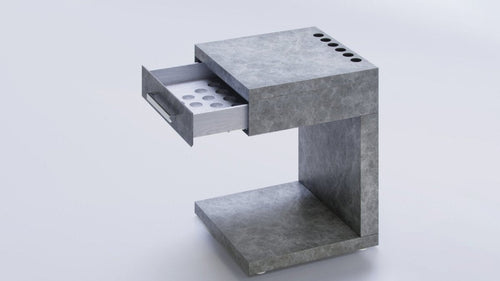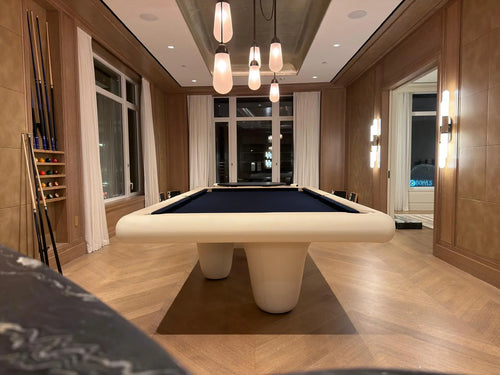


Enjoy our modern designs
Billiards has never been just a game. It is an obsession.
For centuries, the green felt has captivated emperors, presidents, literary giants, and street hustlers. It is a game that requires the geometry of a physicist and the nerve of a gambler.
Billiards has inspired memorable lines, but a memorable attribution is not always a reliable one. These examples distinguish a documented screen quotation, a disputed saying and historical stories that need more care.
Table of Contents
The Backhanded Compliment
“to play billiards well was a sign of an ill-spent youth”
— Charles Roupell, as recalled by Herbert Spencer in David Duncan’s 1908 biography
The familiar story has Spencer losing to a brilliant young player and insulting his opponent. Spencer explicitly denied that scene. In the account recorded by his biographer David Duncan, he said he had repeated a remark by Charles Roupell, without directing it at any player or particular game.
Duncan’s The Life and Letters of Herbert Spencer, pages 298–299, preserves that denial and Spencer’s explanation. It is evidence for what Spencer said about the anecdote, not proof that every later version preserves Roupell’s exact words. The longer “gentleman” formulation should not be presented as a verified Spencer quotation.
The joke still plays on a recognisable idea: billiards takes practice. You cannot buy a smooth stroke. You have to earn it, hour by hour, shot by shot, until the table starts to feel less like furniture and more like a map.
The Writer’s Prescription
A documented room, rather than an unverified prescription
The Mark Twain House & Museum identifies his Hartford billiard room as his office, study and a place for recreation. That is firmer evidence than the unsourced claim that Twain called the table better than doctors.
Mark Twain, born Samuel Clemens, was not a casual player. He was a fanatic. He did not simply keep a billiard table in the house; he built part of his life around it.
When Twain lived in Hartford, Connecticut, his billiard room became both a place of recreation and a creative refuge. He was known to play for hours, often deep into the night, and the rhythm of the game seemed to fit the rhythm of his mind.
The museum describes Twain spreading manuscript pages across the table for editing and entertaining friends late into the night. This makes the room a striking example of work and recreation sharing the same space; it does not establish a medical benefit from billiards.
The Hustler’s Philosophy
“Money won is twice as sweet as money earned.”
— “Fast Eddie” Felson, The Color of Money
Spoken by Paul Newman in the sequel to The Hustler, this line captures the darker, electric soul of American pool.
Billiards is not only about mechanics. It is about action. It is about putting something on the line — your ego, your wallet, your reputation — and taking the result from someone else through nerve, calculation, and skill.
The contrast between precise shot-making and uncertain human motives gives a fictional pool story its tension. Every match can carry pressure, pride and the risk of misjudging an opponent; that interpretation does not by itself explain the historical survival of the sport.
The Comedian’s Confidence
W. C. Fields and the billiards comedy
The American Film Institute records Fields as Sheriff “Honest” John Hoxley in Six of a Kind (1934), and identifies billiards among the film’s subjects. An exact dialogue quotation needs a traceable scene or script; the “fair game... or two” exchange is therefore not reproduced as verified dialogue here.
W.C. Fields was a vaudeville juggler before he became a screen comedian, and he was a master of physical timing. That timing translated beautifully to billiards.
The AFI synopsis describes Hoxley as a bumbling sheriff. A comic character’s confidence is part of the performance, not evidence of a player’s real skill or a rule that apparent clumsiness must conceal mastery.
For players, the useful thought is simpler: judge an opponent by the shots and decisions at the table. Boasting and modesty are unreliable measures of ability.
The Royal Legend
A royal quotation needs a royal source.
No identifiable contemporary source is supplied for “Let it be done” as a billiards order from Louis XI in 1470. It should not be treated as his documented words.
The exact Bastille installation story also needs archival evidence before it can anchor a chronology. A king’s name and a precise year can make a story sound authoritative without establishing it.
The Billiard Congress of America offers a broader account: billiards developed from a northern European lawn game in the fifteenth century, probably in France, and moved indoors onto tables. This is a historical summary, not documentation of the supposed decree.
The indoor table, cloth and cushions created a distinctive setting for play. Those developments are worth exploring without attaching invented dialogue to a monarch.
The Takeaway
Whether you view billiards as a gentleman’s art, a hustler’s battlefield, or evidence of a misspent youth, the game demands respect.
That is why writers, philosophers, comedians, kings, and gamblers have all found something worth saying about it. The table has always attracted a strange mix of people: the refined and the reckless, the disciplined and the crooked, the intellectual and the obsessive.
When you step up to the table, you are not just playing a game. You are entering a conversation that has been going on for centuries — one built on angles, pressure, ego, patience, and the endless pursuit of one cleaner shot.
Sources
References checked October 19, 2026: David Duncan, The Life and Letters of Herbert Spencer (1908), pp. 298–299: Spencer’s denial and Roupell attribution; Mark Twain House & Museum: billiard room as study and recreation space; Disney: The Color of Money, Eddie Felson quotation and Paul Newman role; AFI: Six of a Kind (1934), Fields’s role and billiards subject; BCA: broad historical account of billiards’ lawn-game origins.