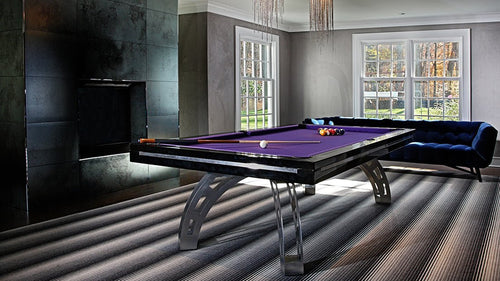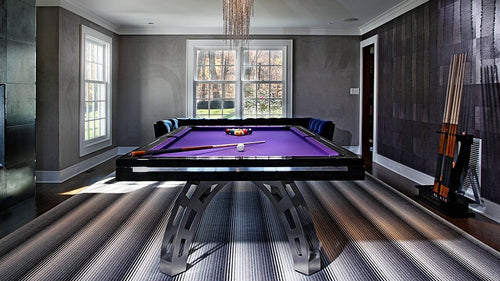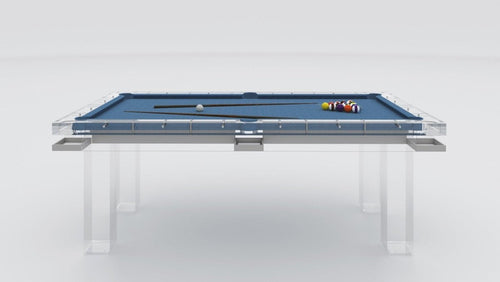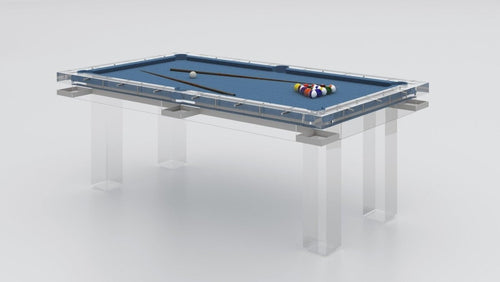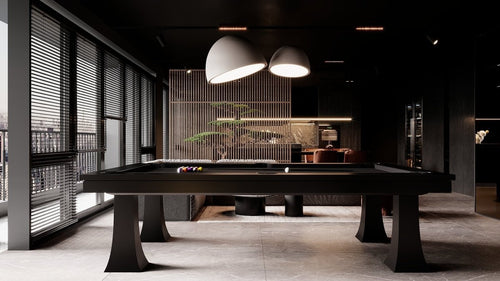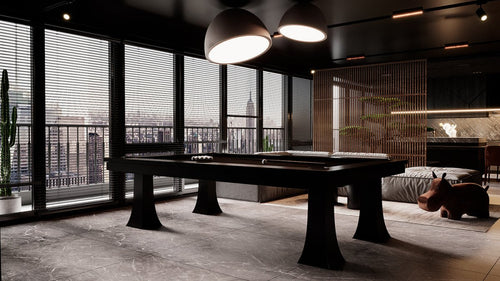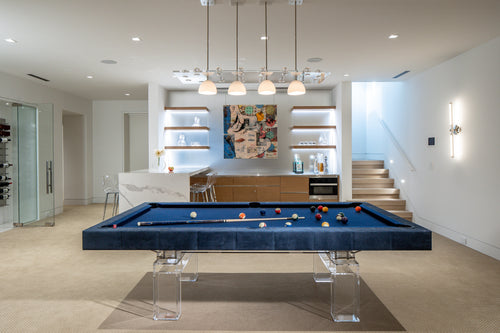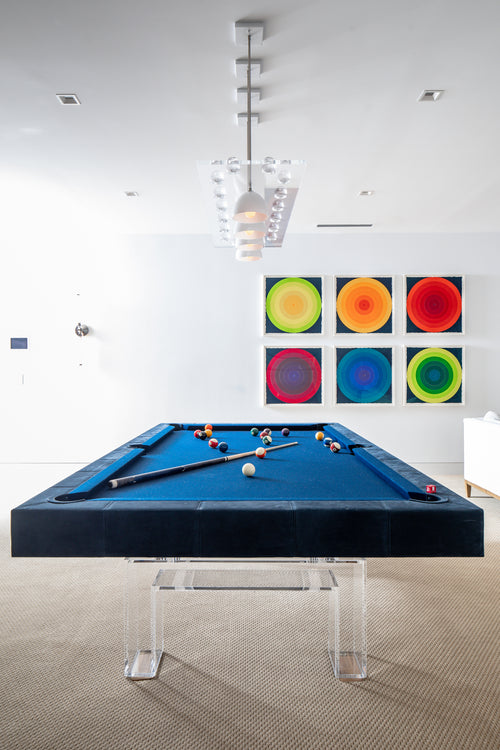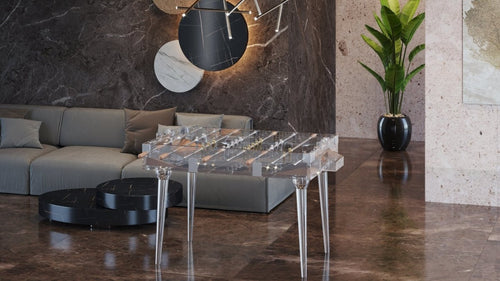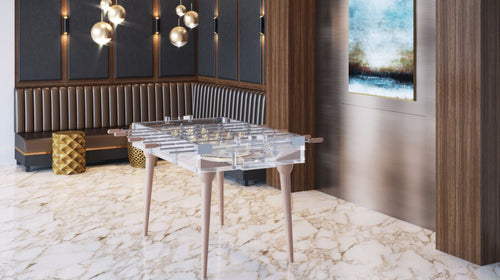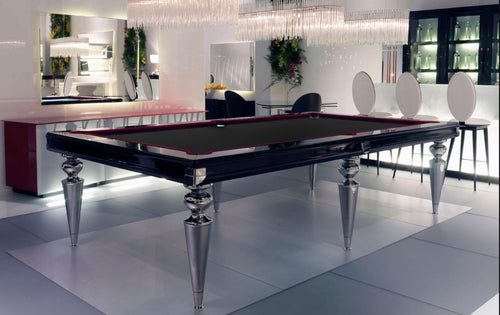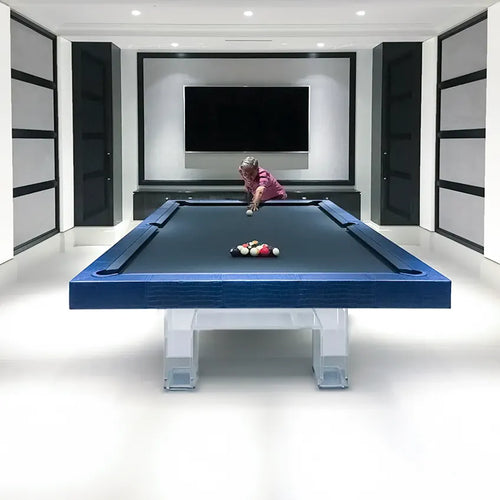


Enjoy our modern designs
Cue storage is one of the easiest details to get wrong in a pool room. The table may be beautiful. The lighting may be carefully selected. The room may have strong materials, thoughtful furniture, and a clean layout. Then a basic cue rack gets added to the wall and the whole space suddenly feels less refined.
That is the problem with cue storage. It looks like a small decision, but it has a large visual effect. Pool cues are long, vertical, repetitive objects. If they are stored poorly, they create clutter immediately. If the rack looks cheap, the room absorbs that cheapness.
Good cue storage should make the room easier to use without making it feel like a basement game room. The best solutions either disappear into the architecture or look considered enough to deserve being seen.
Table of Contents
1. Why Cue Storage Matters So Much
Cue storage matters because it is almost always visible when it is handled poorly. Cues leaning against a wall make the room feel temporary. A basic rack makes the room feel recreational. A rack placed in the wrong spot can interrupt the wall, crowd the table, or make the entire space feel less designed.
In luxury interiors, the pool table is usually meant to feel like furniture, not equipment. Cue storage can either support that goal or ruin it. If the cues are treated like loose gear, the room starts to feel like a hobby space. If they are stored with intention, the room feels more complete.
This is especially important when the pool table is placed in an open-concept living area, formal lounge, hotel space, club room, or entertainment suite. In those rooms, every visible object carries more weight.
Designer insight: Cue storage is not just a practical detail. It is part of the room’s visual discipline.
2. Decide Whether the Cues Should Be Visible or Hidden
The first decision is simple: should the cues be part of the room’s visual identity, or should they disappear when not in use?
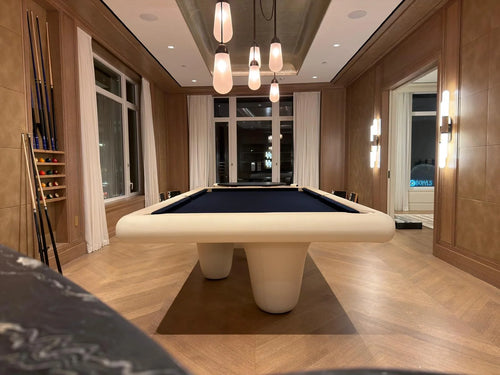
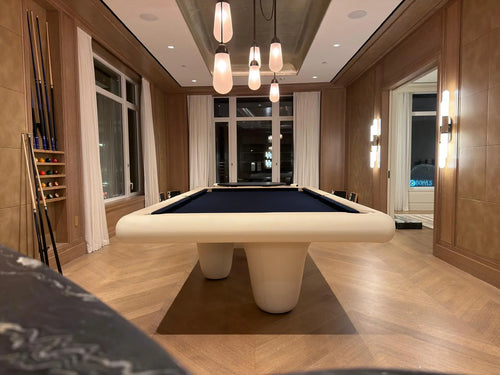
Visible cue storage can work in a dedicated billiard room, club-style lounge, or space where the game function is meant to be celebrated. But visible storage needs to be designed well. The rack should feel architectural, not like an accessory bought after the table arrived.
Hidden storage usually works better in formal spaces, open-plan homes, luxury hotels, and rooms where the pool table is meant to blend with the interior. Cues can be stored behind millwork doors, inside a cabinet, within a wall panel, or in a concealed vertical compartment.
The wrong move is choosing visible storage by default. Cues do not need to be on display just because they need to be accessible.
3. Avoid Generic Wall Racks in Formal Rooms
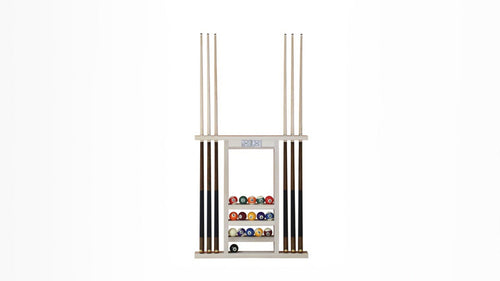
A standard cue rack can be practical, but it often brings the wrong feeling into a luxury room. It immediately signals “game room” in the most literal way. That may be fine in a casual basement, but it can feel crude in a custom home or hotel lounge.
The problem is not only the rack itself. It is the effect it has on the wall. A generic rack can interrupt millwork, compete with art, clutter a clean surface, or make a refined room feel like a sports bar.
If the room has strong architecture, the cue storage should respect that architecture. It should not look like a retail accessory attached to a finished wall.
When in doubt, avoid the obvious rack. The more refined the room, the less the storage should announce itself.
4. Built-In Storage Usually Looks More Expensive
Built-in cue storage is often the cleanest solution because it allows the storage to belong to the room. Instead of adding a rack to the wall, the cues become part of the millwork, paneling, cabinetry, or storage system.
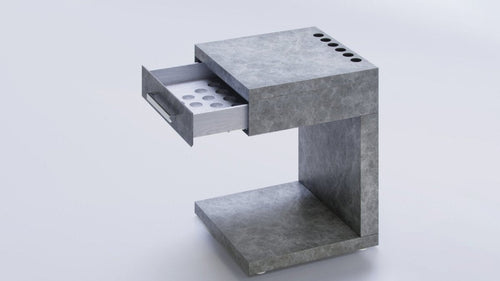
This can be done in several ways. A tall cabinet can hold cues vertically. A sideboard can include a concealed cue section. A wall panel can open to reveal storage. A bar or lounge wall can include a dedicated billiard compartment. In more casual rooms, a custom open display can still work if it is designed as part of the wall.
Built-in storage also gives designers more control over proportion, finish, and placement. The storage can match nearby cabinetry, relate to the table, or disappear completely.
The best cue storage looks like it was planned before the table arrived.
Pro tip: If the room already has millwork, a bar, or wall paneling, solve cue storage there first. A separate rack should be the fallback, not the default.
5. Match the Room, Not Just the Table
A common mistake is matching cue storage only to the pool table. The rack uses the same wood tone or finish as the table, but it ignores the wall, lighting, cabinetry, flooring, or surrounding furniture.
That can make the storage feel detached. The table and rack may match each other, but together they still look like a game-room set dropped into a larger interior.
Better cue storage relates to the architecture. It may use the same finish as the millwork, the same metal as the lighting, the same leather detail as nearby seating, or the same rhythm as the wall panels. The table should be part of that relationship, but not the only reference point.
The goal is not perfect matching. The goal is belonging.
6. Placement Should Support Real Use
Cue storage has to be beautiful, but it also has to work. If the cues are too far from the table, people will leave them leaning nearby. If the storage is awkward to access, guests will avoid using it correctly. If it sits inside the playing path, it creates friction during the game.
Good placement keeps cues close enough to be useful but out of the cue path. It should be easy for someone to select a cue without walking through another player’s shot or interrupting the room’s circulation.
In hospitality spaces, placement also affects staff. The storage should be easy to reset, easy to check, and visible enough to manage without making the room feel cluttered.
Beautiful storage that people do not use is not good storage. It is decoration with a design flaw.
7. Cue Storage Should Protect the Cues Too
Cue storage is not only about hiding visual clutter. It should also protect the cues. Cues should be stored straight, supported properly, and kept away from unnecessary impact, moisture, or heat.
Leaning cues against walls can lead to damage. Loose storage can allow cues to knock into one another. Poorly designed clips or shallow racks can feel unstable. In a luxury room, that kind of handling looks careless and shortens the life of the equipment.
A proper storage solution should hold the cues securely without making them difficult to remove. It should feel smooth to use and visually calm when closed or arranged.
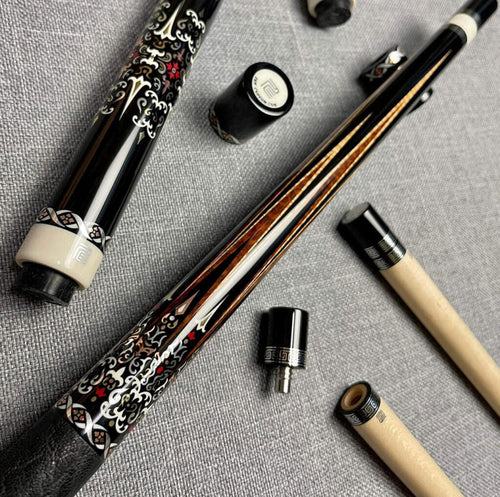
The better the cues, the more important this becomes. Expensive accessories deserve storage that treats them like part of the specification, not disposable extras.
The Bottom Line
Cue storage can quietly ruin a pool room if it is treated as an afterthought. Generic racks, exposed clutter, awkward placement, and poor material choices can make even a beautiful table feel less refined.
The best cue storage is planned early, placed conveniently, and designed to match the room’s architecture. It either disappears cleanly or becomes a controlled design feature.
A luxury pool room should not look like it is storing equipment. It should look like every object has a reason and every detail knows where it belongs.