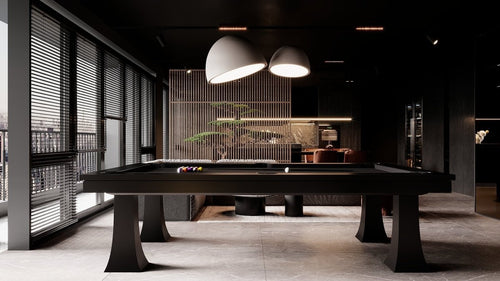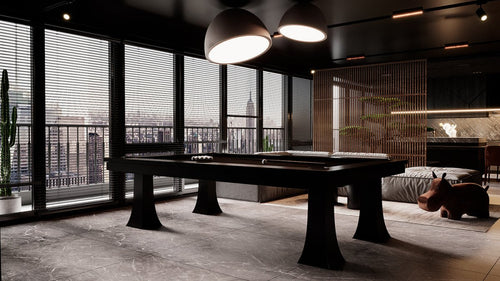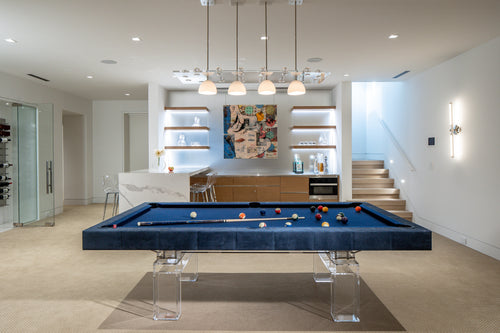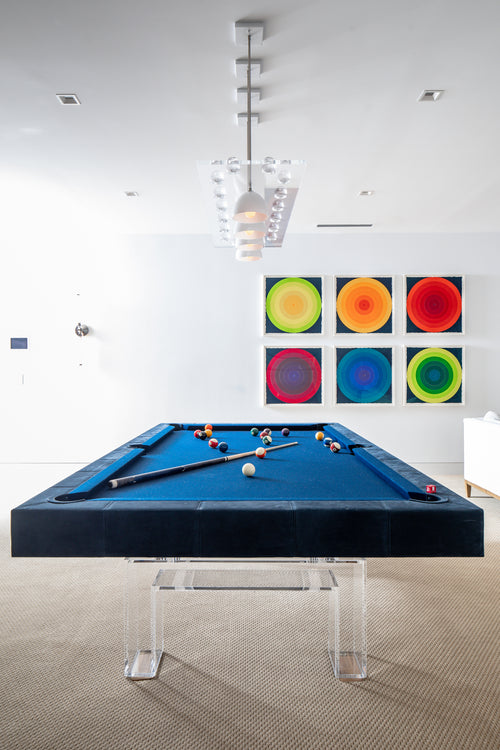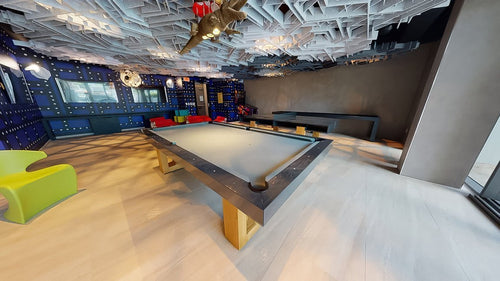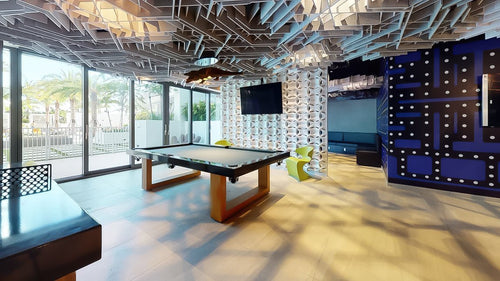


Enjoy our modern designs
A bespoke pool table is not defined by one dramatic feature. It is rarely just the rarest stone, the loudest finish, or the most unusual base shape. The difference is usually quieter than that. It is the accumulation of precise design choices that make the table feel intentional, site-specific, and naturally integrated into the room around it.
This is especially true in luxury interiors, where “custom” can easily become overdesigned. A pool table does not need to shout to feel personal. In many of the best rooms, the table feels bespoke because every proportion, material, edge, and finish has been considered in relation to the architecture, furniture, lighting, and lifestyle of the home.
Table of Contents
1. The Exact Finish of the Frame
The frame finish is one of the first things people notice, even if they do not consciously register it. A dark walnut table, a pale oak table, a black lacquer table, and a satin metal table can all have the same general shape, yet create completely different impressions.
This is where bespoke design begins. The finish should not be selected in isolation. It should respond to the flooring, wall paneling, cabinetry, nearby furniture, and the overall tone of the room. A walnut frame can feel warm and architectural in a modern organic home. A black-stained oak frame can sharpen a masculine lounge or penthouse game room. A whitewashed wood can soften the table for a coastal or Mediterranean interior.
2. The Sheen Level
Sheen is one of the most overlooked details in custom pool table design. Two tables can use the same material and color, but the difference between matte, satin, semi-gloss, and high-gloss completely changes the mood.
Matte finishes tend to feel more architectural and understated. Satin finishes are versatile and work well in refined residential interiors because they catch light without becoming overly reflective. High-gloss finishes are more theatrical and can be beautiful in Art Deco, ultra-modern, or hospitality-inspired spaces.
The Pro Insight: A truly bespoke table considers how the finish behaves under the room’s lighting, not just how it looks in a showroom photo.
3. The Rail Profile
The rail profile has a huge effect on how the table feels. A thick, squared rail can make the table look grounded and substantial. A thinner, softened rail can make it feel more elegant and furniture-like. A beveled or chamfered edge can introduce a subtle architectural detail without making the piece feel busy.
The rail is also the part of the table people physically interact with most. Hands rest on it. Players lean into it. Guests notice its thickness and edge treatment even if they cannot name the detail. When the rail feels right, the table feels more resolved.
4. Pocket Style
Pocket design can dramatically affect the character of a pool table. Leather drop pockets feel classic and familiar. Hidden pockets feel cleaner and more modern. Metal pocket details can add a refined industrial note. Matching pockets to the rail finish can make the table feel seamless, while contrasting pockets can create deliberate emphasis.
Small choices matter here: leather color, stitching, pocket opening shape, metal trim, and whether the pocket is visually celebrated or minimized. The best pocket design supports the table’s identity instead of pulling attention away from it.
5. Felt Color
Felt is often treated as a simple color choice, but it has enormous visual impact. It is the largest uninterrupted color field on the table. In many rooms, it becomes one of the dominant surfaces.
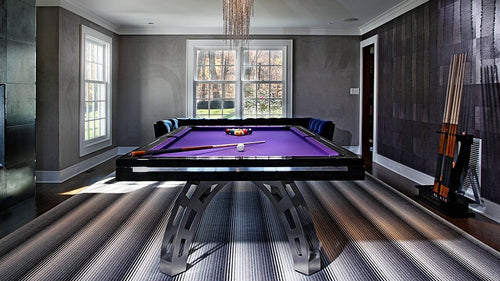
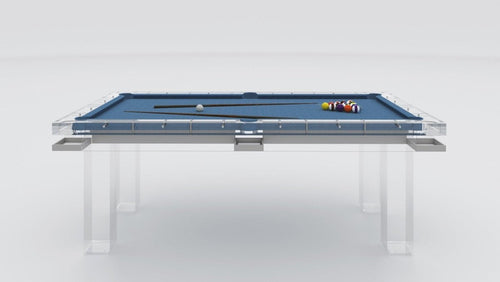
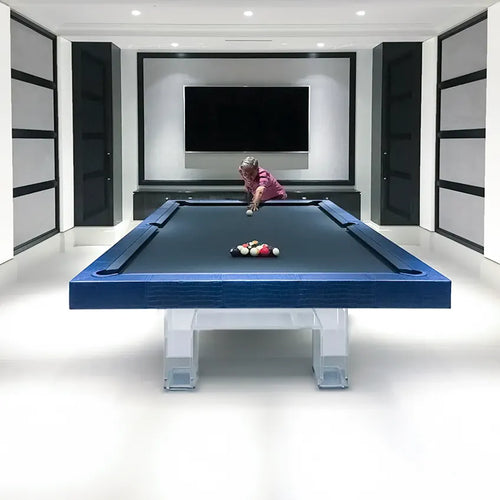
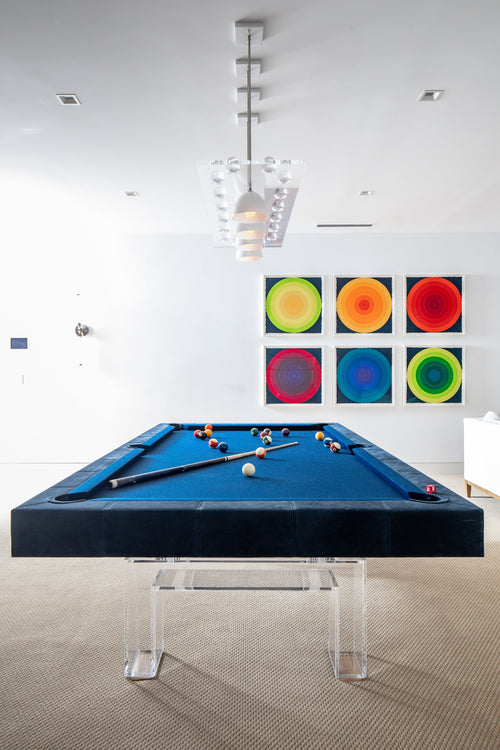
Green is traditional and instantly recognizable. Tournament blue feels sporty and contemporary. Black can feel sleek but may be too heavy in some interiors. Grey, camel, navy, burgundy, and custom neutrals can make the table feel more integrated into a designed room. The ideal felt color creates a bridge between playability and interior design.
6. The Proportion of the Base
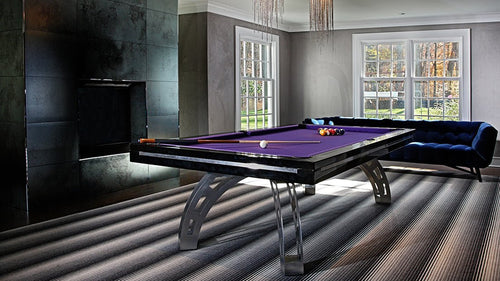
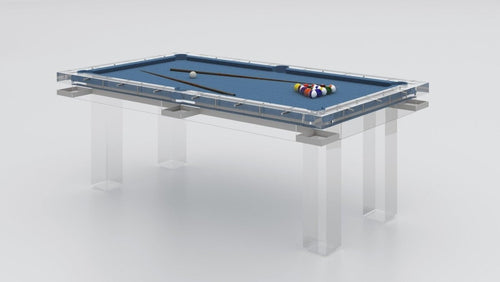
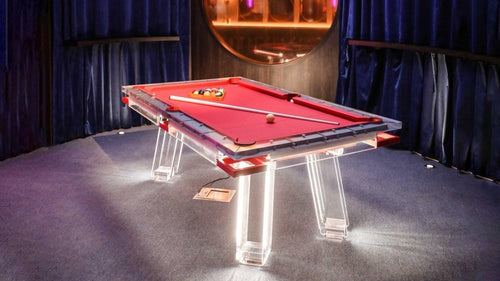
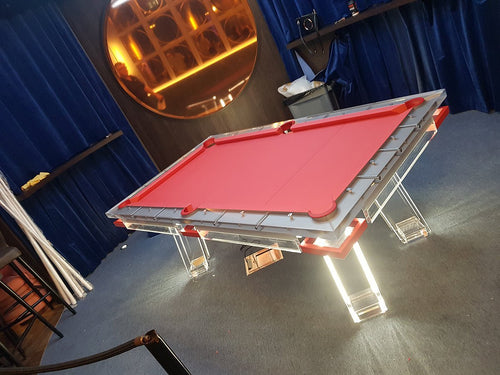
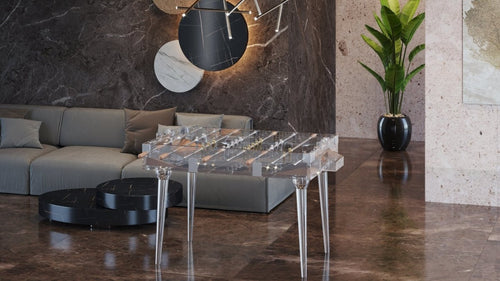
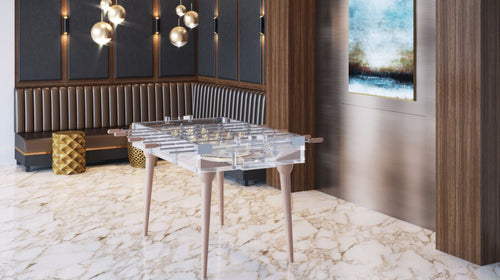
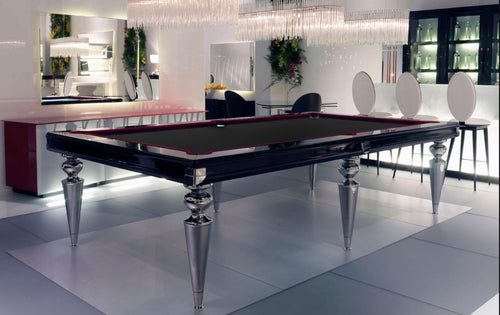
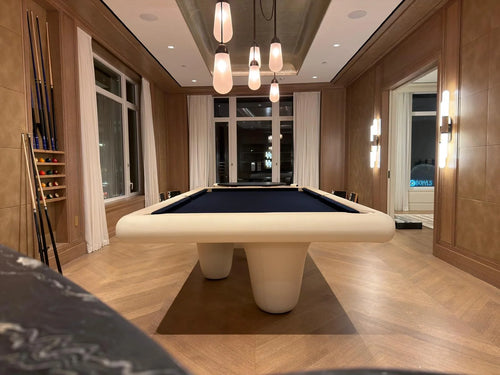
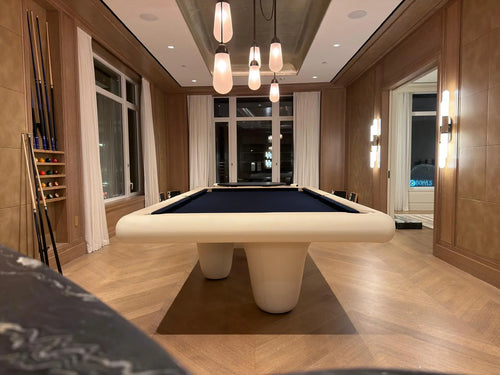
A pool table’s base is where much of its personality comes from. Thin legs feel lighter. Solid pedestal forms feel sculptural. Cross-braced structures feel architectural. Acrylic bases feel airy and contemporary. Metal bases can feel industrial, futuristic, or refined depending on their shape.
A bespoke table considers mass, negative space, and sightlines. From some angles, the base may be the most visible part of the table. In open-plan homes, the table is often seen from the side before it is seen from above. That makes the base design crucial.
7. Metal Details
Metal accents can make a pool table feel tailored, but they can also ruin the design if they are chosen carelessly. Polished chrome, brushed stainless steel, antique brass, blackened steel, bronze, and champagne metal all communicate different things.
The goal is not to cover the table in metal. The goal is to use metal as punctuation. A brass detail in a room with brass lighting feels intentional. Blackened steel in a room with dark-framed windows feels architectural. Chrome beside polished contemporary furniture feels clean and modern.
8. Edge Details
Edges are a quiet luxury detail. A pool table with a basic square edge can look fine, but a carefully considered edge treatment can make it feel far more expensive.
A softened edge makes the table feel more touchable and residential. A bevel can add precision. A bullnose can feel more traditional. A sharp mitered edge can feel modern and architectural. The edge also affects how light moves across the table, which matters because the table sits in the room all day as a furniture object.
9. Material Pairing
The best custom pool tables often combine materials: wood and metal, stone and lacquer, acrylic and glass, leather and walnut, marble and bronze. But material pairing has to be disciplined.
The strongest bespoke designs usually have a clear hierarchy: one primary material, one secondary material, and perhaps one accent. A walnut table with black metal details feels grounded and masculine. A marble table with brass accents feels formal and sculptural. An acrylic table with a neutral felt color feels modern and visually light.
10. Room-Specific Sizing
Size is not only a technical decision. It is a design decision. A 9-foot table may feel impressive, but in the wrong room it can dominate everything. A 7-foot table may be practical, but in a large lounge it may feel underscaled. An 8-foot table often works beautifully in residential interiors because it balances playability with proportion.
A bespoke table is sized for the room, not just for the game. Circulation, seating, wall distance, bar placement, views, and how guests move through the space all matter.
11. Accessory Matching
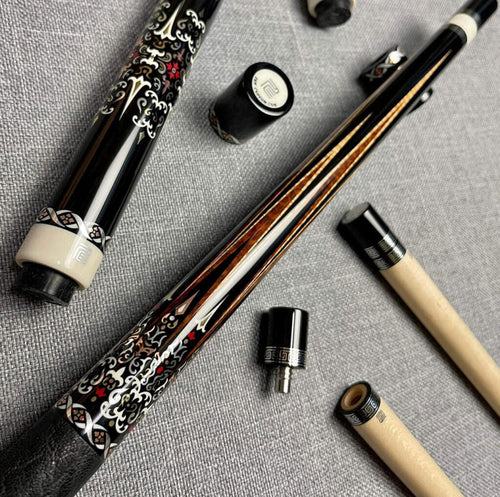
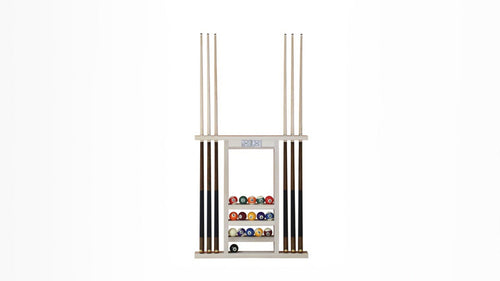
Cues, racks, covers, benches, dining tops, and storage pieces should not be afterthoughts. A beautiful bespoke table can lose some of its effect if the accessories look generic.
A wall-mounted cue rack should match the table’s material language. A triangle rack can be made in a coordinating wood or finish. A table cover can be selected to suit the tone of the room. If the table has a dining top, the top should feel like part of the original design, not an emergency add-on.
12. How the Table Relates to the Room’s Mood
The most important design choice is also the hardest to define: the table has to match the mood of the room. Not just the color. Not just the finish. The mood.
A coastal home may need something relaxed, pale, and tactile. A downtown penthouse may need something sharper and more architectural. A traditional estate may need richness, symmetry, and warmth. A Miami-style entertainment room may call for acrylic, gloss, or bold contrast. A mountain home may need heavier materials and natural textures.
| Design Detail | Why It Matters |
|---|---|
| Finish & Sheen | Sets the table’s personality and controls how it reacts to light. |
| Rails, Edges & Pockets | Determines whether the table feels classic, modern, heavy, soft, or architectural. |
| Base & Materials | Controls the visual weight of the table from every angle. |
| Accessories | Completes the room and prevents the table from feeling isolated. |
The Bottom Line
The most luxurious custom pool tables are rarely the ones with the most features. They are the ones with the clearest point of view.
A bespoke table should feel considered from every angle: the sheen of the finish, the shape of the rail, the tone of the felt, the proportion of the base, the pocket detail, the accessory set, and the way the entire piece sits inside the room. The real goal is not to make a pool table look “custom.” The goal is to make it feel inevitable, as if it was always supposed to be there.