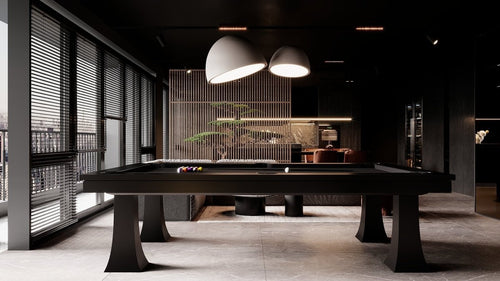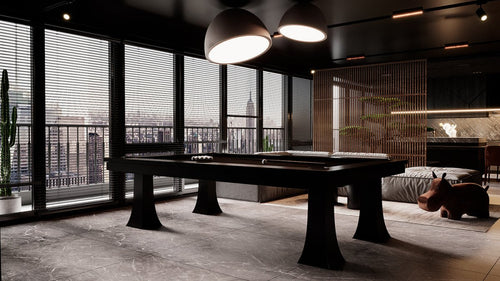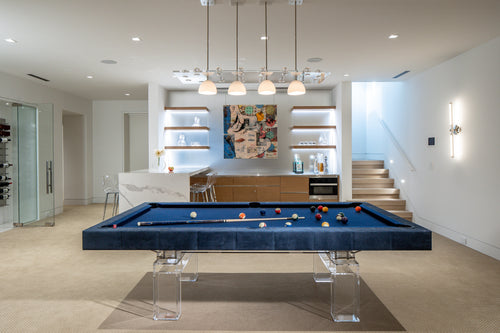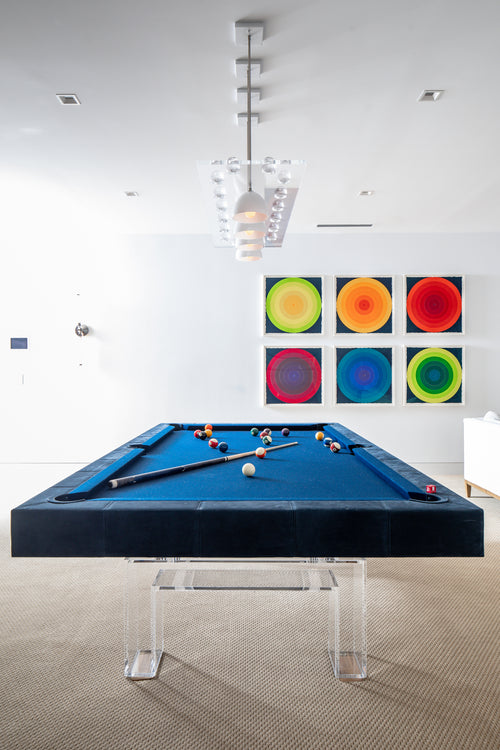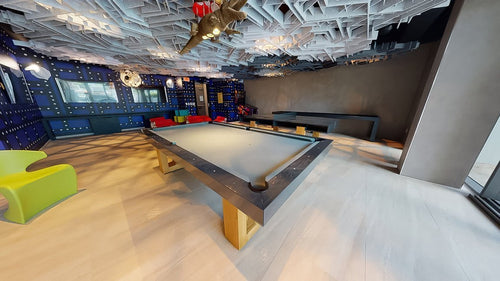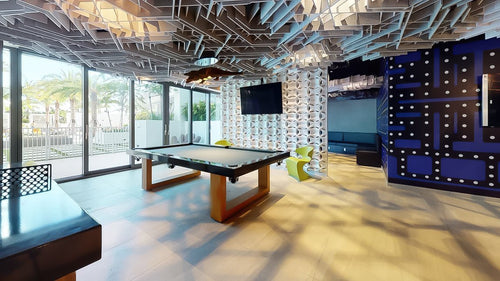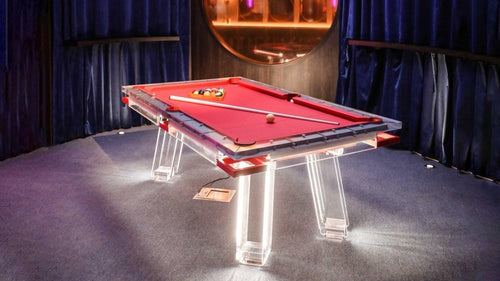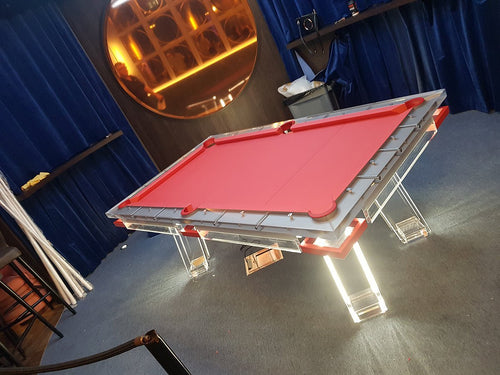

Enjoy our modern designs
Billiard Cloth Craft
Most people call it felt, but the surface on a serious pool table is closer to a performance textile than a decorative fabric. The best billiard cloth begins with carefully prepared wool, precise spinning, tight weaving, controlled dyeing, and finishing work that turns fiber into speed, smoothness, and accuracy.
The cloth on a pool table is not just there for color. It is part of the physics of the table. It affects speed, spin, durability, maintenance, and the way the entire room feels around the game.
Material Origin
Fabric Quality Starts
Before the Loom
Most people call the surface of a pool table “felt,” but that word is misleading. High-end billiard cloth is not the same loose, fuzzy material used in craft fabric or cheap upholstery. It is a technical surface built for speed, consistency, durability, and control.
A good billiard cloth begins long before it reaches the loom. It starts with fiber. The better the fiber, the better the cloth has a chance to become.
High-end billiard cloth usually begins with fine wool, often associated with Merino sheep from regions such as Australia or New Zealand. These sheep produce long, soft, strong fibers that can be spun into smoother yarn. That matters because pool table cloth has to survive constant friction: balls rolling, cues brushing, hands pressing, chalk dust settling, and repeated play in the same traffic areas.
A cheap fabric in tournament blue is still a cheap fabric. Textile performance starts deeper than color.— On the difference between appearance and construction
The useful way to understand billiard cloth is as a chain of decisions: fiber choice, yarn formation, weave density, dyeing, and finishing. Each stage affects the final playing surface. You cannot fake premium cloth by simply choosing a nice shade of green, blue, gray, or camel.
Wool gives billiard cloth its natural resilience, grip, and feel. Nylon is often added in smaller amounts to improve strength, elasticity, and wear resistance. The goal is not to make the cloth feel synthetic. The goal is to reinforce the wool so the finished surface can handle years of play without stretching, pilling, or breaking down too quickly.
Yarn Formation
Worsted Cloth Begins with
Discipline in the Fiber
Once the wool is sourced, it has to be cleaned, combed, and prepared for spinning. This is where worsted cloth separates itself from ordinary felt.
In the worsted process, wool fibers are combed so the long fibers are aligned in the same direction, while many of the shorter and weaker fibers are removed. The result is a smoother, tighter, cleaner yarn.
That matters because short loose fibers are what create fuzz, pilling, and nap. A traditional fuzzy fabric may feel soft under the hand, but on a pool table that softness becomes drag. It can slow the ball, alter the roll, collect chalk, and wear unevenly.
Stage 01
Fiber Selection
MaterialFine Wool
PurposeResilience
Long, strong fibers create a better foundation for smooth yarn and durable cloth.
Stage 02
Combing
ProcessAlignment
PurposeLess Fuzz
The worsted process removes many shorter fibers and creates a cleaner yarn structure.
Stage 03
Spinning
OutputTighter Yarn
PurposeControl
A smoother yarn helps create a faster, more consistent playing surface.
Stage 04
Blending
AdditionNylon
PurposeWear Resistance
A controlled wool-nylon blend can improve strength without turning the cloth into a synthetic-feeling surface.
Professional cloth should be chosen for the cue sport and product specification. Nap-free worsted cloth is familiar in American pool; a controlled directional nap is also a deliberate feature of high-performance snooker cloth.
The yarn is the first serious performance decision.
Surface Architecture
Warp, Weft, and the
Architecture of Roll
Once the yarn is ready, it is woven into cloth. This is where warp and weft matter.
The warp threads run lengthwise through the fabric. The weft threads run across them. Together, they create the structure of the cloth. That structure determines how the fabric behaves under friction, pressure, stretch, and repeated use.
For billiards, the weave has to be tight and consistent. A loose weave would create movement, texture, and irregular resistance. A dense weave gives the ball a more predictable path. The smoother and more uniform the surface, the less the cloth interferes with the shot.
This is the part casual players rarely think about. Pool table cloth is not just a colored skin stretched over slate. It is a surface architecture.
The ball is interacting with thousands of woven threads every time it rolls. If those threads are uneven, fuzzy, loose, or inconsistent, the ball knows. You may not see the defect immediately, but you feel it in slower speed, strange roll-off, inconsistent spin, or premature wear marks.
Good cloth creates less drama. The ball simply goes where it was sent.
Color and Finish
Dye Gives the Cloth Color.
Finishing Gives It Behavior.
After weaving, the cloth is dyed. Classic tournament green remains the traditional color, but modern tables often use blue, gray, red, camel, charcoal, black, or custom tones depending on the room.
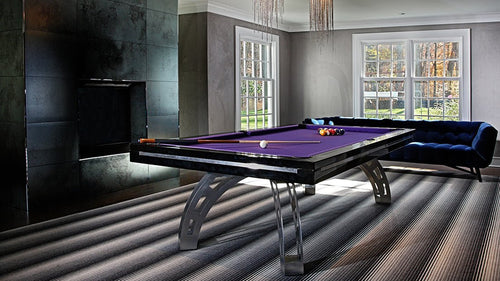
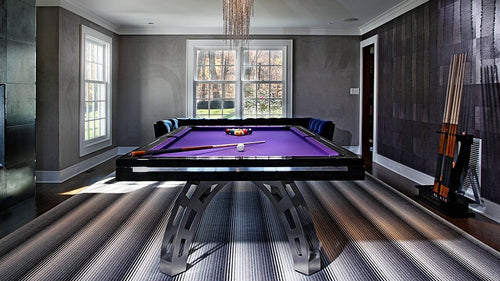
In luxury interiors, the felt color is often chosen as part of the whole palette: wall tone, wood finish, lighting temperature, rug texture, stone flooring, metal accents, and upholstery. But color alone does not make cloth good.
A high-quality dyeing process has to produce even color without weakening the fiber or causing bleeding. The cloth has to keep its tone under table lighting, resist fading, and avoid looking patchy after installation.
This is especially important in high-end residential spaces. A luxury pool table often sits under strong overhead lighting, sometimes in a room designed around atmosphere: pendant lights, wall sconces, moody paint, dark wood, polished metal, leather seating, or a custom bar nearby. Weak dye work exposes itself quickly in that kind of room.
Fabric is not finished when it comes off the loom. In many ways, that is when the real product work begins.
For billiard cloth, finishing is where the woven fabric becomes a controlled playing surface. Precision shearing removes remaining fuzz. Pressing and steaming help stabilize the cloth. The goal is to reduce stretch, create a consistent hand, and make sure the fabric behaves predictably once it is pulled tight across the slate.
Finishing can make good cloth better, but it cannot turn mediocre yarn and loose weaving into professional-grade fabric.— On the limits of surface treatment
Some manufacturers also apply stain-resistant treatments, including coatings similar to Teflon-style finishes. These can help resist spills, but they are not automatically superior for every table. On a serious playing surface, heavy coatings may affect elasticity, feel, and ball response.
The best cloth feels effortless because every layer beneath it is doing its job.
Performance Types
Worsted, Napped, and Synthetic Cloth
Do Not Play the Same
Nap-free worsted cloth is a common performance choice for American pool. It offers a smooth surface without a directional nap. That does not make it the universal best cloth for every billiard discipline: professional snooker uses purpose-designed napped cloth.
This is why worsted cloth is often called speed cloth. The surface is tighter and slicker, so the ball travels farther with less energy loss. For skilled players, that is an advantage. It allows more precise cue ball control and a more professional playing experience.
Care requirements depend on the cloth maker’s instructions. A nap-free surface and a directional nap need different maintenance approaches; neither the presence of nap nor the wool percentage alone establishes quality or service life.
Premium Choice
Worsted Wool Cloth
FeelFast
Best ForAmerican Pool
Smooth and nap-free; choose a model specified for the pool game and intended playing conditions.
Traditional Choice
Napped Wool Cloth
FeelSlower
Best ForSnooker and UK Pool
A controlled nap is part of the playing surface in snooker and some pool disciplines, including professional use.
Check the Product
Synthetic Cloth
FeelVariable
Best ForSpecified Use
Judge the named cloth’s playing performance and intended use; synthetic content alone is not a quality grade.
Buying Rule
Do Not Cheap Out
Table LevelPremium
Cloth LevelPremium
Putting low-end cloth on a high-end slate table is like putting budget tires on a sports car.
Napped cloth has a directional texture created by raised fibers. Its speed and control depend on the specific cloth and maintenance. A nap is not evidence that a table is intended only for casual players.
But nap also creates maintenance issues. The cloth usually needs regular directional brushing to keep the fibers aligned. Over time, it can develop pilling, track marks, worn spots, and uneven speed. The ball may behave slightly differently depending on direction and wear.
For example, Strachan describes the controlled nap of its snooker range and identifies No. 10 Championship as the official World Snooker cloth. Choose for the discipline and intended playing characteristics rather than ranking all napped cloth below all worsted cloth.
Synthetic content does not establish quality on its own. Compare the actual cloth’s composition, intended game, playing characteristics and maintenance instructions. Evaluate a product rather than treating every blend as decorative or low-performing.
The problem with economy cloth is not always obvious on day one. It reveals itself over time.
Interior Design
Cloth Changes Both the Game
and the Room
There is also a design side to this. Pool table cloth is one of the most visible surfaces in a game room. It acts almost like a horizontal color field in the center of the space.
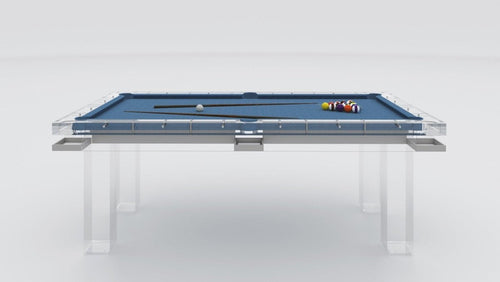
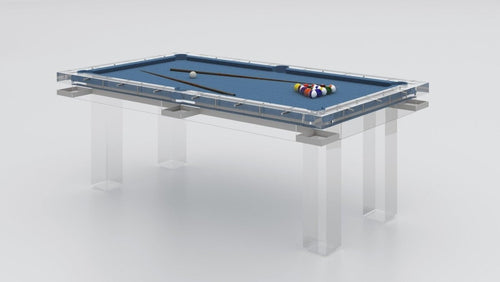
Green feels classic. Blue feels competitive and modern. Camel feels warm and architectural. Gray feels restrained. Black feels dramatic, though it can show chalk and dust more aggressively.
But cloth color should be chosen after the performance level is decided. A beautiful color on poor cloth is still poor cloth. A luxury table should start with the right fabric category first, then move into color, tone, and room coordination.
Design Connection
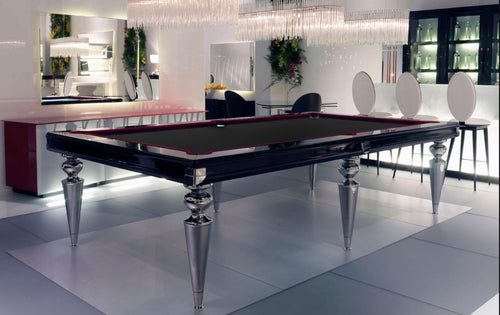
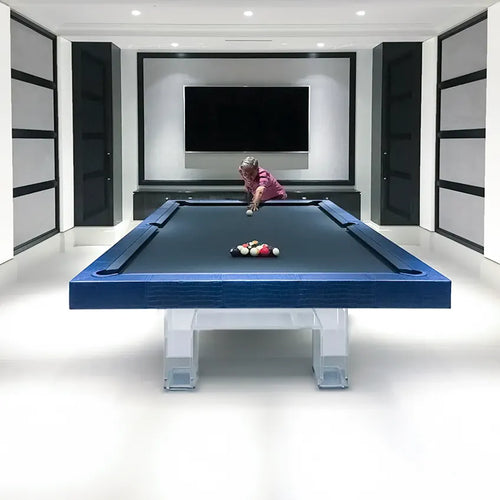
For a refined game room, cloth is where play quality and visual atmosphere meet. The right fabric supports accurate roll while giving the table its central color presence. That matters whether you are choosing a finished luxury pool table, planning a full game room set, or commissioning a custom design.
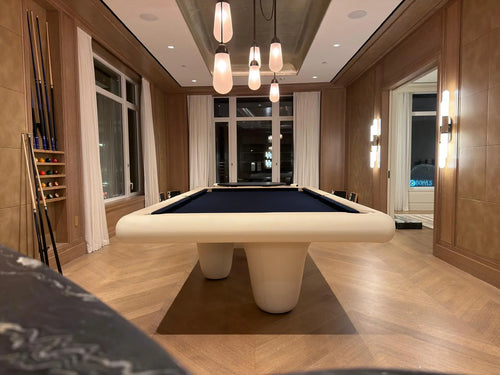
This is especially true when the table sits in a serious interior: walnut paneling, leather seating, stone floors, warm lighting, or a custom bar nearby. In that environment, the cloth has to do two jobs. It has to support play, and it has to visually belong.
The best billiard cloth does both.
The easiest way to explain billiard cloth quality is this: bad cloth is mostly color and covering. Good cloth is structure, finish, and behavior.
The difference starts with the sheep, but it does not end there. Premium wool matters. Worsted spinning matters. Warp and weft matter. Weave density matters. Dyeing matters. Finishing matters. Even the choice to use or avoid certain coatings matters.
The Real Surface
A pool table cloth is not just a surface. It is a chain of technical decisions turned into something the player experiences as speed, smoothness, accuracy, and control. When the cloth is right, the table feels less like furniture with fabric on top and more like a proper playing instrument.