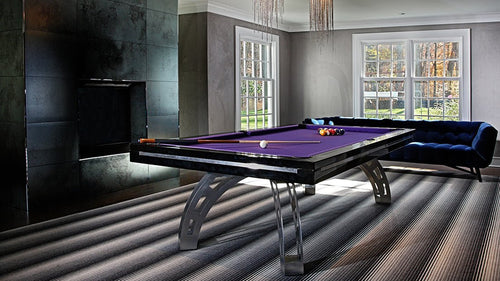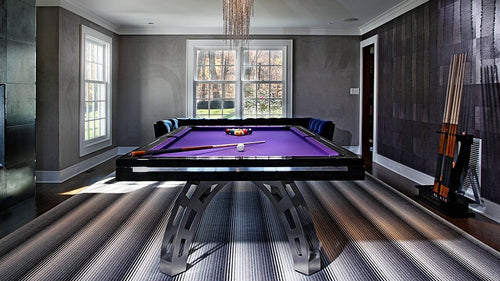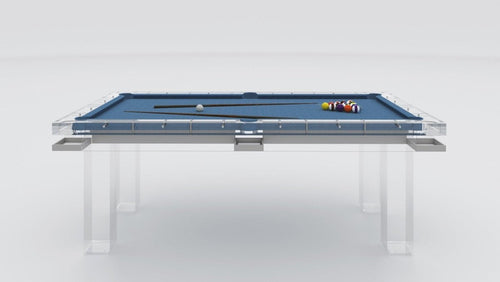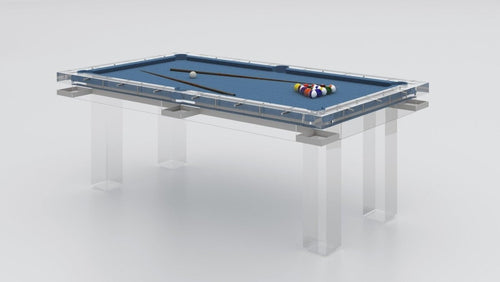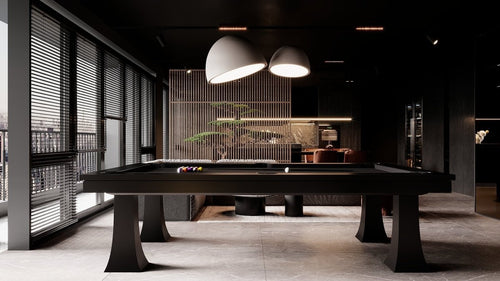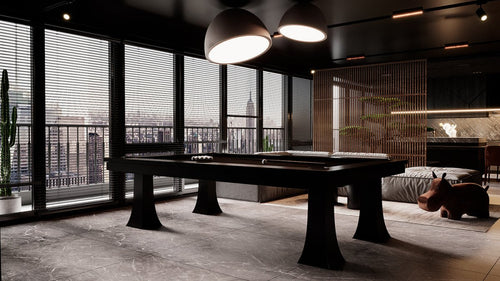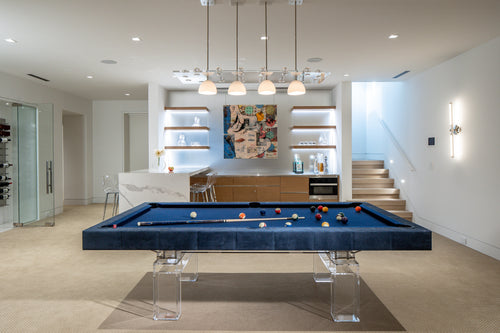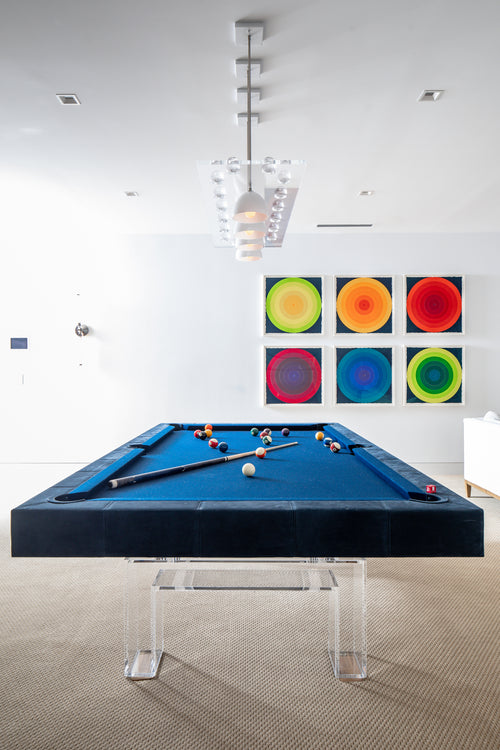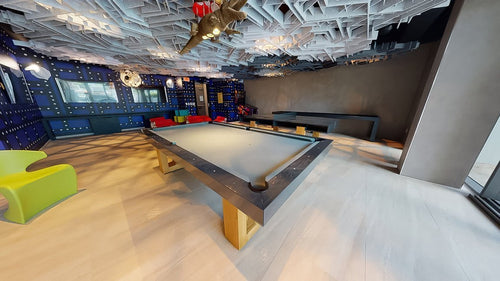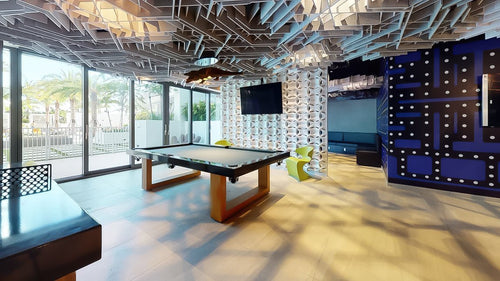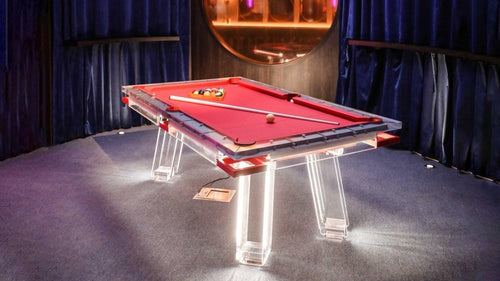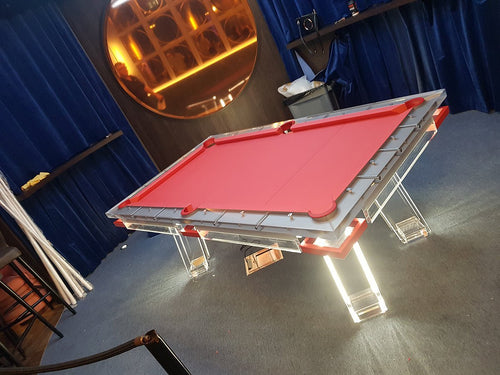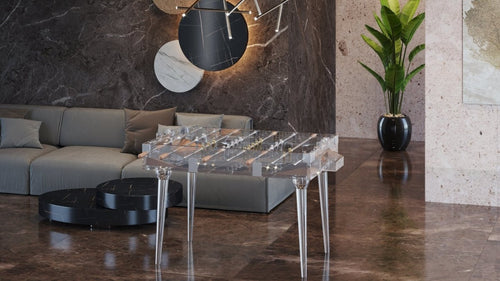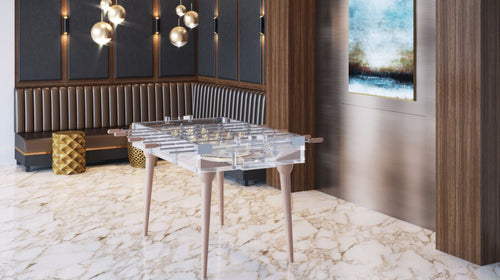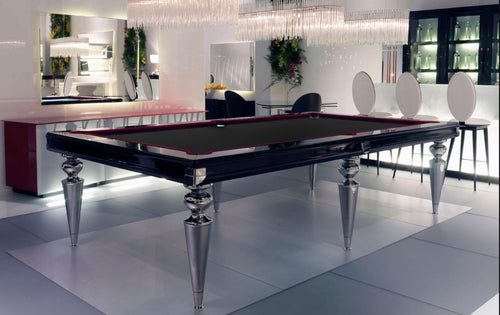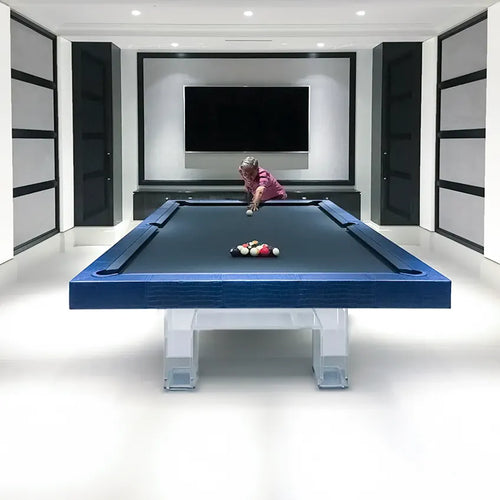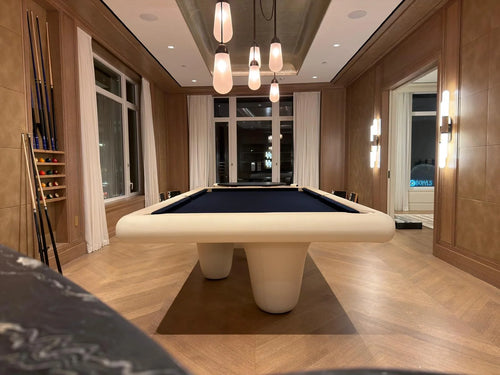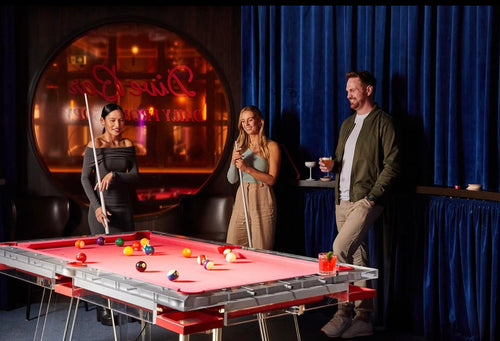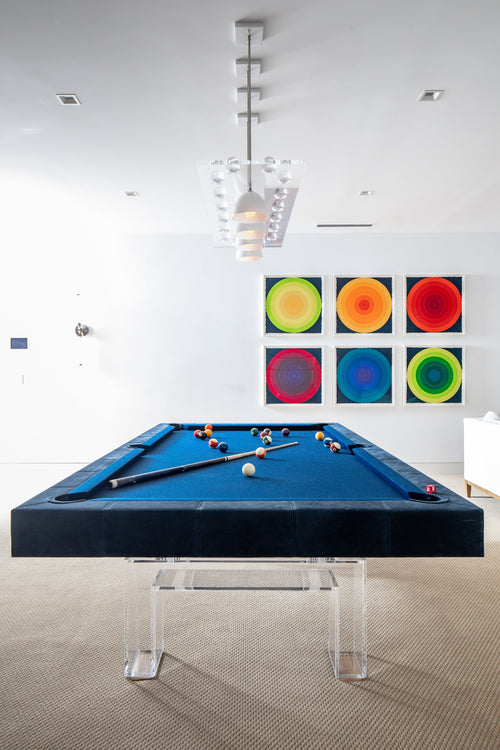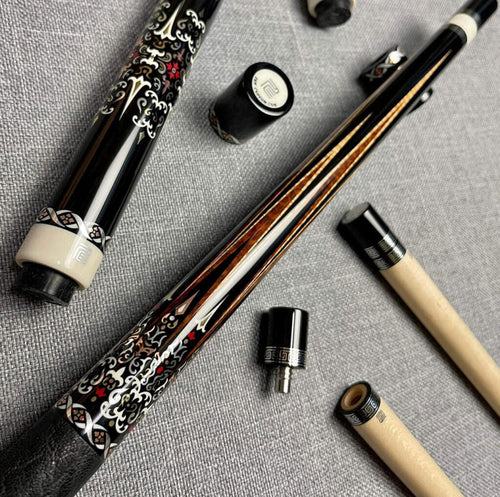


Enjoy our modern designs
Mixed-material pool tables can look incredible. They can also look like a designer lost control.
That is the problem with combining wood, Lucite, stone, and metal. Each material has a strong personality. Wood brings warmth. Lucite brings lightness and modernity. Stone brings weight and permanence. Metal brings structure and precision.
Together, they can make a pool table feel truly bespoke, architectural, and made for the room. But if the materials are chosen carelessly, the table starts to feel busy, gimmicky, or fake-luxury. Instead of looking custom, it looks like a catalog of upgrades stacked onto one object.
The best mixed-material pool tables are not impressive because they use many materials. They are impressive because the materials are controlled. The goal is not more. The goal is hierarchy.
Table of Contents
- 1. Why Mixed Materials Are So Powerful
- 2. Start With a Primary Material
- 3. Wood as the Warm Anchor
- 4. Lucite as the Light Element
- 5. Stone as the Architectural Weight
- 6. Metal as the Structural Detail
- 7. Strong Material Combinations
- 8. Bad Material Combinations to Avoid
- 9. Felt, Pockets, and Finish Sheen
- The Bottom Line
1. Why Mixed Materials Are So Powerful
A pool table is a large furniture object. Because of its size, a single material can sometimes feel too flat or too heavy. An all-wood table may feel warm, but it can also feel bulky. An all-metal table may feel sharp, but it can become cold. An all-Lucite table can feel light and dramatic, but it may need grounding. A stone-heavy table can feel luxurious, but also visually heavy.
Mixed materials solve this by balancing each other. Wood can warm up stone. Lucite can lighten a heavy base. Metal can sharpen soft natural materials. Stone can give a transparent table more visual authority. Leather pockets can make a modern table feel less sterile.
That is the appeal. Mixed materials allow a pool table to have depth. The table can feel warm and modern, heavy and light, polished and tactile, dramatic and livable. But only if the mix has logic.
2. Start With a Primary Material
The first rule is simple: one material should lead. A mixed-material pool table should not feel like four materials competing equally. That is usually where the design falls apart.
The primary material gives the table its identity. Everything else supports it. If the primary material is wood, the table will feel warm and furniture-like. Lucite, stone, and metal become accents or structural contrasts. If the primary material is Lucite, the table will feel modern, light, and sculptural. Wood, stone, and metal need to ground it.
If the primary material is stone, the table will feel architectural and substantial. Wood and Lucite need to soften or lighten it. If the primary material is metal, the table will feel precise, industrial, or contemporary. Wood or leather can make it more residential.
The Pro Insight: A bespoke table should feel composed, not assembled. One material leads, one supports, and one finishes the detail.
3. Wood as the Warm Anchor
Wood is usually the easiest material to build around because it makes the table feel human. It adds warmth, grain, tactility, and a sense of furniture craftsmanship.
In mixed-material designs, wood often works best as the anchor. It can form the rails, apron, base, or frame, while Lucite, stone, or metal appear as supporting elements. A walnut table with bronze details and a stone base feels rich and grounded. A white oak table with Lucite legs feels lighter and more modern. A black oak table with metal trim and charcoal felt feels architectural.
- Best Pairings: Lucite for lightness, stone for weight and luxury, metal for structure, leather pockets for warmth, and navy, olive, charcoal, taupe, or black felt.
- Strong Woods: Walnut is the most flexible luxury wood. White oak feels softer and more contemporary. Black oak feels sharper and more architectural. Mahogany feels more traditional and formal.
- Watch Out For: Wood can get overwhelmed if the other materials are too loud. The more beautiful the wood grain, the less decoration it needs.
4. Lucite as the Light Element
Lucite changes the entire visual weight of a pool table. It makes the table feel lighter, clearer, and more contemporary. It can help a large table sit in a room without blocking sightlines. It can also create the illusion that the slate or rail structure is floating.
This is why Lucite works so well in open-plan homes, penthouses, coastal interiors, and rooms with strong architecture or views. But Lucite needs grounding. On its own, it can feel too slick, too cold, or too showroom-like.
- Best Pairings: Walnut for warmth, black oak for contrast, white oak for softness, marble for glamour, travertine or limestone for warmth, chrome or polished nickel for sleekness, and brass or bronze for richer contrast.
- Best Felt Colors: Black, charcoal, navy, taupe, or olive.
- Watch Out For: Lucite becomes gimmicky if everything around it is also transparent, glossy, or reflective. A clear pool table does not need a clear room.
5. Stone as the Architectural Weight
Stone gives a pool table permanence. Marble, travertine, limestone, granite, quartzite, and onyx all make the table feel more architectural. Stone can appear as a base, side panel, plinth, insert, foot detail, or accent.
Used well, stone makes the table feel rare and grounded. Used badly, it makes the table feel heavy and desperate to look expensive. Stone is powerful because it adds visual weight, which means it needs balance.
- Best Pairings: Walnut for warmth, white oak for soft modernity, black oak for contrast, Lucite for lightness, bronze or brass for warmth, chrome or polished nickel for glamour, and blackened steel for architectural structure.
- Best Felt Colors: Taupe, charcoal, navy, black, or olive.
- Watch Out For: Dramatic marble plus high-gloss lacquer plus chrome plus bright felt plus ornate pockets is not luxury. It is noise.
6. Metal as the Structural Detail
Metal is best when it feels structural. A blackened steel base, bronze reveal, brushed brass pocket trim, polished nickel foot, stainless support, or thin metal inlay between wood and stone can make a mixed-material table feel more tailored and resolved.
Metal is risky when it feels decorative for no reason. Random shiny trim almost always cheapens a pool table. Good metal looks built-in. Bad metal looks added on.
- Best Pairings: Walnut and bronze, black oak and blackened steel, white oak and brushed brass, Lucite and chrome, marble and polished nickel, travertine and bronze, limestone and matte black metal.
- Strong Direction: Bronze is warmer and more mature than brass. Chrome and polished nickel are best with Lucite, lacquer, marble, and high-contrast interiors. Blackened steel is the safest modern option.
- Watch Out For: Metal needs a job. If it does not connect to the lighting, hardware, furniture legs, stair railings, window frames, bar fixtures, or structure of the table, remove it.
7. Strong Material Combinations
| Combination | Why It Works | Best Mood |
|---|---|---|
| Walnut + Lucite + Bronze | Walnut adds warmth, Lucite adds lightness, and bronze adds refinement. | Modern but livable. |
| White Oak + Travertine + Brushed Brass | Soft, warm, and current without trying too hard. | Organic modern, coastal, Mediterranean. |
| Black Oak + Marble + Polished Nickel | Black oak gives depth, marble adds luxury, and polished nickel sharpens the table. | High-impact and dramatic. |
| Lucite + Black Felt + Chrome | Lucite gives lightness, black felt grounds the table, and chrome sharpens the structure. | Sleek, urban, modern. |
| Walnut + Marble + Brass | Walnut softens the marble while brass warms the composition. | Formal and rich. |
| Blackened Steel + Walnut + Olive Felt | Steel gives structure, walnut adds warmth, and olive felt feels custom without being loud. | Grounded, masculine, architectural. |
8. Bad Material Combinations to Avoid
- Too Many Shiny Materials: Gloss lacquer, polished marble, chrome, mirrored walls, glass, and bright lighting all together can feel exhausting.
- Warm and Cool Materials With No Bridge: Cool marble, yellow brass, grey wood, blue felt, and black metal may not automatically work together. A bridge material like walnut, charcoal felt, or bronze can calm the contrast.
- Lucite Plus Too Much Acrylic Furniture: A Lucite pool table already makes the transparent statement. Repeating clear materials everywhere makes the room feel themed.
- Dramatic Stone Plus Dramatic Felt: Heavily veined marble with bright red, bright blue, or loud green felt can become chaotic.
- Rustic Wood Plus High-Gloss Chrome: This usually feels confused. Rustic texture usually wants blackened steel, bronze, aged brass, or matte metal.
- Decorative Metal on Decorative Stone: If the stone already has visual movement, keep the metal clean.
The Pro Insight: Every material contrast should answer a question. Does it warm the table, lighten it, ground it, sharpen it, or connect it to the room? If not, it probably does not belong.
9. Felt, Pockets, and Finish Sheen
Felt color becomes even more important when the table already has multiple materials. The felt should simplify the table, not complicate it. Black felt works well when the table needs drama and contrast. Charcoal is the safest felt color for mixed-material tables. Navy adds richness and sophistication. Taupe softens the material mix. Olive adds warmth and character.
Pocket style should either simplify the table or support its warmth. Hidden pockets are usually best for highly modern mixed-material tables. Modern low-profile pockets are the safest middle ground. Simple leather pockets are useful when the table needs warmth. Shield pockets are harder to use because they add visual detail and work best only when the mixed-material table still leans traditional.
Sheen can either calm mixed materials down or make them louder. Matte finishes make mixed materials feel more architectural and understated. Satin is the safest sheen for mixed-material tables. Semi-gloss works when the table is more formal or traditional. High gloss should be used carefully because it makes the whole table more demanding.
The Bottom Line
Mixed materials can make a pool table feel truly bespoke, but only when the mix has discipline.
Wood brings warmth. Lucite brings lightness. Stone brings architectural weight. Metal brings structure and precision. Together, they can create a table that feels layered, custom, and deeply connected to the room. But more materials do not automatically mean more luxury.
The best mixed-material tables usually have one dominant material, one balancing material, and one accent. That is the formula. Anything beyond that needs a very good reason.
Done right, mixed materials do not make the table louder. They make it deeper.