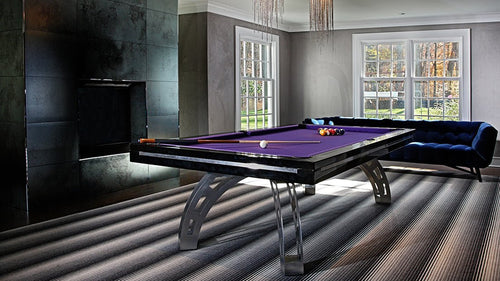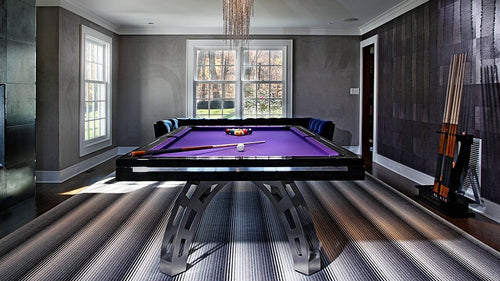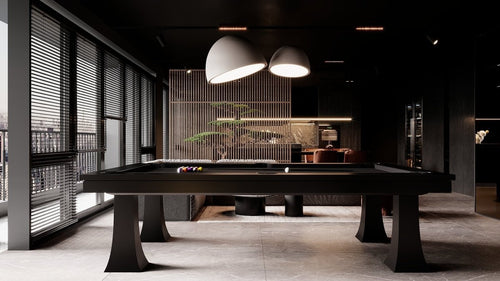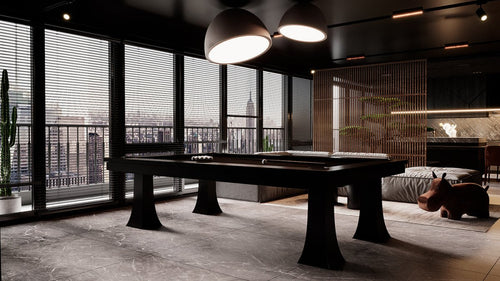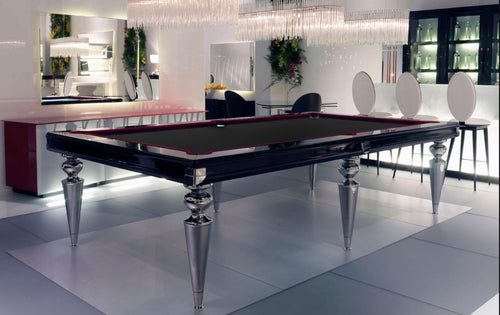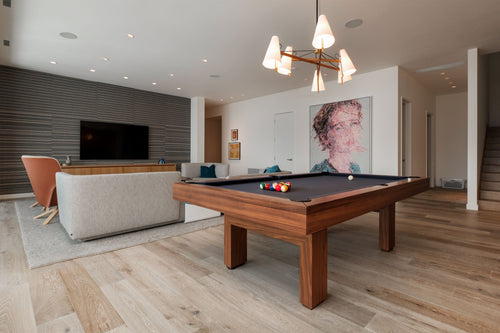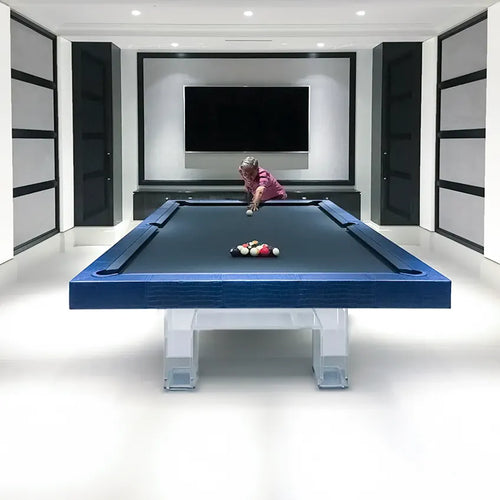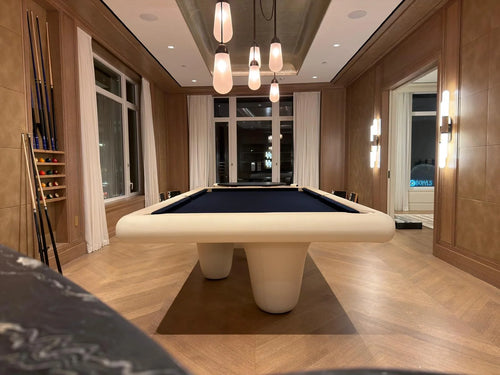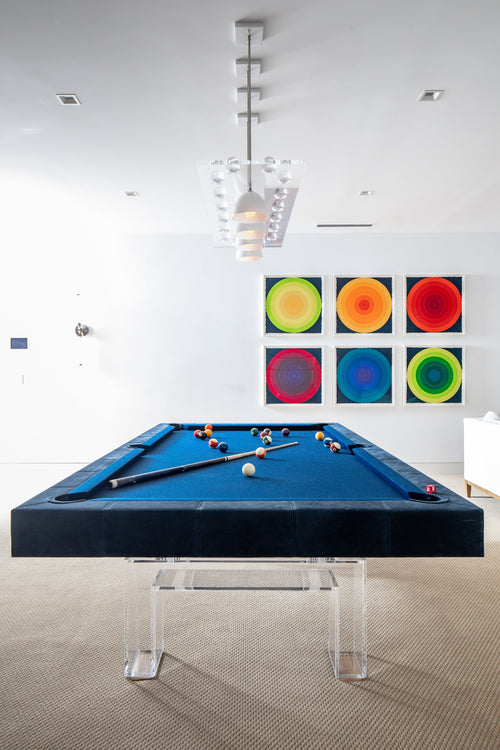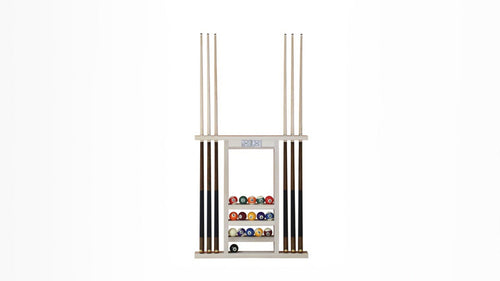


Enjoy our modern designs
How to avoid the classic game room mistake: buying a cue rack that almost matches, but not quite.
There is a moment of panic every pool room owner faces. You have just ordered a beautiful new cue rack. It arrives, you unbox it, hold it up next to your pool table, and realize... it’s the wrong shade of brown.
Matching wood stains is arguably the hardest part of finishing a game room. "Mahogany" from one manufacturer might look like deep red wine, while "Mahogany" from another looks like brown mud.
If you are trying to coordinate your cue storage with your table, you need to look beyond the name on the can. Here is your guide to navigating wood species, stains, and finishes.
Table of Contents
- 1. The "Species" Trap: Why the Wood Matters More Than the Stain
- 2. Decoding the "Big Three" Billiard Stains
- The Red Family: Mahogany, Cherry, Burgundy
- The Brown Family: Walnut, Espresso, Pecan
- The Blonde/Grey Family: Oak, Driftwood, Grey Wash
- 3. Approve Actual Finish Samples
- 4. The Nuclear Option: When in Doubt, Go Black
- Summary Checklist for Buyers
1. The "Species" Trap: Why the Wood Matters More Than the Stain
The biggest mistake buyers make is assuming that "Dark Walnut Stain" will look the same on everything. It won't.
The final color is a combination of the stain + the underlying wood.
- Oak: Oak has a very open, aggressive grain. It soaks up stain deeply in the "veins," creating a high-contrast look. If your table is oak, a maple rack stained the same color will look much smoother and potentially lighter.
- Maple: A smoother grain will not reproduce the appearance of an open-grained oak surface. The actual wood, preparation, stain, and topcoat determine the result; use a representative sample instead of predicting a fixed pink or orange undertone.
- The Lesson: Try to identify the wood species of your table first. If you can match the species, the stain has a much better chance of matching, too.
2. Decoding the "Big Three" Billiard Stains
While there are infinite colors, the billiard industry revolves around three main flavor profiles. The first step is figuring out which family your table belongs to.
The Red Family: Mahogany, Cherry, Burgundy
- The Look: Warm, traditional, and suited to old-world libraries or classic billiard rooms.
- The Danger: The "purple" factor. Some traditional mahogany stains have strong purple or plum undertones, while modern versions lean more orange-red.
- The Fix: When buying a rack, look for descriptions like "Red Mahogany" versus "Brown Mahogany." Those labels matter more than people think.
The Brown Family: Walnut, Espresso, Pecan
- The Look: Masculine, earthy, and versatile. Brown stains usually work well in both traditional and transitional rooms.
- The Danger: Going too dark. "Espresso" is often one step away from black. If your table is a medium walnut, an espresso rack may look like a black hole on the wall.
- The Fix: Use the "squint test." Stand back and squint at your table. Does it read as a dark blob or as warm wood? Match that intensity.
The Blonde/Grey Family: Oak, Driftwood, Grey Wash
- The Look: Modern, rustic, coastal, or industrial.
- The Danger: Undertones. Grey stains can pull blue, green, or beige depending on the light.
- The Fix: This is the hardest category to match online. You are often safer choosing a deliberate contrast, like black, than trying to match a specific "Weathered Grey" perfectly.
3. Approve Actual Finish Samples
There is no universal percentage that defines a successful wood-finish match. Decide whether you want a close match or an intentional contrast, then judge physical samples together.
The rack and table may receive different light. Review a finished sample of the actual rack wood beside the table, both in daylight and under the room’s usual lighting.
Color names alone are not specifications. Minwax recommends testing on the same wood and applying the intended topcoat to the sample because the wood and finish both affect the result.
4. The Nuclear Option: When in Doubt, Go Black
If a vintage table has an aged or sun-faded finish that is difficult to reproduce, a deliberate contrast may be easier to coordinate than a close match.
Pivot to black.
A black cue rack is one possible neutral accent alongside green, blue, red, or grey cloth. Check it against the whole room rather than treating black as an automatic match for every scheme.
Summary Checklist for Buyers
Before you buy a rack, do this:
- Take a photo of your table leg in natural daylight. The legs usually show the true wood color better than the rails, which get handled and chalked more often.
- Identify the grain. Is it swirly and wild, like oak? Or smooth and subtle, like maple?
- Check the lighting. If your rack is going in a dark corner, choose a slightly lighter stain so the wood grain is still visible.