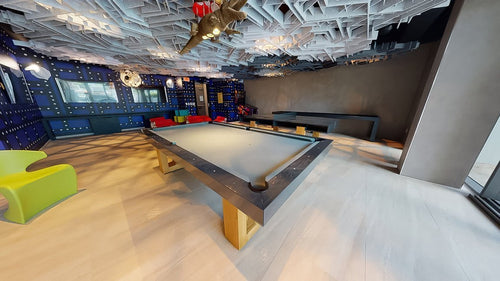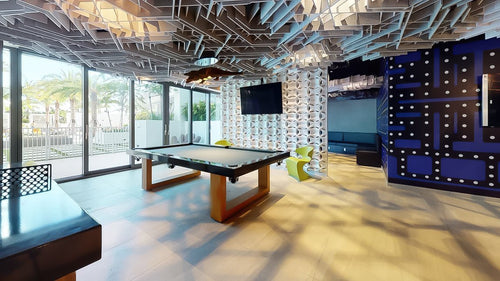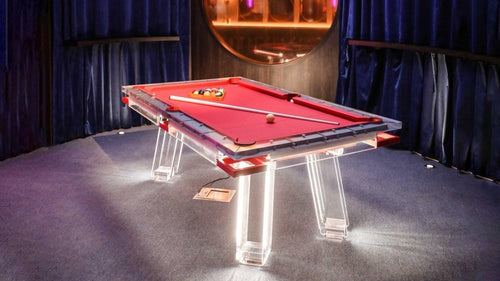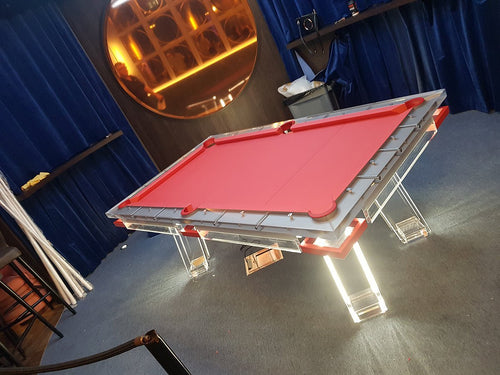


Enjoy our modern designs
Billiards belongs to the domestic history of the White House as well as to the history of public recreation. Tables and rooms changed with successive households, leaving a record in institutional histories and photographs.
John Quincy Adams and the First Table
The Miller Center profile by Adams Papers editor Margaret A. Hogan identifies John Quincy Adams as the president who installed the first billiard table in the White House, and lists billiards among his recreations.
The table was one of several ways Adams spent his leisure time. His interest in the game places billiards within the ordinary routines of a presidential household.
The White House as a Home
A recreational room is part of a household, even when the household is also a seat of government. Furnishings and photographs help recover that domestic side of the building.
An official White House garden history describes the conservatory completed under James Buchanan in 1857 as a favorite private retreat for the Lincoln family during the Civil War. The greenhouse complex later became part of the story of Grant’s billiard room.
Ulysses S. Grant’s Billiard Room
The White House Historical Association’s grounds history records that Grant had a billiard room built between the greenhouse and the mansion in the 1870s.
An official White House garden history describes Hayes replacing Grant’s billiard room with a palm court, and the conservatory’s removal during Theodore Roosevelt’s 1902 remodeling. Recreation and planting were successive uses of this part of the residence.
A Room for the Coolidge Family and Guests
A 1928 photograph by Ralph Waldo Magee documents the Billiard Room at the southwest end of the Ground Floor Corridor. Its White House Historical Association caption identifies it as a source of diversion for the Coolidge family and their guests.
The photograph gives this account a visible setting: a room furnished for play and used by a presidential family and its visitors.
From Recreation to the Map Room
The space shown in the 1928 photograph is now known as the Map Room. The White House Historical Association’s Ground Floor history describes its role as the hub from which Franklin Roosevelt followed World War II.
The association also identifies the last situation map prepared for Roosevelt, dated April 3, 1945, above the fireplace. This change in use illustrates how the residence adapted to the demands of different administrations.
A Domestic Thread in Presidential History
Adams’s table, Grant’s added room and the Coolidge-era photograph document different moments in presidential recreation. Taken together, they show that billiards was part of life around the Executive Mansion.
Following these particular rooms reveals a domestic thread within a building more often discussed through ceremonies and affairs of state.