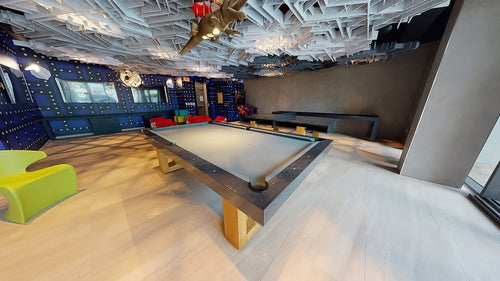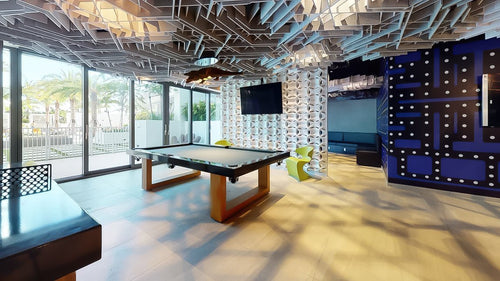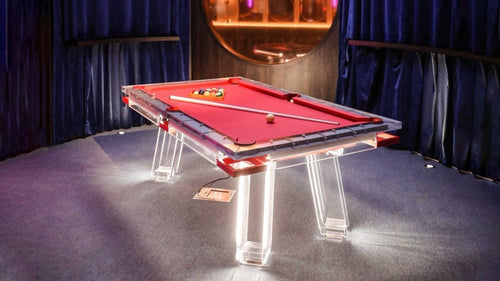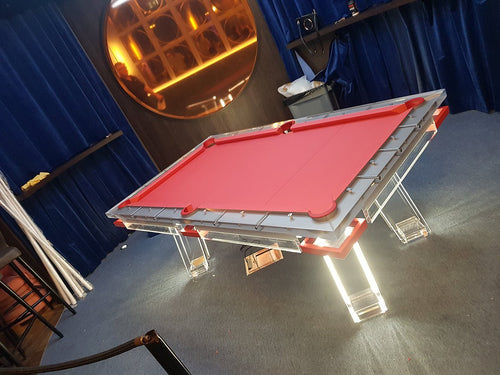


Enjoy our modern designs
You can source the rarest burl veneers, apply a flawless hand-rubbed finish, and install a table with millimeter precision—but if the overhead lighting is wrong, the entire aesthetic collapses. Bad lighting does not just make a room uncomfortable; it actively fights the architecture of the table, flattening rich wood grains into dull mud or turning a sleek finish into a blinding mirror.
Over two decades of designing and installing kinetic furniture at PTP, the intersection of light and wood has proven to be one of the most critical final touches in any luxury game room. Mastering this alchemy requires balancing color temperature, diffusion, and fixture geometry to ensure the table is illuminated as a masterpiece rather than an interrogation subject.
Table of Contents
1. The Physics of the Finish: Managing Glare
How a table reflects light depends entirely on its topcoat. Overhead lighting must be explicitly tailored to the sheen of the wood. The wrong fixture does not simply look bad; it changes the way the entire table performs visually.
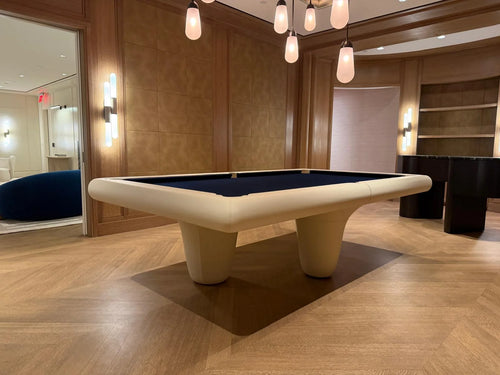
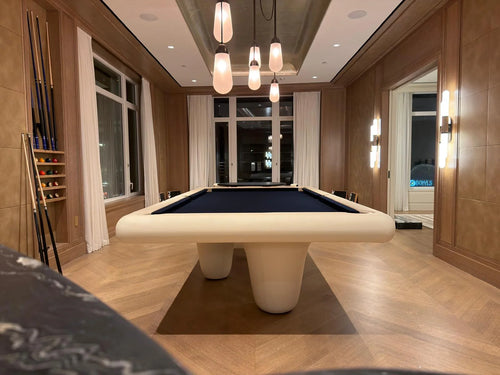
- High-Gloss and French Polishes: These finishes act like dark mirrors. If you hang a fixture with exposed bulbs directly over a high-gloss mahogany table, the players can be distracted by sharp reflections on the rails. The solution is to use fixtures with frosted glass diffusers, shaded bulbs, or upward-cast lighting that bounces softly off the ceiling.
- Matte, Satin, and Open-Grain Finishes: A natural low-sheen walnut or an open-grain matte black ash absorbs light rather than reflecting it. These tables are far more forgiving. Exposed Edison bulbs, focused spotlights, or architectural LEDs can drive light into the texture of the wood grain without creating the same level of eye strain.
The Pro Insight: The shinier the finish, the softer the light should be. The more textured and matte the finish, the more directional the lighting can become.
2. Color Temperature: The Kelvin Scale
Light is not simply white or yellow. It is measured in Kelvin, and mismatching the color temperature of your bulbs with the undertones of your wood can ruin the finish. A beautiful table can look orange, flat, grey, or sterile under the wrong bulb.
| Wood Tone & Finish | Ideal Light Temperature | The Visual Effect |
|---|---|---|
|
Warm Woods Cherry, mahogany, teak |
2700K - 3000K Warm white |
Enhances the natural reds and golds in the wood while creating a cozy, intimate lounge atmosphere. |
|
Neutral/Natural Woods Clear walnut, white oak |
3000K - 3500K Soft white |
Keeps the wood looking authentic and organic without turning it artificially yellow or clinically blue. |
|
Cool/Bold Finishes Matte black, grey ash, concrete |
3500K - 4000K Cool white |
Sharpens the high-contrast brutalist or industrial aesthetic and prevents grey tones from looking muddy. |
3. Sculpting with Shadows: Highlighting the Grain
To make a premium wood grain pop, you actually need shadows. If a light source is too flat and perfectly dispersed, like a standard recessed ceiling floodlight, it washes out the topography of the wood. The grain loses its movement, and the table starts to look flatter than it really is.
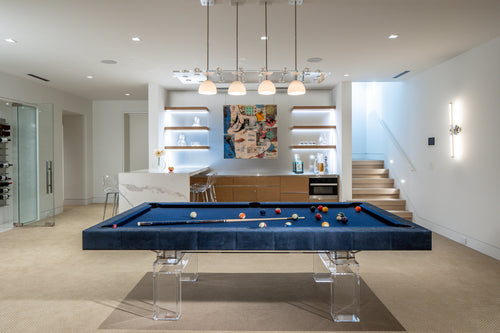
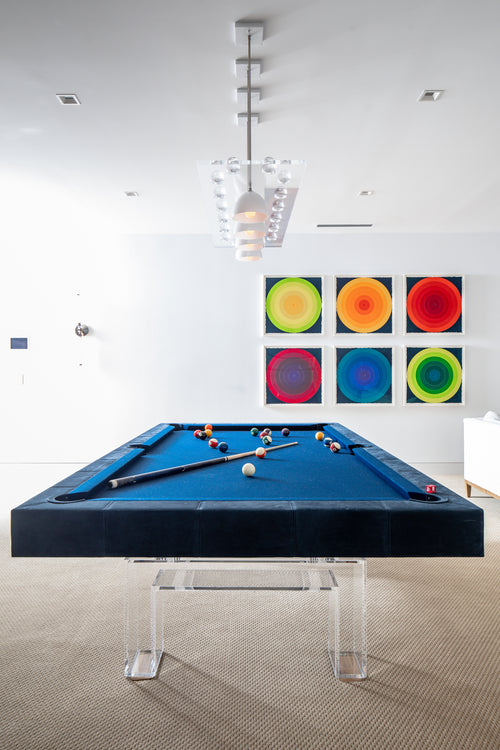
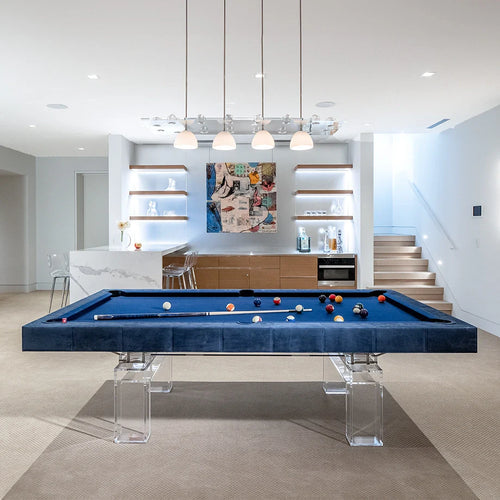
To highlight the swirling figure of a burl veneer or the deep valleys of a wire-brushed ash, you need directional light. A multi-shade billiard pendant or a linear architectural LED bar provides a concentrated pool of light that hits the rails at a slight angle. This micro-shadowing effect gives high-end wood its three-dimensional depth and tactile luxury.
The Pro Insight: The distance from the light source to the playing surface is a non-negotiable metric. To prevent glare from hitting players in the eyes while standing, and to ensure the light pool covers the rails without bleeding awkwardly onto the floor, the bottom of the lighting fixture should typically hang 32 to 36 inches above the playing surface.
4. Matching the Fixture to the Table’s Silhouette
The light fixture is the visual crown of the table. It should not feel like a random object suspended above the room. It must speak the same design language as the table below it.
- For Heavy, Traditional Tables: Stained glass, bronze, or heavy brass multi-shade fixtures help anchor the visual weight of the table and reinforce the room’s classic character.
- For Mid-Century Modern Tables: Linear wood pendants that mirror the species and stain of the table base create a seamless, floating aesthetic.
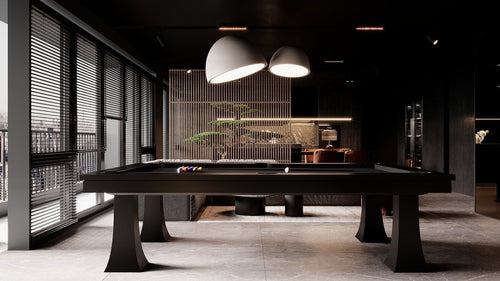
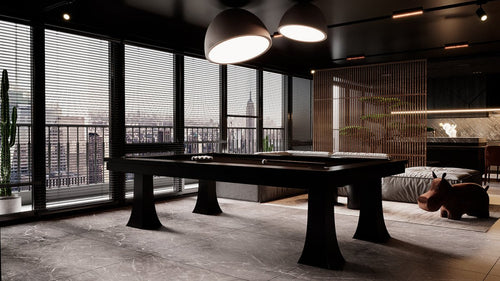
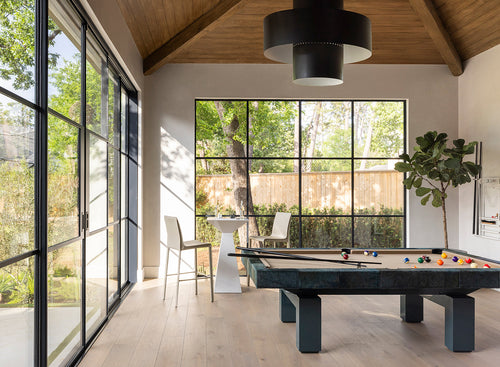
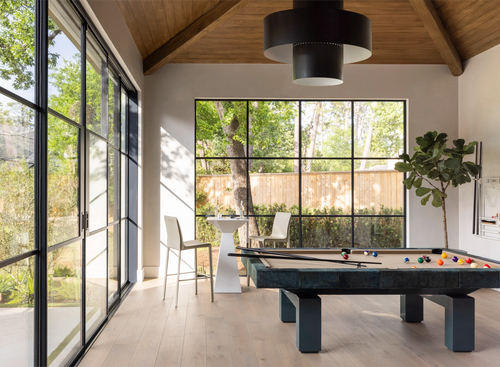
- For Maximalist or Brutalist Spaces: Heavy oxidized steel beams, suspended LED rectangles, or oversized asymmetric metallic domes provide the aggressive architecture that bold tables demand.
The key is proportion. A delicate fixture above a massive sculptural table feels weak. An oversized industrial pendant above a slim minimalist table feels clumsy. The best lighting choices feel inevitable, as though the table and fixture were designed as a single composition.
The Bottom Line
Lighting a custom game table is an exercise in optical physics and aesthetic restraint. By pairing the sheen of the finish with the correct diffusion, aligning the bulb’s Kelvin temperature with the wood’s natural undertones, and selecting a fixture that honors the table’s architecture, you elevate the craftsmanship of the piece and create a far more inviting playing environment.