

Enjoy our modern designs
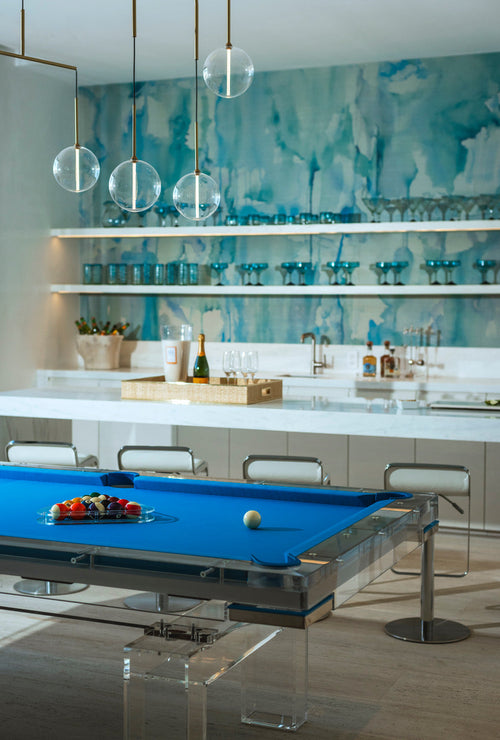
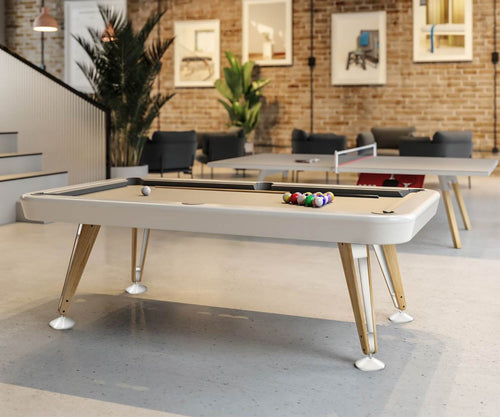
A private bar can be one of the most memorable rooms in a luxury home, but it becomes much stronger when it has a reason for people to stay. A pool table gives a speakeasy-style room movement, rhythm, and social energy. The trick is making the table feel built into the bar environment rather than dropped into the middle of it. Done well, the room feels intimate, cinematic, and useful. Done poorly, it feels like a themed basement.
In this guide:
- 1. Why a Pool Table Belongs in a Private Bar
- 2. Start With the Mood Not the Table
- 3. Bar Placement and Cue Clearance
- 4. Lighting for a Speakeasy Pool Room
- 5. Materials That Create the Right Atmosphere
- 6. Acoustics and Privacy
- 7. Storage for Cues Glassware and Bar Tools
- 8. How to Avoid the Fake Theme Room Problem
1. Why a Pool Table Belongs in a Private Bar
A private bar is social by nature, but without an activity it can become a room where people stand, drink, and eventually leave. A pool table gives the room a natural center of gravity. It creates friendly competition, conversation, and movement without requiring a screen or loud entertainment system.
The table also fits the atmosphere of a speakeasy-style room. It works with low light, rich materials, leather seating, darker woods, brass accents, stone counters, and intimate layouts. It feels classic without needing to become nostalgic.
Design note: The pool table should feel like the room’s social engine, not its decoration.
2. Start With the Mood Not the Table
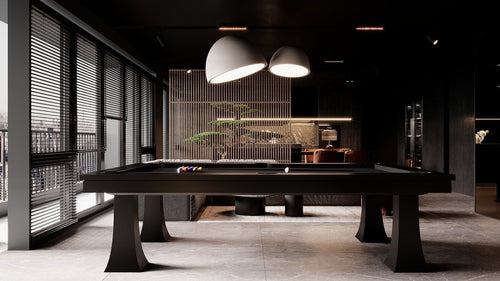
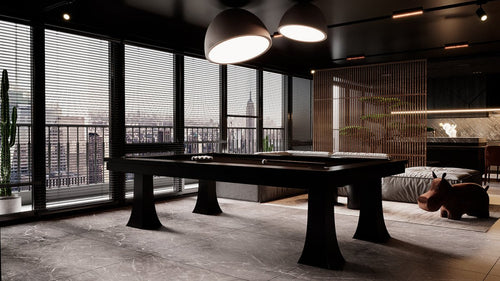
The best speakeasy game rooms start with mood: low light, warmth, privacy, and material depth. The pool table should be selected after that atmosphere is defined. If the table is chosen first without regard for the room, it can easily feel too bright, too sporty, or too modern.
Decide whether the room should feel like a private club, cocktail lounge, cigar bar, boutique hotel, or old-world billiard room. Each version suggests different finishes, cloth colors, seating, lighting, and accessory storage.
- Private club: wood paneling, leather, classic cloth, tailored lighting.
- Cocktail lounge: stone bar, dark metal, moody colors, sculptural seating.
- Boutique hotel: bolder art, refined lighting, mixed materials.
- Old-world billiard room: deeper woods, traditional proportions, quiet elegance.
3. Bar Placement and Cue Clearance
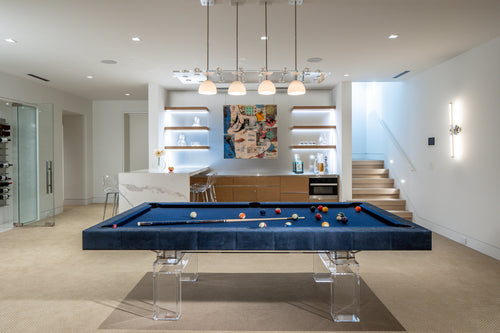
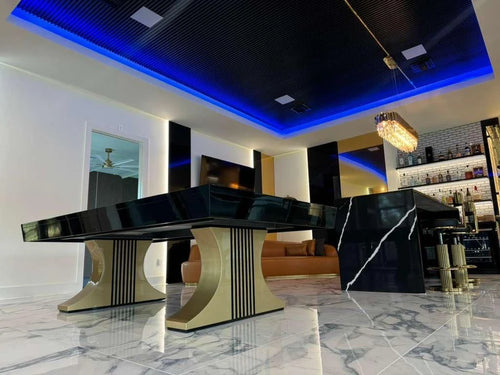
The bar should be close enough to support the room, but not so close that it interferes with play. Bar stools, counters, foot rails, drink ledges, and guests standing with glasses can all ruin cue clearance if they are placed carelessly.
The cleanest layout usually places the bar along one wall and the pool table in the center of the social zone, with enough space for players and spectators. If the room is narrow, the bar may need to be shorter, shallower, or separated from the cue path.
- Keep stools outside the playing envelope.
- Avoid placing a bar island too close to the table.
- Provide drink surfaces that are not the pool table rails.
- Leave room for spectators without blocking shots.
4. Lighting for a Speakeasy Pool Room
Speakeasy rooms depend on low, layered lighting. Pool tables need enough light to play properly. The challenge is not choosing one or the other, but combining both. A dedicated fixture over the table can provide even light while the rest of the room stays warm and atmospheric.
Use dimmers, sconces, backbar lighting, shelf lighting, and accent lamps to control the room’s mood. Avoid bright overhead grids or cold white light. The bar should glow. The table should be clear. The seating should feel intimate.
Design note: The room should be dark enough to feel private and bright enough that the table does not become decorative.
5. Materials That Create the Right Atmosphere
A speakeasy game room wants materials with weight: walnut, oak, leather, brass, bronze, dark stone, smoked glass, plaster, velvet, mohair, and textured wallcoverings. The pool table should borrow from that palette.
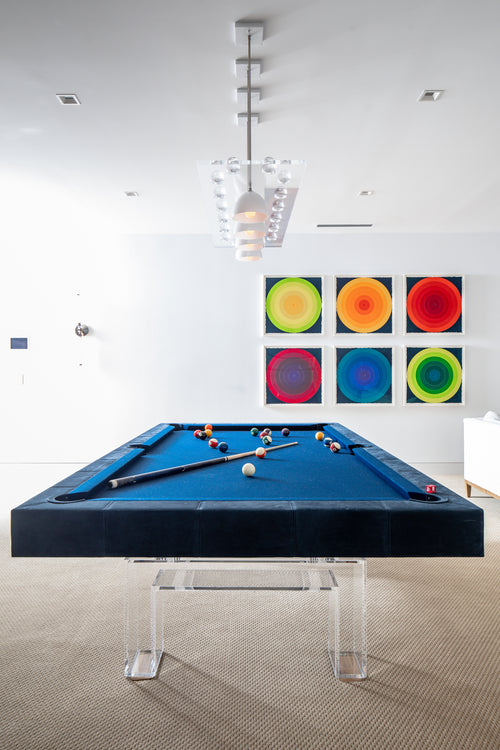
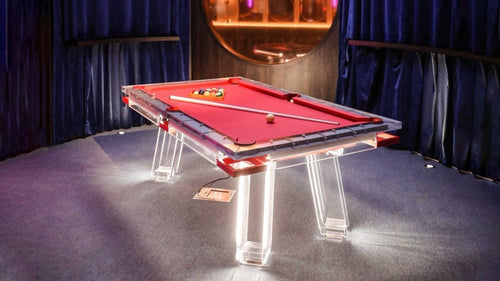
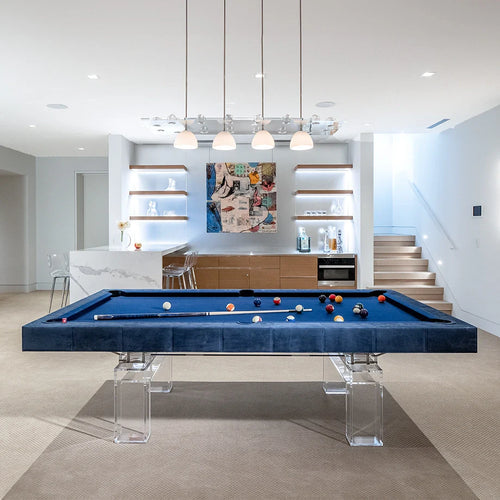
The cloth color is especially important. Traditional green can work, but so can deep navy, charcoal, burgundy, olive, or warm grey. The right choice depends on the bar, seating, wall color, and flooring.
- Use darker woods for a private-club feeling.
- Use brass or bronze accents carefully, not everywhere.
- Use stone or leather details to connect the table to the bar.
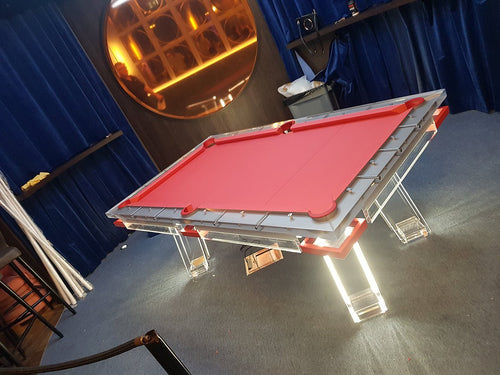
- Avoid glossy novelty finishes unless the room is intentionally dramatic.
6. Acoustics and Privacy
A private bar game room should sound good. Hard surfaces like stone counters, glass bottle displays, tile floors, and plaster walls can make the room louder than expected. Pool balls, conversation, music, and glassware all add sound.
Use rugs, upholstered seating, curtains, acoustic panels, wood paneling, and soft wall treatments to absorb sound. This matters even more if the room is near bedrooms, formal living spaces, or shared walls.
- Use soft seating near the table.
- Consider a rug if it works with leveling and the room design.
- Avoid bare hard surfaces on every plane.
- Use doors or acoustic separation if the room is meant to feel private.
7. Storage for Cues Glassware and Bar Tools
Speakeasy rooms need storage discipline. Cues, balls, chalk, brushes, bottles, glassware, napkins, bar tools, ice buckets, and cocktail books can overwhelm the room if everything is visible.
Built-ins are the best answer. Create dedicated storage for pool accessories that matches the bar millwork. Keep glassware and bar tools separate from game equipment. The room should feel curated, not cluttered.
- Hide cues in a wall cabinet or custom millwork.
- Store balls and chalk in drawers, not on open shelves.
- Use proper drink ledges or side tables for guests.
- Keep the table surface clear when not in use.
8. How to Avoid the Fake Theme Room Problem
The biggest mistake is trying too hard. A speakeasy room does not need fake prohibition signs, novelty whiskey decor, oversized logos, or theatrical clutter. That approach gets old fast and cheapens the room.
Use real materials instead. Dark wood, good lighting, comfortable seating, a strong bar, a beautiful pool table, and controlled art will do more than a dozen themed accessories. The room should feel collected and private, not staged.
Design note: A luxury speakeasy game room should feel like a place people discovered, not a theme someone bought online.
The Bottom Line
A pool table can be the perfect anchor for a speakeasy-style private bar, but only if the table is planned with the bar, lighting, seating, and circulation from the beginning.
Keep the room intimate, use real materials, protect cue clearance, control sound, and avoid fake theme decor. The best version feels like a private club inside the home, not a basement bar trying too hard.