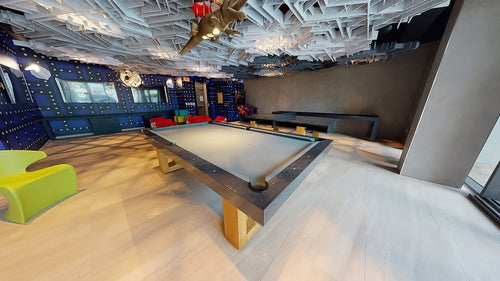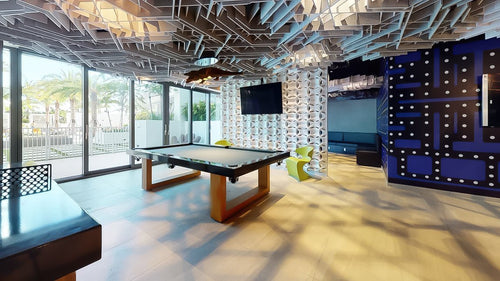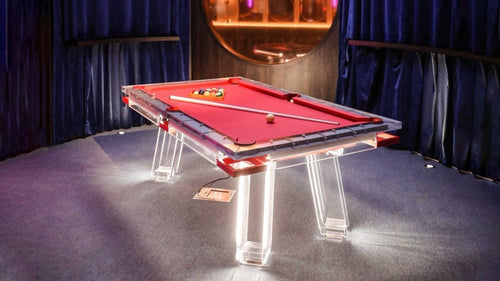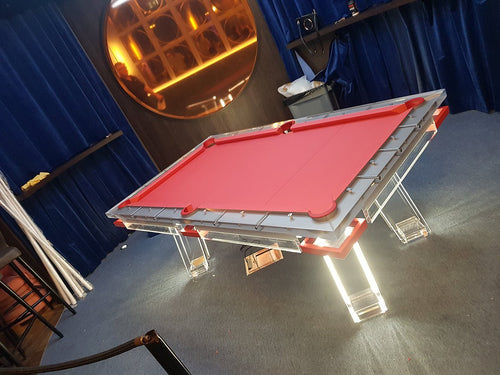


Enjoy our modern designs
The finish on a pool table changes more than the color. It changes the entire attitude of the piece.
A walnut pool table in a matte finish can feel warm, architectural, and understated. The same walnut in a gloss finish can feel richer, more formal, and more polished. A black lacquer table in matte can look modern and restrained, while black gloss can look dramatic, glamorous, and almost showroom-like.
That is why the matte vs. gloss decision matters. It is not just a question of shine. It affects how the table reacts to light, how much visual weight it carries, how formal the room feels, how visible fingerprints and scratches become, and whether the table feels like furniture, sculpture, or a statement piece.
Table of Contents
- 1. Why Finish Matters So Much
- 2. Matte Pool Table Finishes
- 3. Gloss Pool Table Finishes
- 4. Matte vs. Gloss: The Main Differences
- 5. How Lighting Changes the Decision
- 6. How Felt Color Affects the Finish
- 7. Wood, Lacquer, and Metal
- 8. When to Choose Matte, Gloss, or Satin
- 9. Common Mistakes
- The Bottom Line
1. Why Finish Matters So Much
A pool table is already a large object. Even a clean, minimalist table takes up visual space because of its size, horizontal surface, frame, rails, and base. The finish controls how that mass is perceived.
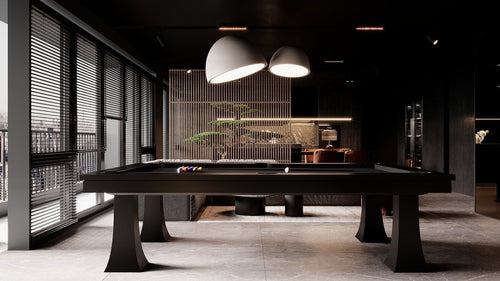
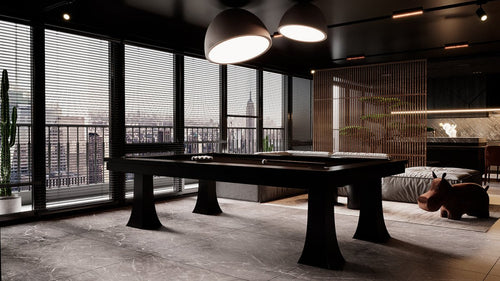
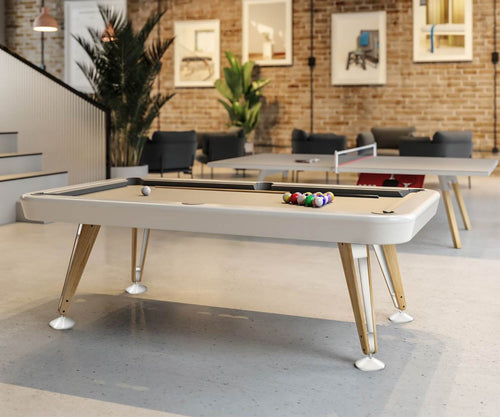
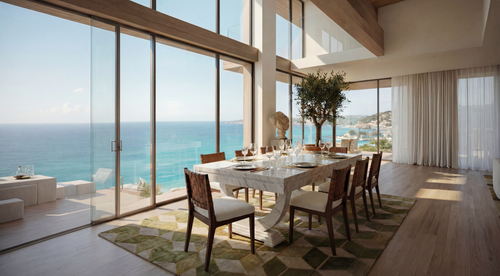
A matte finish absorbs light. It tends to make the table feel softer, quieter, and more grounded. It reduces glare and usually integrates more easily into residential interiors.
A gloss finish reflects light. It creates highlights, contrast, and visual drama. It can make a table feel sleeker and more luxurious, but it also draws more attention.
The Pro Insight: The table finish should not be selected in isolation. It should belong to the room’s architecture, lighting, flooring, upholstery, and surrounding furniture.
2. Matte Pool Table Finishes
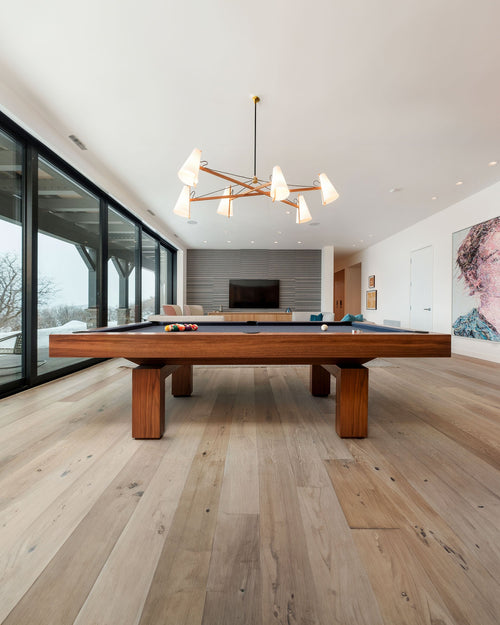
Matte finishes have become extremely popular in modern luxury interiors because they feel calm, architectural, and less showy. They work especially well when the pool table needs to feel like part of a designed room rather than a decorative centerpiece.
A matte finish does not mean dull. Good matte finishes still have depth. They simply avoid strong reflection. Instead of bouncing light dramatically, they reveal the material more quietly.
- Best For: Modern homes, minimalist interiors, organic modern spaces, transitional rooms, mountain homes, coastal homes, and open-plan living areas.
- Pairs With: Natural wood flooring, plaster walls, stone fireplaces, linen upholstery, leather seating, textured fabrics, low-sheen metal accents, and warm architectural lighting.
- Strength: Matte lets the table feel expensive without demanding too much attention.
- Watch Out For: Some matte surfaces can show oils, hand marks, chalk dust, and scuffs, especially in darker colors. Poor-quality matte can also look plasticky or unfinished.
3. Gloss Pool Table Finishes
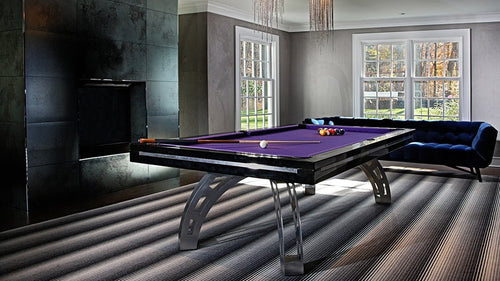
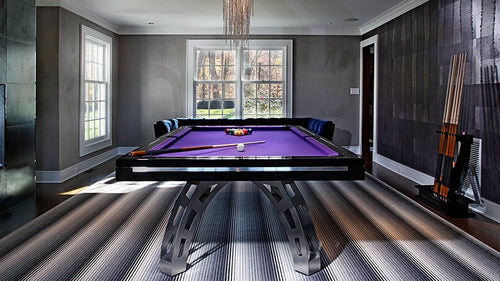
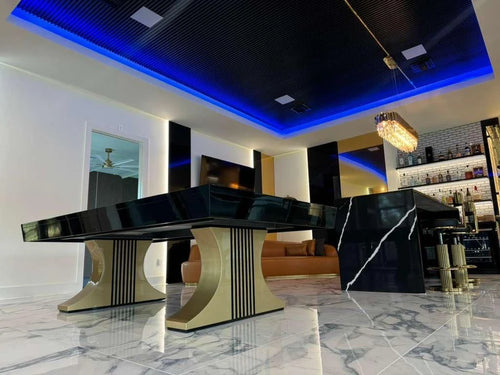
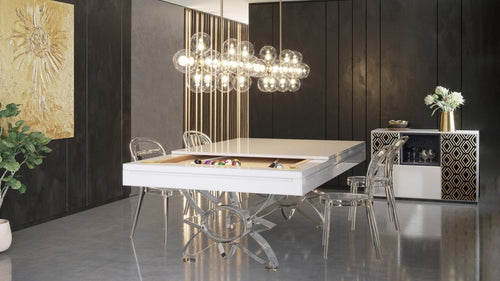
Gloss finishes are more dramatic. They reflect light, sharpen the silhouette of the table, and create a more polished impression. A gloss table usually feels more formal, glamorous, and attention-grabbing than a matte table.
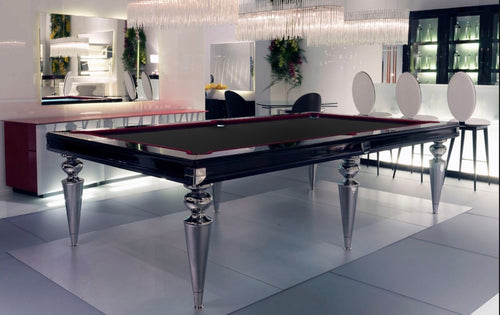
Gloss can be beautiful when the room supports it. Black gloss lacquer, polished wood, high-gloss white, and glossy painted finishes can make a pool table feel like a true centerpiece. In the right setting, gloss has a richness that matte cannot fully replicate.
- Best For: Glamorous interiors, Art Deco-inspired spaces, penthouses, formal lounges, luxury entertainment rooms, Miami-style homes, and contemporary villas.
- Pairs With: Marble, polished stone, chrome, polished nickel, brass, glass, acrylic, sculptural lighting, dark walls, formal seating, and black, navy, charcoal, or burgundy felt.
- Strength: Gloss creates visual impact, reflection, depth, and a polished high-design effect.
- Watch Out For: Gloss shows fingerprints, dust, scratches, swirl marks, chalk residue, and small imperfections more quickly.
4. Matte vs. Gloss: The Main Differences
| Matte | Gloss |
|---|---|
| Quieter and softer. | More dramatic and reflective. |
| Easier to integrate into residential interiors. | More formal and attention-grabbing. |
| Usually better with texture, plaster, stone, leather, linen, and wood. | Usually better with marble, metal, lacquer, glass, acrylic, and dramatic lighting. |
| More visually forgiving, though not maintenance-free. | Shows dust, fingerprints, scratches, and swirl marks more quickly. |
5. How Lighting Changes the Decision
Lighting is one of the biggest factors in choosing matte or gloss. A matte finish looks softer under most lighting conditions because it absorbs light rather than throwing it back into the room.
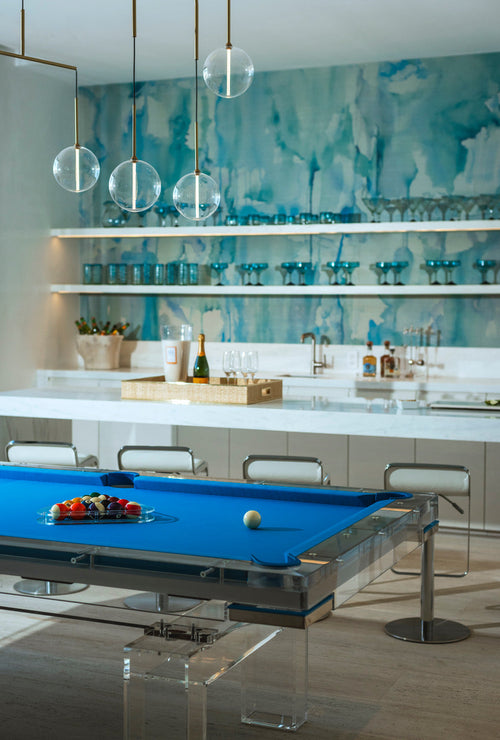
Gloss is more sensitive. A glossy table can look incredible when the lighting is controlled, but awkward when the reflections are harsh. Pendant lights can create bright spots. Windows can reflect across the rails. Strong overhead lighting can make the finish look busier than expected.
This does not mean gloss is bad. It means the lighting plan matters more. If the room has soft, indirect lighting, gloss can look rich. If the room has harsh overhead lighting, matte may be safer.
6. How Felt Color Affects the Finish
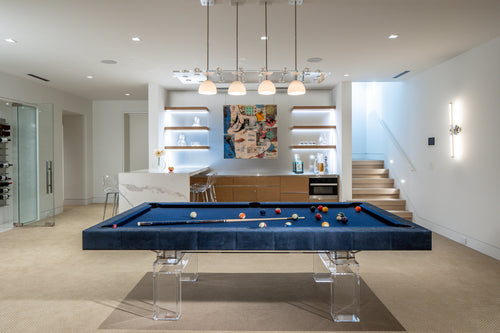
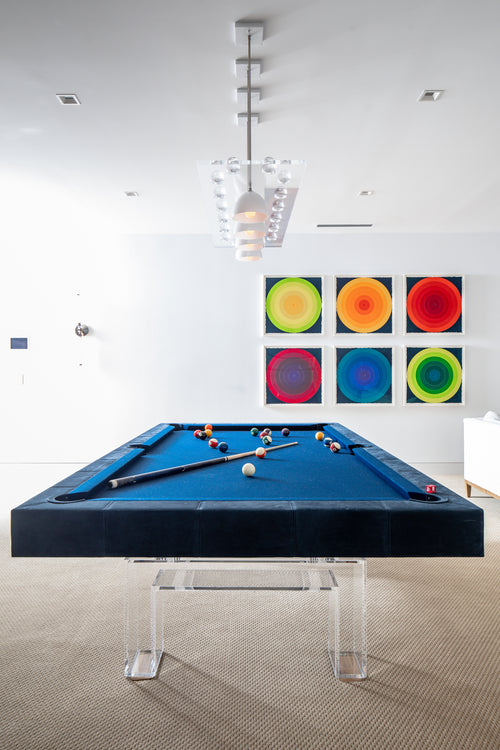
Felt color and finish need to work together. A matte black table with black felt creates a strong, stealthy look. A gloss black table with black felt feels more dramatic and formal. A matte walnut table with olive felt feels warm and grounded. A gloss walnut table with navy felt feels richer and more traditional.
Charcoal felt is flexible and works with both matte and gloss. Navy adds depth and looks especially good with gloss walnut, gloss black, matte walnut, or satin metal accents. Taupe tends to work better with matte or satin finishes because it supports a softer, more residential look.
The stronger the finish, the more carefully the felt needs to be chosen. A high-gloss table with a loud felt color can become too much quickly. A matte table can usually handle a slightly more distinctive felt because the finish itself is calmer.
7. Wood, Lacquer, and Metal
Wood behaves differently depending on sheen. Matte wood feels natural, warm, and architectural. Gloss wood feels more formal and traditional, making the grain look deeper and more luxurious, especially on darker woods.
Lacquer is where the difference becomes more dramatic. Matte lacquer feels modern and restrained. Gloss lacquer creates a polished, high-design effect. Black gloss lacquer can look glamorous and sharp, while matte black lacquer feels cleaner and more architectural.
Metal accents follow the same logic. Matte black metal, blackened steel, brushed bronze, and brushed brass feel restrained and architectural. Polished chrome, polished nickel, and glossy brass feel sharper and more glamorous.
8. When to Choose Matte, Gloss, or Satin
- Choose Matte If: You want the table to feel calm, modern, architectural, and easy to integrate into the home.
- Choose Gloss If: You want the table to feel dramatic, formal, glamorous, and visually dominant.
- Choose Satin If: You want depth and refinement without the maintenance and glare of full gloss.
- Choose Matte Wood If: The room has natural textures, warm lighting, and a modern or organic design language.
- Choose Gloss Wood If: The room is more formal, traditional, or club-like.
- Choose Matte Lacquer If: You want a clean contemporary table that feels restrained.
- Choose Gloss Lacquer If: You want a bold centerpiece with a polished, high-drama look.
The Pro Insight: Many pool tables look best in satin. Satin gives the material depth without the maintenance, glare, and visual loudness of full gloss.
9. Common Mistakes
- Assuming Gloss Means Luxury: Gloss can look expensive, but it can also look cheap. The quality of the finish, lighting, and restraint matter more than shine.
- Assuming Matte Is Always Practical: Matte can still show smudges, oils, and chalk dust, especially in dark finishes.
- Ignoring Lighting: A finish that looks good in a catalog may look completely different under real lighting.
- Choosing Finish Before Felt: Finish and felt need to be considered together.
- Overusing Reflection: Gloss table, chrome accents, mirrored walls, polished stone, glass furniture, and bright lighting can become visually exhausting.
- Making Everything Too Flat: Matte table, matte walls, matte flooring, matte furniture, and muted felt can look dead without contrast or texture.
The Bottom Line
Matte and gloss finishes both have a place in pool table design. The mistake is treating one as automatically more luxurious than the other.
Matte is quieter, softer, and easier to integrate. It works beautifully in modern homes, organic interiors, and spaces where the pool table should feel like refined furniture. Gloss is sharper, dressier, and more dramatic. It works best when the table is meant to command attention and the room has the lighting and materials to support it.
For most real homes, matte or satin will be the better choice. They are easier to live with and harder to regret. But in the right room, a gloss finish can be stunning. The best finish is not the shiniest one. It is the one that makes the table feel like it belongs.