

Enjoy our modern designs
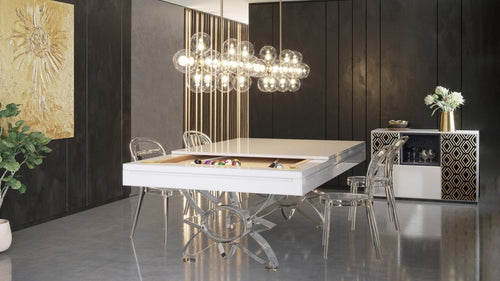
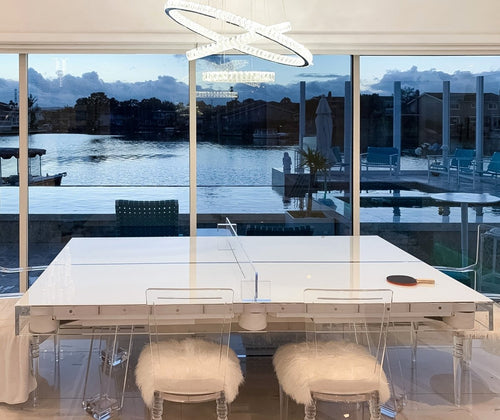
A white pool table can look exceptional in the right room. It feels clean, architectural, modern, and lighter than traditional billiard furniture. In minimalist interiors, coastal homes, contemporary lounges, and bright open-plan spaces, a white table can make the game room feel less like a basement and more like part of the home’s design language.
But white is not a forgiving choice. It shows marks. It reflects light. It can feel sterile if the room is not warmed up properly. It can also look cheap if the finish, proportions, or cloth color are wrong.
So the real question is not whether white pool tables are good or bad. The question is whether the room, client, and material choice can support one.
Table of Contents
1. Why White Pool Tables Are So Appealing
White pool tables are appealing because they break from the old image of the dark, heavy billiard room. They feel brighter and more current. Instead of making the table look like traditional game-room equipment, white can push it closer to furniture, sculpture, or architecture.
This is especially useful in homes where the pool table is visible from other living areas. A white table can feel less visually heavy than dark wood or black lacquer. It can sit more comfortably in open-plan spaces, modern homes, and rooms where natural light plays a major role.
White also gives designers flexibility. It can work with pale oak, travertine, limestone, concrete, glass, chrome, brushed brass, or soft neutral palettes. It can feel coastal, minimal, gallery-like, or futuristic depending on the table design and surrounding materials.
Designer insight: A white pool table is strongest when it is chosen as part of the architecture, not as a novelty color.
2. Why White Can Be Risky
The same qualities that make a white pool table attractive can also make it difficult. White surfaces reveal dirt, scuffs, fingerprints, chalk dust, and small marks more easily than darker or more textured finishes.
White can also become too stark. In a room without warmth, texture, or contrast, a white pool table may feel clinical instead of luxurious. The table can start to look like showroom furniture rather than something that belongs in a lived-in interior.
Another risk is poor execution. A low-quality white finish can look flat, plastic, or overly glossy in the wrong way. Because white is visually simple, the proportions and finish quality become more obvious. There is less ornament to hide behind.
This is why white pool tables need discipline. The design has to be good. The finish has to be good. The room has to be ready for it.
3. Where White Pool Tables Work Best
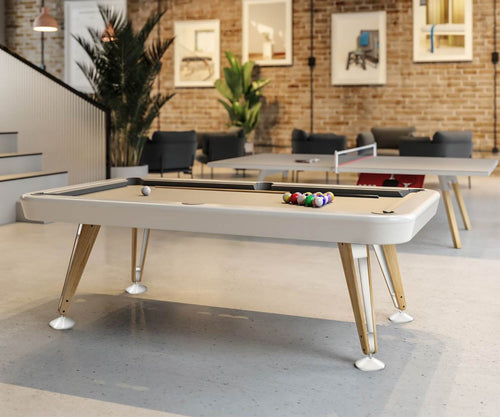
White pool tables work best in interiors that already use lightness as part of their design language. Contemporary coastal homes, modern villas, bright penthouses, gallery-like living spaces, and neutral entertainment rooms can all support a white table beautifully.
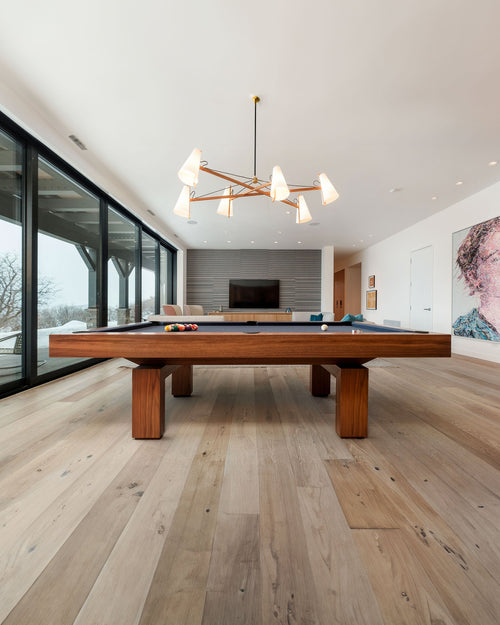
They also work well in rooms with strong architectural contrast. A white table against darker wood floors, charcoal walls, black-framed windows, or warm stone can feel sharp and intentional. The contrast gives the table definition without making the room feel heavy.
Where white tables struggle is in rooms that are already too white, too flat, or too unfinished. If every surface is pale and there is not enough texture, the table may disappear or make the room feel cold.
White needs context. It performs best when the room gives it either warmth, contrast, or both.
4. The Cloth Color Matters More Than Usual
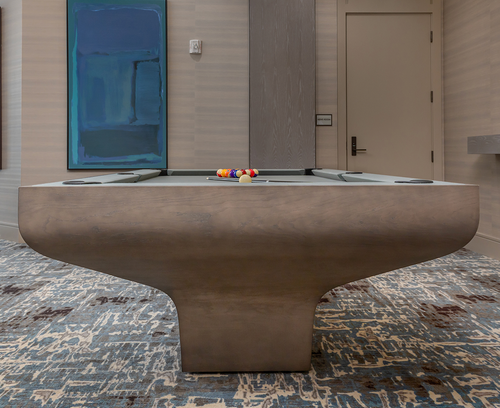
With a white pool table, cloth color becomes a major design decision. Traditional green creates a strong contrast and can make the table feel more classic. Grey, taupe, camel, navy, black, or muted blue can make it feel more modern. Bright cloth colors can work in rare cases, but they are risky.
The cloth determines whether the table feels calm or loud. A white frame with a soft neutral cloth can look refined and architectural. A white frame with bright red or electric blue cloth can quickly become flashy.
The safest approach is to choose cloth that belongs to the room’s palette. It does not have to match the sofa or rug exactly, but it should feel connected. The goal is to avoid making the playing surface look like a random color block in the middle of the room.
Pro tip: On a white pool table, the cloth color becomes the visual center. Choose it with the same care you would give a rug, stone slab, or large upholstery piece.
5. Finish Quality Makes or Breaks the Look
A white pool table depends heavily on finish quality. Matte white, satin white, lacquered white, textured white, and painted white all create different moods. A glossy white table may feel sleek and dramatic, but it can show reflections and fingerprints more easily. A matte finish may feel softer and more architectural, but it still needs to be durable and properly sealed.
The edge details matter too. Sharp, clean lines can make the table feel modern. Softer profiles can make it feel more relaxed. Exposed hardware, visible pockets, and contrast trim need to be handled carefully because they will stand out more against white.
White is unforgiving because every detail becomes visible. If the proportions are awkward, the rails are bulky, or the finish looks thin, the table will not feel luxurious.
A white table should look intentional from every angle, not just in a catalog image.
6. Maintenance Is Real, But Manageable
White pool tables do require more visual maintenance than darker tables. Chalk dust, fingerprints, drink rings, and small scuffs are more noticeable. This does not make them impractical, but it does mean the client needs realistic expectations.
The room’s use matters. In a formal entertaining space with careful adult use, a white table can be perfectly manageable. In a high-traffic family game room, rental property, hotel amenity space, or party-heavy environment, white may require more upkeep than the owner wants to deal with.
Maintenance also depends on the finish. A high-quality sealed finish will be easier to clean than a delicate or poorly protected surface. Accessories matter too. A proper cover, organized chalk storage, clean hands, and basic care habits can make a white table much easier to live with.
White is not automatically a maintenance nightmare. But pretending it behaves like walnut or black metal is dishonest.
7. When to Avoid a White Pool Table
A white pool table is not the right answer for every room. It should usually be avoided if the room already lacks warmth, if the client dislikes visible maintenance, or if the table will be heavily used by children, guests, renters, or hospitality crowds without careful upkeep.
It can also be the wrong choice in traditional interiors where the white finish feels disconnected from the architecture. If the rest of the home is dark, historic, rustic, or heavily textured, a white table may feel too abrupt unless the contrast is handled deliberately.
The biggest warning sign is choosing white only because it looks clean in photos. A white pool table needs a real reason to be white. It should support the room’s concept, not just chase a minimalist trend.
The Bottom Line
White pool tables can be beautiful, clean, and architectural. They can make a game room feel lighter, more modern, and more connected to the rest of a luxury home.
But white is not effortless. It needs the right room, the right finish, the right cloth color, and a client who understands maintenance. Done well, a white pool table feels refined and intentional. Done poorly, it feels sterile, fragile, or trendy.
The best white pool tables do not look like a bold choice trying to impress. They look like the only color that made sense for the room.