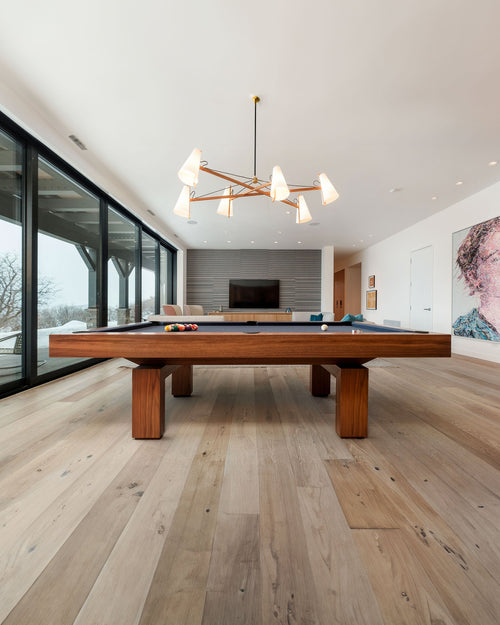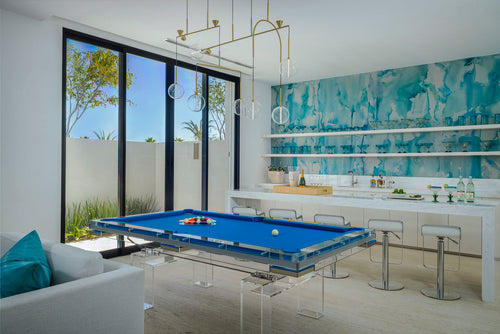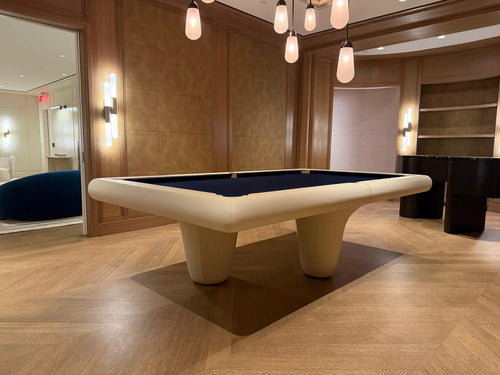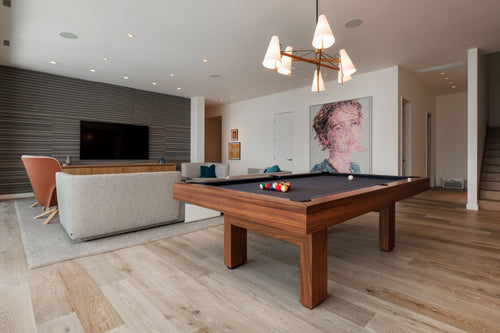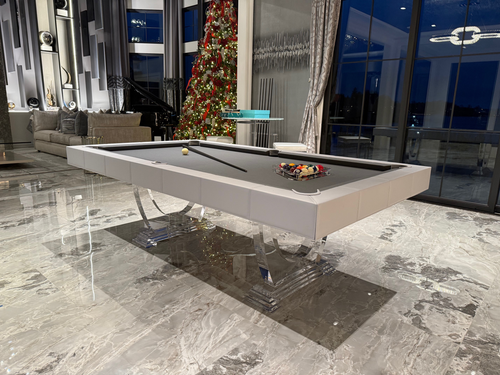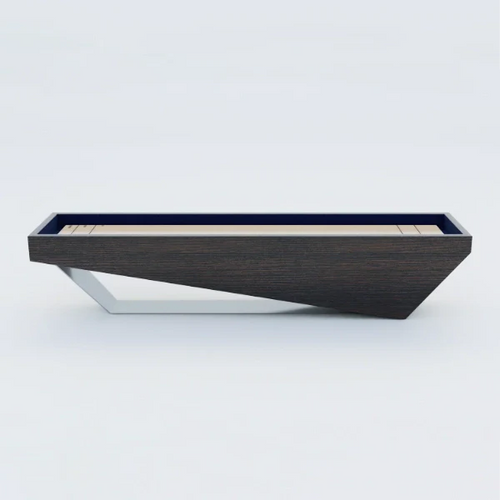


Enjoy our modern designs
Wood texture changes the entire personality of a pool table. Most people think about wood finish in terms of color first: walnut, oak, black stain, natural oak, espresso, whitewash, or greywash. Color matters, but texture is what decides whether the table feels polished, rustic, architectural, casual, formal, modern, or old-world.
A smooth walnut pool table feels very different from a wire-brushed walnut table. A distressed oak table feels different from a clean open-pore oak table. A black-stained smooth table may feel sleek and urban, while a black-stained wire-brushed table can feel more grounded and material-rich.
Distressed, wire-brushed, and smooth finishes all have a place. The mistake is choosing texture because it looks interesting on a sample. The right choice depends on the table’s design, the architecture of the room, and the atmosphere you want the space to have.
Table of Contents
1. Why Wood Texture Matters
A pool table is large enough that texture becomes a major design feature. On a small side table, a distressed or wire-brushed finish may be a minor detail. On a pool table, it becomes part of the whole room.
The rails, frame, legs, apron, and base all carry the finish. That means the texture has to be considered from multiple angles, not just from above. A table that looks subtle in a close-up sample may feel much heavier once the texture is spread across an eight-foot or nine-foot piece of furniture.
Texture also changes the way the table feels physically. Smooth finishes feel refined and clean. Wire-brushed finishes feel tactile and architectural. Distressed finishes feel aged, casual, and character-driven.
2. Smooth Wood Finishes
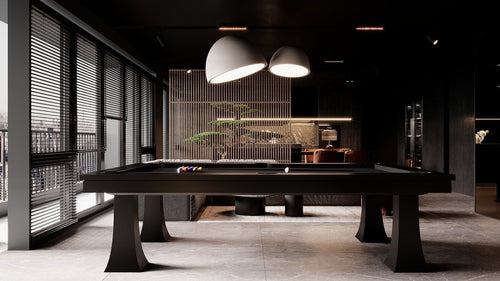
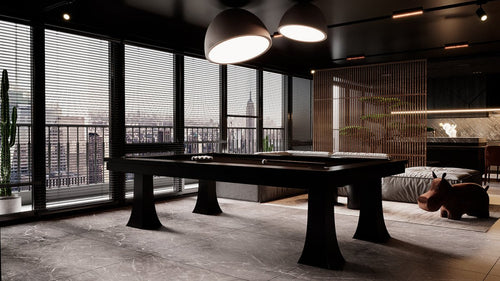
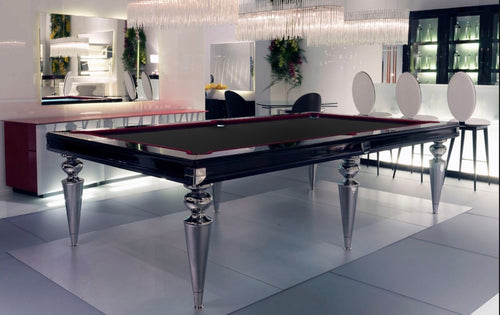
Smooth wood finishes are the most refined and versatile option. They can be matte, satin, semi-gloss, or gloss, but the key characteristic is that the surface feels even, controlled, and polished.
Smooth finishes usually make a pool table feel more tailored. They emphasize silhouette, proportion, and material quality rather than surface texture.
- Best For: Contemporary homes, formal lounges, luxury game rooms, penthouses, transitional interiors, Art Deco-inspired spaces, minimalist rooms, traditional billiards rooms, and interiors with polished stone, lacquer, metal, or glass.
- Pairs With: Charcoal felt, navy felt, black felt, burgundy felt, taupe felt, leather pockets, hidden pockets, shield pockets on traditional tables, brass, bronze, chrome, polished nickel, marble, lacquered cabinetry, leather seating, and sculptural lighting.
- Watch Out For: Smooth finishes can look bland if the wood lacks character or if the room has too little contrast. Smooth dark finishes can also show scratches, dust, and fingerprints more easily.
3. Wire-Brushed Wood Finishes
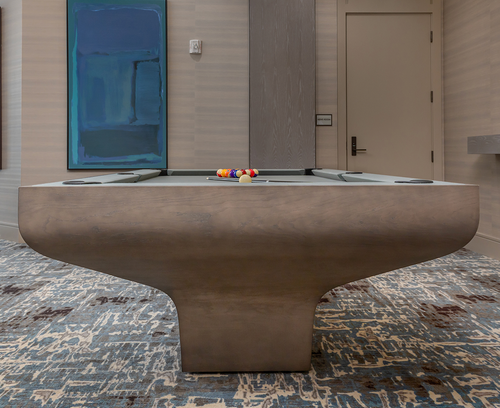
Wire-brushed wood finishes are more textured than smooth finishes but usually less aged-looking than distressed finishes. The process emphasizes the natural grain by brushing away softer parts of the wood surface, leaving a subtle raised texture.
This is why wire-brushed finishes are so useful in modern interiors. They add texture without making the table feel rustic. They make the wood feel real, but still controlled.
- Best For: Organic modern homes, mountain homes, coastal homes, modern rustic interiors, warm contemporary spaces, neutral interiors, and rooms with stone, plaster, leather, linen, wool, or natural rugs.
- Pairs With: Taupe felt, olive felt, charcoal felt, navy felt, simple leather pockets, hidden pockets, blackened steel, bronze, brushed brass, matte black metal, stone fireplaces, plaster walls, textured rugs, leather chairs, and warm lighting.
- Watch Out For: Wire-brushed finishes need restraint. If the brushing is too aggressive, the table can start to feel rough, rustic, or artificially aged.
The Pro Insight: Wire-brushed is often the best middle ground. It adds warmth and texture without locking the table into a rustic identity.
4. Distressed Wood Finishes
Distressed wood finishes are designed to look aged, worn, weathered, or imperfect. This can include softened edges, saw marks, dents, rub-through, uneven color, hand-scraped texture, worn corners, greywash, reclaimed effects, or other signs of use.
Distressing gives a pool table instant character. It can make the table feel relaxed, rustic, old-world, coastal, farmhouse, lodge-like, or antique-inspired depending on how it is done. But distressed finishes are also the riskiest of the three.
- Best For: Mountain homes, rustic game rooms, farmhouse interiors, coastal homes, lake houses, wine rooms, lodge-style spaces, traditional casual interiors, and rooms with reclaimed beams, stone, leather, or antique furniture.
- Pairs With: Olive felt, camel felt, burgundy felt, traditional green felt, navy felt, brown leather pockets, shield pockets, bronze, antique brass, blackened steel, stone fireplaces, leather seating, reclaimed wood beams, woven rugs, and warm sconces.
- Watch Out For: Distressed finishes can quickly look fake. Real wear happens in specific places. Fake distressing often looks random, evenly distributed, and decorative.
5. The Main Difference Between the Three
| Texture | Personality | Best Use |
|---|---|---|
| Smooth | Polished, clean, controlled, refined. | Formal, modern, transitional, glamorous, or versatile interiors. |
| Wire-Brushed | Architectural, tactile, warm, material-rich. | Organic modern, coastal, mountain, and warm contemporary homes. |
| Distressed | Lived-in, aged, rustic, casual, character-heavy. | Lodges, rustic rooms, casual traditional spaces, coastal homes, and reclaimed-material interiors. |
6. How Room Style Should Guide the Choice
Modern interiors usually work best with smooth or wire-brushed finishes. For minimalist rooms, smooth is usually safest. For organic modern rooms, wire-brushed is often better.
Traditional interiors can work with smooth, lightly wire-brushed, or distressed finishes depending on formality. A formal traditional room usually wants smooth walnut, mahogany, or closed-pore wood. A relaxed traditional game room can handle distressed walnut, aged oak, or shield pockets.
Coastal and mountain homes often work beautifully with wire-brushed or lightly distressed finishes. Industrial interiors usually prefer wire-brushed or smooth finishes, especially with blackened steel or darker woods. Glamorous interiors usually want smooth finishes, because rough texture can make the table feel too casual.
7. Felt and Pocket Pairings
Felt color and pocket style should follow the table’s texture. A smooth finish with hidden pockets creates the cleanest architectural look. A smooth finish with leather pockets works well in transitional, traditional, and contemporary rooms. A smooth finish with shield pockets belongs mostly on formal traditional tables.
Wire-brushed wood with simple leather pockets is one of the strongest pairings for modern residential interiors. It feels warm, tactile, and custom without being overly decorative. Wire-brushed wood with hidden pockets can also work beautifully when the table should feel modern but not cold.
Distressed wood usually wants leather pockets or shield pockets. Brown, espresso, or cognac leather supports the aged character of the finish. Hidden pockets are harder to pair with distressed wood unless the design is intentionally modern rustic.
8. Maintenance Differences
Smooth finishes are usually easier to wipe down, but they can show scratches and marks more clearly, especially if they are dark, satin, or gloss. High-gloss smooth finishes are the most demanding.
Wire-brushed finishes can hide minor marks better because the texture naturally breaks up the surface. However, the grain texture can hold dust or chalk residue if the brushing is deep. A lightly wire-brushed satin finish is often a very livable choice.
Distressed finishes are forgiving because new marks often blend into the existing character. The danger is not maintenance as much as taste. If the distressing is too theatrical, the table can age stylistically faster than a smoother or more restrained finish.
The Bottom Line
Texture decides whether a wood pool table feels polished, architectural, or lived-in.
Smooth finishes are clean, refined, and versatile. Wire-brushed finishes are tactile, warm, and quietly custom. Distressed finishes are aged, relaxed, and character-heavy.
For most luxury custom pool tables, wire-brushed or smooth satin finishes are the best options. Smooth is safer. Wire-brushed is more interesting. Distressed only wins when the room genuinely supports a rustic, lodge, coastal, or old-world mood.