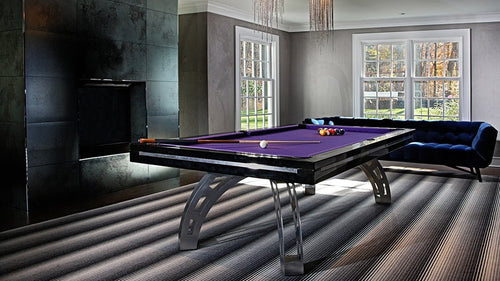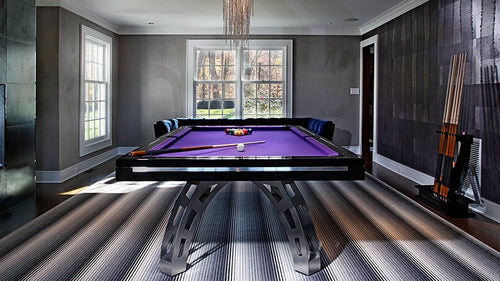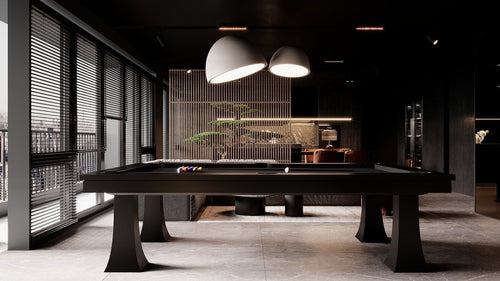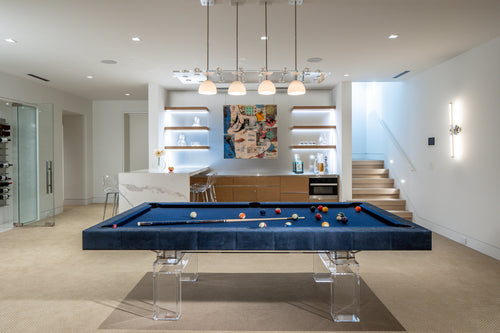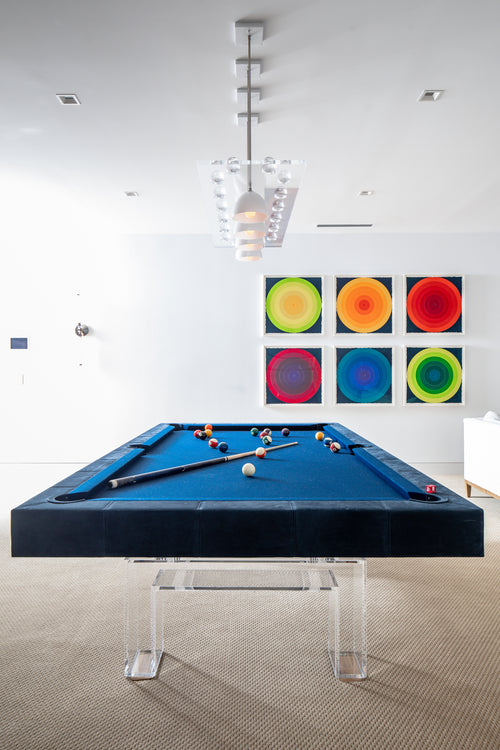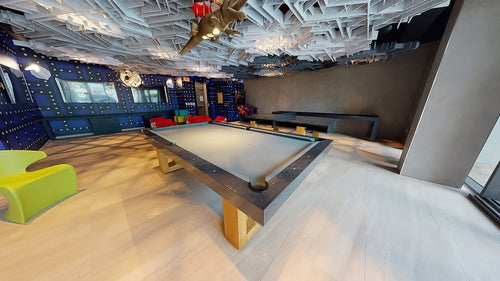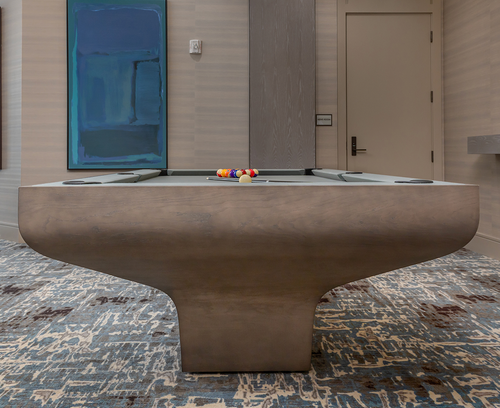


Enjoy our modern designs
For centuries, billiard cues were single, solid sticks: straight, tapered poles usually hewn from hardwood. Early players often used the “tail” end of the mace to strike balls in tight spots, which is where the word cue comes from, derived from the French queue, meaning tail. By the 18th and early 19th centuries, the cue had become its own slender tool, but it remained a full-length, awkward object roughly 57 to 58 inches long.
That made the cue useful on the table but inconvenient everywhere else. Transporting and protecting a single-piece cue was difficult, and a long wooden stick could warp, crack, or break if exposed to moisture, pressure, or a hard knock in transit.
Table of Contents
1. From Mace to Cue
Originally, players relied on heavy, club-like implements known as maces, along with plain wooden cues that offered limited shot variety and precision. The mace was useful for pushing or guiding a ball, but it was clumsy compared with the controlled striking action of the modern cue.
As the game developed, players increasingly favored the cue for finesse, spin, and accuracy. The long one-piece design worked well enough in a fixed billiard room, but it created practical problems away from the table. Travel, storage, and exposure to changes in humidity could all threaten the straightness that serious play depends on.
2. The 1829 Solution: The Two-Piece Cue
The practical breakthrough arrived in 1829 with the two-piece cue: a cue that could be unscrewed into a butt and a shaft through a metal or wooden joint.
This jointed design made cues portable, easier to protect, and more realistic for players who wanted to bring their own equipment to matches. While no single inventor’s name dominates the story in contemporary sources, the innovation emerged during a period of rapid billiards equipment improvement in England, shaped by the broader mechanical and manufacturing advances of the Industrial Revolution.
3. Why It Mattered
The two-piece cue did not radically change the physics of play. Its importance was more practical than theatrical. But that practicality changed how players treated their equipment and how seriously they could personalize their game.
- Transportability: Players could store cues safely in cases and bring them to clubs, tournaments, or private matches without the same risk of breakage.
- Interchangeability: Butt and shaft combinations made it possible to swap shafts, experiment with different playing feels, or use extensions when needed.
- Durability: Jointed cues were less vulnerable to catastrophic travel damage, extending the life of higher-end instruments.
Early on, the two-piece cue was a mark of seriousness. It signaled that a player was not simply using whatever house cue was available, but investing in a personal instrument. Over time, that same idea became standard for anyone who cared about consistency and quality.
4. Adoption and Modern Legacy
By the late 19th and 20th centuries, two-piece cues had become common among serious billiards players. Today, nearly all professional and enthusiast cues are two-piece, while snooker players often use three-piece designs for added convenience and extension options.
One-piece cues still have a place, but mostly as house or communal cues in billiard halls. The classic image of a player unscrewing a cue after a match traces directly back to the 1829 innovation: the moment the cue became not just a room fixture, but a personal tool that could travel with the player.
Conclusion
The two-piece cue stick is a reminder that not every game-changing invention looks dramatic. Sometimes the important breakthrough is a simple ergonomic fix: making a tool easier to carry, protect, and customize.
In billiards, that practical tweak helped move the cue from a clubroom prop to a personalized, portable instrument of precision.