

Enjoy our modern designs
A game room does not need to feel casual to feel fun. That is the mistake many homes make when they add a pool table, bar, arcade piece, or entertainment area. The moment the word “game” enters the conversation, the design suddenly gets treated differently from the rest of the home.
The lighting becomes louder. The furniture gets heavier. The accessories become themed. The room starts to borrow from bars, clubs, and commercial entertainment spaces instead of continuing the language of the residence.
That approach can work in the right setting, but it is easy to overdo. A luxury home does not need a private sports bar unless that is truly the point. Most of the time, the better result is something more restrained: a room that feels like a lounge first, with games woven into the experience rather than dominating it.
Table of Contents
- 1. The Problem With the Sports Bar Template
- 2. A Lounge Is Built Around Mood, Not Theme
- 3. The Pool Table Should Feel Like the Anchor
- 4. Seating Decides Whether People Stay
- 5. Lighting Should Seduce, Not Announce
- 6. The Bar Should Feel Residential
- 7. Avoid Decorating With the Game Itself
- 8. Materials Should Feel Touchable, Not Tough
- 9. Screens Need Discipline
- The Bottom Line
1. The Problem With the Sports Bar Template
The sports bar template is familiar: dark walls, big screens, bright signage, heavy bar seating, high-contrast finishes, themed memorabilia, and a pool table sitting somewhere in the middle of the action. In a commercial setting, that formula makes sense. It tells people immediately what kind of experience they are entering.
Inside a home, it often feels too literal. A private residence has different expectations. The room should still feel connected to the rest of the architecture. The materials should have more nuance. The lighting should be layered rather than blunt. The furniture should invite longer, more relaxed use.
The issue is not that sports bar elements are automatically bad. A bar can be beautiful. A screen can be useful. Darker colors can create atmosphere. The problem is when all of those decisions stack together and the room becomes themed.
2. A Lounge Is Built Around Mood, Not Theme
A lounge begins with atmosphere. It thinks about how people enter, where they pause, how the light feels, what materials they touch, where they set a drink, and how the room behaves when no one is actively playing.
That is the key distinction. A sports bar is usually activity-first. A lounge is mood-first.
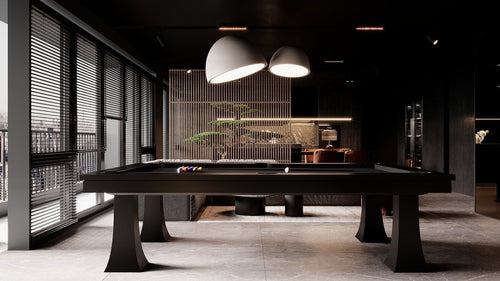
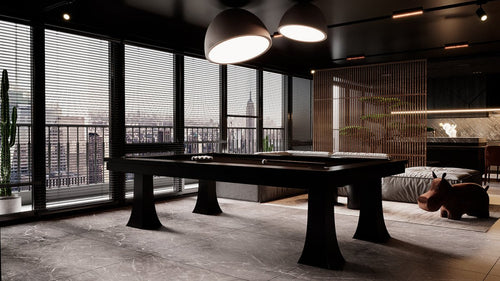
In a lounge-style game room, the pool table does not have to scream for attention. It can anchor the room quietly through proportion, finish, and placement. The bar can feel like millwork rather than a commercial counter. Seating can be lower, softer, and more conversational.
The Pro Insight: A lounge gives the room permission to be used in more than one way. It can hold a game, a conversation, a drink, or a slow evening after dinner.
3. The Pool Table Should Feel Like the Anchor
In a weaker game room, the pool table can feel like an object that was added to make the space more entertaining. In a stronger room, the table becomes the anchor that organizes the space.
A well-placed table creates movement, gives guests something to gather around, and provides a natural center without requiring everyone to participate. Some people play, some watch, some talk from the seating area, and some drift between the bar and the table. The room works because the table gives it structure.
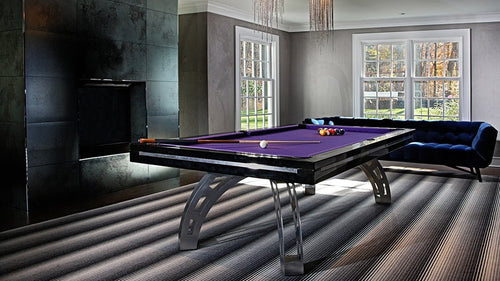
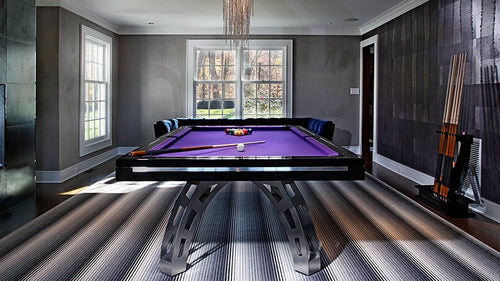
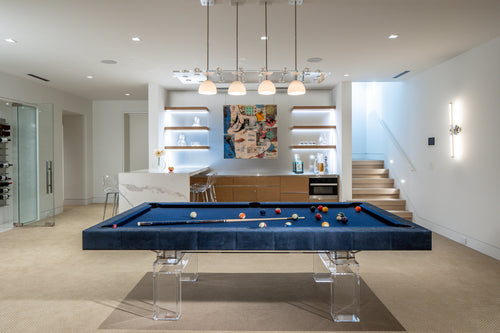
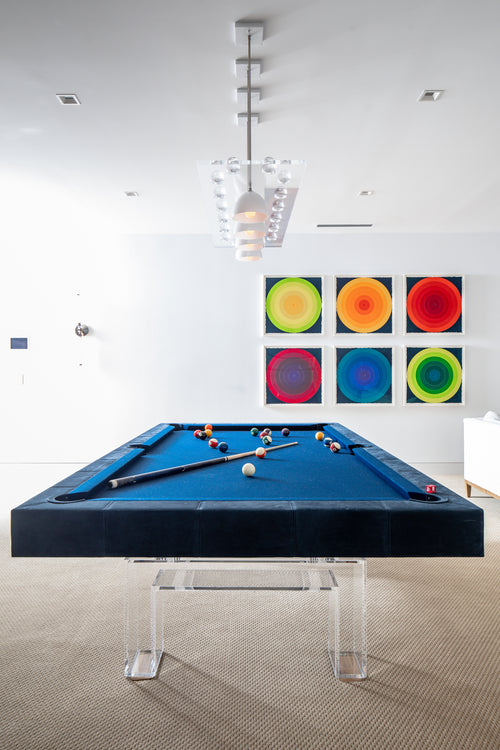
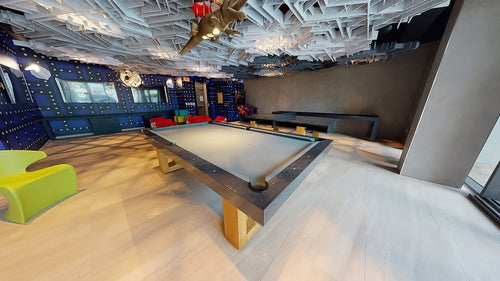
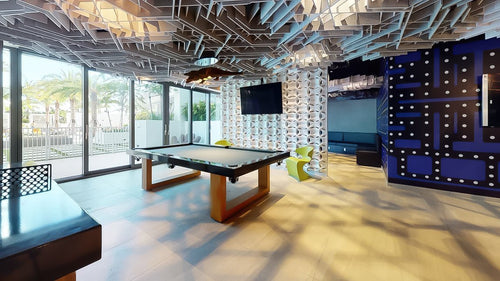
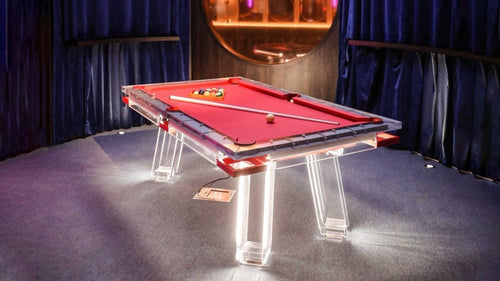
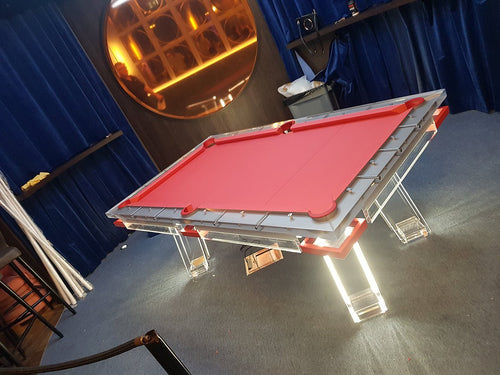
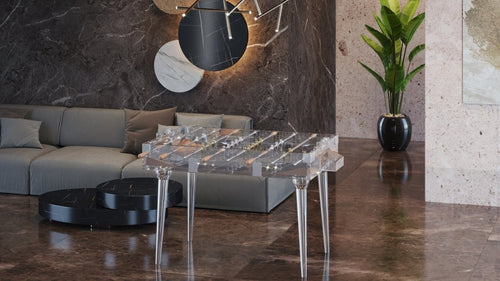
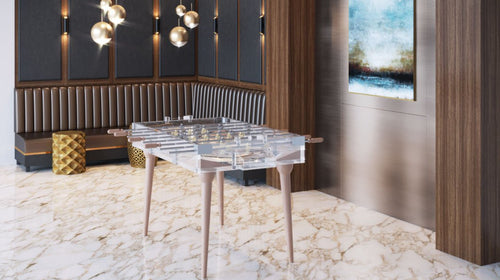
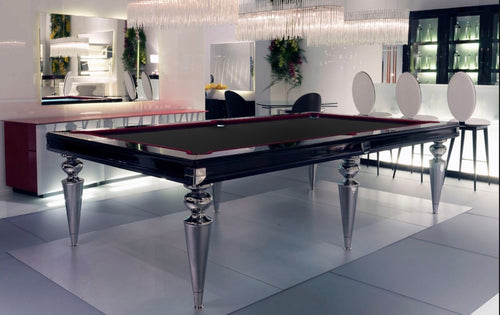
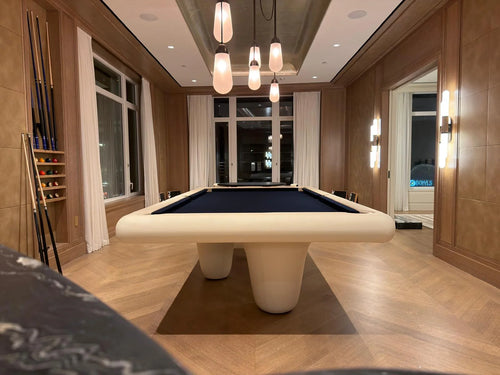
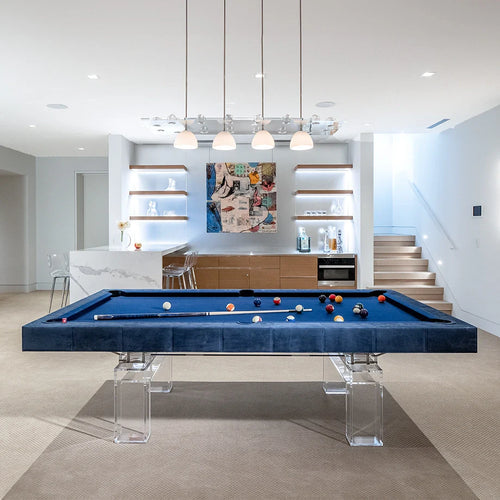
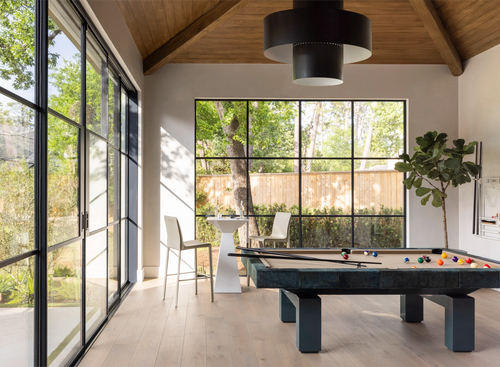
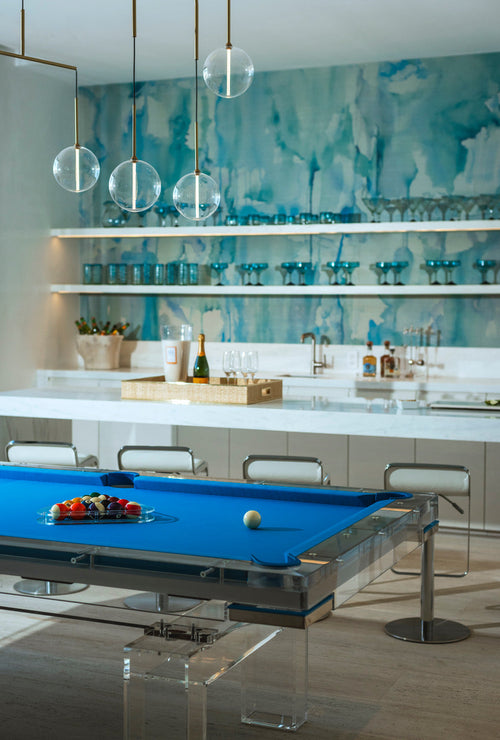
For that to happen, the table has to look worthy of the room. A bulky table with loud felt and generic accessories can pull the whole space toward basement-game-room territory. A refined table with considered materials, controlled proportions, and a felt color that belongs to the palette can feel more like a piece of architectural furniture.
4. Seating Decides Whether People Stay
A pool table can bring people into the room, but seating determines whether they stay. This is where many game rooms fail. They put all the attention on the table, bar, or screen, then treat seating as an afterthought.
A lounge-style game room needs seating that supports different kinds of participation. Not everyone wants to play every round. Some guests want to watch. Some want to talk. Some want to sit with a drink and still feel connected to the room.
Lounge chairs, low sofas, banquettes, benches, and small drink tables can create that flexibility without making the space feel crowded. The seating should not feel like spectator seating. It should feel like part of the room’s social fabric.
5. Lighting Should Seduce, Not Announce
Lighting is one of the fastest ways to make a game room feel either refined or commercial. Bright overhead light may make the table visible, but it can also flatten the room and kill the mood. Lighting that is too dim may look atmospheric but fail once people actually try to play.
The right answer is layered lighting. The pool table needs focused, even illumination across the playing surface. The seating areas need softer light. The bar or cabinet area may need accent lighting. Artwork, textured walls, shelves, or architectural details may need their own quiet glow.
Fixture choice matters as well. A standard billiard lamp can work in a traditional setting, but it may feel too literal in a modern luxury home. A sculptural pendant, refined linear fixture, or more architectural lighting strategy can make the table feel integrated into the room.
6. The Bar Should Feel Residential
A bar can be one of the best parts of a game room, but it is also one of the easiest details to mishandle. The problem starts when the bar becomes too commercial.
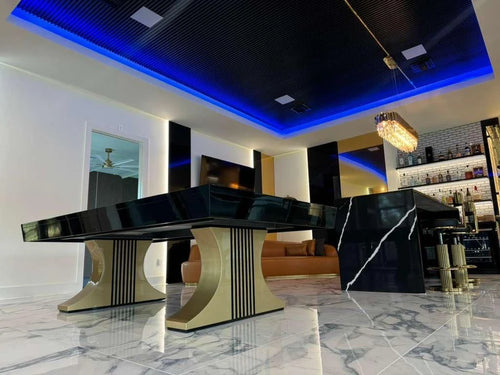
Oversized counters, high stools, mirrored walls, loud lighting, exposed bottles, backlit signage, and overly glossy materials can make the room feel less like a private home and more like a hospitality imitation.
A residential bar should feel more integrated. It can be built into millwork, tucked along one wall, connected to a lounge zone, or designed as a quiet service area rather than the visual centerpiece. In a lounge-style game room, the bar is part of the rhythm. It is not the whole personality.
7. Avoid Decorating With the Game Itself
There is a temptation to make a game room visually explain itself. Cue racks become wall features. Balls, chalk, jerseys, trophies, neon signs, posters, and memorabilia start filling the room. Before long, the design has become a collection of references rather than a composed interior.
A pool table already tells people the room is for play. The design does not need to repeat the message on every wall. Accessories should be stored cleanly, displayed selectively, or integrated into furniture.
A custom cue cabinet can feel elegant. A wall cluttered with mismatched game accessories usually does not. A sophisticated game room does not need to shout “game room.” It just needs to be a room people want to use.
8. Materials Should Feel Touchable, Not Tough
Sports bar design often leans on toughness: dark finishes, hard surfaces, metal, glass, glossy counters, leather, and high-contrast lighting. Those materials can create energy, but they can also make a room feel cold if they are not balanced.
A lounge needs touch. Wood grain, leather, wool, suede, linen, stone, plaster, bronze, matte finishes, and softer upholstery all help the room feel more residential. The goal is not to make everything soft, but to create enough material variety that the room feels layered and comfortable.
| Instead of... | Use... |
|---|---|
| Theme-heavy décor | Art, sculpture, books, photography, and objects that support the room’s mood. |
| Harsh overhead lighting | Layered lighting with focused table light and softer surrounding glow. |
| Commercial bar styling | Residential millwork, concealed storage, stone, wood, bronze, or smoked glass. |
| Spectator seating | Lounge seating that supports conversation before, during, and after the game. |
9. Screens Need Discipline
A game room can include a television, especially if the room is used for sports, movies, or casual hosting. The issue is placement and dominance.
When the screen becomes the main event, the room starts sliding back toward sports bar territory. Every chair faces it. The pool table becomes secondary. The lighting is planned around glare. The walls are arranged around the screen.
A lounge can handle a screen more subtly. It may be positioned to one side, integrated into millwork, concealed when not in use, or balanced with art and architectural details. The room should not feel dead when the screen is off.
The Bottom Line
A game room becomes a lounge when it stops performing the idea of entertainment and starts supporting it.
The pool table is still central, but it is not a prop. The bar is useful, but not theatrical. The lighting has mood, but not gimmick. The furniture is comfortable, but not casual in the wrong way. Everything is designed to make the room feel inviting without making it feel obvious.
That is where the best game rooms are heading: less theme, more atmosphere; less sports bar, more residence; less noise, more intention.
A great game room does not need to convince anyone that it is fun. It just needs to be the room people keep drifting back to.