

Enjoy our modern designs
A formal living room is not the easiest place for a pool table. That is exactly why, when it works, it feels so strong.
The challenge is balance. A pool table carries the language of play, movement, and entertainment, while a formal living room usually carries the language of architecture, symmetry, upholstery, art, and restraint. If the table is chosen casually, it can interrupt the room.
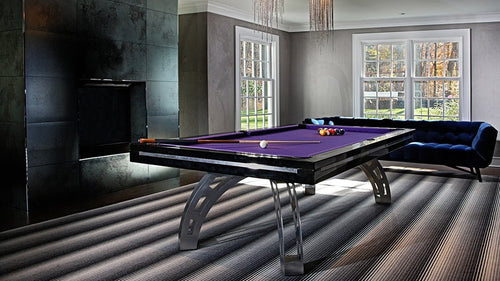
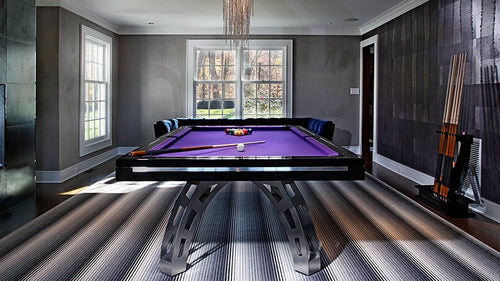
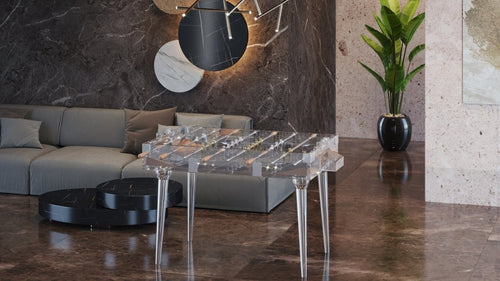
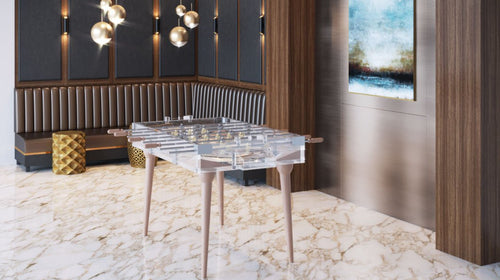
But when the table is handled with intention, the result can be far more interesting than a traditional billiard room. Instead of hiding the pool table in a basement or secondary game space, the home allows it to become part of the main interior. It becomes a social anchor, a sculptural object, and a reason for the room to actually be used.
Table of Contents
- 1. Start With the Room’s Existing Formality
- 2. Avoid the “Game Room Object” Look
- 3. Let the Table Replace the Coffee Table Logic
- 4. Clearance Must Look Elegant, Not Empty
- 5. Choose Felt Like Upholstery
- 6. Use Materials That Speak the Room’s Language
- 7. Keep Accessories Quiet
- 8. Lighting Has to Serve Play and Atmosphere
- 9. Keep Seating Social
- The Bottom Line
1. Start With the Room’s Existing Formality
The first mistake is treating the pool table as an exception to the room. In a formal living room, every major object has to respect the existing language of the space. That means the table should be chosen with the same seriousness as the sofa, rug, lighting, fireplace surround, millwork, and art.
A traditional formal room may have symmetry, paneling, heavier drapery, refined wood tones, and a more composed furniture layout. A modern formal room may rely on cleaner lines, stone, neutral upholstery, large-scale art, and architectural lighting. A transitional room may sit somewhere between those two worlds.
The pool table has to understand which room it is entering. It should not fight the room’s formality. It should translate it.
2. Avoid the “Game Room Object” Look
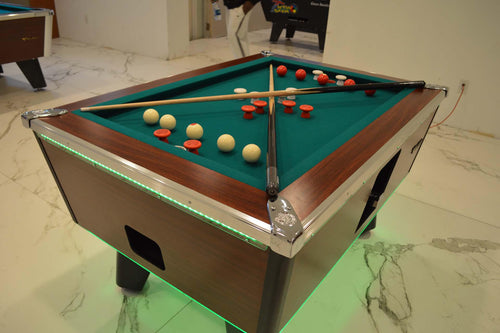
A formal living room cannot absorb the usual game-room clichés. Green felt, bulky rails, heavy legs, exposed accessories, neon signs, wall-mounted cues, and novelty lighting can quickly make the room feel less sophisticated.
That does not mean the room has to become stiff or joyless. It means the game elements need to be edited. The table should read first as furniture, then as recreation.
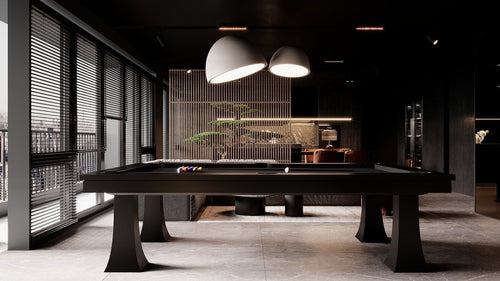
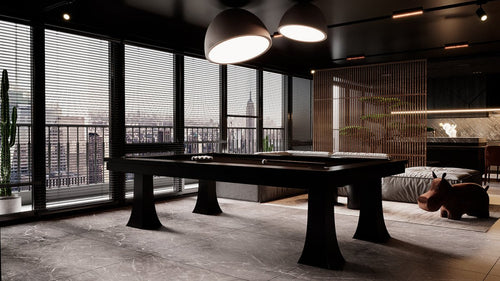
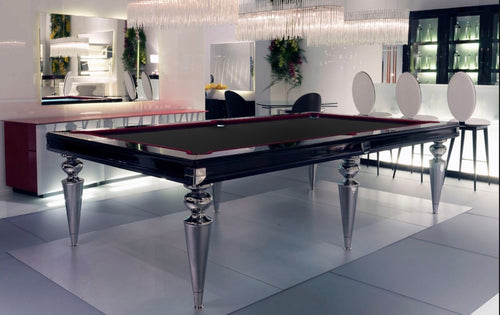
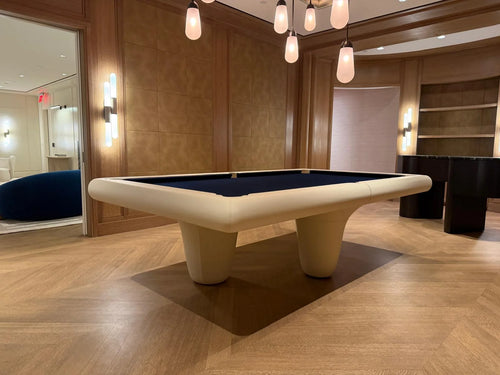
A formal living room needs a table with discipline: refined proportions, a controlled finish, considered pockets, and a felt color that supports the palette instead of announcing itself as billiards.
The Pro Insight: The goal is not to disguise the table completely. The goal is to make it elevated enough for the room it occupies.
3. Let the Table Replace the Coffee Table Logic
A pool table in a formal living room works best when it is not treated as an extra object. It should take over the role of the central anchor.
Most formal living rooms are arranged around a coffee table, fireplace, or seating group. A pool table changes that center. It becomes the object that organizes the room’s movement and sightlines. If the rest of the furniture layout ignores that fact, the space will feel awkward.
Instead of forcing the table into an existing living room arrangement, the room should be planned around its presence. Seating can be pulled back to create proper clearance. Chairs can be placed where people can watch without blocking play. A console, bar cabinet, or pair of lounge chairs can support the opposite side.
4. Clearance Must Look Elegant, Not Empty
Pool tables need space around them, but in a formal living room that space cannot feel like a dead zone. This is one of the hardest parts of the layout.
If furniture is pushed too far away, the room can feel hollow. If furniture is too close, the table becomes frustrating to use. The best solution is to treat the clearance area as part of the design rather than leftover space.
A large rug can help define the table zone without crowding it. Slim benches, occasional chairs, drink tables, or built-in seating can create places to gather while keeping the cue path open. Formal rooms succeed when negative space feels deliberate.
5. Choose Felt Like Upholstery
Felt is one of the easiest ways to either elevate or ruin the table. In a formal living room, the felt color should be chosen with the same care as sofa fabric, drapery, or rug tone.
Traditional green can work in the right formal setting, especially if the room leans classic, club-like, or heritage-inspired. But in many formal living rooms, green felt becomes too recreational. It pulls the table toward a billiard hall association and away from the elegance of the interior.
| Felt Color | Why It Works |
|---|---|
| Charcoal | Architectural, formal, and restrained. |
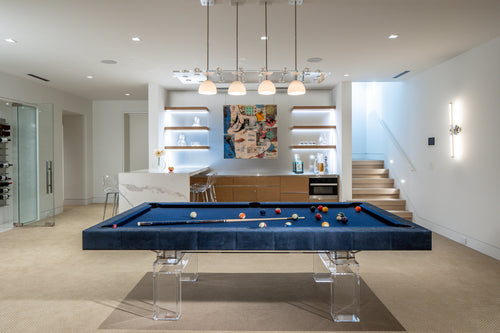
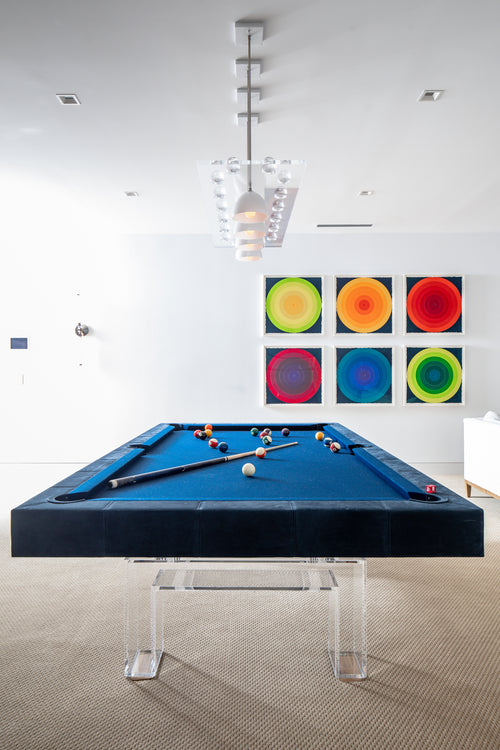
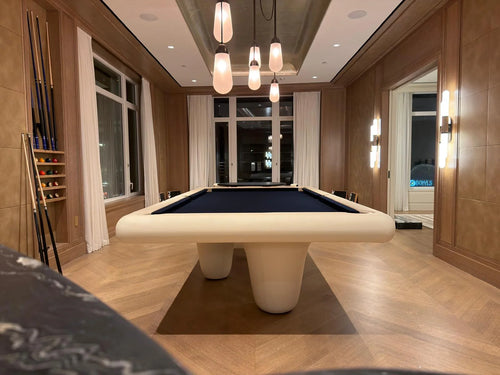
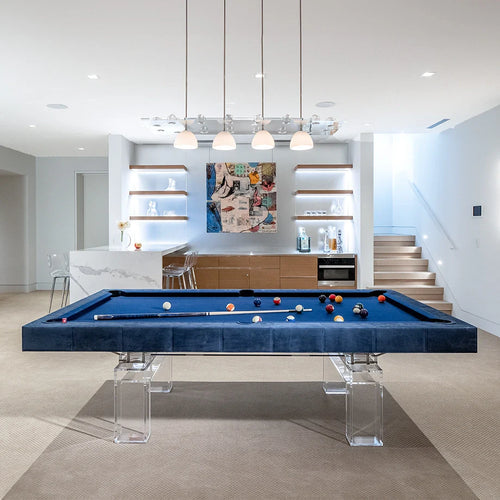
| Navy | Deep, tailored, and refined without becoming severe. |
| Taupe or Warm Grey | Softens the table in neutral interiors. |
| Olive | Rich and old-world when paired with walnut, bronze, or muted stone. |
6. Use Materials That Speak the Room’s Language
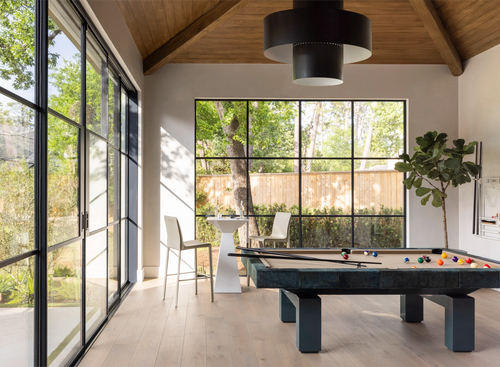
The table’s materials should feel connected to the room, but not overly matched. A formal living room often contains a mix of wood, stone, metal, upholstery, glass, and artwork. The pool table needs to enter that mix with confidence.
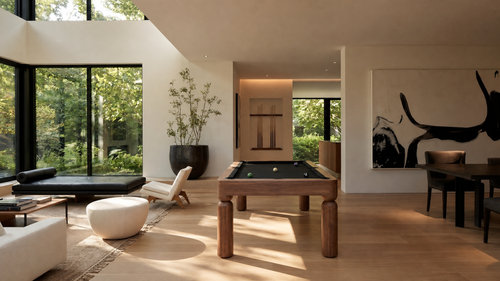
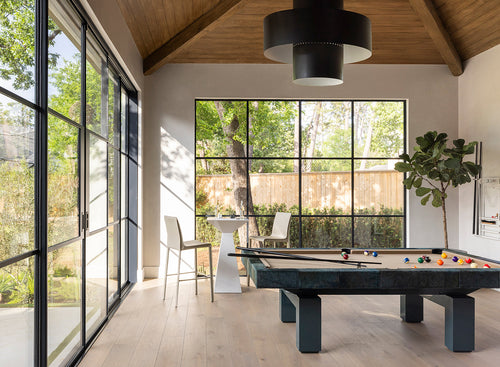
In a room with dark millwork or rich furniture, walnut, mahogany, or a darker stained wood can feel natural. In a pale formal room with limestone, plaster, and soft upholstery, a lighter wood or cleaner contemporary finish may be more appropriate. If the room has bronze hardware or warm lighting, a restrained metal accent can help connect the table to the architecture.
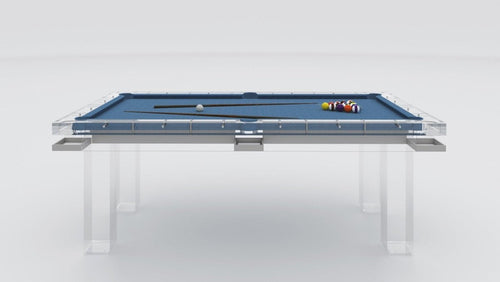
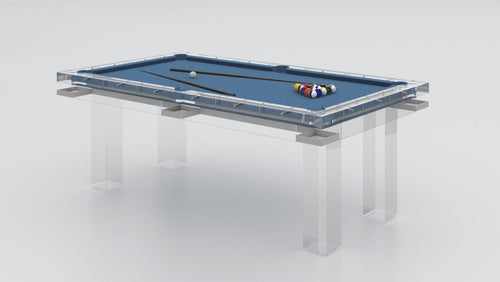
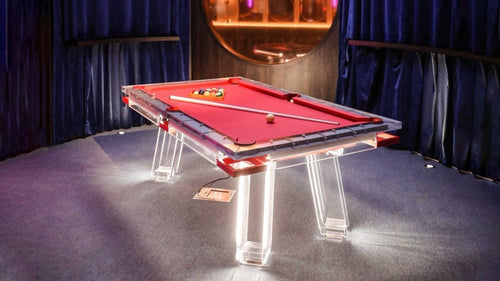
The danger is choosing materials just because they are expensive. Marble, brass, Lucite, leather, and exotic veneers can all be beautiful, but they have to serve the room.
7. Keep Accessories Quiet
Accessories can quickly make or break the illusion. A beautiful pool table in a formal living room can be undermined by a messy cue rack, visible chalk, exposed ball trays, plastic triangles, or accessories that look like they came from a sports bar.
Cues should be stored in a way that feels architectural or furniture-like. A custom wall rack, hidden cabinet, built-in drawer, or nearby console can keep the room clean. Balls, chalk, brushes, and triangles should have a proper place.
The goal is not to pretend the table is never used. The goal is to avoid visual clutter when it is not in use.
8. Lighting Has to Serve Play and Atmosphere
Lighting a pool table in a formal living room requires more care than hanging a standard billiard fixture overhead.
The table needs even light for play, but the room still needs mood. A fixture that works in a basement billiard room may feel too literal or heavy in a formal living room. At the same time, purely decorative lighting may not provide enough usable illumination across the playing surface.
The surrounding layers matter too. Wall sconces, picture lights, floor lamps, and accent lighting can soften the room around the table. The pool table should not sit under a harsh island of brightness while the rest of the living room disappears into shadow.
9. Keep Seating Social
A formal living room with a pool table should not feel like a viewing gallery. Seating should support conversation, not just watching the game.
A pair of lounge chairs can create a quiet corner. A sofa can keep the room comfortable when no one is playing. Benches or stools can offer flexible seating without taking up too much visual space. A console or drinks table can make the room feel hospitable instead of purely recreational.
The best seating arrangement allows people to participate at different levels. Some may play, some may watch, and some may continue a conversation nearby. This is what makes the room genuinely social.
The Bottom Line
A pool table belongs in a formal living room when it changes the room without cheapening it.
It should make the space more active, more social, and more alive, but it should still respect the room’s architecture and tone. The felt, finish, lighting, seating, accessories, and placement all need to feel deliberate.
When done badly, the table feels like entertainment equipment in the wrong room. When done well, it becomes the reason the formal living room finally stops being decorative and starts being used.
The table does not make the room less formal. It gives the formality a purpose.