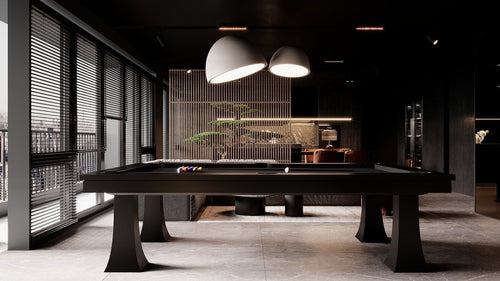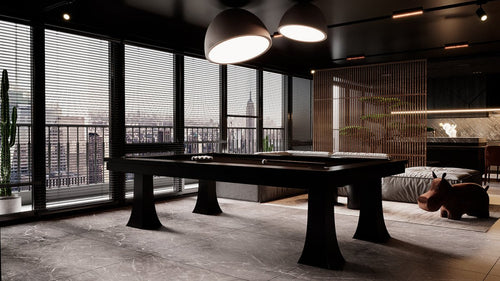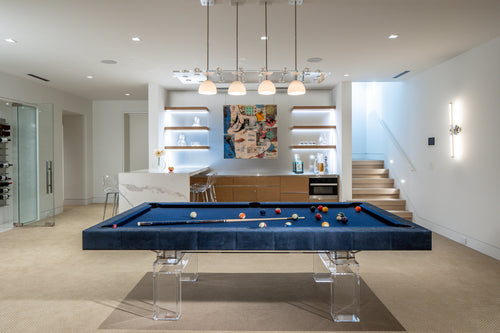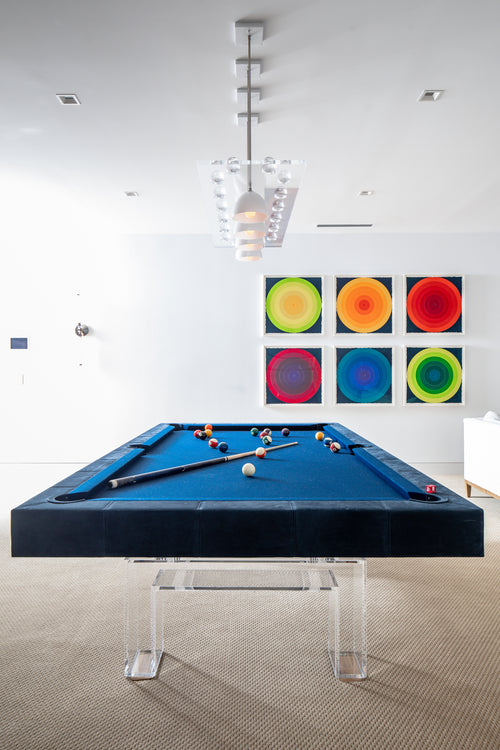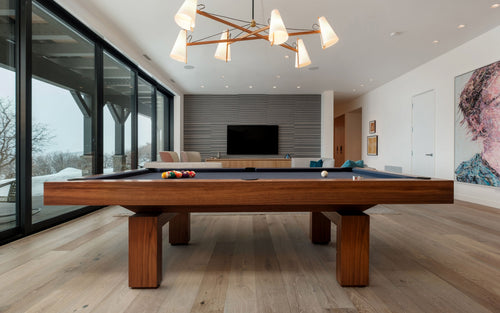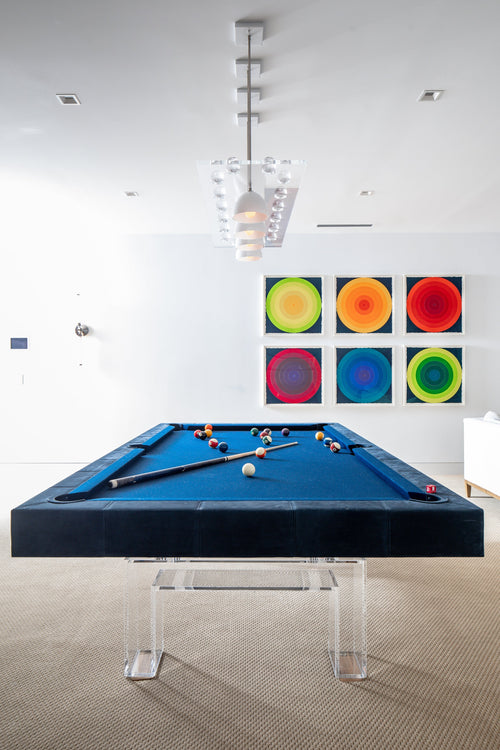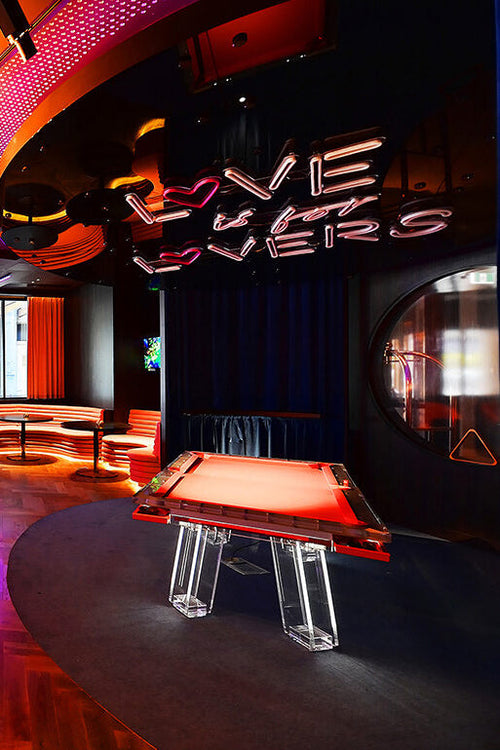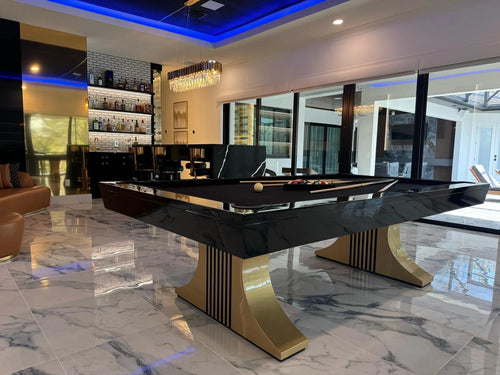


Enjoy our modern designs
In the Royal Borough of Kensington and Chelsea, square footage is the ultimate luxury. Whether you are renovating a classic Victorian terrace or modernizing a mews house, the challenge is usually the same: how do you maximize entertainment value without sacrificing living space?
For many London homeowners, the dedicated game room is a luxury the floor plan simply does not allow. The solution is not always a larger extension or another room below ground. Sometimes, the smarter answer is intelligent, dual-purpose furniture.
At Pool Table Portfolio, we have seen growing demand from SW1, SW3, and W8 for the ultimate hybrid: the luxury dining pool table.
Here is how London designers and homeowners are merging fine dining with professional billiards, without compromising on either.
Table of Contents
The Dining First Philosophy
The problem with many convertible tables is that they still look and feel like pool tables with lids on them. They are too thick, too high, and awkward to sit at for a proper dinner.
That does not work in a formal London dining room. A table in Kensington, Chelsea, Belgravia, or South Kensington has to pass as real furniture first. The billiards function should feel hidden, not forced.
For a table to work properly in this setting, it needs a dining first design philosophy.
- Ultra-slim profiles: The rails need to be engineered as thin as possible while still maintaining the structural rigidity required for slate. This creates better knee clearance, so guests do not feel like they are sitting at a game table during dinner.
- Seamless tops: Dining tops can be crafted from matching hardwoods or tempered glass. When closed, the joinery should feel intentional and discreet, allowing the table to read as a refined oak, walnut, or glass dining surface.
The goal is simple: your guests should enjoy dinner at a beautiful table without immediately realizing there is a professional playing surface beneath it.
The Iceberg Basement Trend
Many Kensington and Chelsea homeowners are digging down, creating multi-level basement extensions for gyms, cinemas, wine cellars, lounges, and entertainment spaces.
These “iceberg” basements can be impressive, but they also create a design challenge. The spaces are often open-plan and multifunctional, meaning every large piece of furniture needs to earn its footprint.
A Pool Table Portfolio convertible table anchors these rooms well because it can serve several roles in the same space. During the day, it can function as a large work surface or conference-style table. In the evening, it becomes a dining surface for guests. Later, it transforms into a professional billiard table for entertainment.
That effectively triples the utility of a single room without making the space feel cluttered or over-programmed.
Navigating the London Staircase
London townhouses are famous for their charm, but also for their narrow hallways, tight staircases, and difficult basement access.
A standard 8-foot American pool table may not fit easily through the front door of a mews property, let alone down a winding staircase or through a tight lower-ground turn.
That is why logistical planning matters as much as design.
- Knock-down construction: Tables can be designed to fully disassemble into manageable components, making it possible to navigate narrow halls, spiral staircases, and basement access points that would be impossible for a pre-assembled unit.
- Precision assembly: Once the components are inside the room, the table can be reassembled and the slate professionally levelled, giving the client a proper playing surface in a space that may have seemed impossible to access.
For historic London properties, this is often the difference between a table that works on paper and a table that can actually be installed.
The Aesthetic: Modern Heritage
The old pub look is not what most London luxury interiors want anymore. The stronger direction is modern heritage: classic architectural bones paired with cleaner, sharper, more gallery-like furniture.
In Kensington and Chelsea, that often means Victorian moulding, tall windows, fireplaces, parquet floors, or period details sitting alongside contemporary lighting, sculptural furniture, and restrained material palettes.
The dining pool table has to belong in that mix. We are seeing especially strong demand for:
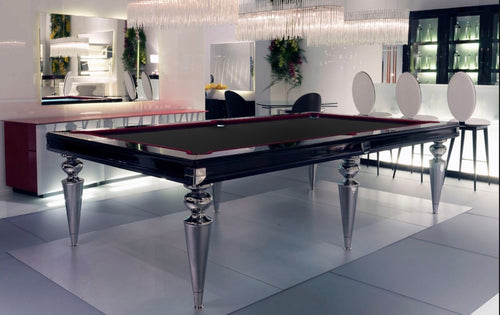
- Ebonized oak and black stain: Deep finishes create contrast against white walls, pale plaster, and traditional moulding without looking overly ornate.
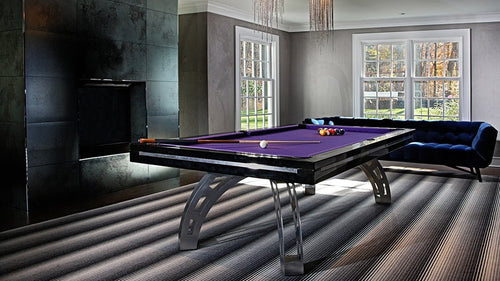
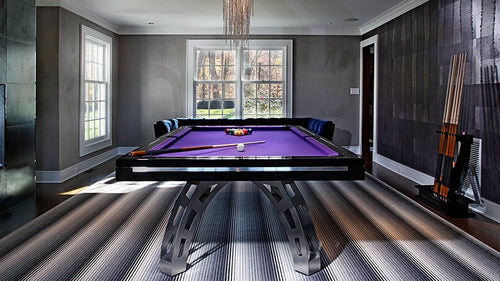
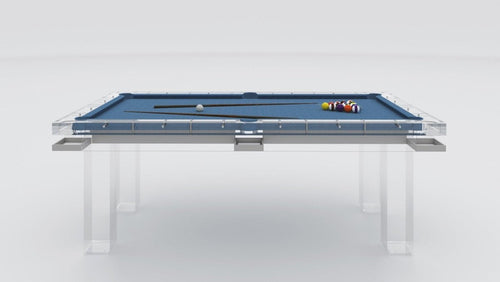
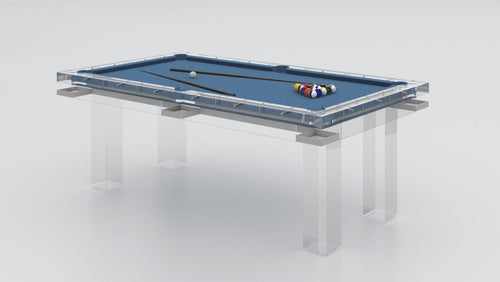
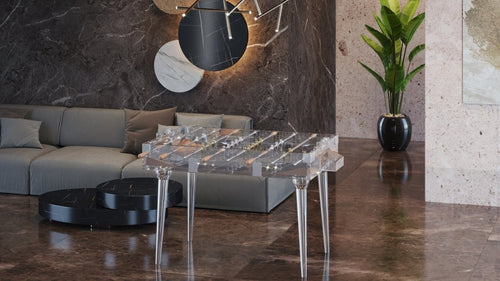
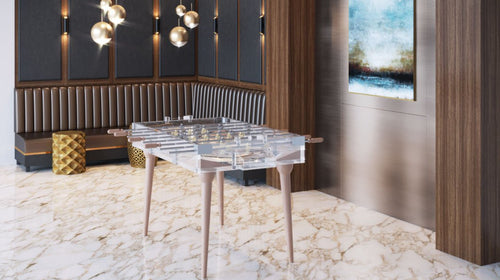
- Steel and glass: For modern extensions or glass-box additions, industrial steel bases and clear glass dining tops can keep the room feeling lighter, cleaner, and more architectural.
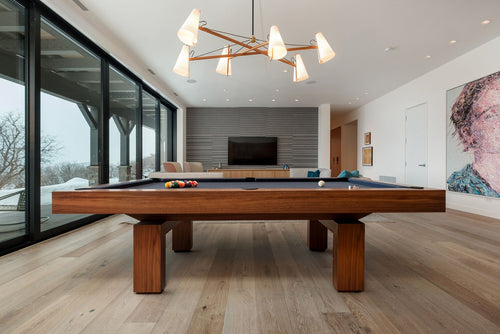
- Walnut and bronze: For warmer townhouses, walnut paired with bronze or muted brass can bridge classic London richness with contemporary restraint.
The point is not to make the table disappear. The point is to make it feel like it was designed for the room from the beginning.
The Bottom Line
In London, you should not have to choose between a formal dining room and a game room.
With the right engineering, proportions, access planning, and material choices, both can exist in the same footprint. That is the real value of a luxury dining pool table: it lets one room do more without making the home feel compromised.
For Kensington and Chelsea townhouses, where every square foot matters, that flexibility is not just convenient. It is the difference between a room that looks good and a room that works hard.
Ready to transform your dining space? Explore Pool Table Portfolio’s dining conversion designs to see how utility and luxury can share the same table, or contact us to discuss the access requirements of your specific London property.