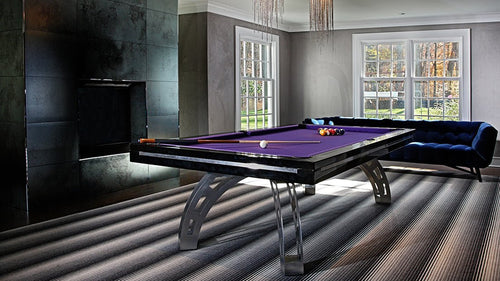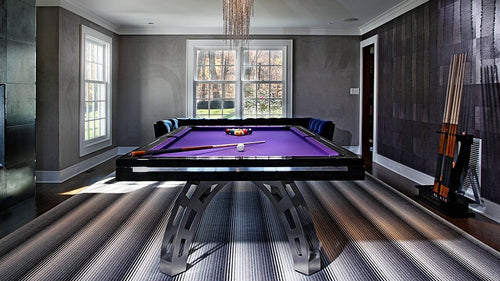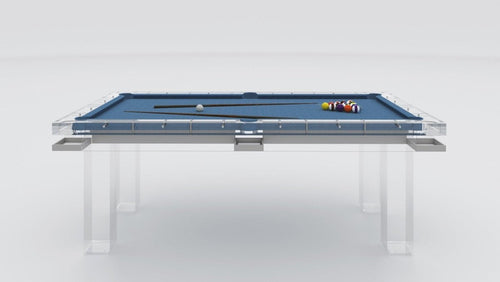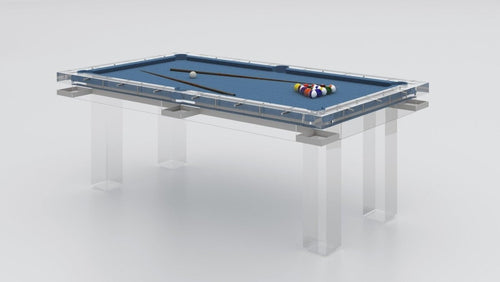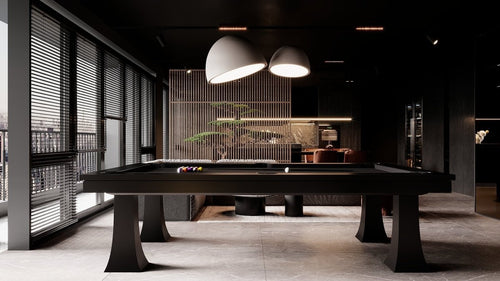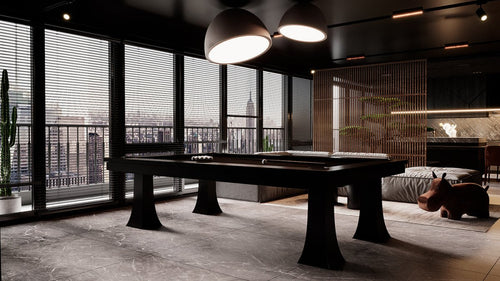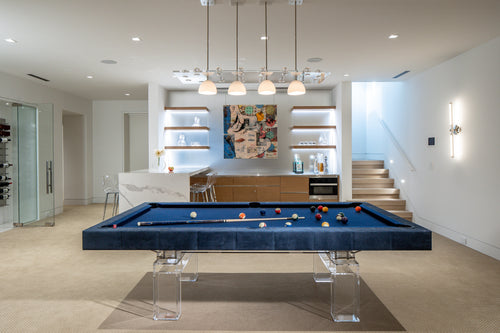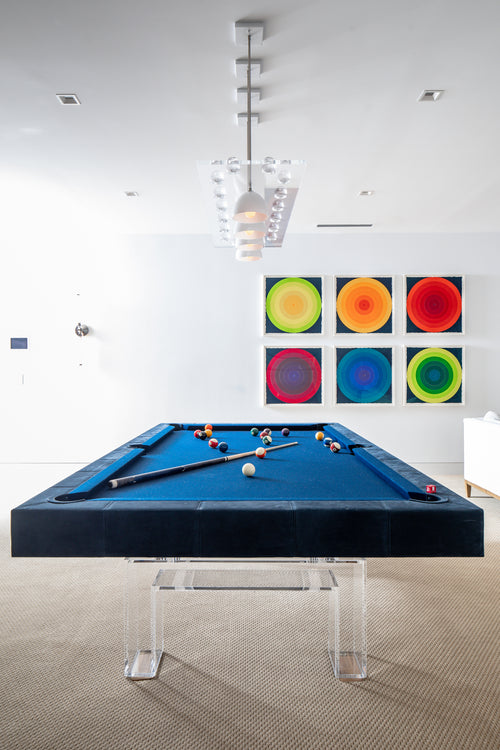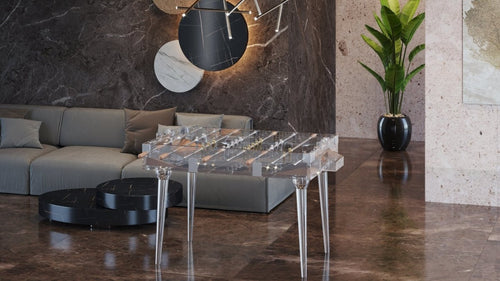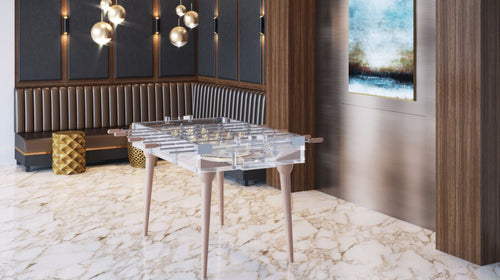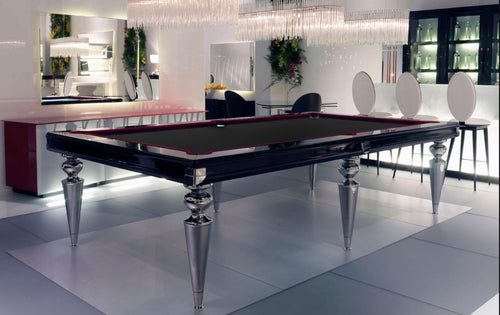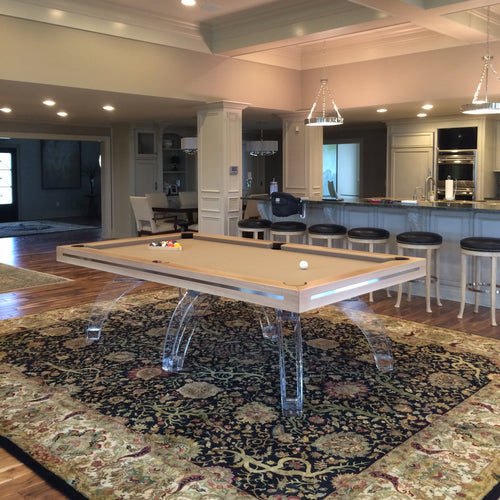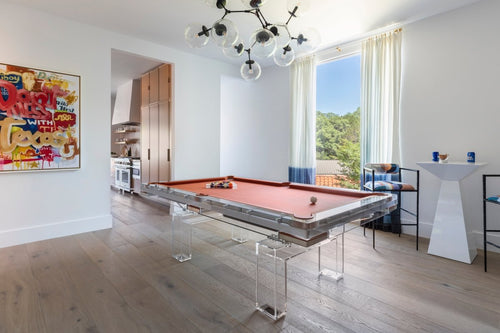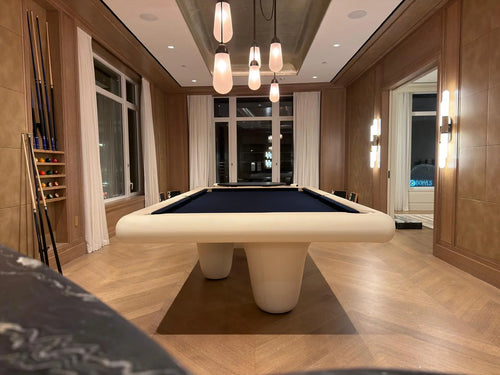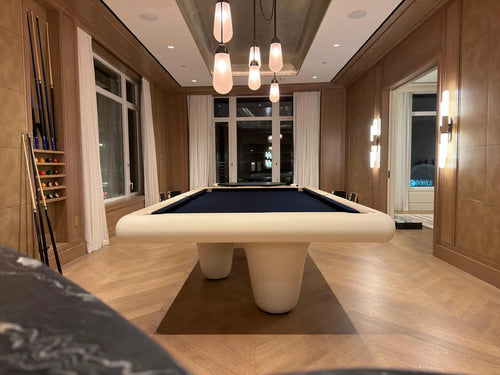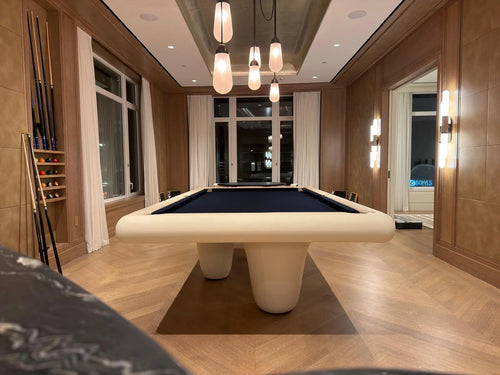


Enjoy our modern designs
In mass-market furniture, fixed pricing makes sense. A chair has a standard finish, a standard dimension, a standard box, and a predictable shipping path. The customer chooses the item, adds it to cart, and the transaction is simple.
Luxury pool tables do not work that way. A serious pool table is not only a product. It is a made-to-order furniture piece, a precision playing surface, a heavy installation, and often a design object tailored to a specific room. The final price depends on more than the model name.
That is why high-end pool tables are usually quoted rather than listed with fixed prices. The quote is not a sales trick. It is a way of pricing the actual table being built, delivered, and installed for the actual project.
Table of Contents
- Luxury Pool Tables Are Not Standard Boxed Products
- Size Changes More Than the Playing Surface
- Materials Have a Major Impact on Price
- Customization Changes the Scope
- Dining Tops and Accessories Affect the Final Quote
- Shipping and Installation Are Project-Specific
- A Quote Protects the Client and the Project
- The Bottom Line
1. Luxury Pool Tables Are Not Standard Boxed Products
A fixed price works best when every customer receives the same item in the same configuration. That is rarely true with luxury pool tables. Even when two clients choose the same model, the final tables may be very different.
One client may want an 8-foot table in walnut with neutral cloth and standard pockets. Another may want the same design in a custom lacquer finish, with a dining top, leather pocket detailing, upgraded accessories, and delivery to a high-rise apartment. Those are not the same project.
Listing one fixed price would either oversimplify the real cost or force every client into a narrow standard package. Neither approach fits the way luxury interiors are actually designed.
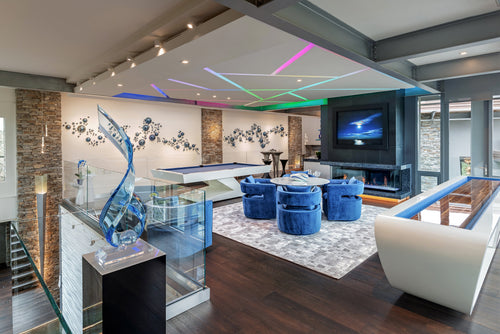
In high-end spaces, the table has to respond to the architecture, the finishes, the room function, and the installation conditions. A quote allows the table to be priced around the real requirements instead of pretending every order is identical.
2. Size Changes More Than the Playing Surface
Pool table size is one of the most basic pricing variables, but it affects more than the amount of material used. A larger table may require larger slate, a different frame structure, more finishing work, more labor, and more careful handling.
In many projects, the size decision also affects the surrounding package. A larger table may require a different room layout, different cue length considerations, adjusted lighting placement, and a more involved delivery plan.
That is why size cannot always be treated like a simple menu upgrade. The difference between a 7-foot, 8-foot, and 9-foot table is not only visual. It changes how the table performs, how the room functions, and sometimes how the table needs to be built and moved.
Designer insight: The best table size is not always the largest one. In luxury interiors, comfort, proportion, and clearance often matter more than scale alone.
3. Materials Have a Major Impact on Price
Materials are one of the main reasons luxury pool tables are quoted. Wood species, veneers, lacquers, metals, stone details, acrylic elements, leather, specialty cloth, and custom finishes all affect cost.
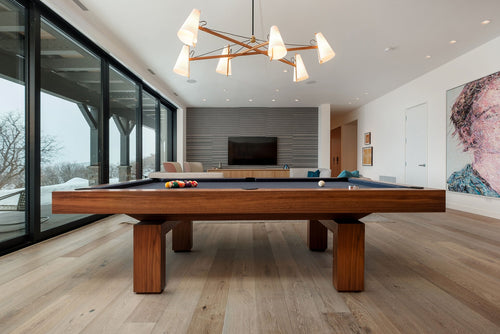
A table with a simple painted finish is not priced the same as a table with hand-selected walnut, polished metal detailing, or a more complex architectural base. A matte finish may have different preparation requirements than high-gloss lacquer. A custom stain may require sample matching. A specialty material may require additional fabrication time.
This is also where luxury projects can become more nuanced. The material choice is not just about expense. It is about coordination. The pool table may need to relate to millwork, flooring, wall panels, stone, lighting, or other furniture in the room.
A fixed online price cannot account for that level of detail. A quote can.
4. Customization Changes the Scope
Many luxury pool table projects involve some level of customization. Sometimes it is simple: a different cloth color, a custom finish, or a dining top. Other times it is more involved: modified proportions, unique materials, brand-specific details, or a design direction created for a particular interior.
The more customized the table becomes, the more the pricing depends on the actual scope of work. A custom finish may require sampling. A modified base may require additional design review. A new material combination may require extra engineering or fabrication planning.
This is not a weakness of the process. It is the reason custom work exists. The client is not paying for a generic item pulled from inventory. They are paying for a table that fits the project more precisely.
For designers, this is usually an advantage. A quoted table gives the design team more room to solve the room properly instead of forcing the entire space around a pre-priced product.
5. Dining Tops and Accessories Affect the Final Quote
Luxury pool tables are often specified with more than the table itself. Dining tops, benches, cue racks, wall-mounted storage, ball sets, covers, lighting, and accessory packages can all become part of the final project.
A dining conversion, for example, is not just an add-on panel. It has to match the table visually, sit properly, store correctly, and feel intentional when the table is being used as furniture. A poorly considered dining top can make even an expensive pool table feel improvised.
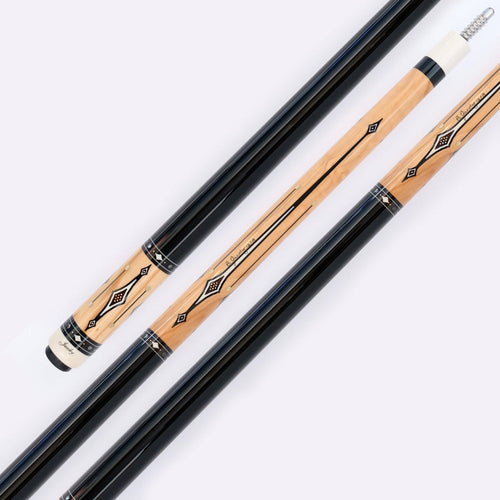
Cue storage is another area where pricing can vary. A basic rack and a custom wall-mounted storage solution are not the same thing. In luxury rooms, the accessories often need to match the table and the architecture around it.
Pro tip: When budgeting for a luxury pool table, include the surrounding pieces early. The table, lighting, cue storage, and accessories should feel like one design decision, not several afterthoughts.
6. Shipping and Installation Are Project-Specific
Shipping and installation are major reasons fixed pricing becomes unrealistic. A pool table is heavy, delicate, and precise. It may include slate, finished wood, fragile surfaces, custom parts, and components that need to be leveled carefully on site.
Delivery to a ground-floor residence is different from delivery to a penthouse. A new construction site is different from a finished home with delicate floors. A domestic shipment is different from an international project. Stairs, elevators, tight corridors, remote locations, and installation scheduling can all affect the final cost.
With ordinary furniture, shipping may be a simple checkout calculation. With a luxury pool table, it is part of the project plan.
This is why a quote is more honest than a fixed price. It allows the seller to account for the real delivery and installation conditions instead of hiding them behind vague estimates or surprising the client later.
7. A Quote Protects the Client and the Project
A good quote does more than name a price. It clarifies what is included. It confirms the model, size, finish, materials, cloth, accessories, shipping assumptions, installation requirements, and any custom details.
That matters because luxury projects involve many stakeholders. The homeowner may care about appearance. The designer may care about coordination. The builder may care about access and timing. The installer may care about site readiness. A quote brings those pieces into one shared document.
Fixed prices can look simpler at first, but they often push the hard questions later. A quote brings those questions forward, where they can be handled before production begins.
For serious projects, that is the better process.
The Bottom Line
Luxury pool tables are quoted because the final table depends on the actual project. Size, materials, finish, customization, accessories, shipping, and installation all affect the final scope.
A fixed price may feel convenient, but it can also be misleading. It assumes every room, every client, and every installation is the same. In high-end interiors, that is rarely true.
A proper quote gives the client a clearer picture of what they are actually buying: not just a pool table, but a made-to-order piece designed to fit the room, the project, and the way the space will be used.