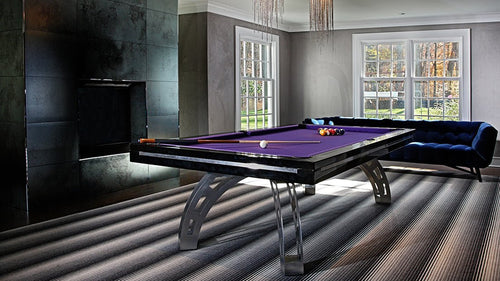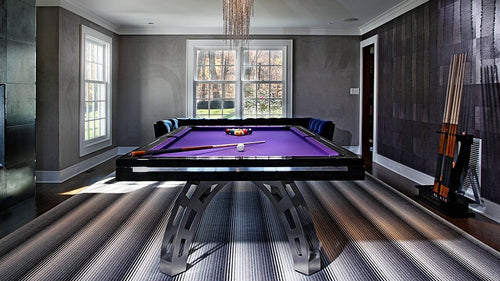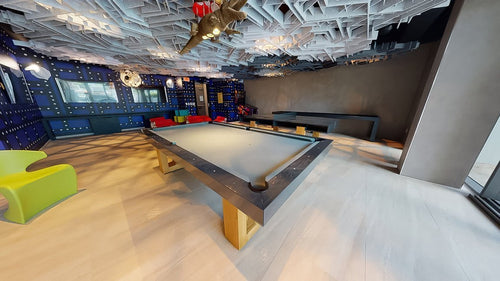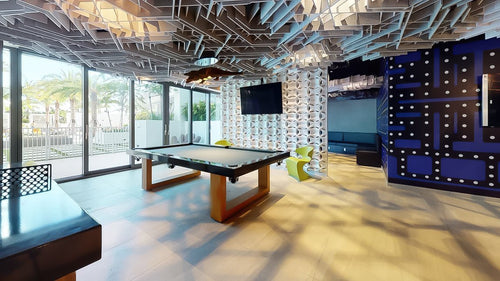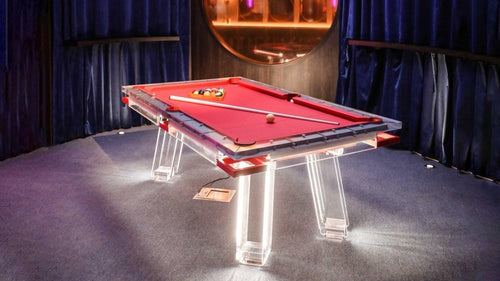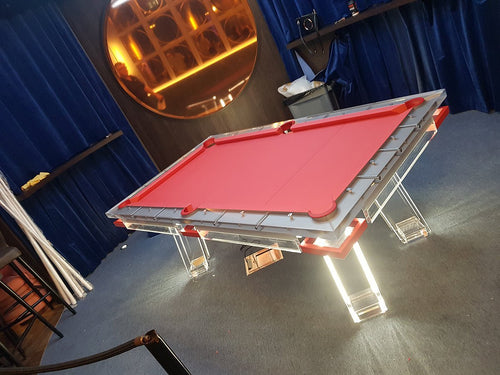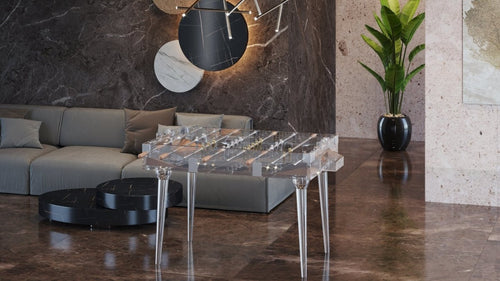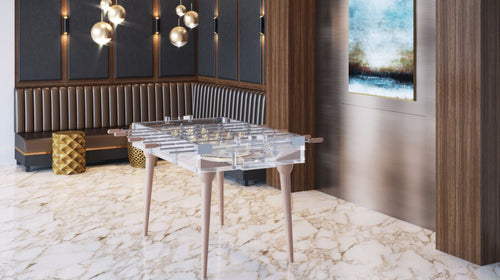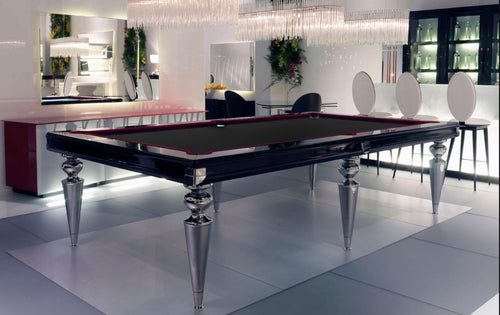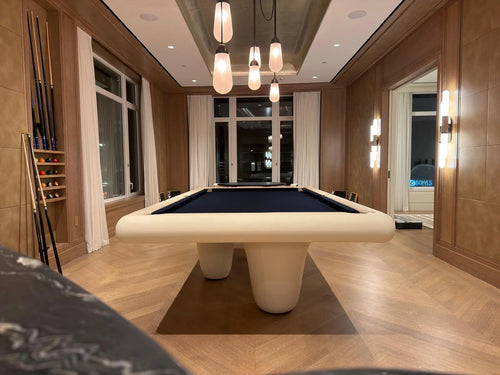


Enjoy our modern designs
If your cue no longer appears straight or feels different in play, have its condition checked by the maker or a qualified repairer. A casual roll on a rail is not a substitute for an inspection before deciding what is wrong or attempting a repair.
For decades, a debate has lived in pool halls, game rooms, and home bars alike: does storing your cue vertically cause it to warp? Is horizontal storage the only safe option?
There is a lot of misinformation around cue storage. The real answer has less to do with whether the cue is standing or lying down, and far more to do with support, climate, and whether the wood is being forced under uneven stress.
Table of Contents
1. The Short Answer
Let’s rip the bandage off: orientation does not automatically cause warping.
Storage orientation is only part of the decision. Follow the cue maker’s instructions for support, temperature, and humidity. For example, McDermott recommends keeping a cue straight in a wall rack and using a vertical cue case for extended storage. A different rack or cue may have different requirements.
If you have dealt with a warped cue, do not assume the rack angle proves the cause. Review the cue’s condition, storage history, and manufacturer guidance before changing the setup.
The Pro Insight: The question is not “vertical or horizontal?” The real question is whether the cue is being stored straight, supported evenly, and protected from climate swings.
2. The Real Culprits of Cue Warping
Temperature, humidity, and storage support deserve attention. McDermott specifically warns about extreme environmental conditions and instructs owners to keep racked cues straight; this is practical guidance, not a claim that every warped cue has the same cause.
- The Environment: Wood is organic. It expands and contracts as humidity and temperature change. A damp basement, hot car, radiator, drafty window, or direct sunlight can all create uneven movement in the wood fibers. This is one of the most common causes of cue warping.
- The Lean: Vertical storage gets a bad reputation because many players do not actually store cues vertically; they lean them against a wall. When a cue leans, gravity pulls against the middle of the shaft while the tip and bumper take uneven pressure. Over time, that stress can bend the cue.
- The Sag: Horizontal storage is not immune either. If the supports are too far apart or poorly placed, the middle of the cue can sag under its own weight. A flat position is only safe when the cue is properly supported.
| Warping Cause | What Happens | How to Prevent It |
|---|---|---|
| Humidity & Temperature | Wood fibers expand and contract unevenly. | Keep cues away from damp rooms, heat vents, sunlight, and cars. |
| Leaning | The cue bends under uneven pressure from the wall and floor. | Use a proper vertical rack that keeps the cue straight at 90 degrees. |
| Poor Horizontal Support | The cue can sag if the supports are spaced badly. | Use a rack with balanced support points for the butt and shaft. |
3. Vertical Storage: The Pros and Cons
Vertical racks are the standard for many pool rooms because they are space-efficient, easy to use, and visually clean. A well-designed vertical rack can also turn cues into part of the room’s display instead of hiding them away.
- The Myth: Gravity pulls the cue downward and bows the stick.
- The Truth: In a quality vertical rack, gravity pulls through the length of the cue, not against it. A straight, properly fitted rack is consistent with McDermott’s guidance; it does not guarantee that every cue will remain straight in every environment.
- The Risk: Cheap clips, tight clamps, or awkward angles. If the rack pinches the shaft or forces the cue into a lean, the rack is creating the exact stress it is supposed to prevent.
The best vertical storage allows the cue to stand or hang naturally without twisting, bending, or being squeezed. The cue should feel held, not forced.
4. Horizontal Storage: The Pros and Cons
Horizontal racks can look excellent in traditional rooms, especially when mounted above wainscoting, built into millwork, or paired with other wall-mounted game room accessories. They are also useful when floor space is limited.
- The Myth: Laying a cue flat is automatically the most natural and safest state for wood.
- The Truth: For horizontal storage, first confirm that the cue maker permits it and that the rack provides suitable support. The cue needs to be held in a way that distributes weight evenly.
- The Risk: Bad support placement. If the supports are too far apart, the cue can form a bridge and sag in the middle over time.
Choose the horizontal support positions recommended for the actual cue and rack. Do not infer suitability merely from having supports at both ends.
The Pro Insight: A horizontal display still needs suitable support. Appearance alone does not show whether the arrangement is appropriate for the cue.
5. The Verdict
Choose storage that follows the cue maker’s guidance, fits the actual cue, and suits the room. Appearance comes after those requirements.
- Choose based on your space: If you have floor space, vertical storage is clean and efficient. If you have wall space but a tight room, a horizontal rack mounted flush to the wall may be the better choice.
- Focus on the fit: Look for a rack that holds the cue straight without forcing a bend or clamping the shaft excessively. Material alone does not establish whether a clip is suitable.
- Mind the climate: Keep cues away from excessive heat, dampness, direct sun, and rapid environmental changes. Use the maker’s recommended storage conditions.
The Bottom Line
A high-quality rack, whether vertical or horizontal, is an investment in the longevity of your game. Orientation is not the enemy. Poor support, leaning, sagging, humidity, and temperature swings are the real problems.
Choose a well-fitting rack or case and follow the cue maker’s storage advice. Good support and stable conditions reduce avoidable risks, but neither a particular orientation nor an expensive rack guarantees a cue will never warp.