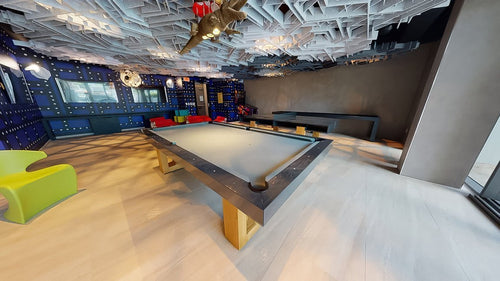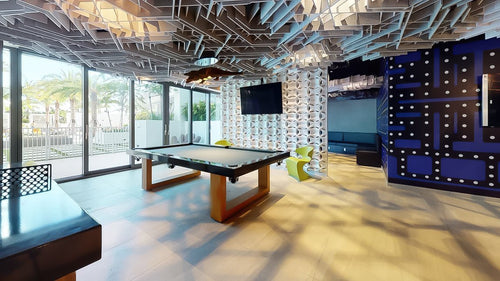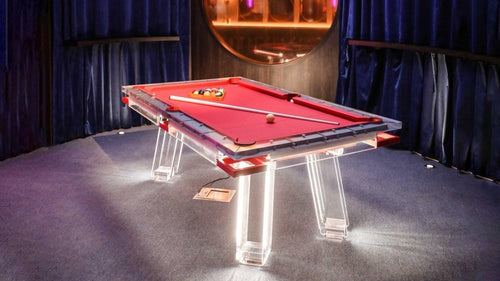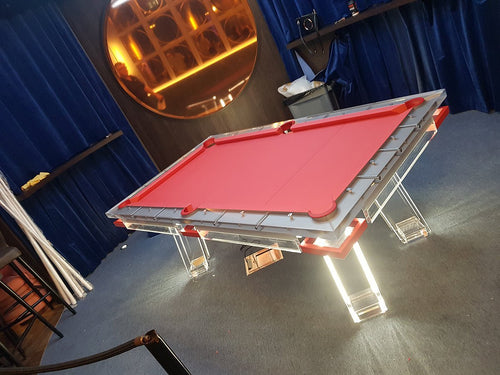


Enjoy our modern designs
The basement has changed. In a luxury home, it is no longer just a place for storage, spare furniture, old carpet, and a forgotten pool table. A well-designed basement can become a private club, wellness suite, media lounge, game room, wine bar, golf simulator, or full entertainment level. But the same old mistake still ruins many of them: the room gets expensive features without becoming a truly designed space.
In this guide:
1. Why Basements Often Feel Cheap
Basements feel cheap when they look like leftover rooms. Low ceilings, random lighting, wall-to-wall carpet, bulky furniture, visible clutter, and disconnected activities all create the classic rec room feeling. The problem is usually not the idea of a basement game room. The problem is that the space was filled instead of designed.
A luxury basement needs the same level of planning as the main floor. The pool table, bar, seating, lighting, flooring, storage, and wall treatments should all feel connected. Otherwise, expensive individual pieces will still look casual.
Design note: A basement does not become luxury because it has expensive toys. It becomes luxury when the room has discipline.
2. Start With a Real Concept
Before choosing the pool table, decide what the basement is supposed to be. Is it a private bar? A family game room? A cinema lounge? A golf simulator suite? A wine and billiards room? A wellness level? Each concept changes the materials, lighting, layout, and table style.
Without a concept, the basement becomes a collection of amenities. With a concept, the pool table can become part of the room’s identity instead of just one more object inside it.
- Private club: darker woods, leather, bar, tailored lighting.
- Family lounge: durable finishes, soft seating, flexible zones.
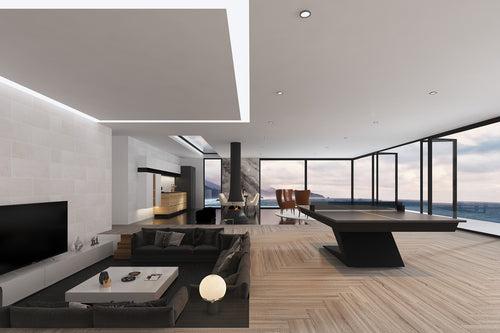
- Modern gallery: clean table design, architectural lighting, minimal clutter.
- Wellness and recreation suite: calmer materials, softer palette, better acoustic control.
3. Fix the Ceiling Problem
Basement ceilings are often the biggest visual weakness. Low height, exposed ducts, awkward soffits, and flat recessed lighting can make the entire space feel compressed. A pool table only makes this more obvious because it draws attention to the center of the room.
The ceiling does not need to be dramatic, but it should feel intentional. Use beams, coffers, acoustic treatment, wood slats, integrated lighting, or clean drywall transitions to make the ceiling feel designed instead of hidden.
Design note: A basement ceiling can either expose the room’s limitations or make the room feel architectural.
4. Use Lighting Like Architecture
Bad basement lighting usually comes from trying to light everything evenly. That makes the room feel flat. A luxury basement needs layers: table lighting, bar lighting, wall lighting, stair lighting, shelf lighting, and soft ambient light around seating.
A pool table needs a properly lit surface, but the fixture should match the room. A cheap hanging light can ruin an otherwise strong basement. A refined linear pendant, architectural downlight plan, or custom fixture can make the table feel built into the design.
- Use dimmers and scene controls where possible.
- Light the pool table separately from the general room.
- Use accent lighting to give walls and shelving depth.
- Avoid cold, flat lighting that makes the room feel commercial.
5. Make the Pool Table Feel Built In
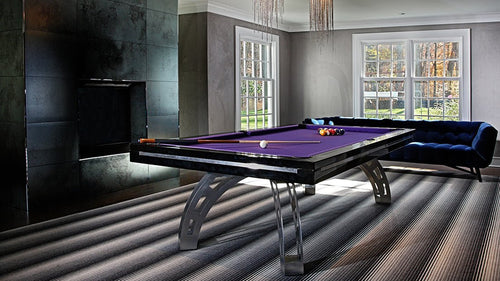
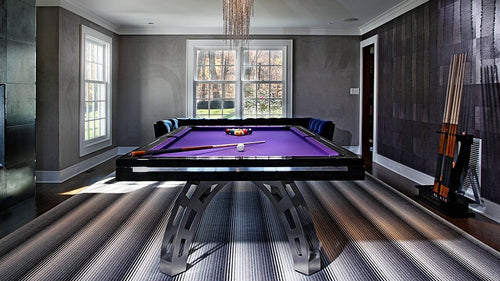
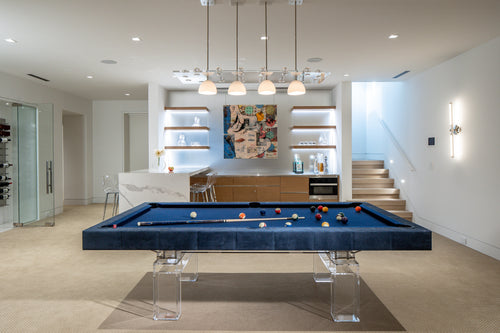
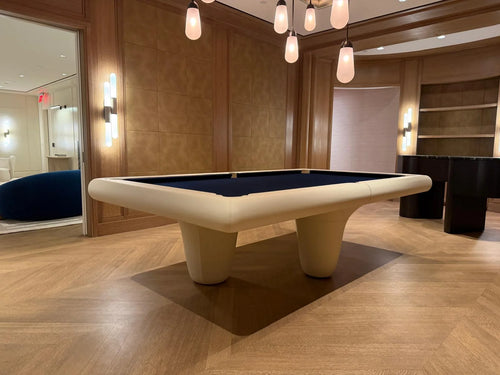
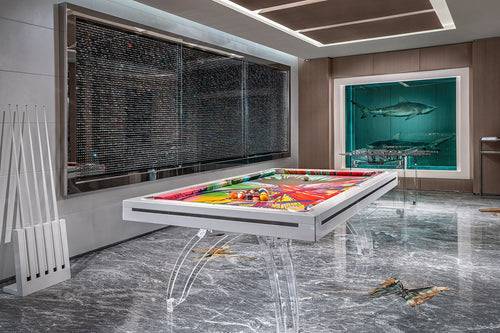
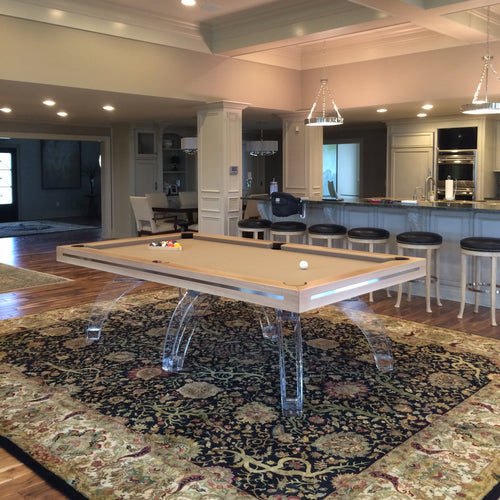
A pool table feels cheap when it looks isolated. It feels expensive when the room is designed around it. That does not mean it has to sit in the exact center, but it should clearly belong to the plan. Cue storage, seating, lighting, wall art, and flooring should support it.
The table can become the main anchor of the basement, especially when paired with a bar, lounge seating, or media wall. The key is clearance. Luxury does not mean crowding. A table with breathing room always looks better than a table squeezed into a room that is technically too small.
- Give the table full cue clearance.
- Coordinate the table finish with millwork, flooring, or bar materials.
- Place seating where it supports play without blocking movement.
- Avoid random accessory racks that look like afterthoughts.
6. Upgrade Materials Without Overdecorating
Luxury basements need material quality, not clutter. Wood paneling, stone, plaster, leather, bronze, acoustic fabric, and good cabinetry can do more than themed signs, novelty decor, or oversized game-room graphics.
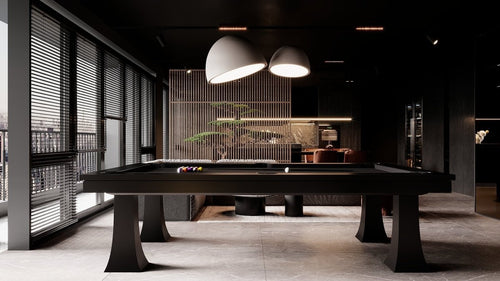
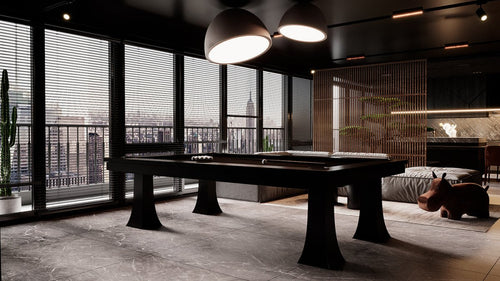
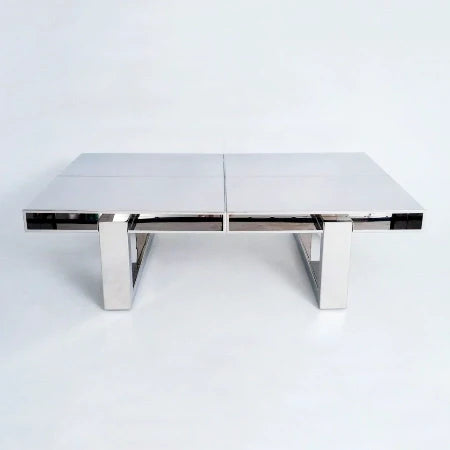
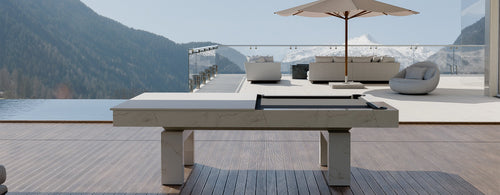
The pool table should match the material language of the room. If the basement uses walnut millwork and dark stone, the table should not look like a bright sports-room object. If the room is light and modern, the table should feel crisp, architectural, and restrained.
Design note: The fastest way to cheapen a luxury basement is to decorate it like a theme bar.
7. Control Sound and Comfort
Basements can sound hollow, boomy, or closed in. Pool balls, music, movie sound, conversations, and footsteps all add to the noise. If the room has hard flooring, drywall, glass, and stone everywhere, it may feel less comfortable than it looks.
Use rugs, upholstered seating, acoustic wall treatments, fabric panels, wood slats, curtains, or acoustic ceiling systems to soften the room. Comfort is part of luxury. A room that echoes does not feel expensive for long.
- Use soft seating around the game area.
- Avoid hard surfaces on every plane.
- Control sound between theater, bar, and game zones.
- Use ventilation so the basement does not feel stale.
8. Build Storage Into the Design
Basements attract clutter: games, remotes, pool cues, balls, chalk, bar tools, blankets, gym equipment, bottles, snacks, and extra seating. If storage is not planned, the room slowly becomes a polished storage room.
Built-in storage is the clean solution. Cue cabinets, drawers, closed shelving, bar storage, and concealed AV storage keep the room elegant. The best luxury basements look reset even after heavy use because everything has a place to go.
- Use hidden storage for cues and balls.
- Keep AV equipment and remotes out of sight.
- Include storage near the bar and seating zones.
- Avoid open clutter around the pool table.
The Bottom Line
A luxury basement should not feel like a nicer version of an old rec room. It should feel like a complete entertainment level with a clear concept, strong lighting, proper materials, storage, acoustics, and space planning.
The pool table can be the anchor, but only if the room is designed around it. Give it space, match it to the architecture, control the ceiling and lighting, and remove the clutter. That is how a basement becomes luxury instead of just expensive.