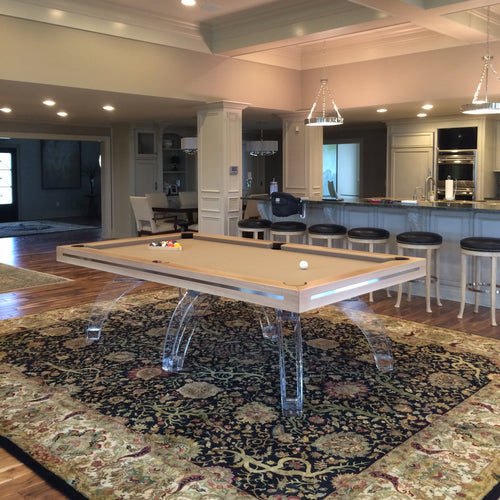


Enjoy our modern designs
Table Tennis Performance
A ping pong table can have a beautiful finish and a sculptural base, but its playing surface still needs a reliable response. Top thickness is one construction detail. Material, coating, support, condition, and the performance of the complete table also matter.
When choosing a premium ping pong table, it is easy to focus on the visible elements first: the wood finish, the architectural base, the color of the playing surface, or how well the table fits into the rest of the game room. Those details matter, but none of them matter much if the table does not play well.
Performance Foundation
The Real Test Is
the Bounce
A ping pong table can look expensive and still feel cheap the moment the ball hits the surface. If the bounce is low, sluggish, uneven, or hollow, the table immediately loses credibility.
Table tennis depends on rhythm, speed, spin, and repeatable response. The playing surface has to return the ball cleanly. It cannot absorb the shot and make the game feel flat.
A table tennis ball has a specified mass of 2.7 grams. Mass is not itself a measure of impact force. Judge the completed surface by its measured rebound and uniformity rather than assuming its thickness alone determines how much energy returns to the ball.
A useful playing surface gives a uniform, repeatable rebound. Assess that result instead of assuming that a thicker top always bounces better.— On why bounce defines table quality
A low or uneven rebound can make rallies difficult to judge. Compare bounce at several locations and inspect the surface condition; a disappointing response does not, by itself, identify thickness as the cause.
Within otherwise comparable panel designs, changing thickness changes the structure. It does not guarantee a higher or more consistent bounce across different materials and table designs.
Treat thickness as a specification to investigate alongside the panel material, support system, intended environment, and any approval or test evidence.
Official Logic
The Official Standard Is Bounce,
Not Thickness Alone
One important detail is worth clearing up: official table tennis rules do not simply say that every table must be 25mm thick.
The ITTF Laws of Table Tennis, rule 2.1.3 permit any playing-surface material that produces a uniform rebound of about 23 cm when a standard ball is dropped from 30 cm. The French federation’s 2025 rules reproduce this requirement. A 25 mm top is not a universal rule.
Manufacturer examples show why millimeters alone are insufficient. Butterfly’s table specifications list both 22 mm and 25 mm ITTF-approved models, as well as thinner models intended for other uses.
Important Distinction
Check the model’s actual specification and approval when competition use matters. A thickness number does not certify the whole table.
That distinction matters because a buyer should not judge a table by one number in isolation. A thick top with weak materials, poor coating, or a flimsy frame can still play badly.
Buyer Guide
Thickness Examples
Need a Complete Specification
The examples below come from Butterfly’s specification sheet. They illustrate different constructions and approvals, not a universal ranking of bounce by thickness. Check current model details and approval status before purchase.
Manufacturer Example
16 mm
ModelTimo Boll Repulse
Listed ApprovalUSATT
A model-specific example from Butterfly’s sheet; it is not a rating for every 16 mm table.
Manufacturer Example
19 mm
ModelPlayback 19
Listed ApprovalUSATT
Compare the complete product, including its support and intended use.
Manufacturer Example
22 mm
ModelSpace Saver 22
Listed ApprovalITTF
An example showing that a 25 mm top is not required for every ITTF-approved design.
Manufacturer Example
25 mm
ModelCentrefold 25
Listed ApprovalITTF
Approval and performance belong to the model, not to the thickness number alone.
Ask what the table is designed to do. Occasional home play, regular training, organized competition, and outdoor use create different requirements; thickness alone does not assign the category.
Match the table to its environment. An indoor table should not be assumed suitable for a damp garage or patio merely because its top is thick. Confirm the manufacturer’s environmental and storage instructions.
For a home table, compare the response, stability, storage footprint, ease of handling, and available space. A thinner model may suit the room better, but evaluate the actual product rather than a generic thickness tier.
If possible, play on the shortlisted model or ask for performance information. Price, thickness, and appearance can guide comparison, but they cannot replace evidence of how the table performs.
A 22 mm surface is compatible with an ITTF-approved design: Butterfly lists its Space Saver 22 that way. That does not make every 22 mm table approved or guarantee the same performance.
Butterfly also lists 25 mm ITTF-approved models. Their approval belongs to those table designs; the same nominal thickness on another product is not proof of equivalent performance.
Beyond Thickness
Material and Coating Still
Decide the Feel
Indoor table specifications commonly identify wood or MDF tops. Confirm the actual substrate rather than assuming every premium table uses the same material. The completed surface should remain flat and provide an even rebound.
A cheap thick panel can still feel bad if the material is soft, inconsistent, or poorly finished. A thinner table from a better manufacturer may outperform a thicker bargain table if the construction is more stable.
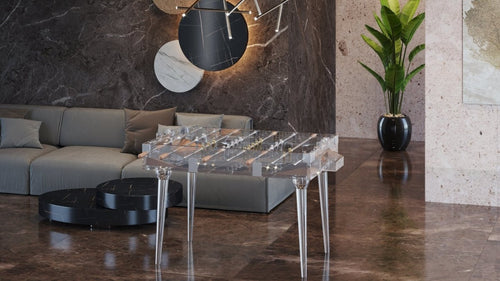
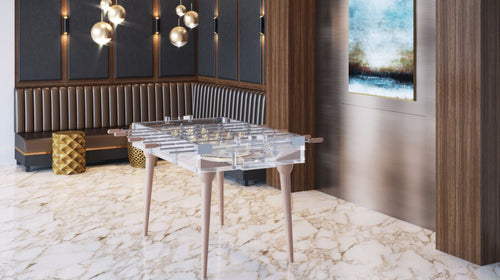
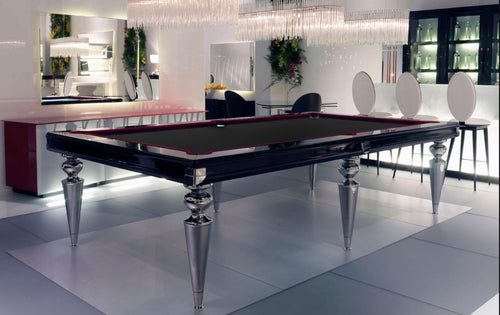
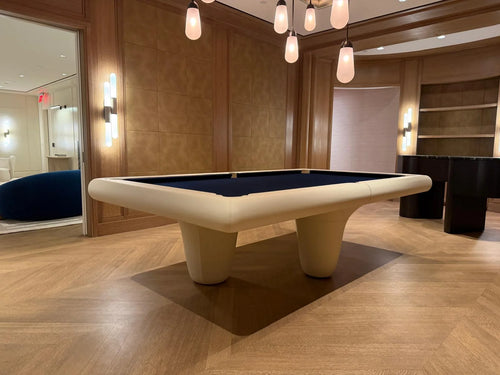
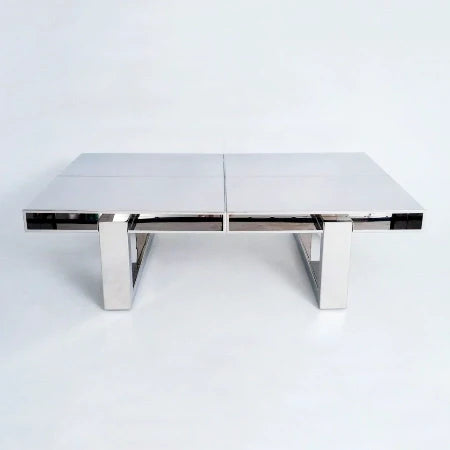
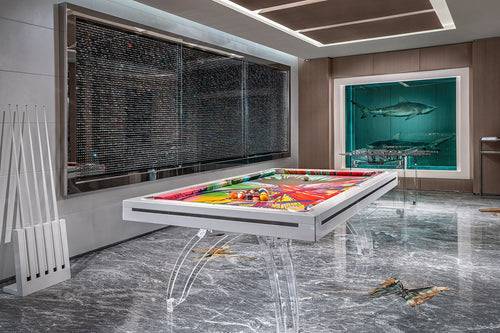
This is especially important in custom work. A luxury ping pong table is often designed with wood, veneer, lacquer, metal, or stone-like visual elements. Those materials may look beautiful, but the actual playing surface still has to be engineered for table tennis.
Furniture-grade beauty does not automatically create table-tennis-grade bounce.— On the difference between appearance and performance
The playing surface must be flat and suitable for the game. Verify its rebound and finish instead of treating density as a universal pass-or-fail criterion.
The surface coating also changes the way the table performs. A good table tennis finish is not just paint. It has to create the right balance of friction, smoothness, glare control, and durability.
If the surface is too glossy, it can create glare and affect visibility. If it is too slick, the ball may not grip correctly. If it is too soft, it can wear quickly or absorb impact. If it is uneven, the bounce and spin response can change across the table.
For luxury tables, this becomes a design challenge. The surface has to look refined enough for the room, but it cannot behave like ordinary furniture finish. A dining-table-style lacquer may look beautiful and still be wrong for actual table tennis.
The finish has to serve the game.
Structure
The Frame Decides Whether
the Thickness Works
A thick top needs a strong structure underneath it. A 22mm or 25mm panel is heavy, and if the undercarriage is weak, the surface can sag, shift, or lose consistency over time.
The frame, apron, and supports help maintain the top’s shape and position. Inspect the assembled table for flatness and stability; frame depth or panel thickness alone does not guarantee identical response at every point.
This is where many lower-quality tables fail. They advertise a thicker top, but the frame does not support it properly. The result is a table that looks good on a spec sheet but does not feel solid during play.
Inspect the Complete Table
Inspection note: Look underneath as well as across the playing surface. Check the supports, fasteners, level adjustment, and any folding locks using the manufacturer’s instructions.
Judge the complete table: top material, coating, supports, assembly, condition, and intended use. Thickness is one part of that assessment, not a fixed ceiling on performance.
Luxury Context
A Luxury Game Table Should
Look and Play Correctly
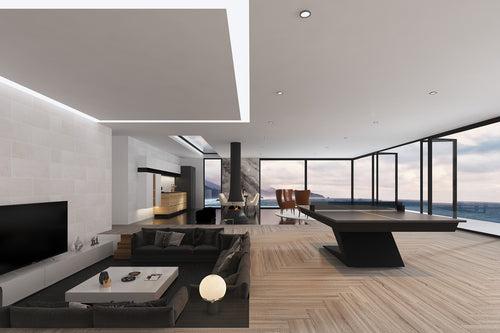
In a luxury game room, the table has to do two jobs. It has to look like it belongs in the space, and it has to play well enough to justify its presence.
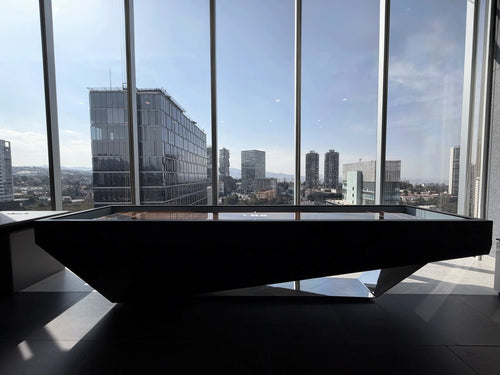
A custom ping pong table with a sculptural base, premium finish, and weak playing surface is not a true luxury game table. It is furniture with a game painted on top. That may be acceptable for a decorative piece, but it is not enough for a table that claims to be high-end.
A custom design should resolve appearance and play together. Confirm the surface response, finish, support, dimensions, and intended environment before approving the visual details.
Buyer Check 01
Playing Response
CheckUniformity
Ask ForTest Evidence
Try the actual model or request performance information for the complete table.
Buyer Check 02
Room and Storage
CheckFootprint
ConfirmAccess and Handling
Measure the playing and storage arrangements before choosing a model.
Buyer Check 03
Intended Environment
CheckIndoor / Outdoor
FollowMaker Guidance
A thicker indoor top is not a substitute for an outdoor-rated construction.
Buyer Check 04
Competition Use
CheckModel Approval
ConfirmCurrent Requirements
If organized play matters, verify the exact model and event requirements.
A 1-inch top can be part of a good custom table, but the number alone does not establish its bounce or long-term stability. Ask the maker how the completed design is tested and supported.
A luxury ping pong table should not ask the buyer to choose between beauty and performance. It should deliver both.
Design Connection
For a refined game room, performance details should be resolved before the table becomes a visual object. Top thickness, coating, frame support, net design, lighting, and clearance all matter when planning a full game room set or commissioning a fully custom design.
Compare the complete specification rather than ranking tables by thickness alone. Look for appropriate materials, surface finish, support, environmental suitability, and performance evidence.
A thick top with a weak frame can still play badly, while a well-built 19mm table can outperform a cheap 22mm one.
The useful target is a uniform, repeatable response across the playing surface. More bounce is not automatically better; the rules specify a rebound target.
The Real Difference
Top thickness is useful information, but the completed table is what you play on. Assess its flatness, finish, support, and uniform rebound together. A clear specification and performance evidence are more useful than a single impressive number.
The same rebound and ball-mass requirements appear in the 2026 ITTF Laws, rules 2.1.3 and 2.3.2.