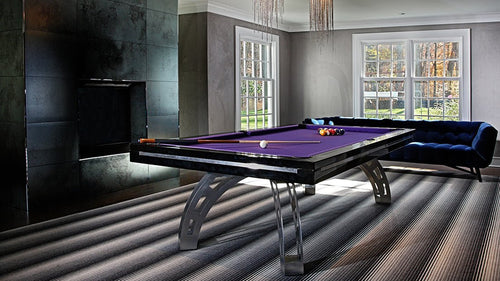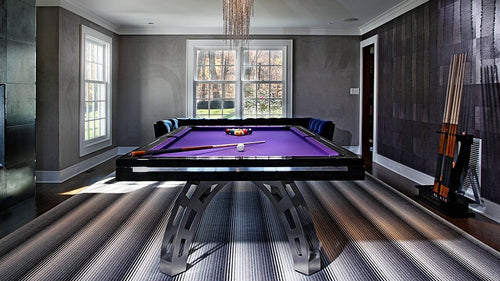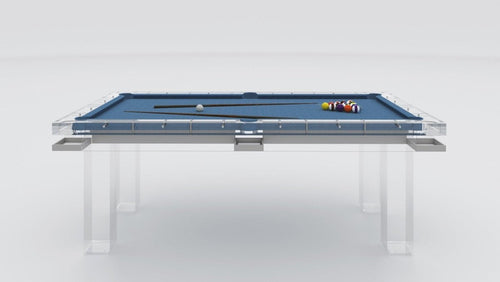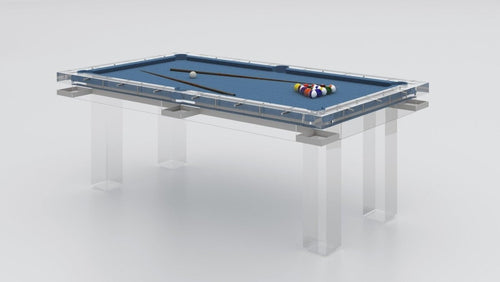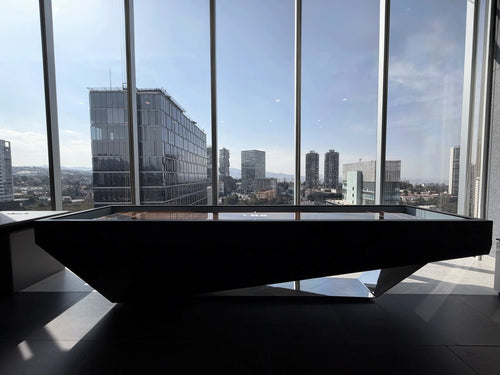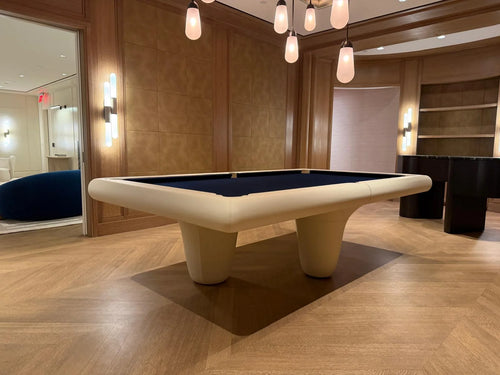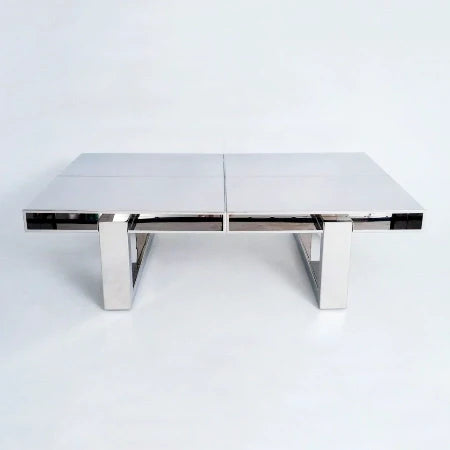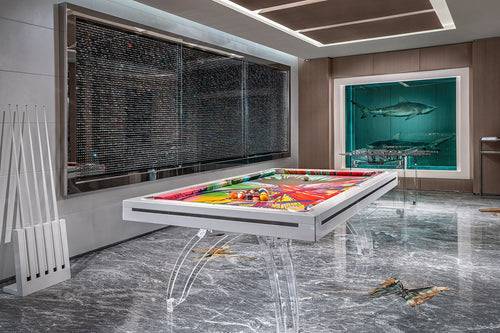


Enjoy our modern designs
One important nineteenth-century development in cue sports was the adoption of rubber cushions and, later, more stable vulcanized rubber.
The material change helped makers pursue more consistent rebound for players already using rails in their shotmaking.
For players, consistency matters because a rail is part of the intended route in a bank or kick. A cushion must be considered together with its installation, the cloth, and the condition of the table.
Table of Contents
Cushions Before Rubber
Early makers used stuffed or padded cushions before adopting rubber. Thurston’s company timeline records its replacement of list or stuffed cushions with rubber in 1835.
Different constructions produce different rebound behavior. The materials, workmanship, and condition of a particular cushion all deserve attention.
Uneven response makes a rail shot harder to judge. That is a useful reason to assess cushions carefully, whether the table is historic or new.
Early Rubber Experiments and Their Quirks
Thurston’s record dates its introduction of rubber cushions to 1835. These were steps in equipment development, rather than the beginning of deliberate cushion play.
Rubber offered makers another way to tune a resilient cushion. Material choice alone, however, does not establish how every completed rail will perform.
The challenge was to make rubber more stable and useful over a range of conditions. Untreated natural rubber was vulnerable to temperature changes.
Thurston’s published timeline records a vulcanized-rubber cushion patent in 1845 and further refinements in 1869.
Goodyear’s Vulcanization Breakthrough
The Smithsonian’s account of Charles Goodyear dates his vulcanization discovery to 1839 and his U.S. patent to 1844. Heating rubber with sulfur changed its properties and expanded its practical uses.
This process made rubber a more stable commercial material. Temperature, aging, and installation still affect the finished equipment.
For billiards, the aim was a repeatable rebound that a player could learn through practice. Vulcanization was an important contribution to that aim, not a guarantee attached to every rubber cushion.
Thurston’s 1845 milestone shows how quickly the process entered billiard equipment development. Later cushion refinements continued the work.
Technical Consequences for Play
The practical value of a dependable rail appears in several kinds of shot:
- Consistent rebound: A well-installed, even cushion helps players learn the table’s response.
- Speed and precision: Cushion condition is one of the variables in controlling a multi-rail route.
- Cushion-based games: Carom disciplines make dependable rail response especially valuable.
Rebound depends on the complete collision: cushion material and geometry, mounting, cloth, incoming speed, spin, and angle. Alciatore’s bank-and-kick analysis explains why a simple angle-in/angle-out picture needs qualifications.
A replacement cushion should match the table’s specified profile and installed nose height. A familiar profile name is not proof that it fits every rail assembly.
Design and Manufacturing Ripple Effects
A cushion works as part of a table assembly.
When judging play, examine the cushion, rail attachment, cloth, and the rest of the setup together. Poor performance should not automatically be blamed on the rubber compound.
For a buyer, this means asking how a table is built, installed, and serviced, rather than relying on a promise of a particular number of rebounds.
That shift still matters today. A beautiful table with poor cushions will feel wrong. It may look impressive, but it will not play correctly. In cue sports, the rail is not decoration. It is equipment.
Goodyear’s Legacy
Goodyear’s work had uses far beyond billiards. The Smithsonian also records the patent litigation surrounding his process, a reminder that technical importance and easy commercial success are different things.
In cue sports, the material’s legacy is part of a longer effort to make equipment response dependable.
Banks, kicks, and multi-cushion routes still require practice on the actual table. Reliable equipment makes that learning more useful; it does not remove the effects of speed and spin.
Vulcanized cushions helped establish an expectation of consistent rail behavior, alongside continuing improvements in the rest of the table.
The useful lesson is the connection between materials and play: a chemical advance supplied makers with a better tool, while table design and careful installation determined how that tool performed.