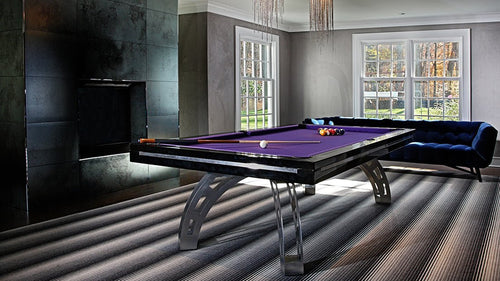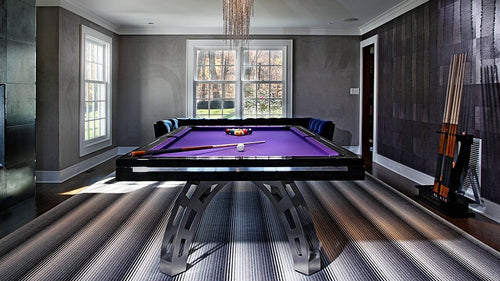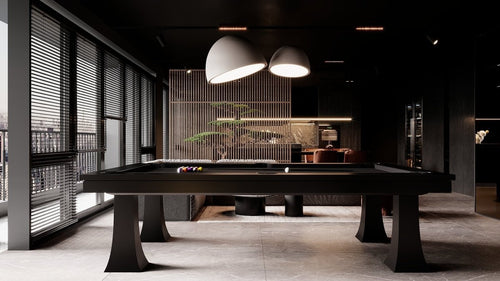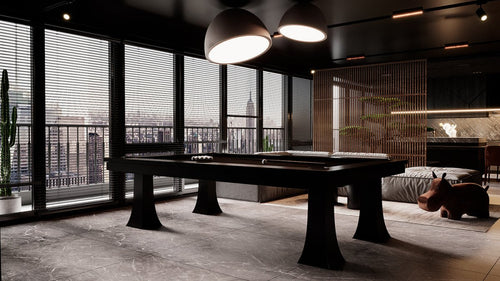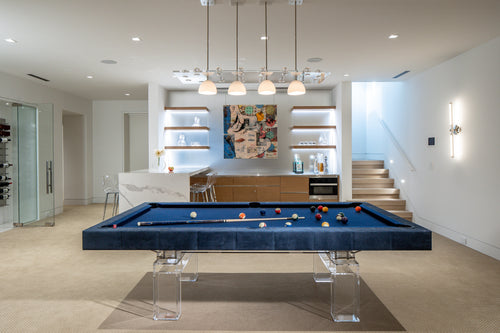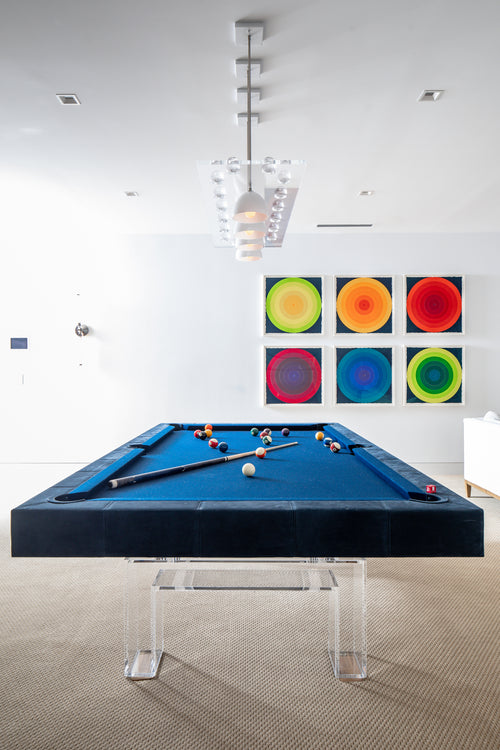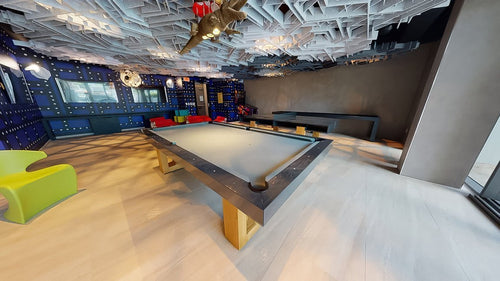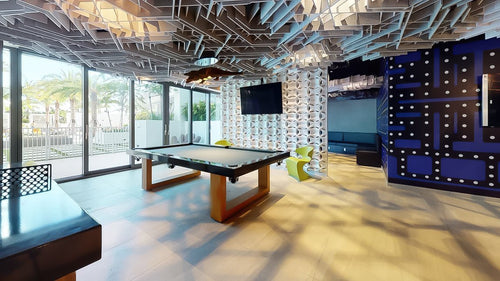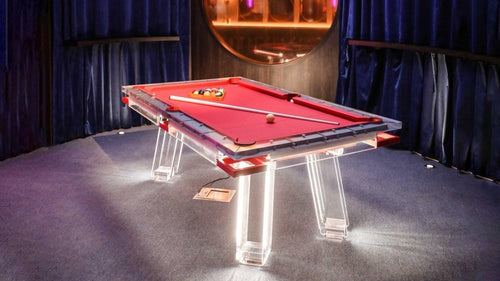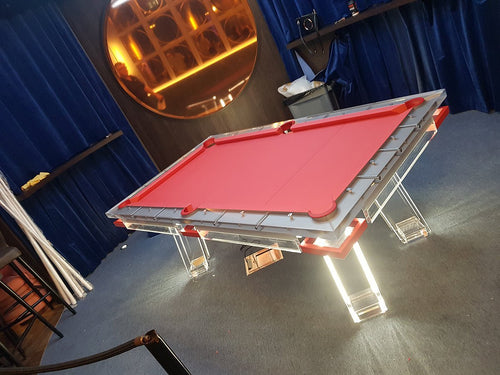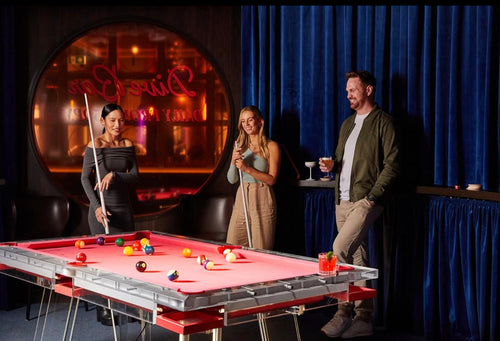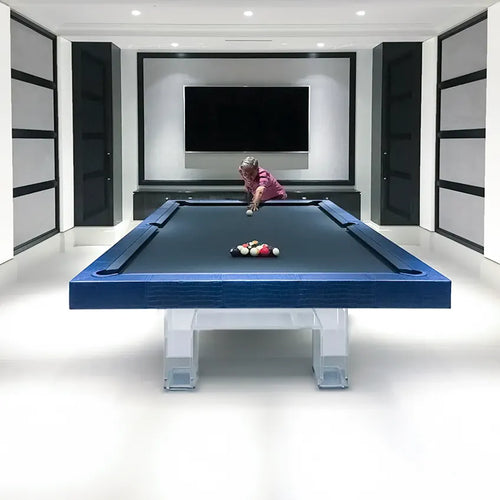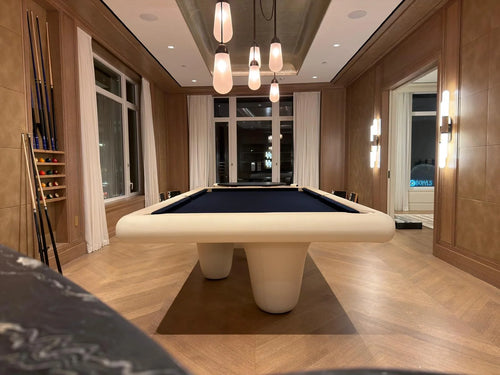


Enjoy our modern designs
PoolTablePortfolio • Kicking Systems
A visual starting point for short kicks, with the cue-ball position, target and rebound conditions made explicit.
When another ball blocks a direct shot, a cushion-first route may offer a legal contact or a pot. Choosing the route requires attention to both the cue ball’s starting position and the contact you want on the object ball.
An unspecified two-finger transfer cannot identify an exact aiming point for every setup. A documented mirror method provides a clearer starting reference.
01
What Is a Short Kick Shot?
A kick sends the cue ball to a cushion before it hits the object ball. A short-distance kick can be particularly sensitive to small aiming errors; making contact and potting the object ball are different goals.
02
A Mirror Reference Explained
Overview
For a short-distance kick, begin with the desired cue-ball centre position at contact, then mirror that target across the appropriate cushion reference. This is an aiming model to test, not a guaranteed pot.
Step 1 – Define the target
- For a pot, picture the object ball’s line to the pocket.
- Place an imaginary cue ball behind the object ball on that line, touching it. The centre of this “ghost ball” is the geometric cue-ball target; it is not the point on the object ball’s surface.
Step 2 – Mirror the target
- When the object-ball target is close to the kicking rail, Alciatore recommends the rail-groove line: the line through ball centres when balls touch the cushion.
- Imagine the target reflected to the other side of that line, at the same perpendicular distance.
- Sight from the actual cue-ball centre toward that reflected target. This supplies a line to compare with the table’s response.
Step 3 – Lock the aim
- Choose a visible reference along the aiming line as you settle into the shot.
- Start without sidespin, keeping your contact on the cue ball’s vertical centreline.
- Deliver a smooth, committed stroke.
03
Why It Works
Reflection geometry uses both a starting point and a target. Actual cushions also respond to speed, spin and distance. Alciatore distinguishes rail-groove, cushion-nose and diamond-line references for different shot conditions; moving two fingers without defining those points does not perform that construction.
04
Tips for Consistency
- Stay relaxed: Don’t rush. Keep your eyes locked on the rail spot while getting down.
- Adjust by observation: Test a repeatable pace and note the miss direction. Cloth speed alone does not give a universal fuller-or-thinner correction.
- Practice both rails: Repeat measured setups on different cushions and record what changes.
Table-to-table calibration
Repeat the same layout at a few controlled speeds before changing ball positions. Keep a simple sketch of the starting points and result. Do not assume every adjustment will be only a tiny amount.
05
To Conclude
A useful short-kick routine begins with a defined target, a visible aiming reference and controlled practice. The mirror model gives you a way to investigate the shot; the table’s actual response tells you how to refine it.
06
Sources
References checked October 19, 2026: Alciatore: mirror kick aiming; Alciatore, May 2015: reference lines, short-distance kicks and ghost-ball target.