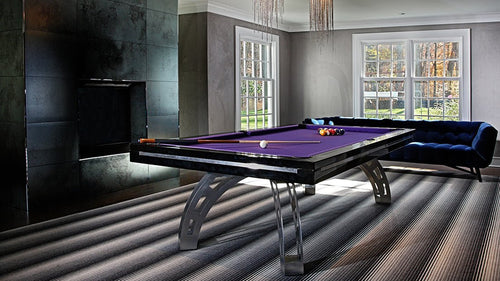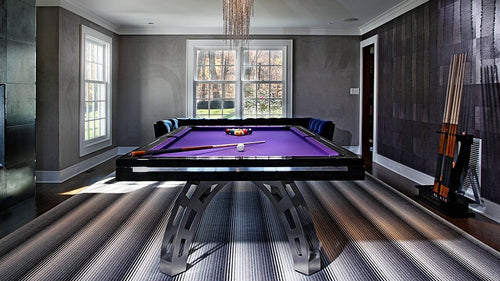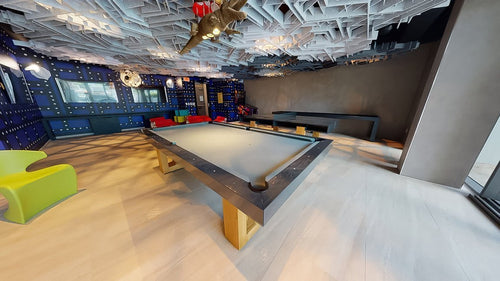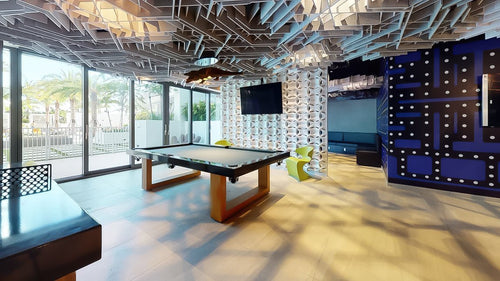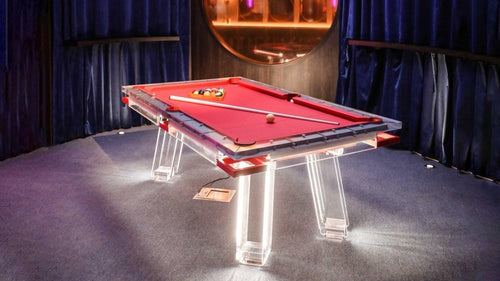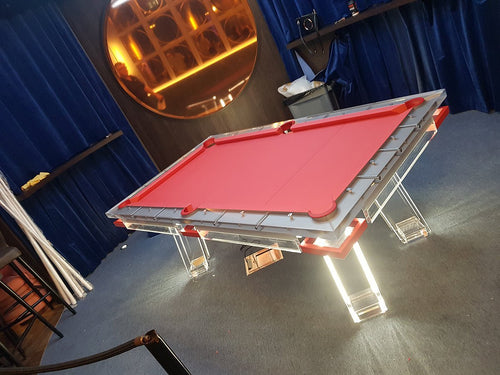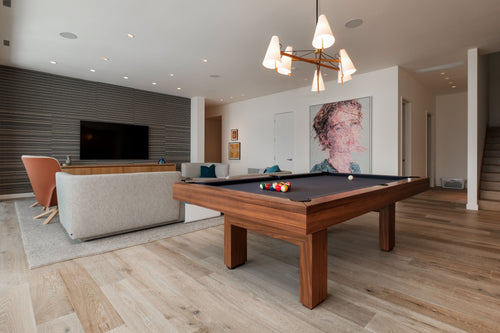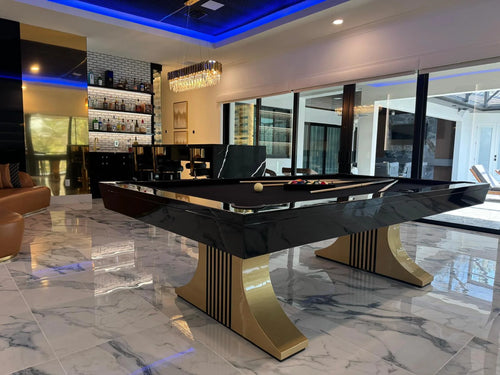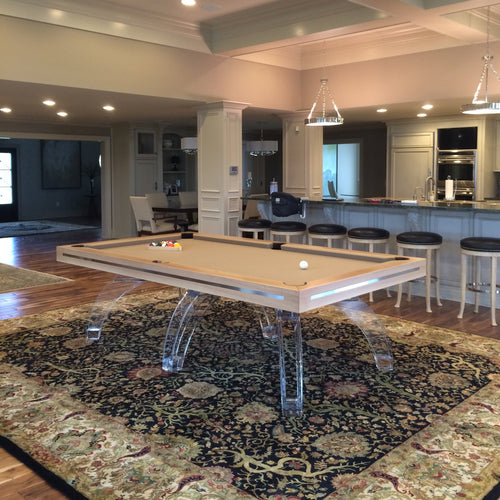


Enjoy our modern designs
Fact-checked and updated October 19, 2026.
Straight rail introduces the central idea of carom billiards: send your cue ball into both of the other balls on a pocketless table. You do not need a cushion contact to complete the carom. That simple objective makes the game useful for studying contact thickness, speed and the position left for the next stroke. Formal free-game competition, however, is not unrestricted everywhere on the table.
Equipment & Setup
For a full-size match table, the UMB specifies a playing surface of 2.84 × 1.42 metres, measured inside the cushions. This is a playing-area dimension, not the furniture’s overall footprint. Carom balls are larger and heavier than ordinary American pool balls: Aramith lists its regular carom sets at 61.5 mm, and the UMB rules specify 205–220 g. Use a matched carom set appropriate to the table.
The standard game has two players and three balls. Each player keeps their assigned cue ball; the opponent’s cue ball and the red are the object balls during that player’s turn. Modern sets may distinguish the cue balls with color or markings. The red, opponent’s ball and striker’s ball have designated starting spots; do not use an improvised pool head-string placement. See the UMB starting-position diagram, Scheme A.
Core Rules & Scoring
A legal carom scores one point, and the striker continues until a miss or foul. In UMB partie libre, the corner zones are subject to restrictions that prevent an unlimited sequence with both object balls trapped there. Read Articles 24 and 51–61 of the UMB rules for the calls and zone procedure. Agree whether you are playing that formal discipline or an unrestricted practice drill before starting.
Position Play: Think Beyond the First Point
Pocketing is absent, so the next position remains visible after every stroke. Start by asking two questions: where will my cue ball finish, and where will the first object ball go? A successful contact can still leave an awkward next shot if you separate the balls unnecessarily. Watch all three balls to the end of the stroke rather than stopping your observation at the score.
Nursing means controlling a compact group through a series of gentle strokes. It rewards small, repeatable movements, but it is easy to practice only a comfortable layout and miss the wider lesson. Alternate close-control work with open-table positions that require a different speed or contact angle.
Fouls & Special Positions
Pushes, double hits, playing while balls are moving and other defined infringements end the turn without a point for that stroke. Frozen balls and balls leaving the playing surface have discipline-specific procedures. In particular, do not import pool’s ball-in-hand rules into carom. Ask a referee or experienced club player to demonstrate the appropriate reset before a competitive game.
A Simple Practice Session
Choose a comfortable three-ball position and attempt it several times with the same intended speed. Record whether you scored and whether the resulting position remained playable. Then change only one element, such as first-ball contact thickness. Compare the outcomes instead of changing spin, speed and aim together. This turns straight rail from an exercise in making contact into a study of controlled continuation.
For wider context, see our guide to general carom rules. If you are buying a table specifically for carom, confirm the playing surface, cushions and intended ball set with the supplier rather than assuming a pocket pool table is equivalent.