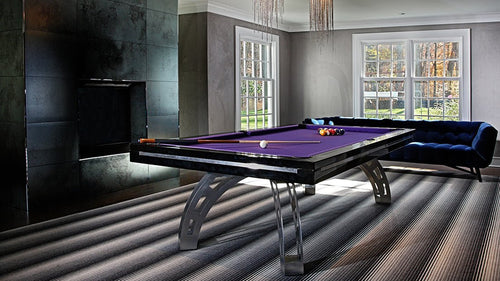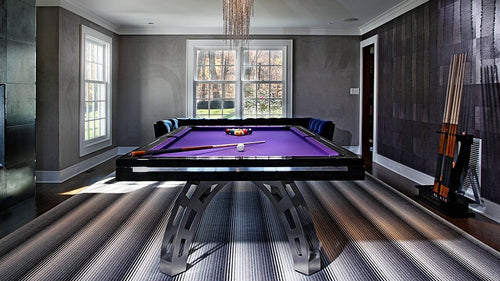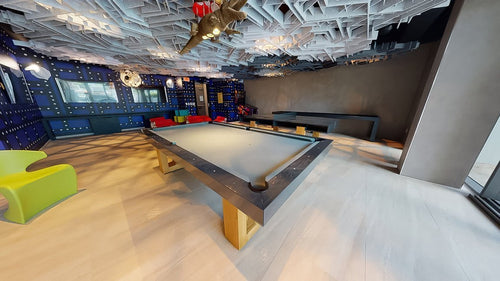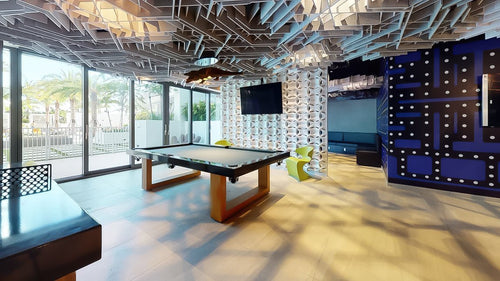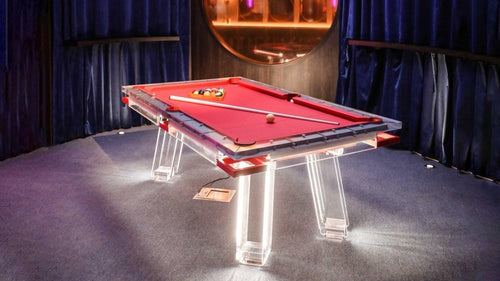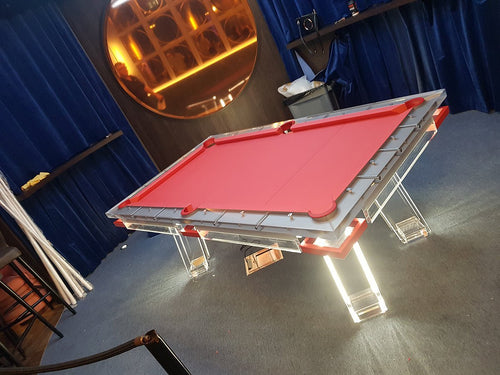


Enjoy our modern designs
Game Rules & Strategy
Bumper
Pool
Fast, tactical, compact — a practical guide using the BCA bumper-pool rules reproduced by CueSight. Confirm any house variations before play.
Bumper Pool is played on a smaller table with fixed rubber bumpers that reshape angles and routes. Each player has one home pocket at the far end — no roaming among six pockets. It's quick, strategic, and all about controlled banks.
Players
2 or 4
Solo or teams of two
Balls Each
5
Including one marked ball
Home Pockets
1 each
At the opposite end
Win Condition
All 5 in
First to pocket all five wins
✦
Table Setup
How to Set Up
the Table
Illustration only: the colors begin at opposite ends and score into their matching pocket across the table. Bumper layouts and starting spots vary; use the markings and instructions supplied with your table. This drawing is not a scale setup template or an opening-shot route.
-
Choose Colors
One player takes red, the other white — five balls each, including one marked ball per side. In team play, teammates share one color between them.
-
Place the Marked Balls
Place the balls on the table’s marked spots, with each marked ball in front of the pocket at its starting end. The matching scoring pocket is at the opposite end.
-
Use the Marked Spots
Use the table’s five starting spots for each color rather than inventing a semicircle. Check the spot layout against the table’s supplied instructions.
-
Check Bumpers and Level
Confirm all bumpers are clean and securely fixed — even small shifts change shot angles significantly. Verify the table is level before play begins.
The Rules
Published BCA
Rules of Play
-
Players: Two players or two teams of two. Each side shoots to their designated home pocket throughout the game.
-
Opening shot: Both shoot the marked ball simultaneously via the cushion on their right. The player closer to the scoring hole plays next; a player who scores continues.
-
Marked ball first: You must pocket your marked ball before any other. If you pocket any other ball before the marked ball, your opponent may immediately drop two of their balls into their home pocket.
Penalty: opponent drops 2 -
Consecutive turns: Pocket your own ball and you shoot again. Miss, and your opponent plays. If both score their marked balls, both shoot again using the ball to the left of the hole.
-
Ball leaves the table: Your ball off the table goes inside the central bumpers and your turn ends. An opponent’s ball off the table is restored; one of your balls goes inside the central bumpers.
Penalty: restore / central bumpers -
Pocketing opponent's ball: A pocketed opponent’s ball counts for them. Your ball in their hole gives them two drops, whether intentional or accidental. Contacting an opponent’s ball is a permitted defensive tactic.
Wrong pocket: opponent drops 2 -
Jump restrictions: Check the table or event rules for jump restrictions. The reproduced BCA text does not specify a jump penalty.
-
Win condition: First player to sink all five balls into their home pocket wins. If your last ball enters the opponent's pocket, you lose — regardless of the score.
Final ball in wrong pocket = loss
Quick Reference
Fouls &
Penalties
Use the detailed rules above for ball-off-table and wrong-pocket situations. A ball knocked off the table does not automatically award two drops. If you use an unmarked ball before scoring your marked ball, restore the disturbed balls; scoring a ball before the marked ball is a separate two-drop penalty.
// Pro Tip
Soft, precise banks win more racks than power. The temptation to force the ball through the bumper cluster is what most new players lose to. Control the contact point, commit to the angle, and let the table's geometry do the work. Fighting the bumpers is always a losing strategy.
Winning Play
Strategies
That Win
Strategy 01
Bank Mastery
Drill simple one-cushion routes first until they're automatic, then layer in two-cushion patterns as you develop feel for the table speed. Master the basics before adding complexity.
Strategy 02
Defend the Lanes
Park your balls in positions that block clean angles to your opponent's pocket. Bumper Pool is as much about denying routes as creating them. A ball that forces your opponent into a two-cushion bank instead of one is working for you even when it isn't moving.
Strategy 03
Commit to the Line
Visualize the rebound path off each bumper before shooting, then commit fully. Avoid trying to steer the cue midway through the stroke. If the line isn't clear, step back and recalculate — don't steer the ball mid-swing.
Strategy 04
Marked Ball Priority
Pocket your marked ball as early as possible. The two-ball penalty for pocketing other balls first swings racks with brutal speed — opponents can jump from one ball ahead to three in a single turn. Don't let the marked ball sit while you cherry-pick easier shots.
Bumper Pool rewards precision and lane control. Use the bumpers as allies, not obstacles — that's the mindset that separates consistent winners from players who rely on power.— On the core philosophy of Bumper Pool strategy
Common Questions
FAQ
-
Can I play solo?
Yes — solo play is excellent for banking practice and learning how your specific table rolls. Run both sides alternately, or focus on running all five of one color to train positional awareness without the time pressure of a turn-based opponent.
-
What's the best table shape for beginners?
Rectangular tables are simpler to read because the cushion angles are predictable. Octagonal tables are fun and compact but add complexity — the angled corners create non-obvious bank paths that confuse new players. Start rectangular, graduate to octagonal.
-
How is Bumper Pool different from regular pool?
Three key differences: a smaller table, a single home pocket per player rather than six shared pockets, and fixed bumpers that force bank-first thinking on almost every shot. There's no calling pockets, no cue ball — you shoot your colored balls directly. It's a fundamentally different spatial puzzle.
// Final Thoughts
Set up correctly, play your marked ball first, keep fouls off the table, and treat the bumpers as tools rather than obstacles. Do all four and games stay fast, fair, and competitive every time you play.
Rule source: BCA bumper-pool rules reproduced by CueSight. This is a specific published rule set; table manufacturers and local groups may use variations.