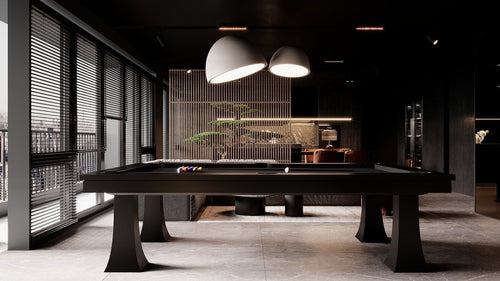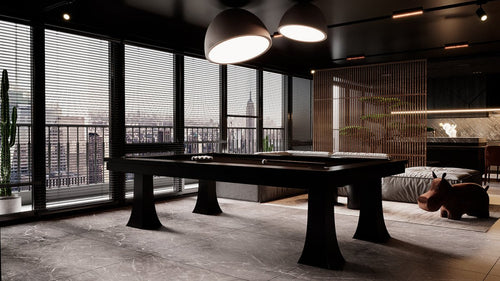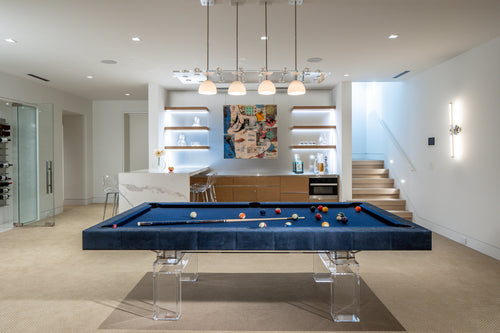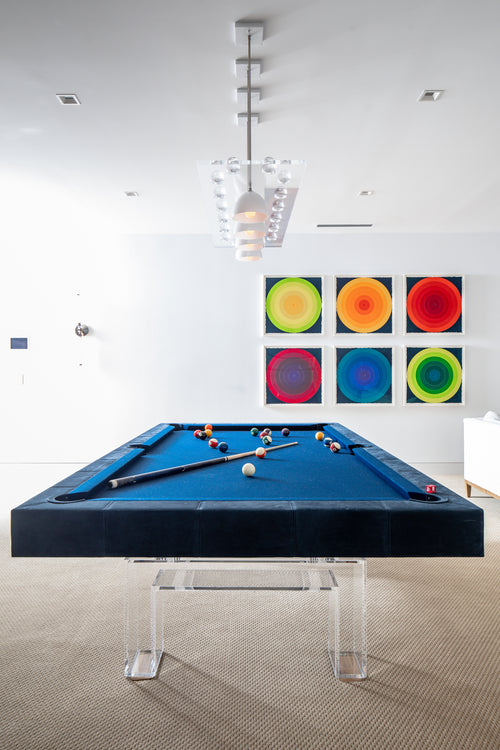


Enjoy our modern designs
Pool table pockets are easy to overlook until they are wrong.
Most people focus on the frame, felt color, base design, and finish first. That makes sense. Those are the obvious visual decisions. But the pockets quietly influence the entire character of the table. They can make a pool table feel classic, modern, minimal, sporty, formal, or completely custom.
A pocket is not just a functional opening where the ball drops. It is also a design detail. The material, shape, depth, visibility, stitching, trim, and integration with the rail all affect how refined the table feels.
Table of Contents
1. Why Pocket Style Matters
Pool table pockets sit at the intersection of design and play. They are used constantly, but they are also seen from every angle. On many tables, the pockets become one of the most visible details along the rail.
A beautiful walnut table with poorly matched plastic pockets can feel cheaper than it should. A sleek contemporary table with bulky traditional leather pockets can feel confused. A formal table with hidden pockets may lose some of the classic charm that made the room appealing in the first place.
Pocket style should be chosen with the same care as felt color, finish, and frame profile. The best choice depends on the table’s design language, the room’s architecture, and the level of visual formality you want.
2. Traditional Leather Drop Pockets
Traditional leather drop pockets are the most familiar pocket style. They are often associated with classic billiard rooms, private clubs, heritage game rooms, and traditional home interiors.
These pockets usually hang visibly below the rail and are made from leather or leather-like material. They may include shield shapes, fringe, stitching, embossed details, or metal irons depending on the design. Their biggest strength is warmth. Traditional leather pockets instantly make a pool table feel more classic and tactile.
- Best For: Classic game rooms, traditional interiors, library-style spaces, country homes, club-inspired rooms, and rich wood tables.
- Pairs With: Walnut, mahogany, dark oak, green, navy, burgundy, olive, or camel felt, brass or bronze details, leather seating, paneled rooms, and warm lighting.
- Watch Out For: Traditional pockets can look bulky on modern tables. They can also feel too decorative in minimal or architectural rooms.
Designer Take: Traditional leather drop pockets are best when you want the pool table to feel authentic, warm, and classic.
3. Modern Pockets
Modern pockets are cleaner, simpler, and more integrated than traditional leather drop pockets. They are often designed to reduce visual bulk while still keeping the pocket visible.
This category can include streamlined leather pockets, molded pockets, low-profile pockets, metal-trimmed pockets, netless pockets, and pocket designs that sit more tightly within the table’s rail structure. Modern pockets give the table a cleaner appearance without fully hiding the function.
- Best For: Contemporary homes, transitional interiors, penthouses, modern game rooms, open-plan living spaces, and tables with cleaner frame geometry.
- Pairs With: Black oak, walnut, white oak, lacquer, acrylic, metal frames, charcoal, black, navy, or taupe felt, brushed steel, chrome, and matte black accents.
- Watch Out For: Modern pockets can feel generic if they are too plain. Screws, seams, plastic inserts, or poorly matched materials can ruin the effect.
Designer Take: Modern pockets are the safest choice for many luxury homes because they feel current without becoming cold or overly minimal.
4. Hidden Pockets
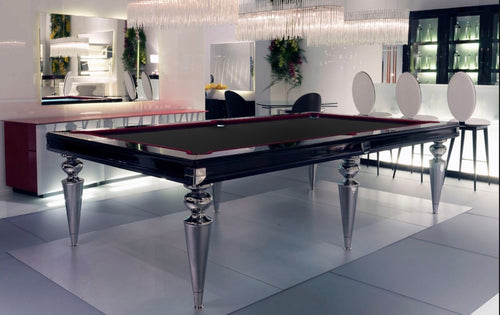
Hidden pockets are designed to visually disappear into the table. Instead of hanging below the rail or being treated as decorative features, they are concealed inside the body of the table or integrated so cleanly that they barely register.
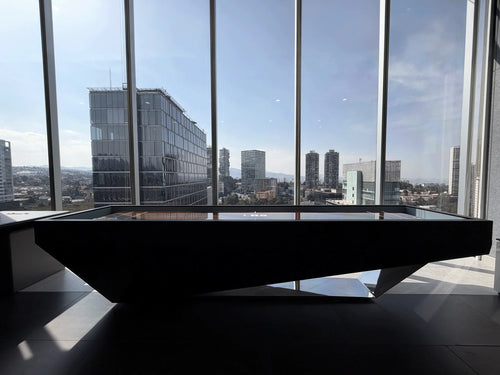
This creates a very different impression. Hidden pockets make a pool table feel more like furniture or architecture. The table becomes cleaner, smoother, and more sculptural.
- Best For: Minimalist interiors, ultra-modern homes, penthouses, gallery-like spaces, contemporary lounges, formal living areas, and sculptural pool tables.
- Pairs With: Acrylic, Lucite, black lacquer, white lacquer, marble, stone, minimal wood frames, charcoal, black, taupe, or navy felt, chrome, brushed stainless steel, and sculptural lighting.
- Watch Out For: Hidden pockets require excellent execution. If the pocket is meant to disappear but the construction is clumsy, the result looks awkward rather than refined.
Designer Take: Hidden pockets are the most architectural option. Use them when the pool table needs to feel sleek, sculptural, and fully integrated into a modern interior.
5. Ball Return Pockets
Ball return systems are not always discussed as a pocket style, but they affect both function and design. Instead of each pocket holding balls individually, the balls travel through an internal channel and collect at one end or side of the table.
This is common in commercial tables, but it can also be useful in residential designs when convenience matters. Players do not need to walk around the table collecting balls from each pocket, which can make the table easier to use during frequent play.
- Best For: Entertainment rooms, family game rooms, hospitality spaces, frequent players, and homes where the table will be used often.
- Pairs With: Modern pool tables, commercial-inspired designs, clean-lined contemporary tables, hidden-pocket designs, and game rooms with high guest use.
- Watch Out For: A poorly integrated ball return can make a luxury table feel commercial. Loud internal channels and visible collection trays can reduce refinement.
6. Custom Pocket Options
Custom pockets are where a pool table can become truly bespoke. Instead of choosing between standard leather, modern, or hidden pockets, the pocket design can be tailored to the table, the room, and the client’s preferences.
This may involve custom leather colors, contrast stitching, metal trim, altered pocket shapes, unique liners, monogrammed details, integrated ball collection, or pockets designed to match the table’s exact material palette. The best custom pocket details usually refine the table rather than distract from it.
| Custom Detail | Design Effect |
|---|---|
| Custom Leather | Controls warmth, formality, and how the pocket relates to nearby seating or wood tones. |
| Metal Trim | Connects the pocket to lighting, hardware, furniture legs, or architectural metalwork. |
| Pocket Shape | Can make the table feel sharper, softer, more traditional, or more minimal. |
| Custom Liners | Affects appearance, durability, and sound. |
| Monograms | Adds personalization when handled with restraint. |
7. Which Pocket Style Should You Choose?
- Choose Traditional Leather Drop Pockets If: You want the table to feel classic, warm, and authentic.
- Choose Modern Pockets If: You want a cleaner look without making the pockets disappear.
- Choose Hidden Pockets If: You want the table to feel sleek, architectural, and integrated into the room.
- Choose Ball Return If: You care about convenience and frequent play.
- Choose Custom Pockets If: You want the table to feel truly made for the room.
8. Matching Pocket Style to Interior Style
| Interior Style | Best Pocket Direction |
|---|---|
| Traditional | Leather drop pockets in brown, espresso, black, or burgundy. |
| Modern | Low-profile or hidden pockets with minimal visible hardware. |
| Transitional | Streamlined leather or modern pockets that bridge classic and contemporary design. |
| Coastal | Clean pockets with lighter woods, taupe or navy felt, and restrained detailing. |
| Industrial | Black leather, blackened steel trim, exposed metal details, or stronger pocket contrast. |
| Statement Luxury | Hidden pockets or custom metal-trimmed pockets that support the table’s drama without adding clutter. |
9. Small Pocket Details That Make a Big Difference
- Leather Color: Black leather feels formal and sharp. Brown leather feels warmer and more traditional. Cognac leather feels relaxed and tailored.
- Stitching: Matching stitching is elegant. Contrast stitching can work, but it needs to suit the table’s personality.
- Pocket Depth: Deeper pockets feel more traditional and substantial. Shallower or more integrated pockets feel cleaner.
- Pocket Trim: Metal trim can elevate a pocket, but only when it relates to the rest of the room.
- Visibility: Some pockets are meant to be seen. Others are meant to disappear. Decide this early.
- Sound: Leather and lined pockets feel softer. Harder internal systems can sound more mechanical.
The Bottom Line
There is no single best pocket style. Traditional, modern, hidden, ball return, and custom pockets all have their place.
Traditional leather pockets bring warmth and classic billiards character. Modern pockets create a cleaner, more contemporary look. Hidden pockets make the table feel architectural and refined. Ball return systems improve convenience. Custom pockets allow the details to match the exact personality of the room.
The main mistake is treating pockets as a default specification. They are not. They are part of the table’s design language. When the pocket style is right, you may not notice it immediately. That is usually the point. It simply makes the whole table feel more intentional, more polished, and more bespoke.