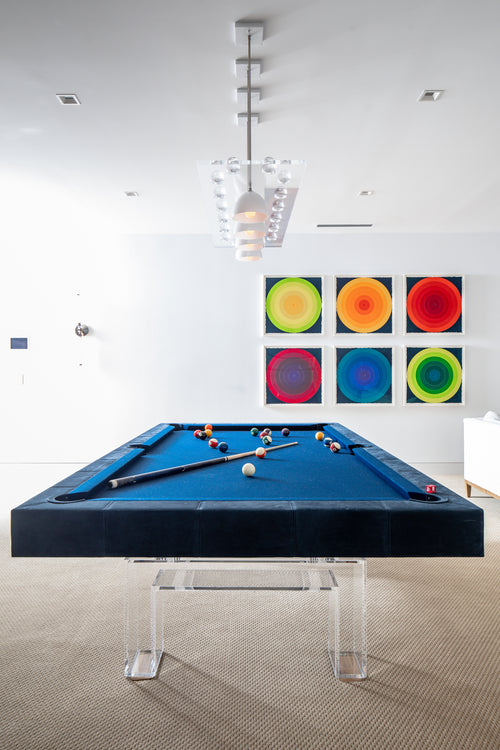


Enjoy our modern designs
Table tennis records range from marathon rallies to a single fast hit. They measure different achievements under different rules. A useful record roundup therefore gives the category, holder and source instead of treating every impressive number as comparable to a normal competitive rally. This selection was checked on October 19, 2026.
A marathon rally
The Guinness longest-rally listing credits Emil Ohlsson and Fredrik Nilsson with 15 hours, 49 minutes and 35 seconds in Malmö on April 18, 2025. That is a controlled endurance achievement, not the duration of an ordinary match point.
Guinness says this surpassed the same pair’s earlier 13-hour, 37-minute, 6-second record. Online record pages can lag new announcements, so cite the page and review date when repeating a figure.
The fastest-hit update
In a report published October 9, 2026, Guinness says Otto Tennilä reached 149 km/h, surpassing Łukasz Budner’s 116 km/h mark from 2016. The earlier figure is therefore a historical benchmark, not the current record described in that newer announcement.
A measured speed near impact does not by itself provide the ball’s travel time through a rally. The path length, air resistance, bounce and measurement method matter. Avoid turning a record speed into an unsupported claim about a player’s reaction time.
Repeated contacts are a different challenge
The same Guinness report records 75 counter hits in 30 seconds by Miikka O’Connor and Emil Rantatulkkila. That category tests sustained coordination rather than maximum striking speed. It should not be confused with a continuous-rally duration record or a multi-player endurance event.
When comparing attempts, check whether the title counts contacts, completed exchanges, elapsed time or consecutive opponents. Those details can change the meaning of a number considerably.
A precisely named competitive milestone
At the 2017 Czech Open, Tomokazu Harimoto won an ITTF World Tour men’s singles title at 14 years and 61 days. The ITTF’s contemporary report identifies him as the youngest winner of that specific title category at the time. “Youngest professional champion” is too broad: junior, senior, national and international competitions have different records.
Novelty challenges also need exact labels. A bat-handle bounce, a serve from distance and a ball balanced on a racket are separate feats, not interchangeable measures of table-tennis skill.
What to take from the records
The interest lies in the contrast. Endurance attempts emphasize repeatability and pacing; fast-hit attempts isolate a burst of speed; competitive titles test performance against opponents over a tournament. Each can be impressive without proving that it is the best training target for an ordinary player.
For practice, use repeatable goals appropriate to your game: a controlled rally, accurate placement or a consistent serve. Record conditions and compare like with like.
How to keep a record roundup reliable
- Name the exact record category.
- Separate an event date from the date of the article announcing it.
- Prefer the governing body or record organization’s own result.
- Treat a newer verified announcement as relevant even when an older record page remains online.
- Label unsupported claims as unverified or leave them out.
Records can change. The links above let readers inspect what was reported instead of relying on an undated superlative.
Record sources reviewed October 19, 2026. Check the linked listings for later updates.