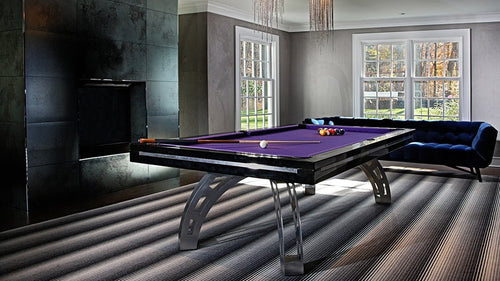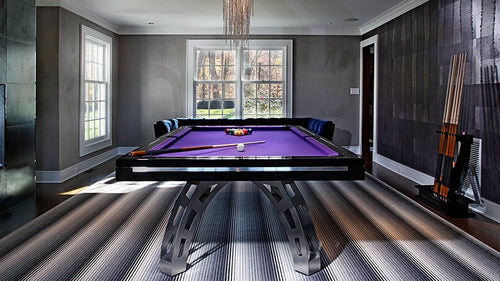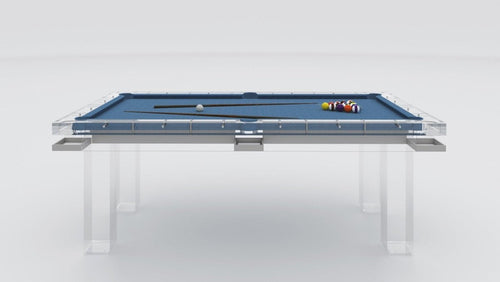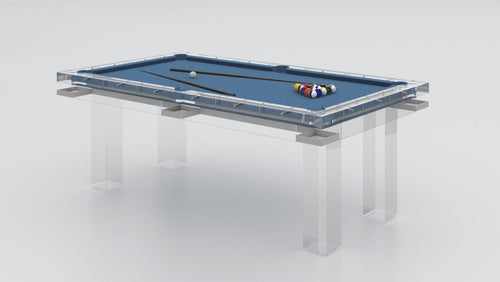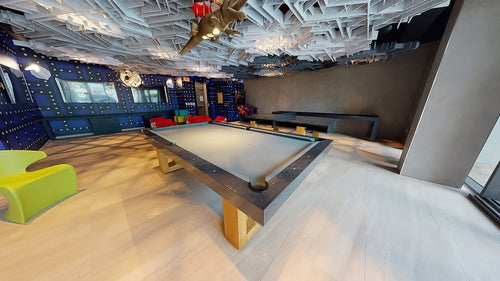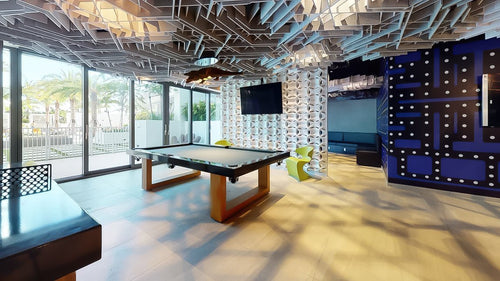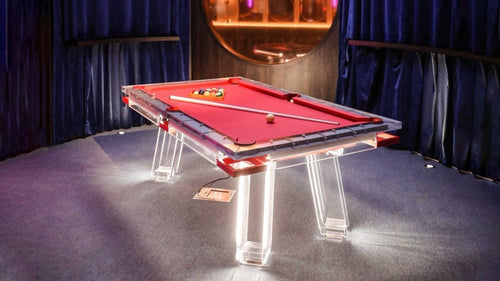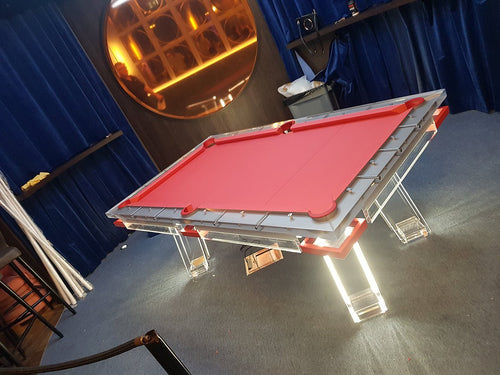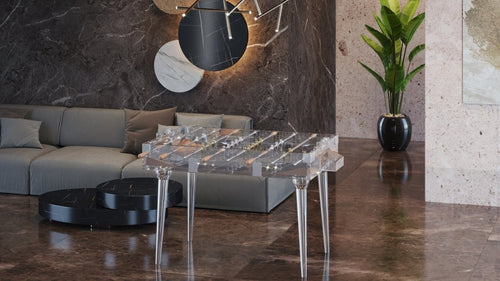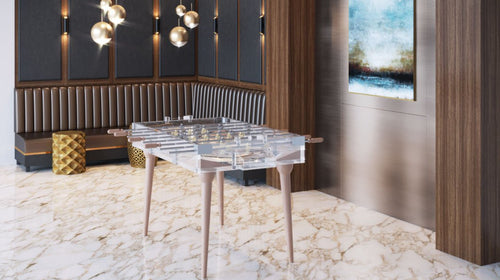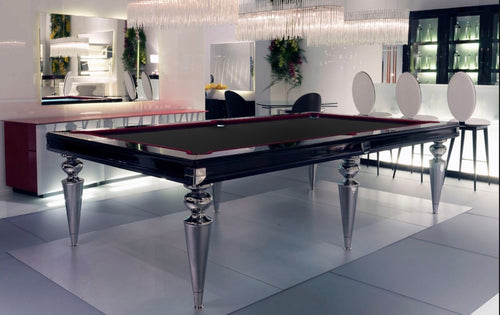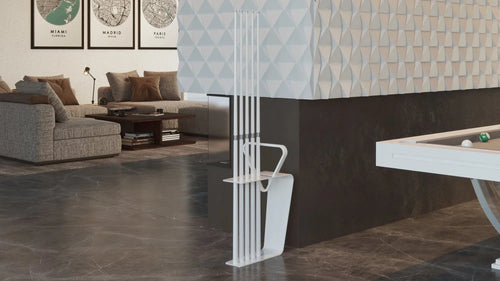


Enjoy our modern designs
For a long time, the billiard room had a very predictable identity. It was usually pushed into the basement, wrapped in dark wood, filled with leather chairs, and treated as a private retreat rather than a central part of the home. The mood was masculine, enclosed, and often disconnected from the rest of the interior.
That version of the billiard room still exists, and in the right home it can be beautiful. A dark lounge with strong woodwork, low lighting, a bar, and a serious table can still carry real atmosphere. The problem is that many homes no longer live that way.
Modern luxury interiors are more open, more fluid, and more social. Entertainment spaces are no longer hidden away; they are part of the home’s architecture. That shift has changed the role of the pool table. It is no longer just a game table placed in a game room. It can be the object that defines how people gather, move, talk, watch, drink, and spend time together.
Table of Contents
- 1. The Old Billiard Room Was Built Around Escape
- 2. The Pool Table Is Becoming Part of the Main House
- 3. A Social Room Is Different From a Game Room
- 4. The Best Billiard Rooms Have Zones
- 5. The Table Should Invite, Not Intimidate
- 6. Lighting Sets the Social Tone
- 7. Materials Decide the Mood
- 8. The Room Should Work When Nobody Is Playing
- 9. The Pool Table as Social Architecture
- The Bottom Line
1. The Old Billiard Room Was Built Around Escape
The traditional billiard room was often designed as a retreat from the rest of the house. It had its own atmosphere, its own rules, and its own visual language. Dark paneling, green felt, club chairs, framed memorabilia, bar signs, heavy lamps, and a sense of separation all helped create the feeling of a private world.
There is nothing inherently wrong with that. When done with taste, the classic billiard room can feel rich, intimate, and cinematic. The issue is that many versions became too narrow. They were not designed for the whole home. They were designed for one type of use, one type of guest, and often one type of owner.
For high-end interiors today, that separation often feels dated. Homeowners still want leisure, but they do not necessarily want a room that feels cut off from the architecture. They want spaces that are relaxed, social, and beautiful enough to be seen.
2. The Pool Table Is Becoming Part of the Main House
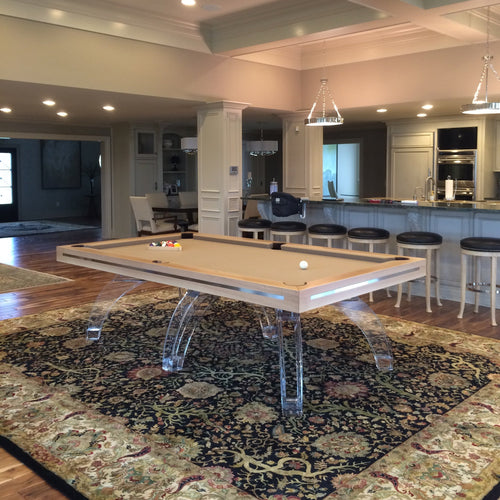
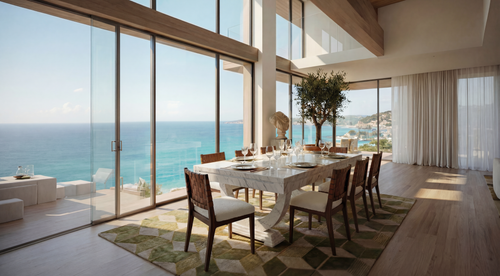
One of the biggest changes in luxury homes is that game spaces are moving out of the basement. Pool tables are showing up in open lounges, great rooms, penthouses, dining libraries, covered terraces, and transitional spaces between the kitchen, bar, and outdoor area.
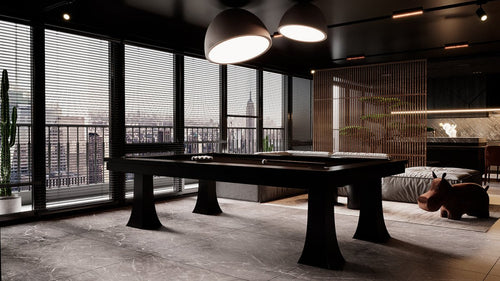
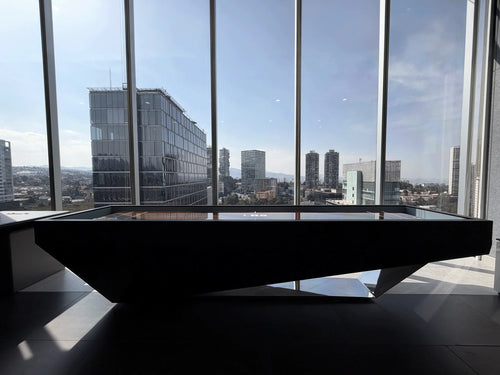
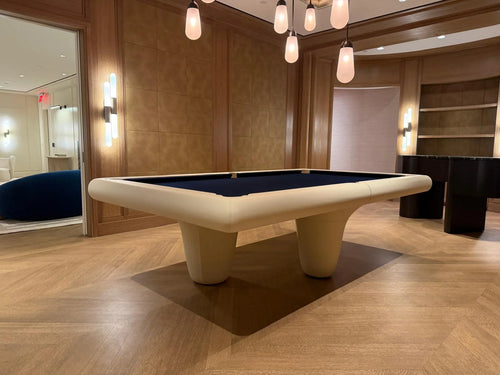
Once the table enters the main house, it has to behave differently. It cannot rely on the old billiard-room formula. A bulky traditional table with green felt and heavy carving may work in a dedicated club-style room, but it may feel wrong in a glass-walled modern home or a soft neutral living space.
The table now has to participate in the interior. It has to relate to the flooring, lighting, wall finishes, furniture, artwork, and sightlines. It also has to support more than serious play. It has to support conversation, circulation, and hosting.
3. A Social Room Is Different From a Game Room
A game room is usually designed around activity. A social room is designed around behavior. That distinction matters.
A basic game room asks: what games are in here? A more considered social room asks: how do people gather here? Where do they sit? Where do they stand with a drink? Can someone watch without playing? Can a conversation continue while a game is happening?
The best billiard rooms are not only enjoyable during a game. They are enjoyable before and after the game as well. People should be able to drift into the room, lean against a bar, sit nearby, watch a shot, talk across the table, or move through the space without feeling like they are interrupting the activity.
The Pro Insight: A pool table alone does not create a great room. The surrounding furniture decides whether the space feels inviting or empty.
4. The Best Billiard Rooms Have Zones
A strong billiard room is rarely just one open box with a table in the middle. It usually has zones, even if those zones are subtle.
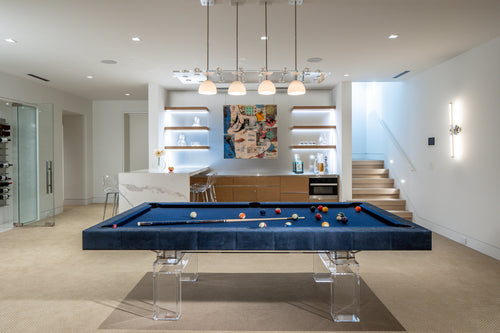
There is the playing zone, where clearance and movement matter most. There is the watching zone, where seating gives people a place to stay connected without interfering with the game. There may be a drink zone with a bar, console, cabinet, or nearby kitchen access. In larger spaces, there may also be a conversation zone that allows the room to keep functioning even when no one is actively playing.
| Zone | Purpose |
|---|---|
| Playing Zone | Protects cue clearance, movement, and table function. |
| Watching Zone | Lets guests stay connected without blocking play. |
| Drink Zone | Supports hosting through a bar, console, cabinet, or nearby service edge. |
| Conversation Zone | Keeps the room useful even when no one is actively playing. |
5. The Table Should Invite, Not Intimidate
Some pool tables look impressive but make the room feel too formal, too heavy, or too serious. They signal that the space is for players only, which can unintentionally push everyone else to the edges.
A more social billiard room needs a different kind of presence. The table should still feel refined and substantial, but it should not make the room feel closed off. It should invite people toward it, even if they are not serious players.
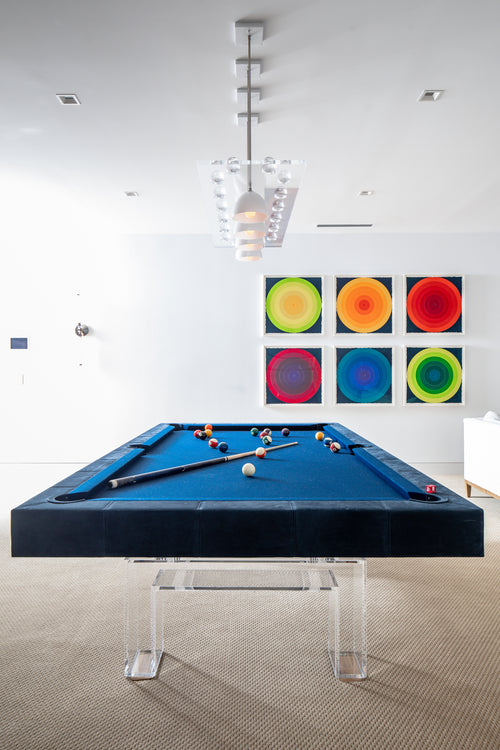
A clean-lined table with warmer materials can feel more approachable than a heavily carved table in a dark room. A softer felt color can make the table feel more integrated into the interior. A lighter base or more open silhouette can make the table feel less like a barrier.
6. Lighting Sets the Social Tone
Lighting is one of the fastest ways to make a billiard room feel either sophisticated or outdated.
The old approach was simple: hang a billiard lamp directly over the table and call it done. That can still work in a traditional room, but in a more architectural interior, lighting needs to do more than illuminate the playing surface.
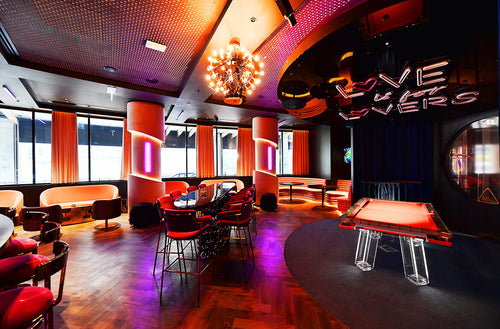
The table needs accurate, even light for play, but the room also needs atmosphere. Seating areas need softer light. A bar or cabinet may need accent lighting. Artwork or textured walls may need subtle illumination. The room should glow, not glare.
7. Materials Decide the Mood
There is a fine line between a billiard room that feels atmospheric and one that feels like a commercial lounge. Materials are usually what decide the difference.
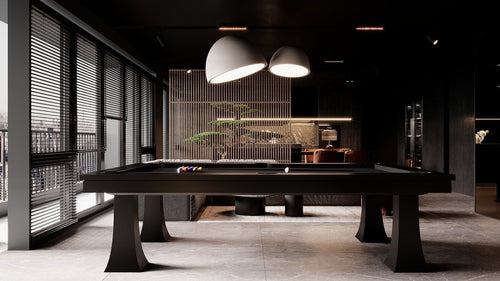
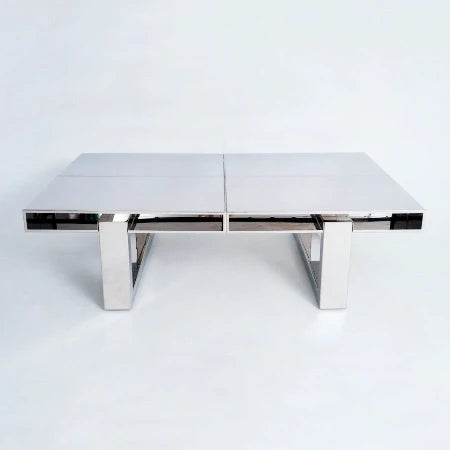
Too much black, too much gloss, too much chrome, too much signage, and too many hard surfaces can quickly push the room toward nightclub or sports-bar territory. A residential billiard room needs more nuance.
Wood, leather, stone, wool, linen, plaster, bronze, smoked glass, and softer upholstery can all create richness without making the room feel themed. The goal is not to copy a bar. The goal is to create a room where entertaining feels natural.
8. The Room Should Work When Nobody Is Playing
This is one of the most important tests of a modern billiard room. If the table is not in use, does the space still feel valuable?
A better billiard room has a reason to be used even when no one is playing. It may function as a lounge, a drinks room, a library, a music space, a gallery, a secondary living area, or a transition between indoor and outdoor entertaining.
The pool table remains central, but the room does not depend entirely on it. It becomes part of the home’s rhythm, not just an event space for occasional games.
9. The Pool Table as Social Architecture
The best way to understand the new billiard room is to stop thinking of the table as a game object and start thinking of it as social architecture.
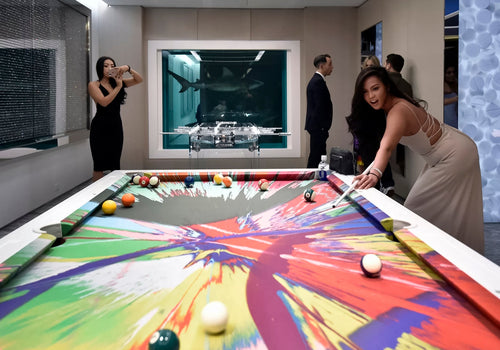
A pool table shapes movement. It creates pause. It gives people something to gather around. It offers a reason to linger without forcing a formal activity. It can sit between dining and lounging, between indoor and outdoor space, between conversation and play.
Some people play. Some watch. Some talk. Some hold a drink. Some drift in and out. The room stays active because the table gives it structure.
The Bottom Line
The future of the billiard room is not a darker basement with better finishes. It is a more integrated, more social, more architectural space.
The classic billiard room still has its place, but the more interesting shift is happening in homes where the pool table is no longer hidden away. It is being brought into the life of the house.
When done well, the table becomes more than a luxury game piece. It becomes the object that organizes the room, connects guests, and gives the home another way to be lived in.