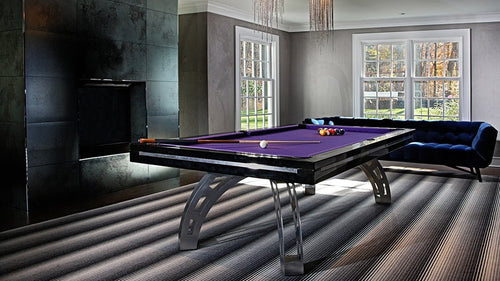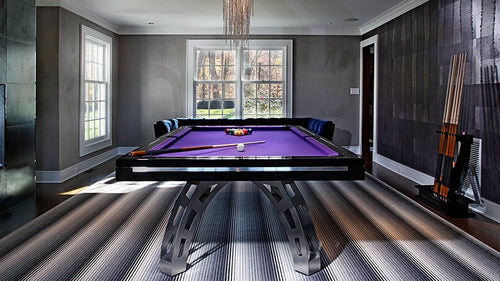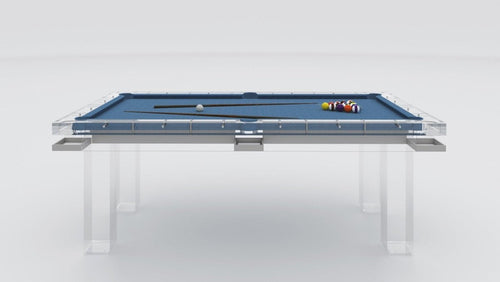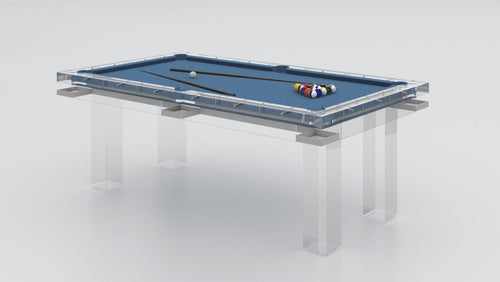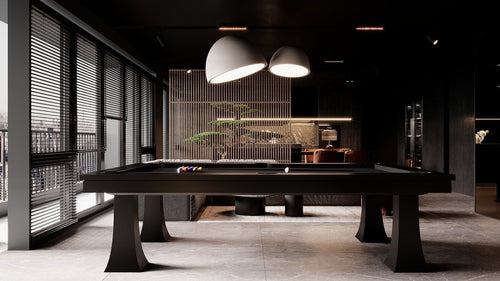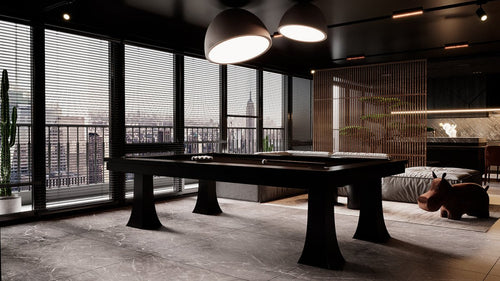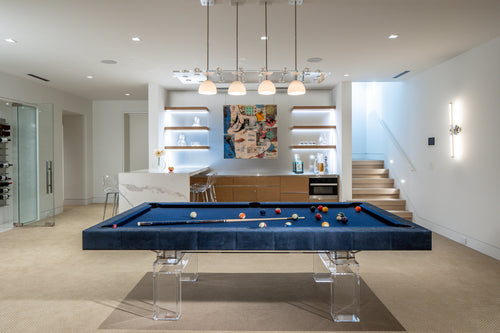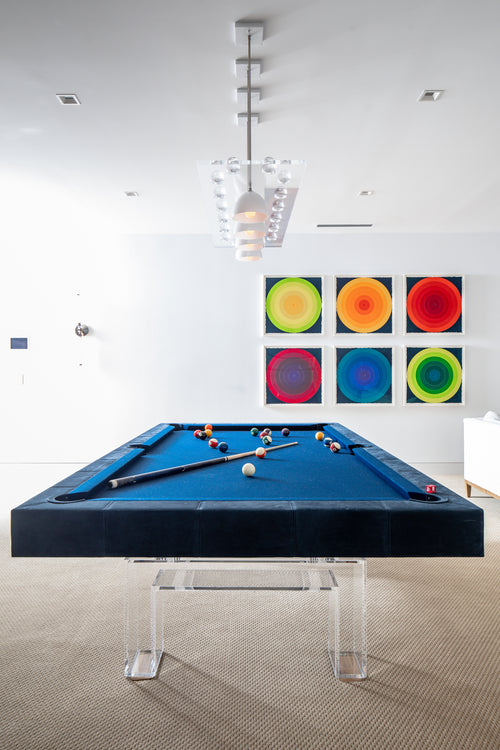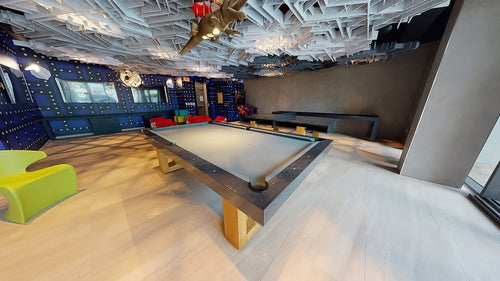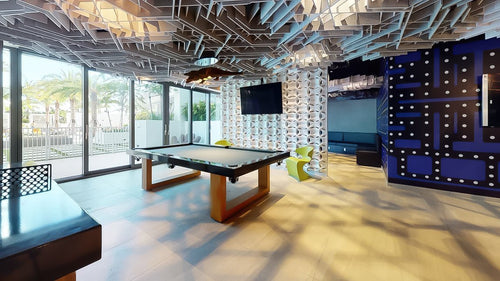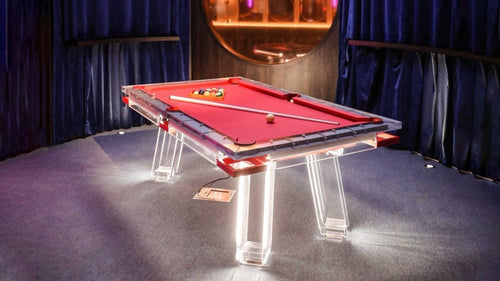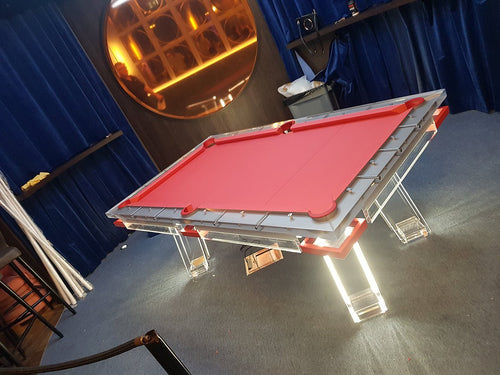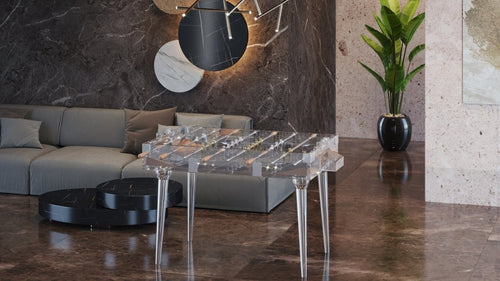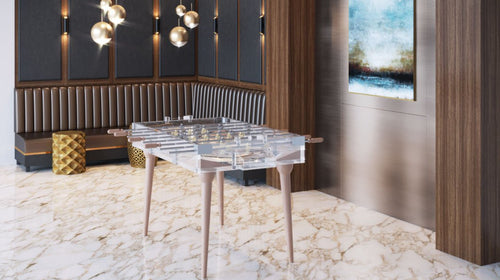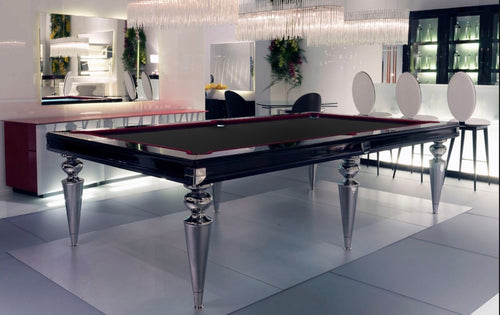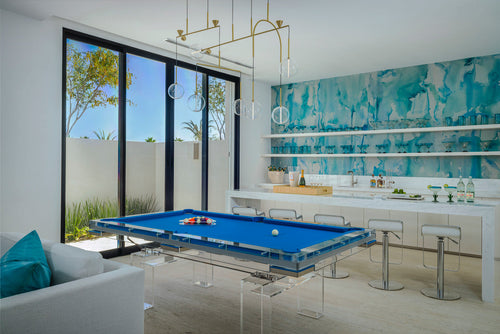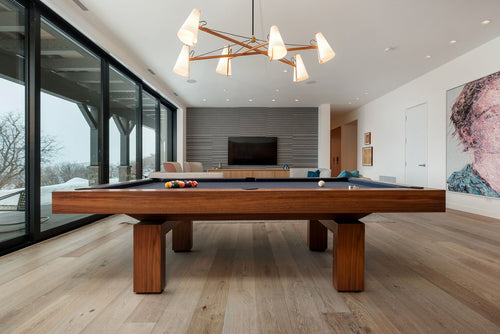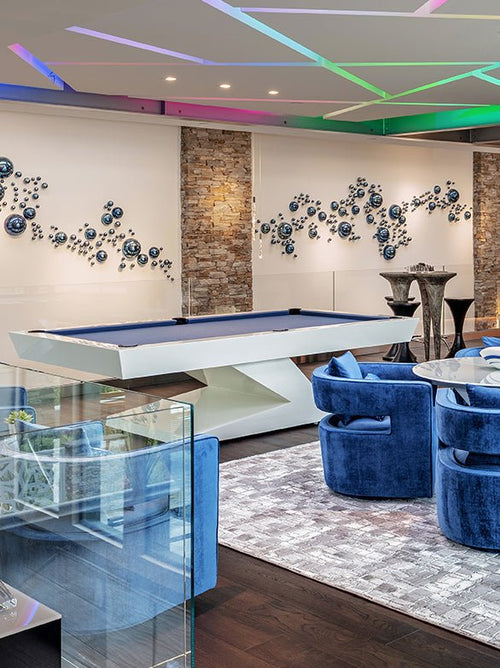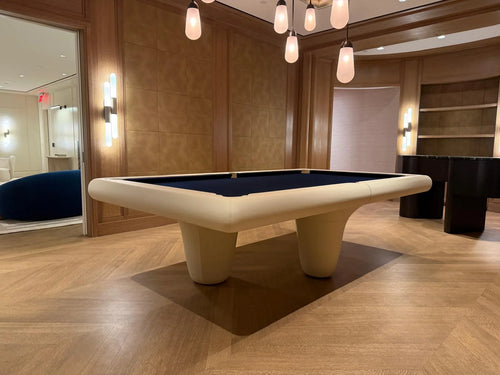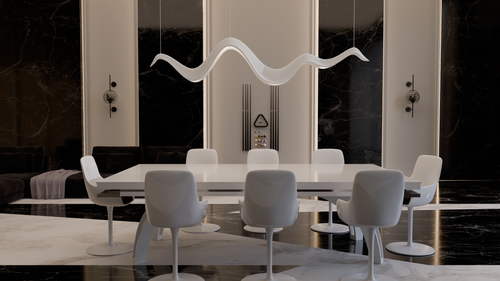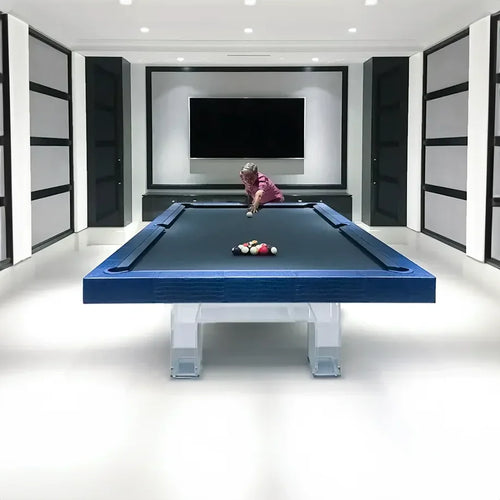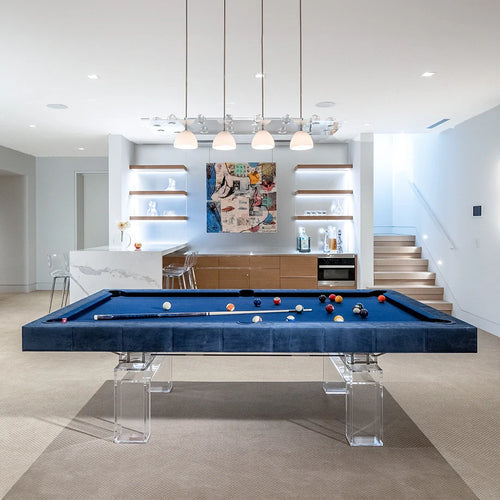


Enjoy our modern designs
Table Care & Maintenance
Re-felting:
When, Really?
Most pool table owners treat cloth like a roof — they wait for it to fail. The smarter model is tires on a performance car: you change them when handling suffers, not when they blow out on the highway.
The cloth is the single most important factor in how your game plays. It dictates speed, spin, and accuracy on every shot. Playing on cloth that is years past its prime is not playing pool — it is fighting your equipment on a surface that penalizes skill and rewards nothing.
The Numbers
Realistic
Lifespan by Use
Cloth is a consumable. It is engineered to perform at a specific level and then degrade — not catastrophically and all at once, but gradually, in ways that erode your game before they become visible to the eye. The industry standard for residential tables assumes average use of a few hours per week.
7–10
Years — Light Use
A few hours per week, careful maintenance, consistent brushing after play. The comfortable outer edge of cloth lifespan.
5–7
Years — Moderate Use
Regular family play, frequent practice sessions, or a household with teenagers who play daily. Performance degrades noticeably before year seven.
6–12
Months — Commercial
Pool halls replace cloth this frequently. Your home table won't see that volume — but it proves cloth is a consumable, not a permanent fixture.
The Consumable Mindset
The reason commercial venues change cloth every six to twelve months is not that their cloth fails dramatically — it is that even mild degradation is unacceptable in a pay-to-play environment. The same logic applies at home: you are not waiting for failure. You are replacing before performance suffers below the threshold where practice produces diminishing returns.
If you are playing on 20-year-old cloth, you are not playing pool. You are playing on a surface that has been lying to you about your game for years.— On the hidden cost of cloth neglect
Symptom 01
The Three Signs
It's Time
Catastrophic failure — a tear, a burn mark, a worn-through patch — is not the threshold for replacement. By the time cloth tears, it has been underperforming for years. These three symptoms appear earlier and are diagnosable with nothing more than a careful eye and one simple test.
01
First to Go
The Sluggish Roll
New cloth is fast and crisp. As dust settles into the weave and fibers loosen over years of compression and humidity cycling, friction climbs. The first sign is subtle: you find yourself hitting harder to achieve the same result. Bank shots that once felt natural require more force. The table feels heavy.
The Test
Roll a ball slowly by hand from one end of the table. Watch carefully as it decelerates. Does it wobble? Does it drift off-line as it loses momentum? Either behavior signals that the cloth has lost its tension or is embedded with debris that creates uneven friction across the surface.
02
Surface Degradation
Pilling and Fuzz
Standard woolen felt sheds. Over time, the fibers that work loose from the weave compress into small balls — pills — particularly in high-traffic zones near the rack area, under the rails, and along the most-used shot lines. Each pill is a microscopic speed bump that kills momentum and introduces random deviation into slow rolls.
The Note
High-end worsted cloth — Simonis being the standard reference — does not pill. The manufacturing process removes the fiber ends before the cloth is finished. If you upgrade to worsted cloth at your next re-felt, you eliminate this failure mode entirely for the life of that cloth.
Simonis eliminates pilling permanently03
Structural Failure
The Slack
Cloth must be stretched drum-tight to function correctly. The tension is what keeps the surface planar, reduces ball-to-cloth contact area, and produces a consistent, repeatable roll. Over years of humidity cycling — the cloth expanding in summer, contracting in winter, expanding again — the fibers stretch beyond their elastic limit and do not fully recover. The cloth goes slack.
The Test
Try to pinch the cloth in the center of the table between your thumb and forefinger. Properly installed, tight cloth resists the pinch. If you can easily lift a fold of fabric, the cloth is too loose. A slack cloth bunches slightly in front of a rolling ball, adding drag and making bank shots unreliable — the ball deflects off a surface that is not perfectly flat.
The Other Reason
Re-felting as
Room Renovation
Beyond performance, there is a purely aesthetic argument for re-felting that deserves its own standing. A pool table is the largest piece of furniture in the room. Its cloth color dominates the visual character of the space in a way no other single element can match. Tastes change, rooms get repainted, rugs get replaced — but the felt stays, increasingly out of step with everything around it.
Re-felting is the cheapest dramatic renovation available to a game room. Swapping traditional bottle green or burgundy for a contemporary steel grey, slate, or camel transforms the table from a dated fixture into a modern centerpiece — without recovering the rails, refinishing the wood, or buying anything new. The room resets around the table for the cost of a service call.
Bottle Green
Traditional · Classic rooms
Burgundy
Traditional · Warm interiors
Steel Grey
Modern · Neutral palettes
Camel
Contemporary · Warm-tone rooms
Electric Blue
Bold · Statement rooms
Charcoal
Dramatic · Dark interiors
The Upgrade Decision
Re-felting is also the moment to reconsider cloth type. If your current table has standard woolen felt, the service call is a natural opportunity to step up to worsted cloth. Worsted is faster, does not pill, is easier to brush clean, and holds its appearance longer. The price difference is modest relative to the installation labor — and you only pay for installation once.
// The Verdict
If you are blaming the table for missed shots, or if the game feels slow and heavy, stop fighting the equipment. Fresh cloth brings back the crisp crack of the break, lets balls glide without resistance, and makes every session feel like the game it's supposed to be. The cloth is not a permanent feature — it is the playing surface. Treat it like one.