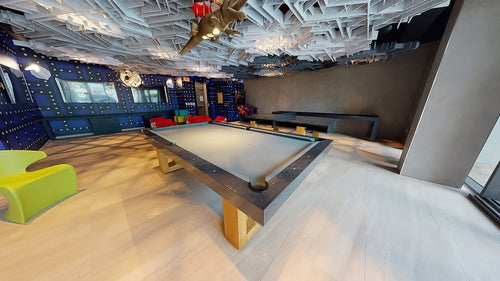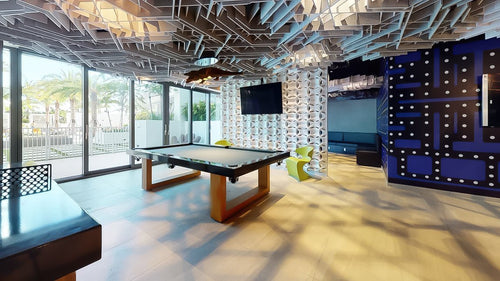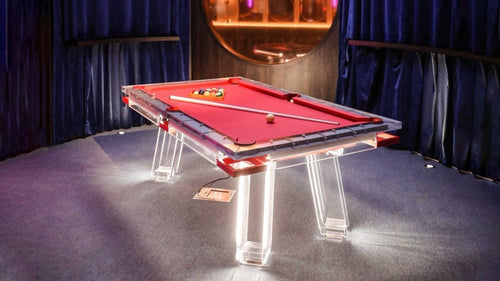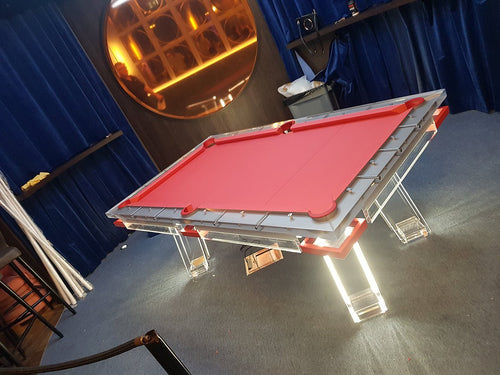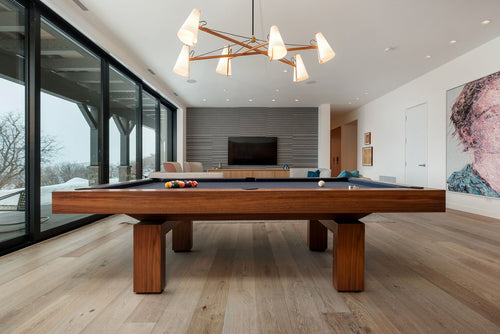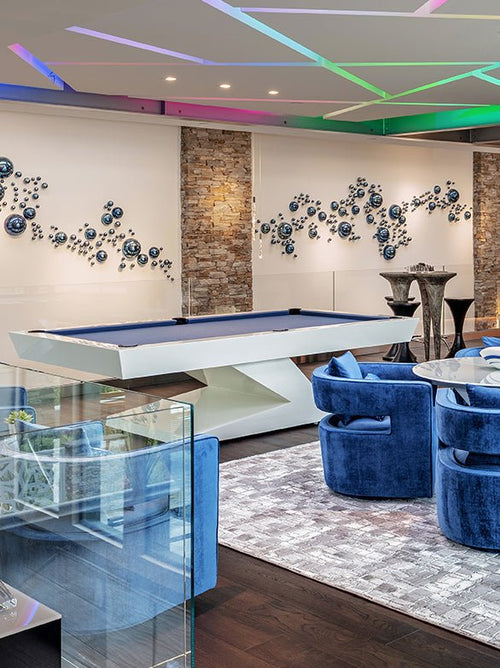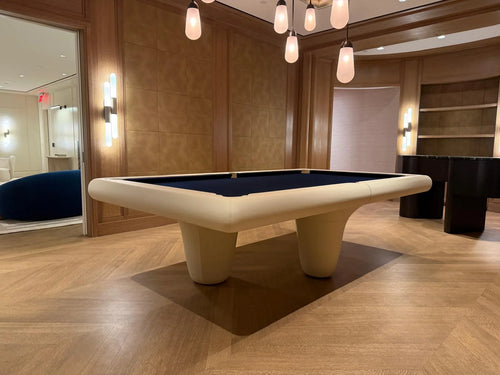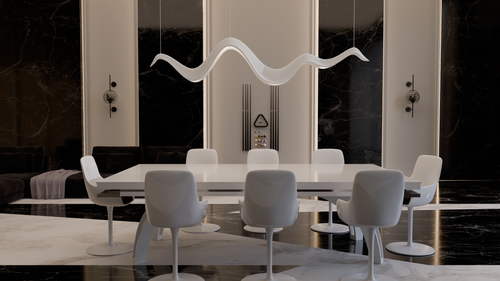


Enjoy our modern designs
In the world of high-end billiards, there is a long-standing "myth of the mountain." The assumption is that the heavier the table, the better it plays. If a table weighs 1,000 lbs, it’s good; if it weighs 1,500 lbs, it must be world-class.
But is mass a true metric of performance, or is it just a byproduct of traditional construction? For the serious player and the luxury collector, understanding the relationship between weight, stability, and energy transfer is the difference between buying a piece of furniture and investing in a professional-grade instrument.
Table of Contents
1. The Anchor Effect: Stability Under Pressure
The primary reason weight matters is lateral stability. A pool table is a massive object that players lean on, sit on (when allowed), and bump into.
- The "Nudge" Test: On a lightweight, entry-level table (often made of MDF or thin slate), an accidental bump from a player's hip can shift the entire frame, instantly ruining the level and the game.
- The Heavy Advantage: A heavy table—typically defined by a solid hardwood or steel frame and thick slate—acts as a structural anchor. Once it is leveled to within a thousandth of an inch, its own mass ensures it stays leveled. It doesn't "settle" as easily, and it is impervious to the minor vibrations and bumps of a busy game room.
2. The Science of the "Dead" Rail
Weight isn't just about the legs; it’s about how the rails are mounted. On a premium table, the rails are bolted directly through the slate.
If the table’s frame is too light, it cannot provide the necessary "clamping force" to keep the rails perfectly rigid. When a ball hits a rail on a light table, a tiny amount of kinetic energy is lost as the rail vibrates or "gives." On a heavy, dense table, that energy is reflected back into the ball. This results in consistent rebound speeds and a "livelier" feel that allows for advanced positional play.
3. The Slate Factor: Where the Real Weight Lives
The single heaviest component of any quality table is the slate bed.
- The Standard: 3/4-inch slate.
- The Professional: 1-inch or 1-1/4-inch slate.
A thicker slate doesn't just add weight for the sake of it. Thicker slate is less prone to sagging over time and is far more effective at dampening the sound and vibration of the balls. When you hear that deep, satisfying thump of a ball being potted on a professional table, you are hearing the sound of mass absorbing energy.
4. When More Weight Isn't Better
Can a table be too heavy? From a playability standpoint, rarely. From a logistical and structural standpoint, absolutely.
- Floor Loading: If you are placing a custom table in a high-rise penthouse or a historic timber-framed home, you must account for "dead load" capacity. A 1,200 lb table creates significant "point loads" at the feet.
- The "Overbuilt" Trap: Some manufacturers add "faux weight" (like heavy metal plates hidden in the legs) to make a cheap table feel more premium. Weight should be a byproduct of quality materials (solid wood, thick slate, cast iron brackets), not an arbitrary addition.
5. The Verdict: Mass as a Proxy for Quality
Does a heavier table play better? Yes, but only because weight is usually a proxy for two things: high-quality materials and structural rigidity.
A heavy table provides the "silent" platform required for precision. It doesn't move, it doesn't vibrate, and it doesn't warp. It provides a consistent, predictable environment where the only variable is the player's skill.
In the game of inches, a half-ton of stability is a very good thing to have on your side.