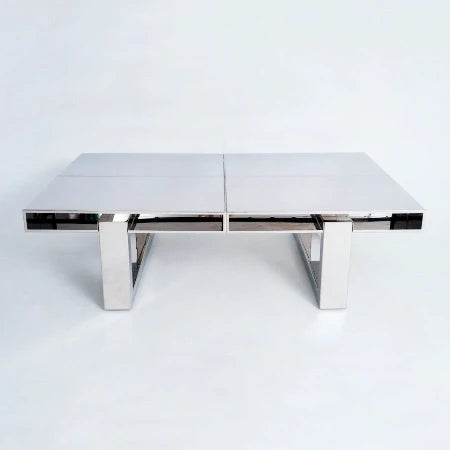


Enjoy our modern designs
Pool table pockets are small, but they can completely change the attitude of a table.
Most buyers think about pocket style in practical terms: where the balls go, how visible the pocket is, and whether the table has drop pockets or a ball return system. Designers look at it differently. They see pockets as part of the table’s visual language.
A pocket can make a table feel traditional, tailored, club-like, rustic, modern, decorative, understated, or fully bespoke. That is why the difference between leather pockets and shield pockets matters.
Table of Contents
1. What Are Leather Pockets?
Leather pockets are pool table pockets made with leather or leather-like material. They can appear in several forms, from simple drop pockets to more decorative traditional designs.
Some leather pockets are very plain. They may sit neatly beneath the rail with minimal stitching and a clean shape. Others are more detailed, with visible seams, metal irons, fringe, embossing, or shaped panels.
This is why “leather pockets” is a broad term. It describes the material more than the exact style. A table with leather pockets can feel traditional, transitional, rustic, or even modern depending on the shape and detailing.
2. What Are Shield Pockets?
Shield pockets are a more traditional pocket style where the leather pocket has a visible shield-shaped face beneath the rail. The shield is usually the hanging leather panel that covers or frames the front of the pocket.
This style is strongly associated with classic billiards rooms, traditional game rooms, private clubs, heritage tables, and old-school pool table design.
Shield pockets usually have more visual weight than simple leather drop pockets. They are meant to be seen. The shaped leather panel adds detail to the side profile of the table and gives the pocket a more decorative presence.
3. The Main Difference
The simplest way to understand it: leather pockets are a material and pocket category. Shield pockets are a specific traditional leather pocket style.
So all shield pockets are usually leather pockets, but not all leather pockets are shield pockets. A simple leather drop pocket may feel clean and understated. A shield pocket usually feels more decorative and classic.
The Pro Insight: This is not just a pocket decision. It is a decision about whether the table should feel restrained and flexible, or visibly traditional and billiards-focused.
4. Leather Pockets
Leather pockets are the more flexible choice. They can work across a wider range of interiors because the detailing can be adjusted.
A simple leather pocket can look at home on a transitional or even modern table. A darker leather pocket can make a table feel tailored. A brown or cognac leather pocket can add warmth. A clean black leather pocket can sharpen the look without becoming overly decorative.
- Best For: Traditional interiors, transitional spaces, modern rustic rooms, warm contemporary homes, mountain houses, libraries, lounges, and residential game rooms.
- Pairs With: Walnut, mahogany, white oak, black oak, dark-stained wood, olive felt, navy felt, burgundy felt, camel felt, charcoal felt, brass, bronze, blackened steel, leather seating, wood paneling, and warm lighting.
- Why Designers Like Them: Leather pockets add warmth, tactility, and classic pool-table identity without necessarily making the table feel old-fashioned.
- Watch Out For: Leather pockets can look cheap if the shape is clumsy, the material quality is poor, or the color fights the wood and felt.
5. Shield Pockets
Shield pockets are more specific and more traditional. They are not trying to disappear. They add shape, detail, and character to the table.
The hanging shield panel becomes part of the table’s side profile, which means it affects how the table looks from across the room. This can be beautiful in the right setting. A shield pocket can make a pool table feel established, classic, and authentic.
- Best For: Traditional game rooms, club-inspired spaces, libraries, cigar lounges, country homes, mountain lodges, classic billiards rooms, and interiors with darker woods and warm lighting.
- Pairs With: Walnut, mahogany, cherry, dark oak, traditional carved bases, green felt, burgundy felt, navy felt, olive felt, camel felt, brass hardware, bronze accents, leather club chairs, wood paneling, traditional rugs, and warm sconces.
- Why Designers Use Them: Shield pockets add personality, classic silhouette, and visible billiards character.
- Watch Out For: Shield pockets can look dated in minimalist, modern, acrylic, or highly architectural spaces. Too much fringe, embossing, contrast stitching, or decorative hardware can make the table feel costume-like.
6. Comparing the Two
| Leather Pockets | Shield Pockets |
|---|---|
| More flexible and easier to adapt. | More traditional and visually specific. |
| Can be simple, clean, modern, rustic, or classic. | Usually decorative, classic, and billiards-focused. |
| Works in more interiors. | Works best in classic or heritage-inspired rooms. |
| Easier to customize quietly. | Adds more side-profile presence. |
The better question is not which one looks more expensive. The better question is which one looks more appropriate for the table and room. Luxury comes from fit, not decoration.
7. Matching Pocket Style to Interior Style
| Interior Style | Best Pocket Direction |
|---|---|
| Traditional Game Rooms | Shield pockets are a natural fit, especially with dark wood, green or burgundy felt, leather chairs, and warm lighting. |
| Modern Homes | Simple leather pockets are usually better than shield pockets. In very minimalist rooms, hidden pockets may be better. |
| Transitional Interiors | Leather pockets are the better choice because they add warmth without locking the table into a heavy traditional style. |
| Mountain Homes | Both can work. Rustic lodges can support shield pockets; modern mountain homes usually look better with simple leather. |
| Coastal Homes | Simple leather pockets are usually better. Shield pockets can feel too heavy unless the coastal interior is more traditional. |
| Industrial Interiors | Simple leather pockets work well, especially with blackened steel, walnut, charcoal felt, or olive felt. |
8. Choosing the Right Leather Color
- Black Leather: Formal, sharp, and versatile. Works well with black tables, walnut tables, charcoal felt, navy felt, black felt, and modern interiors.
- Dark Brown Leather: Warm and classic. Works beautifully with walnut, mahogany, olive felt, burgundy felt, and traditional rooms.
- Cognac Leather: Warmer, lighter, and more relaxed. Strong with white oak, walnut, taupe felt, olive felt, and modern rustic interiors.
- Espresso Leather: A strong middle ground with the warmth of brown and the depth of black.
- Matching vs. Contrasting Leather: Matching leather keeps the look quiet. Contrasting leather makes the pockets more visible, especially on shield pockets.
9. Common Mistakes
- Using Shield Pockets on a Modern Table: A clean-lined modern table rarely benefits from a traditional hanging shield pocket.
- Choosing Cheap-Looking Leather: Shiny, thin, plastic-looking leather makes the whole table feel lower quality.
- Overdecorating the Pocket: Fringe, contrast stitching, embossing, metal trim, and oversized shields all together is usually too much.
- Ignoring the Side View: Pockets affect how the table looks from the side. Shield pockets especially change the silhouette.
- Treating Pockets as a Default: Pockets should be selected like any other design detail.
- Matching the Wrong Brown: Brown leather next to brown wood sounds easy, but mismatched undertones can look awkward.
The Pro Insight: For most luxury homes today, simple leather pockets are the safer choice. Shield pockets work best when tradition is actually the point.
The Bottom Line
Leather pockets and shield pockets are not really opposites. Shield pockets are a more decorative, traditional version of leather pocket design.
Simple leather pockets are more versatile. They work across more homes, especially transitional, modern, rustic-modern, and warm contemporary interiors. They add softness and authenticity without making the table feel overly traditional.
Shield pockets are more specific. They belong in rooms that want a classic billiards identity: wood, leather, warm lighting, rich felt colors, and a sense of old-school game-room atmosphere.
The mistake is using shield pockets when you only want “premium.” They are not premium by default. They are traditional. Use them when tradition is the point.