

Enjoy our modern designs
A pool table is often selected for how it plays, then placed wherever it fits.
That approach works for a basement, a club room, or a purely recreational space. It does not work as well in a luxury home where every major object is expected to contribute to the interior.
For designers, a pool table should be approached as furniture first.
Not because function does not matter. It does. The table still needs accurate play, proper clearance, quality slate, correct cushion response, and durable materials. But in a designed residence, performance alone is not enough.
The table also has to live in the room.
It has to hold its own beside custom millwork, stone, lighting, upholstery, art, and architecture. It has to look resolved when nobody is playing. It has to feel like part of the furniture plan, not an object added after the plan was complete.
That requires designing around form before function.
Table of Contents
- A Pool Table Is One of the Largest Furniture Pieces in the Home
- Form Determines the Table’s Social Role
- Function Should Be Integrated, Not Advertised
- The Base Is the Table’s Architecture
- Rails Control the Table’s Personality
- Felt Is the Largest Color Decision
- Design the Surrounding Furniture Around the Table’s Form
- The Table Should Still Work When the Game Is Over
- What Designers Should Prioritize
- The Bottom Line
1. A Pool Table Is One of the Largest Furniture Pieces in the Home
The first mistake is underestimating the table’s visual scale.
A pool table is not a side piece. It is not an accessory. It is closer to a dining table, kitchen island, or custom conference table in terms of presence. In many homes, it becomes the largest freestanding object in the room.
That means its form has consequences.
The shape of the base affects how heavy the room feels. The rail thickness affects the table’s elegance. The pocket treatment affects whether the piece reads traditional, sporty, or refined. The finish affects how much light the table absorbs or reflects. The felt color affects the entire palette.
Designers would never choose a dining table purely because it seats ten people. The same logic should apply here. A pool table should satisfy the functional requirements, but its form should be chosen with the room in mind.
Designer insight: A pool table has too much visual weight to be treated like equipment. In a luxury room, it behaves like major furniture whether it was specified that way or not.
2. Form Determines the Table’s Social Role
Different pool table forms create different types of rooms.
A heavy carved table with visible pockets and a rich wood finish suggests tradition, ceremony, and permanence. It may work beautifully in a library, club room, or formal billiards room.
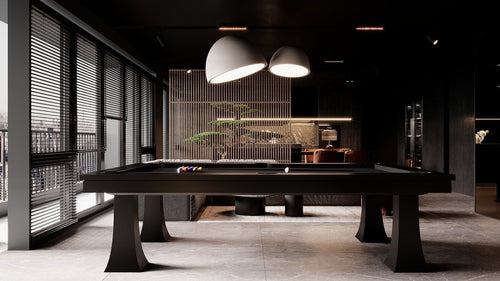
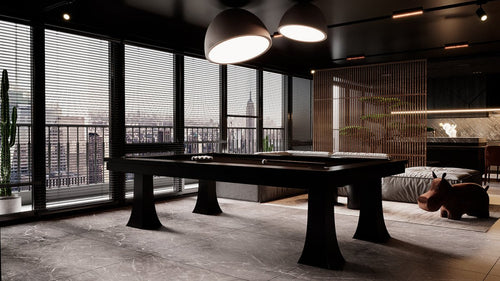
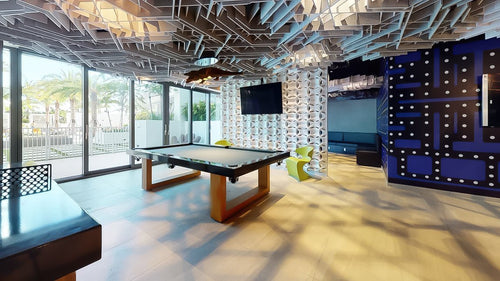
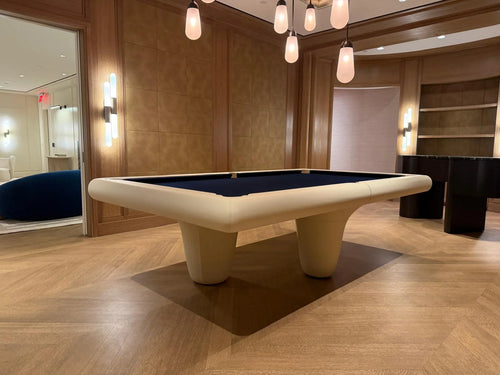
A clean-lined walnut table with hidden pockets and muted felt feels more residential and architectural. It can live comfortably in an open-plan lounge, a modern game room, or a space connected to a bar.
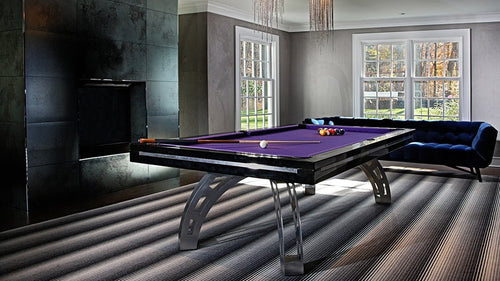
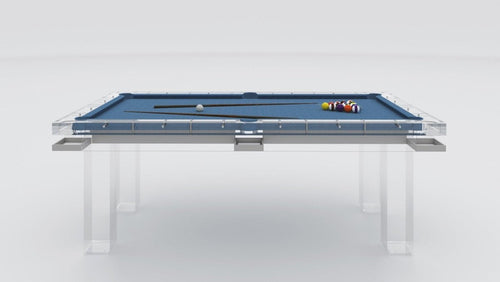
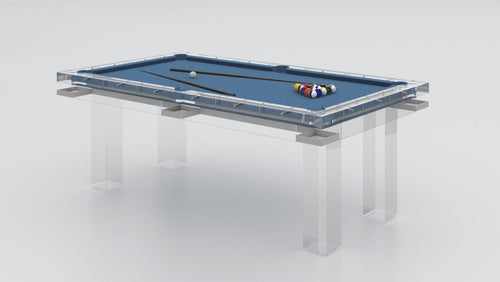
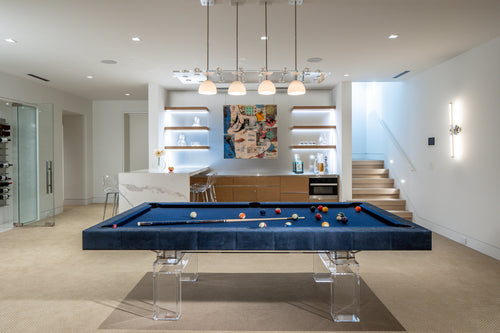
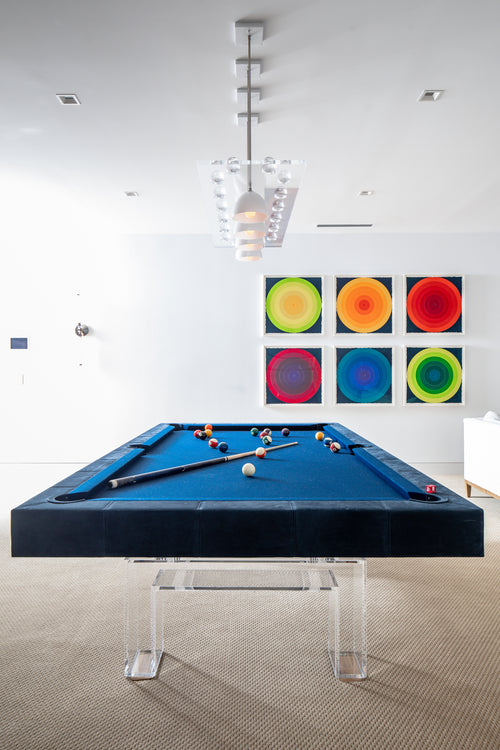
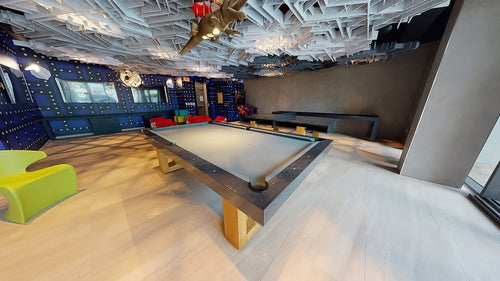
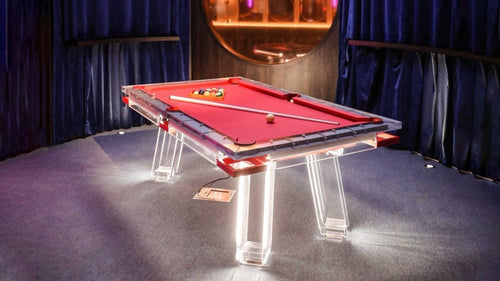
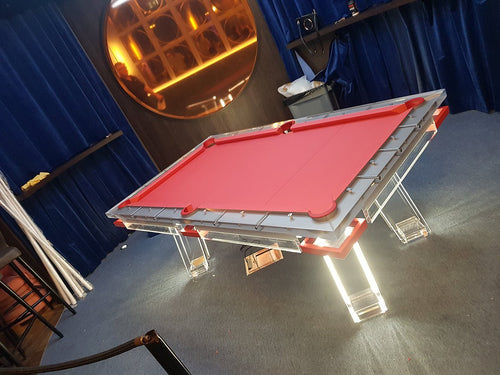
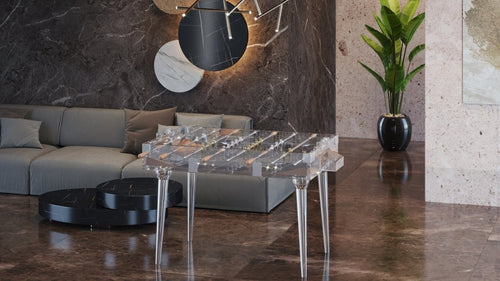
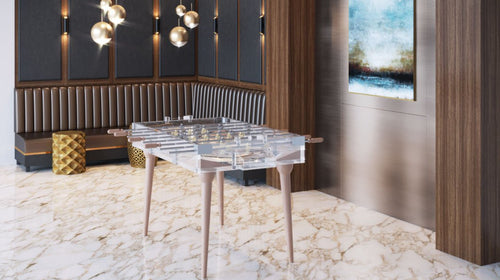
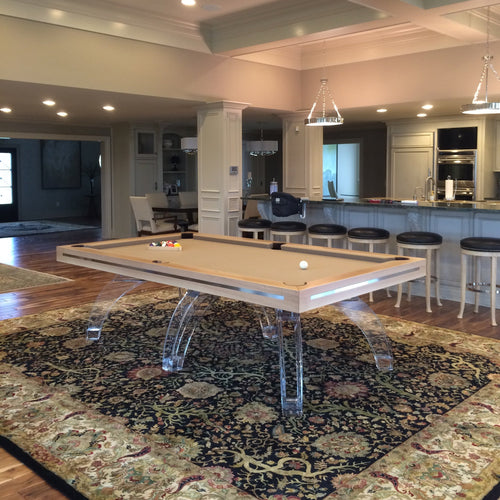
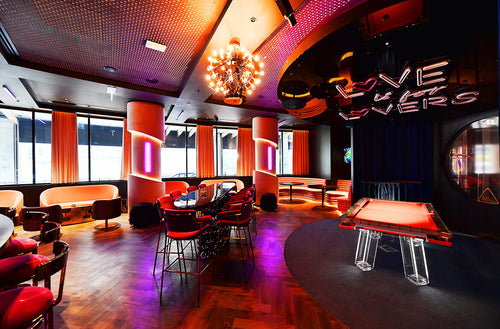
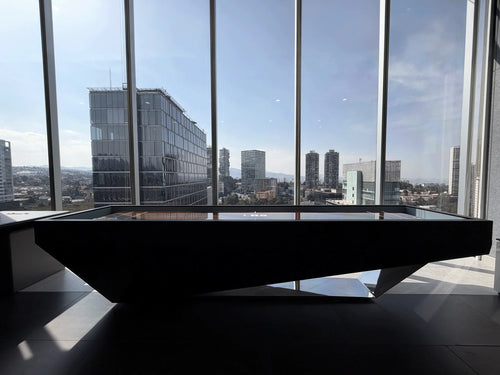
A transparent acrylic or Lucite table changes the entire reading of the room. It reduces visual weight and makes the table feel more sculptural, especially in homes with glass, stone, and contemporary architecture.
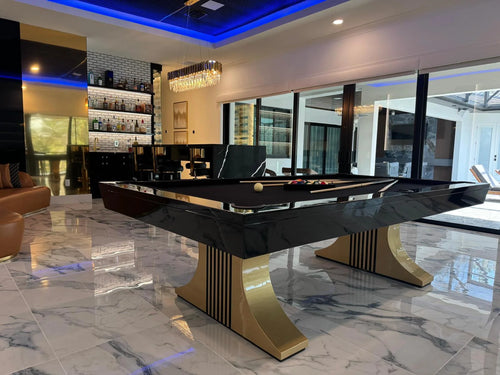
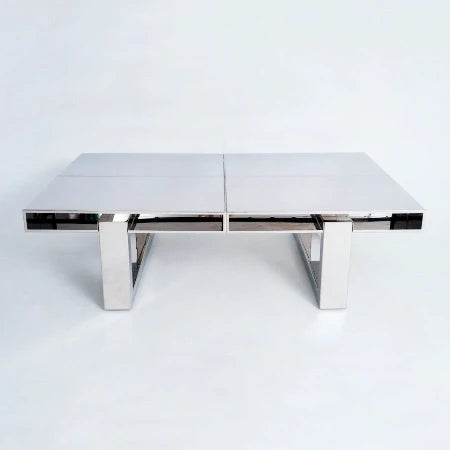
A table with metal, leather, or stone accents can create a more tailored statement, but only if those details are disciplined. Too much contrast can push the piece back into novelty.
The form tells guests how to understand the room.
Is this a serious billiards room? A social lounge? A design feature? A family game space? A dramatic entertaining zone?
The table answers before anyone picks up a cue.
3. Function Should Be Integrated, Not Advertised
The most refined pool tables do not hide their function completely. They simply do not let function dominate the visual experience.
Pockets, rails, cushions, sights, and playing surfaces all have technical roles. But they can be detailed in ways that feel elegant instead of utilitarian.
Hidden pockets can make the table feel cleaner. Slimmer rails can reduce bulk. Tonal felt can soften the playing surface. Integrated storage can remove accessory clutter. A restrained base can prevent the room from feeling overbuilt.
This is the same principle designers use throughout luxury interiors. A kitchen still has appliances, but the best kitchens do not feel like appliance showrooms. A media room still has technology, but the best media rooms do not let equipment control the atmosphere.
A game room should be no different.
The function should be there, but the form should lead.
4. The Base Is the Table’s Architecture
The base is where a pool table becomes furniture.
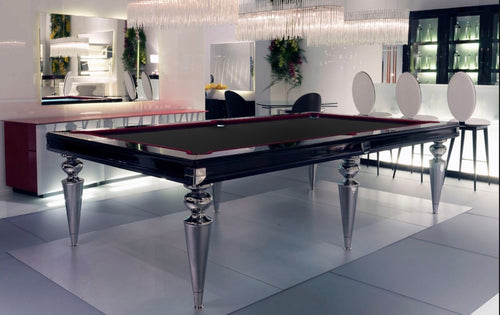
Traditional pool tables often rely on leg detail to create character. That can work, but it can also make the table feel visually busy. Modern interiors often benefit from a base that is more controlled: a trestle, slab, pedestal, monolith, or carefully proportioned leg system.
The base determines how the table touches the floor. It controls shadow. It affects how much air passes underneath the table. It influences whether the piece feels heavy, floating, grounded, or sculptural.
Designers should look at the base before falling in love with the finish.
A beautiful wood species cannot save a clumsy silhouette. A premium material cannot fix poor proportion. If the base does not relate to the room, the table will always feel slightly wrong.
A good base feels intentional from every angle, not just from the product photo.
Pro tip: Judge the pool table from the side elevation, not only the top view. The base is what decides whether the table feels architectural, heavy, elegant, or awkward.
5. Rails Control the Table’s Personality
Rails are one of the most important visual decisions on a pool table because they frame the playing surface.
Thick rails can feel strong and masculine, but they may overpower a softer interior. Thin rails can feel refined, but if they are too delicate, the table may lose presence. A high-gloss rail can create drama, while a matte rail can make the object feel quieter and more architectural.
Rail finish should also be considered in relation to hand contact, light reflection, and nearby materials.
For example, a polished dark rail beneath a strong overhead fixture may produce glare. A matte open-pore wood rail may feel more tactile and residential. A leather-wrapped rail can add softness, but it may change the tone of the room toward club-like luxury.
This is why designers should not treat rails as a technical detail. They are part of the table’s face.
6. Felt Is the Largest Color Decision
In many rooms, the felt is the most concentrated color field in the entire space.
That makes it a design decision, not just a game decision.
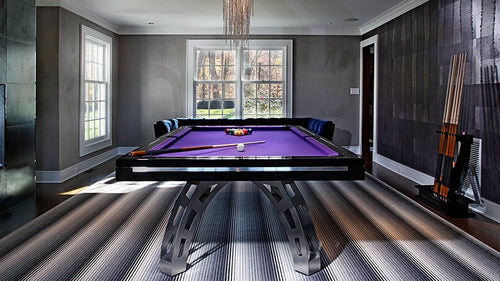
Classic green carries nostalgia and tradition, but it can also fight a contemporary palette. Bright blue can feel energetic, but it may become too sporty. Black can look sleek, but it can also make the table feel severe. Charcoal, taupe, navy, olive, camel, and warm grey often offer more design flexibility.
The right felt color should be selected the way a designer selects upholstery or rug tone: with the whole room in view.
It should respond to flooring, wall color, lighting temperature, millwork, metal finishes, and adjacent furniture. It should also consider how the room will be photographed, because the table surface will likely draw the eye in finished images.
A pool table can be beautifully made and still fail because the felt color is wrong.
7. Design the Surrounding Furniture Around the Table’s Form
Once the table form is chosen, the surrounding furniture should support it.
If the table is heavy and traditional, seating can soften the room and prevent it from feeling too formal. If the table is minimal, surrounding pieces may need more texture so the space does not become cold. If the table is transparent, the room may need grounded elements nearby so the design does not feel weightless.
The furniture plan should also respect how people actually use the room.
There should be comfortable seating outside the cue path. There should be surfaces for drinks. There should be places to lean, watch, and talk. The room should feel social even when only two people are playing.
Designing around form does not mean ignoring movement. It means the movement is solved without sacrificing the composition.
8. The Table Should Still Work When the Game Is Over
This is the real test.
A pool table in a luxury home should not only look good during play. It should look good at rest. It should feel composed when the cues are stored, the balls are put away, and the room is quiet.
That is where furniture thinking matters.
A recreational table depends on activity to justify its presence. A furniture-minded table justifies its presence through proportion, material, finish, and relationship to the room.
It becomes part of the interior rather than an interruption.
9. What Designers Should Prioritize
When specifying a pool table for a luxury interior, designers should begin with the same questions they would ask about any major furniture piece.
- What is the silhouette?
- How much visual weight does it carry?
- What materials does it introduce?
- What does it align with?
- How does it relate to the lighting?
- How does it photograph?
- Does it support the room’s atmosphere?
- Does it feel intentional when no one is using it?
Only after those questions are answered should the technical details finalize the selection.
The best pool tables are not just built to play well. They are built to belong.
The Bottom Line
When form comes first, function does not disappear.
It becomes elegant.